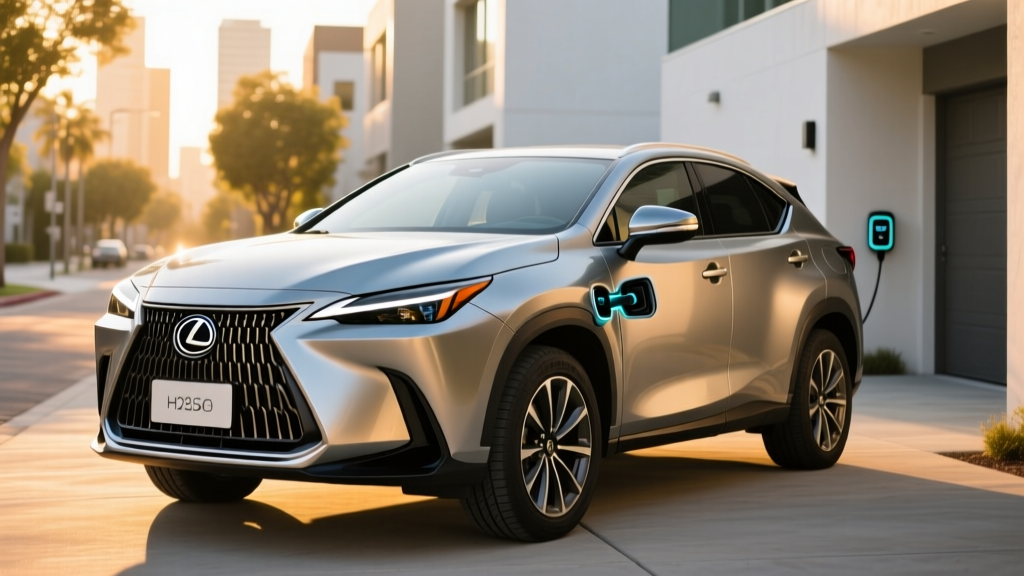
The 2026 Lexus NX 350h hybrid occupies a specific niche: a luxury compact SUV that sips fuel without asking you to plug in, change your driving habits, or worry about charging infrastructure. With an EPA-estimated 41 MPG combined and standard all-wheel drive, it targets buyers who want electrified efficiency but aren't ready — or able — to commit to a full battery-electric vehicle. This guide breaks down exactly what the NX 350h delivers in fuel economy, powertrain specs, real-world ownership costs, and how it stacks up against its plug-in sibling, the NX 450h+, and full EV alternatives.
HEV vs. PHEV: What the NX 350h Actually Is
Before diving into specs, it's critical to distinguish between the two electrified NX variants Lexus offers, because confusing them leads to wrong purchase decisions.
| Attribute | NX 350h (HEV) | NX 450h+ (PHEV) |
|---|---|---|
| Type | Conventional Hybrid (no plug) | Plug-in Hybrid (requires plug for EV range) |
| Battery | ~1.6 kWh NiMH (self-charging) | 18.1 kWh lithium-ion |
| Electric-Only Range | Not applicable (EV assist only) | EPA-est. 37 miles |
| Combined HP | 244 hp | 304 hp |
| EPA Combined MPG/MPGe | 41 MPG | 84 MPGe (EV mode) / 37 MPG (hybrid mode) |
| Needs to Plug In? | No — regenerates via braking/engine | Yes, to access EV range |
| DC Fast Charge? | No | No (Level 2 AC only) |
| Federal Tax Credit (§30D) | Not eligible | Up to $7,500 (subject to eligibility) |
| Starting MSRP (2026) | ~$43,500 | ~$60,500 |
The NX 350h is a self-charging hybrid. Its small battery is replenished entirely by regenerative braking and the gasoline engine. You never plug it in. The electric motors assist the engine during acceleration and enable brief low-speed electric-only driving (typically under 1 mile at parking-lot speeds), but the system's purpose is fuel economy optimization, not electric commuting. If you want meaningful electric-only range, you need the NX 450h+ PHEV or a full EV.
Fuel Economy: EPA Numbers and Real-World MPG
The headline figure for the 2026 NX 350h is its EPA-estimated fuel economy, which remains one of the best in the luxury compact SUV segment.
| Driving Cycle | EPA Estimate | Real-World Expectation |
|---|---|---|
| City | 41 MPG | 42–46 MPG (hybrids excel in stop-and-go) |
| Highway | 37 MPG | 34–37 MPG (sustained 70+ mph reduces regen benefit) |
| Combined | 41 MPG | 38–43 MPG (varies by driving mix) |
Why real-world city MPG often beats the EPA sticker: Toyota's hybrid synergy drive system — which underpins the Lexus NX 350h — recovers energy during braking and low-speed driving. In urban environments with frequent stops, the electric motors do more of the work, and the engine shuts off at idle. Owners in heavy-traffic cities routinely report 43–46 MPG in warm weather. Highway driving, where the engine runs continuously and aerodynamic drag dominates, yields lower figures.
Annual fuel cost estimate: At 15,000 miles/year and $3.40/gallon (national average), the NX 350h costs approximately $1,244/year in fuel. A comparable gas-only luxury compact SUV at 26 MPG combined would cost roughly $1,962/year — a savings of about $718 annually with the hybrid.
Powertrain and Performance Specs
| Specification | 2026 Lexus NX 350h |
|---|---|
| Engine | 2.5L inline-4 Atkinson cycle |
| Engine Output | 184 hp / 185 lb-ft torque |
| Electric Motors | Front + rear (e-AWD), combined system output |
| Combined System HP | 244 hp |
| Transmission | Electronic CVT (eCVT) |
| Drivetrain | AWD standard (electronic rear motor) |
| 0–60 mph | 7.2 seconds (manufacturer est.) |
| Battery Type | NiMH, ~1.6 kWh (sealed, self-charging) |
| Towing Capacity | 2,000 lbs |
| Fuel Tank | 14.5 gallons |
| Total Driving Range | ~595 miles (EPA combined) |
The 2.5-liter Atkinson-cycle engine is optimized for thermal efficiency rather than peak power. The eCVT isn't a traditional belt-and-pulley CVT — it's a planetary gearset that blends engine and motor output seamlessly, which is why Toyota/Lexus hybrids have no shift shock and feel smooth in city driving. The rear electric motor provides electronic AWD without a mechanical driveshaft, engaging only when slip is detected or under hard acceleration.
At 7.2 seconds to 60 mph, the NX 350h is adequate for merging and passing but won't feel sporty. Buyers prioritizing acceleration should look at the NX 350 (turbo gas, 279 hp, ~6.6 sec) or the NX 450h+ PHEV (304 hp, ~6.0 sec).
Pricing, Trims, and Tax Credit Eligibility
The 2026 NX 350h is offered in three trims. Pricing below includes destination charge:
| Trim | MSRP (est.) | Key Features |
|---|---|---|
| NX 350h Premium | $43,500 | 14" touchscreen, wireless CarPlay/Android Auto, heated front seats, power liftgate |
| NX 350h Luxury | $48,700 | Leather, ventilated front seats, panoramic moonroof, 10-speaker audio |
| NX 350h F SPORT Handling | $50,200 | Adaptive suspension, F SPORT seats, 20" wheels, sport-tuned steering |
Federal Tax Credit: The NX 350h Does NOT Qualify
Under IRS §30D rules, the federal clean vehicle credit (up to $7,500) is available only for plug-in electric vehicles — battery-electric vehicles (BEVs) and plug-in hybrids (PHEVs) with a minimum battery capacity of 7 kWh. The NX 350h's ~1.6 kWh NiMH battery does not meet this threshold. The NX 350h is not eligible for the federal EV tax credit.
If the tax credit is a priority, consider:
- NX 450h+ (PHEV): 18.1 kWh battery, potentially eligible for up to $7,500 depending on battery component sourcing, critical minerals requirements, buyer income caps ($150K single / $300K joint), and the $80,000 MSRP cap for SUVs. Always verify current eligibility on the IRS clean vehicle credit page before purchasing.
- Fully electric alternatives like the Tesla Model Y or Genesis Electrified GV70, which may qualify depending on sourcing and price.
Some states offer their own hybrid or efficiency rebates — check your state's energy office or fueleconomy.gov for local incentives that may apply to conventional hybrids.
Battery Warranty, Lifespan, and Replacement Cost
Lexus Hybrid Battery Warranty: 10 years / 150,000 miles (whichever comes first) for the hybrid battery pack and all hybrid system components, including the inverter and electric motors.
This is one of the strongest hybrid warranties in the industry. Lexus covers the hybrid battery for a full decade, and the failure rate for Toyota/Lexus NiMH hybrid batteries is extremely low within that window. Data from fleet operators and long-term owners of Toyota/Lexus hybrids shows most NiMH packs retain 80%+ capacity well past 150,000 miles.
Battery Replacement Cost If Out of Warranty
If the hybrid battery fails after the warranty period, replacement costs for the NX 350h's NiMH pack typically range from $3,000 to $5,000 including labor at a Lexus dealer. Independent hybrid specialists often offer refurbished packs for $2,000–$3,500. For context, this is significantly less than a full EV battery replacement ($10,000–$20,000+), because the NX 350h's battery is small (~1.6 kWh) and its role is supplemental.
Hybrid battery degradation manifests differently than EV battery degradation. You won't notice range loss — the engine simply runs more frequently to compensate, slightly reducing MPG. Most owners never experience meaningful degradation during typical ownership.
Reliability and Long-Term Ownership
Lexus consistently ranks at or near the top of J.D. Power Vehicle Dependability Studies, and the NX 350h benefits from the proven fourth-generation Toyota hybrid system shared with the RAV4 Hybrid and Toyota Camry Hybrid. This powertrain has been in continuous production and refinement since 2018, meaning most early-production bugs have been resolved.
Key reliability advantages of the NX 350h hybrid system:
- No traditional starter motor — the hybrid motor-generator starts the engine, eliminating a common failure point
- Regenerative braking reduces brake wear — many hybrid owners report 60,000–80,000+ miles on original brake pads
- eCVT has no belts or cones — the planetary gearset is extremely durable and doesn't require fluid changes under normal use
- Atkinson-cycle engine runs cooler and at lower stress than conventional Otto-cycle engines
The primary maintenance items remain routine: oil changes (every 10,000 miles with synthetic), cabin air filter, tire rotation, and brake fluid inspection. Expect annual maintenance costs of $400–$600 after the complimentary maintenance period expires (Lexus includes 1 year / 10,000 miles of complimentary scheduled maintenance).
NX 350h vs. NX 450h+ vs. Full EV: Which Fits You?
Choose the NX 350h (HEV) if:
- You don't have access to home or workplace charging
- You want maximum simplicity — no plugs, no apps, no charging planning
- Your budget is under $50,000
- You drive a mix of city and highway and want strong MPG in both
- You plan to keep the vehicle 8–10 years (warranty covers the battery fully)
Choose the NX 450h+ (PHEV) if:
- You have Level 2 home charging (240V) and a commute under 37 miles
- You want to drive mostly electric daily but need gas flexibility for road trips
- You qualify for the §30D federal tax credit (check IRS sourcing rules)
- You want the most powerful NX variant (304 hp)
Choose a full EV (e.g., Tesla Model Y, Genesis Electrified GV70) if:
- You have reliable home charging and your daily driving is under 250 miles
- You want the lowest per-mile fuel cost (electricity at $0.14/kWh ≈ $4.50 per "gallon equivalent")
- You want zero tailpipe emissions and minimal drivetrain maintenance
- You're comfortable with route planning on road trips around DC fast chargers
Pros and Cons at a Glance
Pros
- 41 MPG combined — best in luxury compact SUV class
- No plug-in required; zero behavior change from a gas car
- Standard AWD with no fuel economy penalty vs. FWD
- 10-year/150,000-mile hybrid battery warranty
- Proven, mature hybrid system with excellent reliability record
- Nearly 600 miles of total range per tank
Cons
- No federal tax credit eligibility
- 7.2-sec 0–60 is adequate, not quick
- 2,000-lb towing limit is low for the segment
- Highway MPG drops noticeably above 75 mph
- No DC fast charging (not applicable, but limits any future EV-mode expansion)
- Premium trim starts at $43,500 — not budget-friendly
Frequently Asked Questions
How many MPG does the 2026 Lexus NX 350h hybrid get?
The EPA rates the 2026 NX 350h at 41 MPG city, 37 MPG highway, and 41 MPG combined. In real-world city driving with frequent stops, many owners see 43–46 MPG thanks to regenerative braking. Highway driving at sustained speeds of 70–80 mph typically yields 34–37 MPG.
Does the Lexus NX 350h need to be plugged in?
No. The NX 350h is a conventional hybrid (HEV), not a plug-in hybrid. Its small battery is charged entirely by the gasoline engine and regenerative braking. You fuel it like any other car — just fill the 14.5-gallon tank with regular 87-octane gasoline.
How far can the NX 350h go on electric power alone?
The NX 350h can operate in EV mode for roughly 0.5–1 mile at speeds under 25 mph, such as in a parking lot or slow traffic. This is not designed for commuting — it's a system efficiency feature. For meaningful electric-only driving, you need the NX 450h+ PHEV (37 miles EPA electric range).
Is the Lexus NX 350h hybrid reliable?
Yes. The NX 350h uses Toyota's fourth-generation hybrid system, which has been in production since 2018 across millions of vehicles (RAV4 Hybrid, Camry Hybrid, Highlander Hybrid). Lexus consistently tops J.D. Power dependability rankings. The hybrid battery is covered for 10 years/150,000 miles, and failure rates within that window are very low.
What does it cost to replace the NX 350h hybrid battery?
If the hybrid battery fails out of warranty, dealer replacement typically costs $3,000–$5,000 including labor. Independent hybrid specialists offer refurbished packs for $2,000–$3,500. Most Toyota/Lexus hybrid batteries last well beyond the warranty period with minimal degradation.
Does the 2026 NX 350h qualify for a federal tax credit?
No. Under IRS §30D rules, the federal clean vehicle credit requires a plug-in vehicle with at least 7 kWh of battery capacity. The NX 350h's ~1.6 kWh NiMH battery does not qualify. The plug-in NX 450h+ may be eligible for up to $7,500, subject to income caps, MSRP caps, and battery sourcing requirements — verify on the IRS website before purchasing.
Hybrid vs. PHEV vs. EV — which should I choose?
Choose the HEV (NX 350h) if you lack home charging and want simplicity. Choose the PHEV (NX 450h+) if you can charge at home and want electric-only commuting with gas backup. Choose a full EV if you have reliable charging, drive under 250 miles daily, and want the lowest operating cost and zero tailpipe emissions. See the decision framework above for detailed guidance.
Sources: fueleconomy.gov for EPA MPG data; IRS.gov for §30D clean vehicle credit rules; Lexus USA manufacturer specifications.