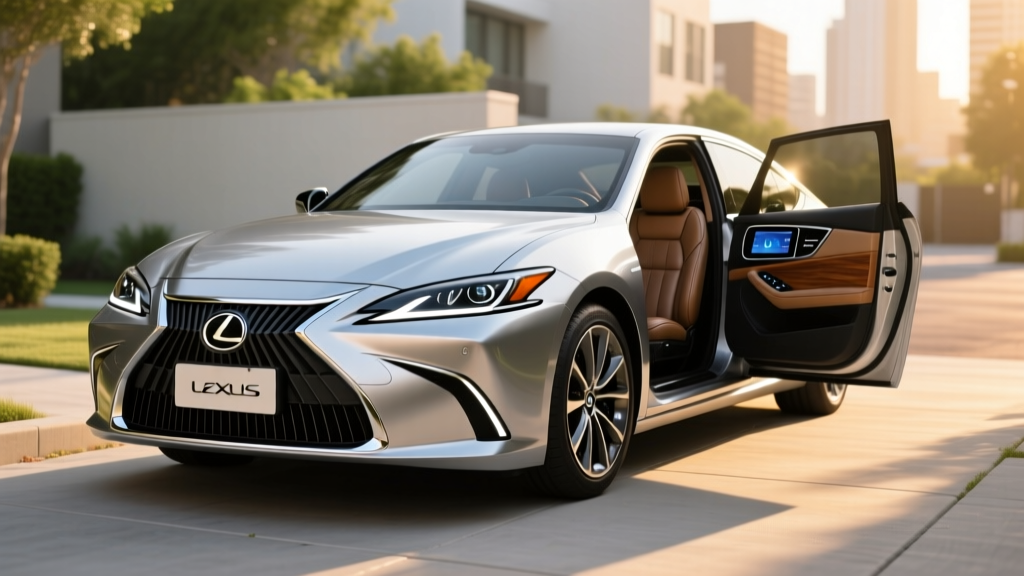
Quick Verdict: The Lexus Hybrid ES Still Sets the Bar for Luxury Efficiency
If you want a midsize luxury sedan that sips fuel without asking you to change how you drive, the 2026 Lexus ES 300h remains the benchmark. With an EPA-rated 44 MPG combined, a proven fourth-generation hybrid powertrain, and Lexus reliability, it occupies a niche that full EVs and conventional gas sedans can't quite fill. No plug required, no range math, no charging apps — just a luxury sedan that returns real-world numbers in the mid-40s during city driving.
This guide covers everything a buyer needs: exact EPA and real-world MPG figures, powertrain specifications, trim pricing, battery warranty details, and an honest look at who should choose this hybrid versus stepping into a plug-in hybrid or full battery-electric vehicle.
2026 Lexus ES 300h: Powertrain and Performance Specs
The 2026 ES 300h pairs a 2.5-liter inline-four Atkinson-cycle engine with Lexus's latest hybrid transaxle and a nickel-metal hydride (NiMH) traction battery. This is a conventional self-charging hybrid (HEV), meaning it recovers energy through regenerative braking and the engine — you never plug it in.
| Specification | Value |
|---|---|
| Powertrain | 2.5L I-4 Atkinson + electric motor (HEV) |
| Combined System Horsepower | 215 hp |
| Engine Output | 176 hp @ 5,700 rpm |
| Electric Motor Output | 88 kW (118 hp) |
| Transmission | eCVT (electronically controlled) |
| Drivetrain | Front-wheel drive |
| 0–60 mph | ~8.1 seconds |
| Hybrid Battery Type | NiMH (sealed) |
| Traction Battery Capacity | ~1.6 kWh (gross) |
| EPA Fuel Economy (City / Hwy / Combined) | 43 / 44 / 44 MPG |
| Fuel Tank Capacity | 13.2 gallons |
| Total Driving Range | ~581 miles (EPA estimate) |
| Base MSRP (2026) | $44,890 (ES 300h base) |
| Battery Warranty | 10 years / 150,000 miles |
The 215 combined horsepower delivers adequate acceleration for highway merging and passing, though the ES 300h is tuned for comfort rather than sportiness. The eCVT provides seamless, shift-free power delivery. Lexus's hybrid system can propel the car on electric-only power at low speeds (typically under 25 mph for short distances), which is where its city efficiency advantage comes from.
Fuel Economy: EPA Ratings vs. Real-World MPG
Lexus rates the 2026 ES 300h at 43 MPG city, 44 MPG highway, and 44 MPG combined per EPA estimates on fueleconomy.gov. These are among the best numbers in the midsize luxury sedan segment.
| Driving Condition | EPA MPG | Real-World Expectation |
|---|---|---|
| City | 43 MPG | 44–48 MPG (hybrids often beat EPA in stop-and-go) |
| Highway | 44 MPG | 40–43 MPG (sustained 75+ mph reduces regen benefit) |
| Combined | 44 MPG | 42–46 MPG depending on driving mix |
Real-world note: Toyota/Lexus hybrids consistently exceed their EPA city ratings in actual stop-and-go driving because the electric motor handles low-speed propulsion where gas engines are least efficient. On the highway at 75–80 mph, expect a slight dip below the EPA highway number — aerodynamic drag dominates and the hybrid system's regenerative advantage diminishes. In cold weather (below 32°F), expect a 5–10% reduction as the engine runs more frequently to maintain cabin heat and battery temperature.
HEV vs. PHEV vs. EV: Which Powertrain Fits Your Driving?
The ES 300h is a conventional hybrid (HEV). Lexus does not currently offer a plug-in hybrid (PHEV) variant of the ES, and there is no battery-electric ES. Here's how to decide which powertrain type suits your situation:
HEV vs. PHEV vs. BEV — Quick Decision Guide
Choose an HEV (like the ES 300h) if: You lack home charging access, drive a mix of city and highway, want maximum simplicity, and prioritize low running costs without lifestyle changes.
Choose a PHEV if: You can install a Level 2 charger at home, your daily commute is under 30–40 miles (so you drive mostly on electricity), and you want the option of gas-powered road trips without range concern.
Choose a full BEV if: You have reliable home charging, want the lowest per-mile fuel cost, qualify for the federal §30D tax credit, and are comfortable planning around DC fast charging on road trips.
The ES 300h's advantage is zero behavioral change. You fuel it like any gas car — just less often. With a 581-mile total range, you'll visit gas stations roughly once every two to three weeks on a typical commute. There is no plug, no charging cable, no app to manage, and no range anxiety.
Pricing, Trims, and Tax Credit Eligibility
The 2026 Lexus ES 300h starts at an MSRP of approximately $44,890 (including destination). Key trims include:
- ES 300h (base): ~$44,890 — includes Lexus Safety System+ 3.0, 12.3-inch infotainment, heated front seats, wireless Apple CarPlay/Android Auto
- ES 300h Luxury: ~$49,500 — adds leather, power-folding rear sunshade, ambient lighting
- ES 300h Ultra Luxury: ~$54,000 — adds semi-aniline leather, rear-seat controls, Mark Levinson audio
- ES 300h F SPORT Handling: ~$48,500 — sport-tuned suspension, F SPORT seats, 19-inch wheels
Federal Tax Credit: Does the ES 300h Qualify?
No. The Lexus ES 300h is a conventional hybrid (HEV), not a plug-in vehicle. The federal §30D Clean Vehicle Credit applies only to plug-in electric vehicles (BEVs and qualifying PHEVs with at least 7 kWh of battery capacity). The ES 300h's ~1.6 kWh NiMH battery does not meet this threshold.
However, some states offer rebates or HOV lane access for hybrids — check your state's energy office or IRS §30D guidelines for current rules. The ES 300h's fuel savings often offset the lack of a federal credit over several years of ownership.
Battery Reliability, Warranty, and Replacement Cost
Hybrid battery longevity is the single most common concern among first-time hybrid buyers. Here's what the data shows:
Battery Warranty & Longevity
Warranty: Lexus covers the ES 300h hybrid battery for 10 years or 150,000 miles (whichever comes first) in all 50 states. This applies to the original owner and is transferable to subsequent owners (coverage transfers at 10 years/150,000 miles from original in-service date).
Real-world lifespan: Toyota/Lexus NiMH hybrid batteries routinely last 150,000–200,000+ miles before significant degradation. Many first-generation Prius and ES 300h batteries have exceeded 200,000 miles with original packs. The ES 300h uses a relatively small, conservatively managed battery — it rarely cycles to full charge or full discharge, which extends cell life.
Replacement cost: If the hybrid battery does require replacement outside of warranty, expect $3,000–$5,000 for a new OEM pack installed at a Lexus dealer. Refurbished/reconditioned packs are available from independent hybrid specialists for $1,500–$2,500. Given the 10-year/150,000-mile warranty and typical longevity, most owners will never face this cost.
Lexus's hybrid powertrain also benefits from reduced wear on the conventional components. The electric motor handles low-speed driving, reducing engine start cycles. The eCVT has no traditional clutch packs or bands to wear out. And regenerative braking significantly extends brake pad life — many hybrid owners report 60,000–80,000 miles on original brake pads.
Ownership Economics: What Does the ES 300h Actually Cost to Run?
Let's compare annual fuel costs between the ES 300h and a comparable gas-only luxury sedan (using the non-hybrid ES 350 as a baseline).
| Vehicle | EPA Combined MPG | Gallons/Year | Annual Fuel Cost |
|---|---|---|---|
| Lexus ES 300h (hybrid) | 44 MPG | 341 | $1,194 |
| Lexus ES 350 (gas V6) | 26 MPG | 577 | $2,020 |
| Annual Savings with Hybrid | — | ~$826/year | |
Over a typical 5-year ownership period, the ES 300h saves roughly $4,100 in fuel costs compared to the gas-only ES 350, easily justifying its modest price premium. Factor in reduced brake wear and the hybrid's strong resale value, and the total cost of ownership advantage widens further.
Pros and Cons: The Honest Picture
Pros
- 44 MPG combined — best in the luxury midsize segment
- No plug, no charging infrastructure needed
- 10-year/150,000-mile hybrid battery warranty
- 581-mile total range between fill-ups
- Lexus Safety System+ 3.0 standard on all trims
- Smooth, quiet powertrain with seamless electric assist
- Strong resale value and proven reliability track record
Cons
- No federal tax credit (HEV, not a plug-in)
- 215 hp is adequate but not quick — 8.1s to 60 mph
- FWD only; no AWD option on the hybrid
- eCVT can drone under hard acceleration
- No PHEV variant available for electric-only commuting
- Infotainment still uses a touchpad on lower trims
- Premium over gas ES 350 takes ~3 years to recoup via fuel savings
Who Should Buy the Lexus ES 300h Hybrid?
The ES 300h is ideal for:
- High-mileage commuters who rack up 15,000+ miles per year and want to minimize fuel costs without the complexity of plug-in charging
- Apartment/condo dwellers who lack access to home charging and aren't ready for a full EV
- Luxury sedan buyers who value Lexus reliability, low cost of ownership, and a quiet ride over sporty performance
- Rideshare drivers in the luxury tier who want to maximize per-trip margins through fuel savings
- Conservative adopters who want electrified efficiency without depending on charging infrastructure or battery technology that's still evolving
The ES 300h is not the right choice if you want electric-only commuting (look at a PHEV like the Toyota RAV4 Prime or BMW 330e), if you want full electrification with the lowest per-mile energy cost (consider a BEV like the Tesla Model S or Lucid Air), or if you prioritize acceleration and driving dynamics over efficiency (the ES 350 V6 or a sport sedan would serve better).
Frequently Asked Questions
How many MPG does the Lexus ES 300h hybrid get?
The 2026 Lexus ES 300h is EPA-rated at 43 MPG city, 44 MPG highway, and 44 MPG combined. In real-world city driving, many owners report 45–48 MPG thanks to the hybrid system's regenerative braking and electric-only low-speed operation. Highway driving at sustained speeds above 70 mph typically returns 40–43 MPG.
Does the Lexus ES 300h need to be plugged in?
No. The ES 300h is a conventional self-charging hybrid (HEV). Its small NiMH battery charges through regenerative braking and the gasoline engine. There is no plug, no charging cable, and no need for any charging infrastructure.
How far can the Lexus ES 300h go on a full tank?
With a 13.2-gallon fuel tank and 44 MPG combined, the ES 300h achieves approximately 581 miles of total driving range per the EPA estimate. In real-world mixed driving, expect 540–600 miles depending on conditions.
Is the Lexus hybrid battery reliable and what does replacement cost?
Yes. Lexus covers the hybrid battery for 10 years or 150,000 miles. Toyota/Lexus NiMH hybrid batteries commonly last 150,000–200,000+ miles. If replacement is needed out of warranty, expect $3,000–$5,000 for a new OEM pack, or $1,500–$2,500 for a refurbished unit.
Does the Lexus ES 300h qualify for any federal tax credit?
No. The federal §30D Clean Vehicle Credit applies only to plug-in vehicles (BEVs and qualifying PHEVs). The ES 300h is a conventional hybrid and does not qualify. Check your state's energy office for any local hybrid incentives that may be available.
Hybrid vs. PHEV vs. EV — which should I choose?
Choose the HEV (ES 300h) if you can't charge at home and want simplicity. Choose a PHEV if you have home charging and a short commute you'd like to drive on electricity. Choose a full BEV if you want the lowest per-mile cost and qualify for federal credits. The ES 300h is the lowest-risk, lowest-complexity entry into electrified driving.