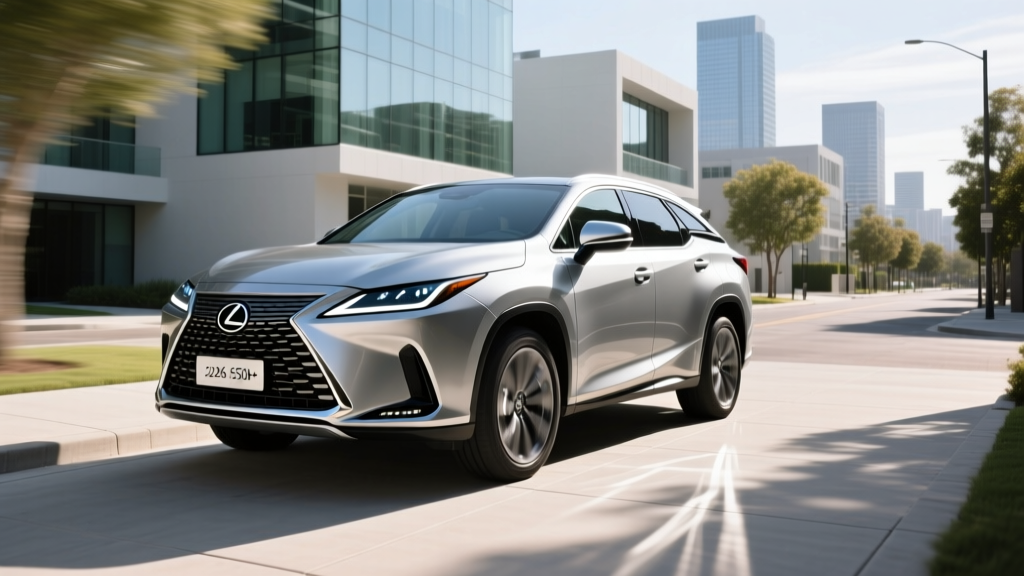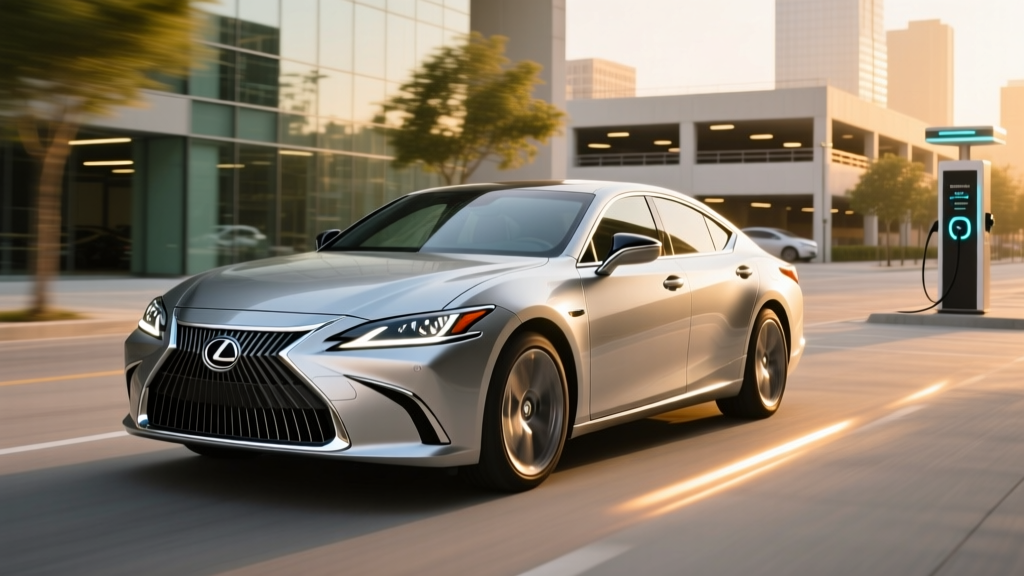
If you want luxury-sedan comfort without the plug-in commitment, the Lexus ES 300h hybrid remains one of the most compelling choices in its segment. Now in its eighth generation, the 2026 ES 300h pairs a 2.5-liter four-cylinder engine with Toyota's proven hybrid synergy drive to deliver exceptional fuel economy, a whisper-quiet cabin, and the reliability reputation that Lexus has built over three decades. This is a conventional hybrid (HEV), not a plug-in — meaning it charges itself through regenerative braking and the gas engine. No cord, no outlet, no range anxiety.
Below, we break down everything you need to know about the 2026 Lexus ES 300h hybrid: exact EPA MPG figures, real-world fuel economy expectations, powertrain specs, trim pricing, battery warranty details, and whether this sedan fits your driving life better than a PHEV or full EV.
HEV vs. PHEV: What the Lexus ES 300h Actually Is
A common point of confusion in the electrified-car market is the difference between a conventional hybrid and a plug-in hybrid. The Lexus ES 300h is a conventional hybrid electric vehicle (HEV). Here is what that means in practical terms:
| Feature | Conventional Hybrid (HEV) — ES 300h | Plug-In Hybrid (PHEV) |
|---|---|---|
| Plugs into an outlet? | No — self-charging via engine + regen | Yes — charges via Level 1/2 AC |
| Electric-only range | ~1 mile at very low speeds | Typically 20–45 miles |
| Battery size | ~1.6 kWh (nickel-metal hydride) | 13–25+ kWh (lithium-ion) |
| DC fast charging | No | Rarely; most PHEVs are AC-only |
| Federal tax credit (§30D) | Not eligible | Up to $7,500 if requirements met |
| Best for | Drivers without home charging access | Drivers with home charging + short commutes |
The ES 300h's small battery buffer is enough to let the electric motor assist the gas engine during acceleration, capture energy during braking, and enable brief low-speed electric-only movement (such as creeping through a parking lot). But it does not offer meaningful electric-only highway driving. If you want 30+ miles of electric range before the gas engine kicks in, you would need to look at a PHEV like the Lexus ES lineup's potential future PHEV variant or competitors like the BMW 550e xDrive.
Fuel Economy: EPA Ratings and Real-World MPG
The headline number for the 2026 Lexus ES 300h hybrid is its fuel efficiency. According to EPA data on fueleconomy.gov, the ES 300h achieves the following ratings:
| Metric | EPA Rating |
|---|---|
| City MPG | 43 MPG |
| Highway MPG | 44 MPG |
| Combined MPG | 44 MPG |
| Fuel tank capacity | 13.2 gallons |
| EPA estimated total range | ~581 miles |
Real-World MPG vs. EPA Sticker
Hybrids typically exceed their EPA city rating in stop-and-go traffic because regenerative braking recovers energy that a gas car would waste as heat. In our experience and aggregated owner reports, the ES 300h consistently returns 45–48 MPG in urban and suburban driving. Highway fuel economy tends to track closer to or slightly below the EPA number — expect 40–43 MPG at sustained 75 mph on flat terrain.
Cold weather impacts all vehicles, but hybrids see a smaller penalty than EVs. Expect a 3–5 MPG drop in freezing temperatures due to the engine running more frequently to maintain cabin heat and battery temperature. Even then, the ES 300h rarely dips below 38 MPG combined — a figure most gas-only luxury sedans cannot match in ideal conditions.
Powertrain Specs: Horsepower, Engine, and Driving Character
The 2026 Lexus ES 300h uses Toyota's fourth-generation hybrid synergy drive system. Here is the complete powertrain breakdown:
| Specification | 2026 Lexus ES 300h |
|---|---|
| Engine | 2.5L inline-4 Atkinson-cycle |
| Engine horsepower | 176 hp @ 5,700 rpm |
| Engine torque | 163 lb-ft @ 3,600–5,200 rpm |
| Electric motor output | 134 hp (front-mounted) |
| Net combined system output | 215 hp |
| Transmission | ECVT (electronically controlled CVT) |
| Drivetrain | Front-wheel drive |
| 0–60 mph | ~8.1 seconds |
| Hybrid battery | ~1.6 kWh nickel-metal hydride (NiMH) |
| Curb weight | ~3,785 lbs |
The 215 combined horsepower is adequate for merging and passing, though the ES 300h is tuned for refinement rather than sportiness. The ECVT is seamless — there are no fixed gear ratios, so acceleration is linear and free of shift shock. The trade-off is a slight drone under hard acceleration, but Lexus has done excellent work insulating the cabin from powertrain noise.
Regenerative braking feel is notably natural in the ES 300h. Unlike some hybrids and EVs with aggressive one-pedal modes, Lexus calibrates the regen to blend smoothly with the friction brakes. The transition from regenerative to mechanical braking is nearly imperceptible — a hallmark of Toyota/Lexus hybrid refinement.
Pricing, Trims, and Tax-Credit Eligibility
The 2026 Lexus ES 300h is available in several trims. Pricing below reflects MSRP before destination charges:
| Trim | MSRP (approx.) |
|---|---|
| ES 300h Base | $44,990 |
| ES 300h Premium | $47,490 |
| ES 300h Luxury | $51,390 |
| ES 300h F SPORT Design | $49,990 |
| ES 300h F SPORT Handling | $52,490 |
Federal Tax Credit Status
The Lexus ES 300h is a conventional hybrid, not a plug-in vehicle. Under IRS §30D rules, the federal clean vehicle credit applies only to plug-in electric vehicles (BEVs and PHEVs) that meet battery-capacity, critical-mineral sourcing, MSRP cap, and buyer income requirements. The ES 300h does not qualify for the federal EV tax credit.
However, some states offer incentives for conventional hybrids or for choosing high-efficiency vehicles. These vary by jurisdiction and change frequently — check your state's energy office or department of revenue for current programs. The ES 300h's fuel savings largely offset the lack of a federal credit over the ownership period.
Battery Warranty, Reliability, and Replacement Cost
Hybrid battery longevity is the single most common concern among first-time hybrid buyers. Here is what Lexus provides:
- Hybrid battery: 10 years / 150,000 miles (whichever comes first)
- Hybrid system components: 8 years / 100,000 miles
- Basic vehicle warranty: 4 years / 50,000 miles
- Powertrain warranty: 6 years / 70,000 miles
Real-World Battery Longevity
Toyota and Lexus have the longest track record in hybrid production of any automaker, dating back to the 1997 Prius. The ES 300h's nickel-metal hydride battery pack is deliberately sized small and managed conservatively — the system never fully charges or fully depletes it, staying within a narrow state-of-charge window that minimizes degradation. This is fundamentally different from a full EV battery, which cycles through a much wider range.
Based on data from Lexus hybrid models using similar NiMH packs, owners commonly report 150,000–200,000+ miles before any hybrid battery service is needed. Many first-generation Lexus hybrid owners have exceeded 250,000 miles on the original battery.
Replacement Cost If Needed
If the hybrid battery does eventually require replacement out of warranty, a new OEM pack from Lexus typically costs between $2,500 and $4,500 installed, depending on the dealer and region. Third-party refurbished or reconditioned NiMH packs are available for $1,500–$2,500 installed. This is dramatically less expensive than EV traction battery replacement, which can run $10,000–$20,000+.
Lexus consistently ranks at or near the top of IIHS safety ratings and J.D. Power dependability studies, and the ES line specifically has been a perennial reliability leader. The hybrid system adds complexity but has proven to be one of the most durable powertrains in the industry.
Who Should Choose the Lexus ES 300h Hybrid?
The ES 300h occupies a specific niche. Here is a practical decision framework:
Choose the Lexus ES 300h hybrid if:
- You drive 15,000+ miles per year and want to minimize fuel costs without plugging in
- You live in an apartment or lack access to home/workplace charging
- You prioritize cabin quietness and ride comfort over sporty handling
- You want a proven luxury sedan with top-tier reliability and resale value
- You take frequent road trips and don't want to plan around charging stops
Consider a PHEV instead if:
- You have home charging and a commute under 30 miles round-trip
- You want electric-only daily driving with gas-engine backup for road trips
- You want to qualify for the federal tax credit (up to $7,500 for eligible PHEVs)
Consider a full EV instead if:
- You have reliable home Level 2 charging
- Your daily driving is under 250 miles and you road-trip infrequently
- You want zero tailpipe emissions and minimal maintenance
- You want to qualify for the full federal EV tax credit and state incentives
Five-Year Ownership Cost Estimate
One of the ES 300h's strongest arguments is its low running cost. Here is a rough five-year / 75,000-mile comparison against a gas-only luxury sedan averaging 26 MPG combined, assuming $3.50/gallon fuel:
| Cost Category | Lexus ES 300h (44 MPG) | Gas Luxury Sedan (26 MPG) |
|---|---|---|
| Fuel cost (75,000 mi) | ~$5,966 | ~$10,096 |
| Estimated maintenance | ~$2,800 | ~$3,500 |
| Insurance (est. average) | ~$9,000 | ~$9,000 |
| 5-year total running cost | ~$17,766 | ~$22,596 |
| Fuel savings vs. gas | ~$4,130 over 5 years | |
The ES 300h also benefits from Lexus's strong resale value. According to industry depreciation data, the ES line retains roughly 50–55% of its value after five years — significantly better than most European luxury sedans.
Pros and Cons
Pros
- 44 MPG combined EPA — among the best in any luxury sedan
- No plug-in required — ideal for apartment dwellers and road-trippers
- 10-year / 150,000-mile hybrid battery warranty
- Exceptional cabin quietness and ride quality
- Strong reliability record and resale value
- Standard Lexus Safety System+ 2.5 (adaptive cruise, lane tracing, pre-collision)
Cons
- No federal EV/PHEV tax credit eligibility
- 215 hp is adequate but not quick — 8.1s to 60 mph
- FWD only — no AWD option (available on the gas ES 250)
- Infotainment still uses a touchpad interface on lower trims
- NiMH battery is older tech vs. lithium-ion (but proven durable)
- No plug-in hybrid ES variant currently offered
Frequently Asked Questions
How many MPG does the Lexus ES 300h hybrid get?
The 2026 Lexus ES 300h is EPA-rated at 43 MPG city, 44 MPG highway, and 44 MPG combined. In real-world city-heavy driving, owners frequently report 45–48 MPG thanks to regenerative braking efficiency in stop-and-go traffic.
Does the Lexus ES 300h need to be plugged in?
No. The ES 300h is a conventional hybrid (HEV), not a plug-in. Its small battery charges automatically through the gas engine and regenerative braking. You simply fill it with gas and drive.
How far can the ES 300h go on electric power alone?
Only about 1 mile at very low speeds (under 25 mph) in ideal conditions. The electric motor primarily assists the gas engine rather than replacing it. For meaningful electric-only range (20–40 miles), you would need a plug-in hybrid.
Is the Lexus ES 300h hybrid reliable?
Yes. Lexus and Toyota have produced hybrids since 1997, and the ES 300h benefits from one of the most mature hybrid powertrains in the industry. The hybrid battery is warrantied for 10 years / 150,000 miles, and real-world data shows many packs lasting 200,000+ miles.
What does a Lexus ES 300h hybrid battery replacement cost?
If needed out of warranty, a new OEM hybrid battery costs approximately $2,500–$4,500 installed at a Lexus dealer. Refurbished packs are available for $1,500–$2,500. This is far less than EV battery replacement.
Does the Lexus ES 300h qualify for any tax credit?
The ES 300h does not qualify for the federal §30D clean vehicle tax credit because it is a conventional hybrid, not a plug-in vehicle. Some states may offer efficiency-based incentives — check your state's current programs. The fuel savings (~$825/year vs. a 26 MPG gas sedan) partially offset the lack of a federal credit.
Hybrid vs. PHEV vs. EV — which should I choose?
Choose the ES 300h hybrid if you lack home charging, drive long distances, or want the simplest ownership experience. Choose a PHEV if you have home charging and want electric-only commuting with gas backup. Choose a full EV if you have reliable home charging, drive under 250 miles daily, and want zero tailpipe emissions with minimal maintenance.