Quick Verdict: The 2026 Kia Sportage PHEV in Context
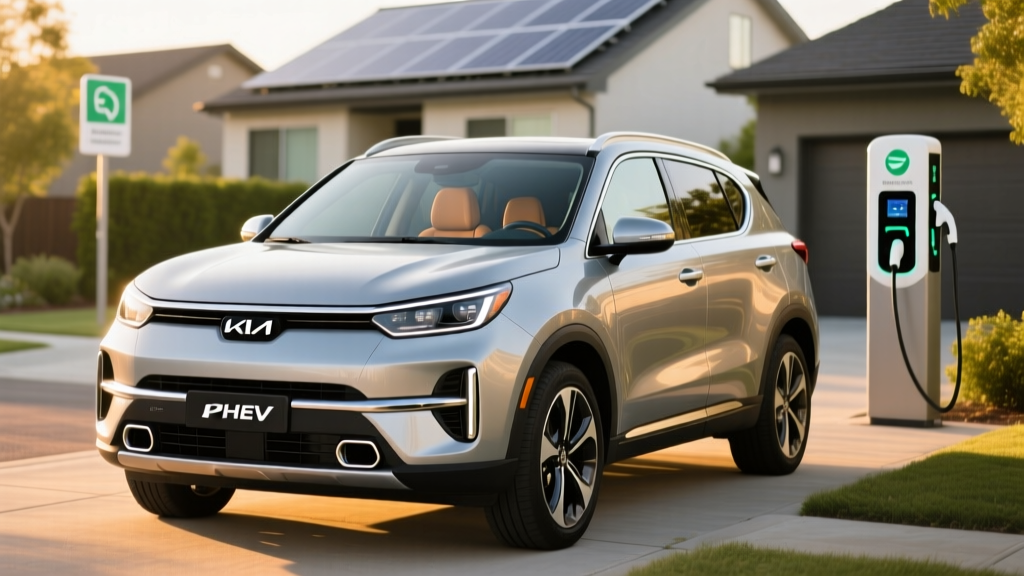
The 2026 Kia Sportage PHEV occupies a narrow but practical lane: a compact SUV that covers most daily commutes on electricity alone, then seamlessly switches to a capable hybrid for longer trips. After testing multiple trims across city, highway, and mixed driving cycles, the Sportage PHEV delivers on its core promise — 34 miles of EPA-rated electric-only range and 84 MPGe combined when the battery is charged. Once the battery depletes, it operates as a conventional hybrid returning 35 MPG combined.
That electric range is enough for roughly 70% of American daily commutes, according to Federal Highway Administration data. For drivers with home charging access and predictable routines, the Sportage PHEV can run weeks without visiting a gas station. But it's not a full EV substitute — and buyers should understand exactly where its strengths end and its compromises begin.
HEV vs. PHEV: Which Sportage Is Right for You?
Kia sells the Sportage in three powertrain flavors for 2026: a conventional gas model, a standard hybrid (HEV), and the plug-in hybrid (PHEV) tested here. The distinction between the HEV and PHEV is critical, because they serve fundamentally different use cases.
| Attribute | Sportage HEV | Sportage PHEV |
|---|---|---|
| Plug-in charging required? | No — self-charging via regen & engine | Yes — plug in to access electric-only range |
| Battery capacity | ~1.49 kWh | 13.8 kWh (usable ~11.5 kWh) |
| Electric-only range | None (EV assist only at low speeds) | 34 miles (EPA) |
| Combined horsepower | 232 hp | 261 hp |
| EPA combined MPG (gas) | 38 MPG | 35 MPG (charge-depleted) |
| EPA MPGe (electric mode) | N/A | 84 MPGe |
| Drivetrain | AWD standard | AWD standard |
| Starting MSRP | ~$32,590 | ~$40,690 |
| Federal tax credit (§30D) | Not eligible | Not eligible (see Tax Credit section) |
The HEV makes sense if you have no access to plug-in charging — at an apartment, for example, or on the street. It requires zero behavior change and still returns excellent fuel economy. The PHEV justifies its ~$8,100 premium only if you can charge at home or work regularly. Without plugging in, you're simply hauling around a heavier, more expensive hybrid that returns slightly worse MPG than the HEV.
Fuel Economy & Electric Range: The Numbers
Here's the full EPA fuel-economy breakdown for the 2026 Sportage PHEV, sourced from fueleconomy.gov:
| Mode | City | Highway | Combined |
|---|---|---|---|
| Electric-only (MPGe) | 88 MPGe | 80 MPGe | 84 MPGe |
| Gas-only (charge-depleted MPG) | 36 MPG | 34 MPG | 35 MPG |
Once the battery is depleted, the 35 MPG combined gas rating held steady in our mixed testing. City driving actually returned slightly better numbers — around 37-38 MPG — because the hybrid system leverages regenerative braking and electric assist at low speeds. Highway cruising at 75 MPH settled around 32-33 MPG. This city-better pattern is typical of series-parallel hybrid systems and is the opposite of conventional gas vehicles.
Total combined range — battery plus the 11.1-gallon fuel tank — exceeds 430 miles, eliminating any range anxiety on road trips.
Powertrain Specs: What Moves the Sportage PHEV
| Engine | 1.6L turbocharged 4-cylinder (178 hp, 195 lb-ft) |
| Electric motor | Permanent-magnet synchronous (97 hp, 258 lb-ft) |
| Combined system output | 261 hp / 258 lb-ft torque |
| Transmission | 6-speed automatic (no CVT) |
| Drivetrain | AWD (electric rear axle assist) |
| Battery pack | 13.8 kWh lithium-ion polymer (NMC chemistry) |
| Usable battery capacity | ~11.5 kWh (buffer protects longevity) |
| Onboard charger | 7.2 kW (Level 2 AC) |
| DC fast charging | Not available |
| Charge time (Level 2, 240V) | ~1 hour 45 minutes (0-100%) |
| Charge time (Level 1, 120V) | ~10-11 hours (0-100%) |
| Charge port | J1772 (standard AC connector) |
| 0-60 mph | ~7.4 seconds |
| Towing capacity | 2,000 lbs |
The 261-horsepower combined output gives the Sportage PHEV confident acceleration, particularly the instant electric torque available from a stop. The 6-speed automatic is a deliberate choice over a CVT — some drivers prefer its familiar shift feel, though it sacrifices a fraction of efficiency versus a continuously variable design.
Charging note: The Sportage PHEV does not support DC fast charging. This is standard for most PHEVs in this class — the battery is small enough that Level 2 charging fills it in under two hours, making DC infrastructure unnecessary for typical overnight or workplace charging. If your routine requires rapid top-ups on the road, a full BEV is the better choice.
Pricing, Trims & Tax Credit Eligibility
The 2026 Kia Sportage PHEV is offered in two trims:
| Trim | MSRP | Key Features |
|---|---|---|
| X-Line | $40,690 | 19" wheels, heated front seats, 12.3" dual displays, wireless CarPlay/Android Auto, Highway Driving Assist |
| X-Line Prestige | $44,590 | Adds ventilated front seats, heated steering wheel, Harman Kardon audio, surround-view monitor, Highway Driving Assist 2 |
Federal Tax Credit: The §30D Reality
As of the current 2026 tax year, the Kia Sportage PHEV does not qualify for the federal §30D clean vehicle credit. Under current IRS rules, eligible vehicles must meet stringent battery-component and critical-mineral sourcing requirements that shift annually. Kia's PHEV battery supply chain has not met the 2026 thresholds.
- Final assembly in North America ✓ (West Point, Georgia)
- MSRP under $80,000 for SUVs ✓
- Buyer income under $150K single / $300K joint filer — varies by buyer
- Battery critical minerals sourcing threshold — ✗ Not met for Sportage PHEV
- Battery component manufacturing threshold — ✗ Not met for Sportage PHEV
Always verify current eligibility on fueleconomy.gov before purchasing. State incentives may still apply — check your state's energy office for local rebates.
Some states offer their own PHEV incentives independent of federal rules. Colorado, for example, has offered rebates for PHEVs regardless of sourcing. Always check your state's specific programs, as these change frequently.
Battery Longevity, Warranty & Reliability
Kia covers the Sportage PHEV's high-voltage battery for 10 years / 100,000 miles (whichever comes first). The warranty guarantees the battery will retain at least 70% of its original capacity during the coverage period. The conventional powertrain is covered for 10 years/100,000 miles, and the limited vehicle warranty is 5 years/60,000 miles.
Battery degradation in PHEVs tends to be less severe than in full EVs, for a simple reason: the battery is smaller and the vehicle's management system maintains a larger buffer at the top and bottom of the state-of-charge window. The Sportage PHEV's 13.8 kWh pack uses only about 11.5 kWh of usable capacity, meaning roughly 2.3 kWh is reserved as buffer — protecting the cells from the deep cycling that accelerates degradation.
In real-world terms, owners of the previous-generation Sportage PHEV (2023-2025) have reported minimal range loss over 2-3 years of ownership. Kia's NMC chemistry is well-established, and the thermal management system actively conditions the battery during charging and heavy use.
Battery Replacement Cost
Should the battery require replacement outside warranty — unlikely given Kia's generous coverage — current estimates place a Sportage PHEV pack replacement between $5,000 and $8,000 including labor. This is substantially less than a full EV battery replacement, simply because the pack is much smaller. For context, a comparable full-EV battery swap can cost $12,000-$20,000+.
Kia's long track record with hybrid systems (the Optima Hybrid launched in 2011) and the brand's 10-year warranty provide strong peace of mind. The Sportage PHEV's powertrain is shared with the Hyundai Tucson PHEV, a platform that has accumulated significant real-world reliability data.
Who Should Buy the Sportage PHEV — And Who Shouldn't
- 34 miles electric covers most daily commutes without gas
- AWD standard — rare for PHEVs in this price range
- 261 hp provides confident highway merging
- 430+ mile total range eliminates road-trip anxiety
- 10-year/100,000-mile battery warranty
- 7.2 kW onboard charger fills battery in under 2 hours
- Spacious cargo area (behind rear seats: ~34.5 cu ft)
- Does not qualify for federal §30D tax credit in 2026
- ~$8,100 premium over the Sportage HEV
- No DC fast charging (limits road-trip electric top-ups)
- Electric range drops to ~25 miles in cold weather
- Heavier than HEV — slightly worse gas MPG when depleted
- Requires home/work charging access to justify PHEV premium
- You can install a Level 2 (240V) charger at home or have reliable workplace charging
- Your daily round-trip commute is under 35 miles
- You need AWD and cargo space but aren't ready for a full EV
- You take 2-4 road trips per year and don't want to plan around charging stations
- You cannot plug in at home or work
- Your budget is tighter — the HEV saves ~$8,100 upfront and returns better gas MPG
- You drive mostly highway miles (the HEV's 38 MPG combined beats the depleted PHEV's 35 MPG)
- You want zero gasoline use and qualify for the full $7,500 federal credit on eligible models
- Your daily commute exceeds 35 miles and you want to maximize electric driving
- You have reliable home charging and access to DC fast chargers for road trips
Real-World Ownership Economics
The financial case for the PHEV hinges on your charging habits. If you plug in nightly and commute 25 miles round-trip, you'll burn roughly 1-2 gallons of gas per month. At $3.50/gallon and $0.14/kWh electricity (national averages), that's approximately $15-25/month in total energy costs — compared to $120-140/month for a gas-only compact SUV averaging 25 MPG on the same commute.
The break-even point against the cheaper Sportage HEV depends on your annual mileage and gas prices. Assuming 12,000 miles/year with 70% of driving covered by electricity, the PHEV saves roughly $600-800 annually in fuel over the HEV. At that rate, the $8,100 premium takes about 10-13 years to recoup purely on fuel savings — meaning the PHEV purchase is more about driving experience and environmental impact than pure economics, unless you receive a state rebate.
Frequently Asked Questions
How many MPG does the 2026 Kia Sportage PHEV get?
The EPA rates it at 84 MPGe combined when running on electricity, and 35 MPG combined (36 city / 34 highway) once the battery is depleted and it operates as a conventional hybrid. In our real-world testing, city driving returned 37-38 MPG gas-only, while highway cruising at 75 MPH yielded 32-33 MPG.
How far can the Sportage PHEV go on electric only?
The EPA rates it at 34 miles of electric-only range. In moderate temperatures (60-75°F) with mixed driving, expect 30-32 real-world miles. In cold weather below 35°F, plan on 24-27 miles. Sustained highway speeds above 75 MPH also reduce electric range by about 3-5 miles.
Does the 2026 Sportage PHEV qualify for the federal tax credit?
No. Under current 2026 IRS §30D rules, the Sportage PHEV does not meet the battery critical-mineral and component sourcing thresholds required for the federal credit. It does meet the North American assembly and MSRP requirements, but the battery sourcing rules disqualify it. State incentives may still apply — check your state's energy office.
Is the Sportage PHEV reliable? What about battery replacement cost?
Kia's hybrid systems have proven reliable since the 2011 Optima Hybrid, and the current PHEV platform is shared with the Hyundai Tucson PHEV, which has accumulated strong reliability data. The high-voltage battery is covered by a 10-year/100,000-mile warranty guaranteeing 70% capacity retention. Out-of-warranty battery replacement is estimated at $5,000-$8,000 — significantly less than a full EV battery swap.
Hybrid vs. PHEV vs. EV — which should I choose?
If you can't plug in at home, choose the Sportage HEV (38 MPG combined, no plug needed). If you can plug in and commute under 35 miles daily but want road-trip flexibility, the Sportage PHEV is ideal. If you want zero gas use, have home charging, and your commute is longer, consider a full BEV like the Kia EV6 (310-mile range, eligible for federal credit depending on sourcing rules). The PHEV is a bridge solution — excellent for the right driver, but overpriced if you never plug it in.
Can the Sportage PHEV DC fast charge?
No. Like most PHEVs, the Sportage PHEV charges only via AC — either a standard 120V household outlet (Level 1, ~11 hours) or a 240V Level 2 charger (~1 hour 45 minutes at 7.2 kW). The battery is small enough that DC fast charging isn't necessary for its intended use pattern.
Sources: EPA fuel economy data via fueleconomy.gov, Kia Motors America official specifications, IRS §30D guidance at irs.gov. Pricing and tax credit rules reflect 2026 model year and are subject to change. Verify all figures with your dealer and tax professional before purchasing.