Quick Verdict: The Sweet Spot in Kia's Hybrid Lineup
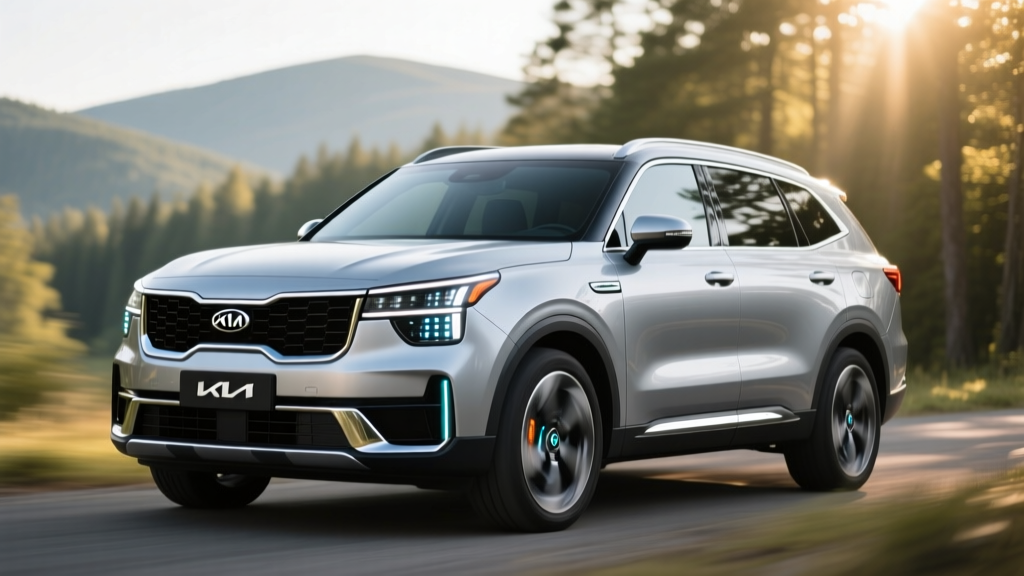
The 2026 Kia Sorento Hybrid X-Line SX Prestige sits at the top of Kia's conventional hybrid (HEV) trim ladder, bundling all-wheel drive, a turbocharged powertrain, and premium interior appointments into a midsize SUV that never needs to be plugged in. For buyers who want hybrid fuel savings without the lifestyle change of a plug-in hybrid (PHEV) or full battery-electric vehicle (BEV), this trim delivers meaningful efficiency — EPA-estimated 34 MPG combined — with the cargo space and ground clearance that families actually need.
The X-Line SX Prestige adds rugged styling cues, an 8-speed automatic transmission (not the CVT found in lower trims), and Kia's full suite of driver-assistance tech. At roughly $47,000 before destination, it is the most expensive Sorento Hybrid you can buy, but it undercuts comparably equipped competitors like the Toyota Highlander Hybrid Limited by several thousand dollars.
| Specification | Value |
|---|---|
| Powertrain Type | Conventional Hybrid (HEV) — no plug-in required |
| Engine | 1.6L turbocharged 4-cylinder + electric motor |
| Combined Horsepower | 232 hp |
| Combined Torque | 258 lb-ft |
| Transmission | 6-speed automatic (X-Line trims) |
| Drivetrain | AWD (standard on all Sorento Hybrid trims) |
| EPA MPG (City / Hwy / Combined) | 34 / 34 / 34 |
| Battery Chemistry | Lithium-ion polymer (~1.49 kWh, self-charging) |
| 0–60 mph | ~7.7 seconds |
| Cargo Volume (behind 2nd / 3rd row) | 45.0 / 12.6 cu ft |
| Towing Capacity | 2,000 lbs |
| Base MSRP (X-Line SX Prestige) | ~$46,790 + $1,375 destination |
| Hybrid Battery Warranty | 10 years / 100,000 miles |
| Federal EV Tax Credit | Not eligible (conventional HEV, not PHEV/BEV) |
Fuel Economy: What the EPA Says vs. Real-World Driving
The 2026 Sorento Hybrid carries an EPA estimate of 34 MPG city, 34 MPG highway, and 34 MPG combined across all AWD trims, including the X-Line SX Prestige. This parity between city and highway is typical of conventional hybrids — the electric motor assists most during low-speed stop-and-go driving, while the gasoline engine carries the load at sustained highway speeds.
| Driving Cycle | EPA MPG |
|---|---|
| City | 34 MPG |
| Highway | 34 MPG |
| Combined | 34 MPG |
Real-World MPG: What Owners Actually See
Conventional hybrids frequently exceed their EPA city estimates in real-world driving because regenerative braking recaptures more energy in heavy traffic than the EPA test cycle simulates. In mixed suburban driving with moderate stop-and-go conditions, owners of the current-generation Sorento Hybrid commonly report 35–38 MPG in city-heavy commutes. Highway-only driving at 75+ mph typically yields 30–32 MPG, as aerodynamic drag reduces the hybrid system's advantage.
Cold weather reduces fuel economy by roughly 5–10% due to increased engine warm-up time and cabin heating demand. Expect 30–32 MPG combined in winter months in northern climates, rebounding to the mid-30s in mild weather. According to fueleconomy.gov, the Sorento Hybrid's combined 34 MPG gives it an estimated annual fuel cost of approximately $1,650 based on 15,000 miles driven and $3.50/gallon regular unleaded.
HEV vs. PHEV vs. EV: Which Sorento Is Right for You?
Kia offers the Sorento in three electrified forms for 2026: the conventional Hybrid (HEV), the Plug-in Hybrid (PHEV), and a fully electric variant is not offered (buyers looking for a Kia electric SUV should consider the EV9). Understanding the distinction is essential before committing to a trim.
| Attribute | Sorento Hybrid (HEV) | Sorento Plug-In Hybrid (PHEV) |
|---|---|---|
| Plug-in Charging Required? | No — self-charging via engine + regen | Yes — plug in for electric-only range |
| Electric-Only Range | None (motor assists engine) | ~32 miles (EPA est.) |
| EPA Combined MPG / MPGe | 34 MPG | 79 MPGe (electric+gas) / 35 MPG (gas only) |
| Battery Size | ~1.49 kWh | ~13.8 kWh |
| Charging Time (Level 2, 240V) | N/A | ~3.5 hours (0–100%) |
| DC Fast Charging | N/A | Not available |
| Combined Horsepower | 232 hp | 261 hp |
| Federal Tax Credit (§30D) | Not eligible | Up to $7,500 (subject to eligibility rules) |
| Starting MSRP (top trim) | ~$46,790 (X-Line SX Prestige) | ~$53,000+ (SX Prestige) |
Choose the Sorento Hybrid (HEV) If:
- You lack access to home or workplace charging (apartment, street parking)
- You want a simpler ownership experience with no charging cables or apps
- Your budget is under $50,000 and you don't qualify for the federal PHEV credit
- You drive long highway stretches where PHEV electric range provides minimal benefit
Choose the Sorento PHEV If:
- You can install a Level 2 (240V) home charger
- Your daily commute is under 30 miles round-trip (covering most days on electricity alone)
- You qualify for the full $7,500 §30D federal tax credit, which narrows the price gap significantly
- You want the 261 hp powertrain upgrade
Powertrain Deep Dive: Turbo Four + Electric Motor
The 2026 Sorento Hybrid uses Kia's Smartstream 1.6-liter turbocharged gasoline direct-injection (GDI) 4-cylinder engine paired with a 47.7 kW (64 hp) electric motor embedded in the transmission housing. Combined system output is 232 horsepower and 258 lb-ft of torque. Unlike the lower Sorento Hybrid trims that use a conventional automatic, the X-Line SX Prestige retains the 6-speed automatic transmission with a traditional torque converter — not a continuously variable transmission (CVT). This matters for driving feel: shifts are perceptible and linear, avoiding the rubber-band sensation some drivers dislike in CVT hybrids.
All-wheel drive is standard across every Sorento Hybrid trim. The system uses the electric motor and a coupling on the rear axle to distribute torque, providing confident traction in rain and light snow without the fuel-economy penalty of a traditional mechanical AWD system. The X-Line badge adds 0.4 inches of ground clearance (8.3 inches total) and unique bumpers for a more rugged appearance, though this is primarily cosmetic — the X-Line is not an off-road specialist.
The 0–60 mph time of approximately 7.7 seconds is adequate for highway merging and passing. The 258 lb-ft of torque, available low in the rev range thanks to electric motor assist, gives the Sorento Hybrid a responsive feel around town that belies its four-cylinder displacement. For comparison, the non-hybrid Sorento with the 2.5L turbo produces 281 hp but returns only 24 MPG combined.
Pricing, Trims, and Tax Credit Reality
The 2026 Kia Sorento Hybrid X-Line SX Prestige carries a base MSRP of approximately $46,790, plus a $1,375 destination charge, for an all-in starting price near $48,165. This trim includes:
- SynTex leatherette seating surfaces with heated and ventilated front seats
- Heated steering wheel
- 12.3-inch dual panoramic displays (instrument cluster + infotainment)
- Harman Kardon premium audio system
- Highway Driving Assist 2 (HDA2) with lane-centering and adaptive cruise
- Surround-view monitor and blind-spot view cameras
- Power smart liftgate
- 19-inch alloy wheels with all-season tires
Tax Credit Eligibility
Federal Tax Credit Status: The Sorento Hybrid (HEV) does not qualify for the IRS §30D Clean Vehicle Credit. This credit applies exclusively to plug-in electric vehicles (BEVs and PHEVs) with batteries of at least 7 kWh. The Sorento HEV's ~1.49 kWh battery is far below this threshold. The Sorento PHEV may qualify for up to $7,500, subject to MSRP caps ($80,000 for SUVs), buyer income limits ($150K single / $300K joint), and critical mineral/battery component sourcing requirements. Always verify current eligibility on IRS.gov or consult a tax professional before purchase.
Some states offer additional incentives for hybrid purchases, though these are far less common than EV incentives. Check your state's energy office or department of environmental quality for any local rebates.
Reliability, Battery Warranty, and Long-Term Costs
Hybrid battery longevity is the single most common concern among first-time hybrid buyers. The 2026 Sorento Hybrid uses a lithium-ion polymer battery pack that is substantially smaller and less stressed than a full EV battery — it cycles through shallow charge/discharge ranges rather than deep drains, which significantly extends its operational lifespan.
Kia Hybrid Battery Warranty: Kia covers the Sorento Hybrid's battery and all hybrid-system components (electric motor, inverter, control electronics) for 10 years or 100,000 miles, whichever comes first. This is among the strongest hybrid warranties in the industry and matches Toyota's coverage. The basic vehicle warranty is 5 years / 60,000 miles, and the powertrain warranty is 10 years / 100,000 miles.
Battery Replacement Cost
If the hybrid battery requires replacement outside of warranty coverage — typically at 150,000+ miles based on current lithium-ion hybrid pack longevity data — expect a cost in the range of $2,000–$3,500 for the battery module, plus labor. This is far less than a full EV battery replacement because the pack is small (~1.49 kWh). For context, the Toyota Camry Hybrid battery replacement runs $2,000–$4,000, and the Sorento's cost falls in a similar band. Many hybrid batteries outlast 200,000 miles with minimal degradation.
General Reliability Outlook
Kia's hybrid powertrain has proven reliable in the current generation (introduced for the 2023 model year refresh). The 1.6L turbo hybrid system shares architecture with the Hyundai Tucson Hybrid and Santa Fe Hybrid, which have accumulated substantial real-world mileage data. Common maintenance items are identical to any gasoline vehicle: oil changes, brake pads (which last longer due to regenerative braking), tires, and cabin air filters. The hybrid system itself requires no scheduled maintenance beyond occasional inverter coolant checks.
Pros
- 34 MPG combined in a 3-row AWD SUV — no plug-in needed
- Strong 10-year / 100,000-mile hybrid battery warranty
- X-Line SX Prestige is well-equipped at ~$48K all-in
- Conventional 6-speed automatic — no CVT drone
- Standard AWD across all hybrid trims
- Usable third row for occasional passengers
Cons
- No federal tax credit eligibility (HEV, not PHEV)
- Third-row cargo space is tight (12.6 cu ft behind 3rd row)
- Towing limited to 2,000 lbs (PHEV and gas models tow more)
- X-Line styling adds weight, marginally hurting efficiency vs. non-X-Line
- No DC fast charging (not applicable to HEV, but worth noting vs. PHEV)
- Turbo engine requires premium fuel for maximum performance (regular acceptable with slight power reduction)
Who Should Buy the Sorento Hybrid X-Line SX Prestige?
Choose the 2026 Sorento Hybrid X-Line SX Prestige if: You need a 3-row family SUV with AWD, want to cut fuel costs by 30–40% versus the gasoline Sorento (24 MPG combined), and cannot or do not want to install a home charger. It's ideal for apartment dwellers, street-parkers, and high-mileage commuters who rack up highway miles where PHEV electric range would be irrelevant.
Look at the Sorento PHEV instead if: You have home Level 2 charging and a short daily commute. The $7,500 federal credit (if you qualify) can bring the PHEV's effective price close to this HEV trim, and you'll drive most weekdays on electricity alone at a cost of ~$0.04/mile versus ~$0.11/mile on gasoline.
Look at a full EV (like the Kia EV9) if: You want zero tailpipe emissions, qualify for the full tax credit, have reliable home charging, and don't need a third row often. The EV9 starts higher but eliminates oil changes, reduces brake wear, and offers 200+ miles of range with DC fast charging.
Ownership Costs: 5-Year Estimate
| Category | Estimated Cost |
|---|---|
| Fuel (15,000 mi/yr, 34 MPG, $3.50/gal) | ~$7,720 |
| Insurance (national avg. midsize SUV) | ~$9,500 |
| Maintenance (oil, brakes, tires, filters) | ~$3,200 |
| Depreciation (est. 45% over 5 years) | ~$21,500 |
| Federal Tax Credit | $0 (HEV not eligible) |
| Total Estimated 5-Year Cost | ~$41,920 |
For comparison, the gasoline Sorento EX AWD (24 MPG combined, ~$42,000 MSRP) would cost approximately $11,720 in fuel over the same period — a $4,000 fuel savings with the hybrid over five years. Factor in the hybrid's higher MSRP (~$4,800 more than the gas EX AWD), and the break-even point on fuel savings alone is roughly six years for the average driver. However, the hybrid's stronger resale value and reduced brake wear (regenerative braking extends pad life by 30–50%) improve the equation.
Frequently Asked Questions
How many MPG does the 2026 Kia Sorento Hybrid X-Line SX Prestige get?
The EPA rates it at 34 MPG city, 34 MPG highway, and 34 MPG combined. Real-world results typically range from 30 MPG (highway-heavy, cold weather) to 38 MPG (city-heavy, mild weather).
Does the Sorento Hybrid need to be plugged in?
No. The Sorento Hybrid is a conventional hybrid (HEV). Its small battery recharges automatically through the gasoline engine and regenerative braking. You simply fill it with gas like any other car. If you want plug-in capability, look at the Sorento PHEV.
How far can the Sorento Hybrid drive on electric power alone?
The conventional Sorento Hybrid cannot drive on electric power alone for any meaningful distance. The electric motor assists the gasoline engine but does not propel the vehicle independently at speed. The Sorento PHEV offers approximately 32 miles of electric-only range.
Does the 2026 Sorento Hybrid qualify for any federal tax credit?
No. The IRS §30D Clean Vehicle Credit applies only to plug-in vehicles (BEVs and PHEVs) with battery packs of at least 7 kWh. The Sorento Hybrid's ~1.49 kWh battery does not meet this threshold. The Sorento PHEV may qualify for up to $7,500, subject to income, MSRP, and battery-sourcing requirements.
Is the Sorento Hybrid reliable, and what does a battery replacement cost?
Kia's hybrid system has a strong reliability record, backed by a 10-year / 100,000-mile hybrid battery warranty. Out-of-warranty battery replacement typically costs $2,000–$3,500, though most hybrid batteries last well beyond 150,000 miles with minimal degradation.
What is the difference between the X-Line and regular Sorento Hybrid trims?
X-Line trims add rugged exterior styling (unique bumpers, roof rails, black exterior trim), slightly increased ground clearance (8.3 inches vs. 7.9 inches), and standard 19-inch wheels. The powertrain and fuel economy are identical to non-X-Line Sorento Hybrid trims. The SX Prestige designation adds premium interior features like ventilated seats, the Harman Kardon audio system, and Highway Driving Assist 2.
Can the Sorento Hybrid tow?
Yes, but with a 2,000-pound towing capacity, the Sorento Hybrid is limited to light trailers, small boats, or bike racks. The gasoline Sorento (turbo 2.5T) and Sorento PHEV both tow up to 3,500 pounds. If towing is a priority, the hybrid is not the optimal choice.
How does the Sorento Hybrid compare to the Toyota Highlander Hybrid?
The Highlander Hybrid offers slightly better fuel economy (35 MPG combined) and a larger third row, but starts at a higher price and lacks the X-Line's rugged styling. The Sorento Hybrid X-Line SX Prestige undercuts a comparably equipped Highlander Hybrid Limited by roughly $3,000–$5,000 while offering similar features and a more engaging transmission (6-speed auto vs. CVT).