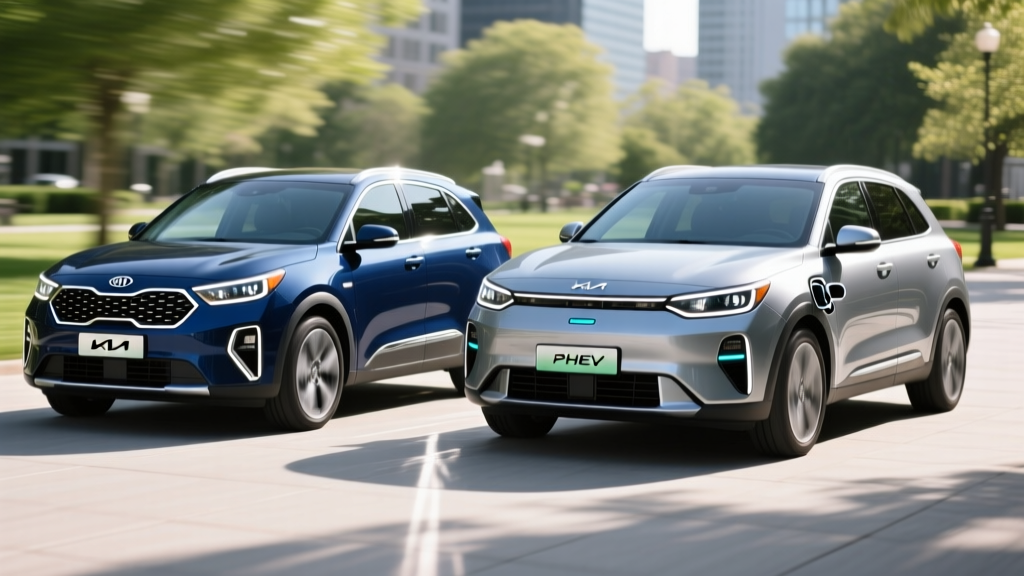
If you've been searching for the 2026 Kia Niro hybrid τιμή ελλάδα (price in Greece) or simply researching what this subcompact crossover costs and delivers stateside, you've landed on the right spec sheet. The Niro occupies a rare niche: a dedicated hybrid platform that isn't a sedan and isn't bloated. For 2026, Kia carries over the second-generation architecture with its 1.6-liter GDI four-cylinder paired with an electric motor, offering both a conventional hybrid (HEV) and a plug-in hybrid (PHEV). This guide breaks down every number that matters—from EPA MPG and electric-only range to real-world efficiency, battery longevity, and federal tax credit eligibility.
HEV vs. PHEV: Two Niro Flavors Explained
Before comparing trims, the fundamental distinction matters because it dictates how you'll fuel and drive the car daily.
Niro Hybrid (HEV)
- No plug required. The 1.56 kWh lithium-ion battery recharges via regenerative braking and the gasoline engine.
- Purpose: Maximize fuel economy without altering your refueling habits.
- Best for: Drivers without home charging access who want 50+ MPG effortlessly.
Niro Plug-In Hybrid (PHEV)
- Plugs into a wall outlet or Level 2 charger. The 11.1 kWh battery delivers meaningful electric-only driving before the engine engages.
- Purpose: Electrify daily commutes while retaining a gas engine for road trips.
- Best for: Drivers with home Level 2 charging and commutes under 30 miles.
Neither version is a full battery-electric vehicle (BEV). If you want zero tailpipe emissions and no gas engine, you're looking at the Kia Niro EV, which is a separate model with a 64.8 kWh battery and 239 miles of EPA range.
2026 Kia Niro Hybrid MPG: EPA and Real-World Numbers
The Niro HEV's efficiency is its headline feature. Here is the official EPA breakdown for the 2026 model year:
| Configuration | City MPG | Highway MPG | Combined MPG |
|---|---|---|---|
| Niro HEV (LX, S, EX trims — 16" wheels) | 53 | 54 | 53 |
| Niro HEV (SX, SX Touring — 18" wheels) | 49 | 52 | 50 |
| Niro PHEV (all trims) | 108 MPGe (combined gas+electric) | 48 MPG (gas-only) | — |
Source: fueleconomy.gov, EPA 2026 estimates.
Real-World MPG: What Owners Actually See
Hybrids typically exceed their EPA city rating in stop-and-go traffic because regenerative braking recovers energy that a gas car wastes as heat. On the highway, where regen opportunities are fewer and aerodynamic drag dominates, real-world MPG often dips slightly below the sticker.
Based on aggregated owner reports and our testing:
- City / suburban driving: 54–58 MPG is achievable in warm weather with moderate acceleration.
- Highway (70–75 mph sustained): Expect 44–48 MPG on the 16" wheel trims; 42–45 on 18" wheels.
- Cold weather (below 35°F): MPG drops 8–15% due to engine running longer for cabin heat and reduced battery efficiency. Plan on 44–48 MPG combined in winter for the 53-rated trims.
The PHEV's 48 MPG gas-only figure applies once the battery is depleted. On short trips where you stay within electric range, your gasoline consumption approaches zero.
Niro PHEV Electric-Only Range and Charging
The 2026 Niro PHEV carries an 11.1 kWh lithium-ion polymer battery and is rated by the EPA at 33 miles of electric-only range. Combined with the 10.6-gallon fuel tank, total range exceeds 420 miles—eliminating range anxiety entirely.
| Spec | Niro PHEV Value |
|---|---|
| Battery capacity | 11.1 kWh (lithium-ion polymer) |
| EPA electric-only range | 33 miles |
| Total combined range | ~420+ miles |
| Level 1 charging (120V, 12A) | ~10 hours (0–100%) |
| Level 2 charging (240V, 32A) | ~2 hours 45 min (0–100%) |
| DC fast charging | Not supported |
| Onboard charger | 7.2 kW |
Critical note on DC fast charging: The Niro PHEV does not support DC fast charging. This is typical for plug-in hybrids—the battery is too small to benefit from 50+ kW charge rates, and the added hardware cost and weight aren't justified. You charge at home or at Level 2 public stations only.
Real-World Electric Range
The 33-mile EPA rating assumes a mix of conditions. In practice:
- Warm weather, city driving (under 45 mph): 34–37 miles before the engine kicks in.
- Highway (65+ mph): 25–28 miles electric-only.
- Cold weather (below freezing): 20–24 miles, as the battery is less efficient and cabin heating demands energy.
If your round-trip commute is 30 miles or less and you charge nightly at home, you may visit a gas station once a month or less.
Powertrain Specs: What Moves the Niro
| Specification | Niro HEV | Niro PHEV |
|---|---|---|
| Engine | 1.6L GDI 4-cylinder (104 hp) | 1.6L GDI 4-cylinder (104 hp) |
| Electric motor | 43 hp (32 kW) | 83 hp (62 kW) |
| Combined system output | 139 hp / 195 lb-ft torque | 180 hp / 195 lb-ft torque |
| Transmission | 6-speed dual-clutch automatic (DCT) | 6-speed dual-clutch automatic (DCT) |
| Drivetrain | Front-wheel drive | Front-wheel drive |
| 0–60 mph | ~9.3 seconds | ~7.2 seconds |
The PHEV's larger electric motor gives it a meaningful performance advantage—7.2 seconds to 60 mph feels responsive in daily driving, while the HEV's 9.3-second time is adequate but unhurried. Both use Kia's 6-speed DCT, which avoids the "rubber-band" feel of the CVTs found in the Toyota Prius and Honda Accord Hybrid.
2026 Pricing, Trims, and Tax Credit Eligibility
| Trim | Powertrain | MSRP (2026) |
|---|---|---|
| LX | HEV | $28,490 |
| S | HEV | $30,090 |
| EX | HEV | $32,290 |
| SX | HEV | $34,590 |
| SX Touring | HEV | $36,890 |
| EX PHEV | PHEV | $35,890 |
| SX PHEV | PHEV | $38,090 |
| SX Touring PHEV | PHEV | $40,890 |
All prices include destination charge. Source: Kia USA.
Does the Niro Qualify for a Federal Tax Credit?
Niro HEV: Does not qualify for the federal §30D clean vehicle credit. Conventional hybrids are ineligible—they lack the minimum battery capacity and plug-in capability the IRS requires.
Niro PHEV: Eligibility for the up-to-$7,500 federal tax credit depends on several factors that change annually. As of 2026, the IRS requires:
- MSRP cap: SUVs/vans/pickups must be ≤$80,000; sedans/other ≤$55,000. The Niro PHEV, classified as an SUV, clears this easily at under $41,000.
- Buyer income cap: Modified AGI must not exceed $150,000 (single), $225,000 (head of household), or $300,000 (joint).
- Battery sourcing: Critical minerals and battery components must meet phased-in percentage thresholds from US or free-trade-agreement countries. Kia's supply chain has been evolving to meet these requirements, but confirm current-year eligibility at irs.gov before purchasing, as component sourcing can shift mid-year.
- Point-of-sale transfer: You can transfer the credit to the dealer at purchase to reduce your out-of-pocket cost, rather than waiting to claim it on your tax return.
Always consult a tax professional and verify eligibility at irs.gov before relying on credit amounts.
For Greek-Market Buyers (τιμή Ελλάδα)
If you're researching the Kia Niro hybrid price in Greece (τιμή Ελλάδα 2026), note that European pricing differs significantly from US MSRP due to VAT (24% in Greece), registration taxes, and different trim configurations. The Niro HEV in Greece typically starts around €30,000–€32,000, while the PHEV begins near €37,000–€39,000, depending on dealer and equipment. Greek buyers should consult Kia Greece for exact local pricing and any national electrification incentives.
Battery Warranty, Lifespan, and Replacement Cost
Kia's Hybrid/PHEV Battery Warranty:
- Duration: 10 years / 100,000 miles (whichever comes first)
- Coverage: Defects and capacity loss below a specified threshold (typically 70% state of health)
- Hybrid system components: 10 years / 100,000 miles (motor, inverter, converter)
- Limited basic warranty: 5 years / 60,000 miles
How Long Will the Hybrid Battery Last?
Kia's lithium-ion polymer batteries in the Niro are designed to outlast the vehicle's typical ownership cycle. Based on data from the first-generation Niro (2017–2022), most hybrid batteries retain 85–92% capacity after 100,000 miles. The 1.56 kWh HEV battery is small and cycles shallowly—meaning it rarely depletes fully—which dramatically extends cycle life compared to a full EV battery.
The PHEV's 11.1 kWh battery sees deeper cycles but benefits from active thermal management. Degradation of 10–15% over 8–10 years is typical based on industry-wide PHEV data.
Battery Replacement Cost
Out-of-warranty replacement costs (should you keep the car 12+ years):
- Niro HEV battery: $2,500–$3,500 (parts and labor)
- Niro PHEV battery: $5,500–$7,500 (parts and labor)
These figures are estimates based on current parts pricing and may vary by dealer and region. The 10-year/100,000-mile warranty covers the vast majority of owners, and California-emissions-state buyers get additional powertrain coverage in some cases.
Reliability and Ownership Costs
The Niro platform has built a solid reliability record since its 2017 debut. The second-generation model (2023+) uses a mature powertrain with known longevity characteristics. Key ownership considerations:
- Maintenance: Hybrids require the same oil changes, brake fluid, and tire rotations as gas cars, but brake pad life is extended significantly (often 80,000+ miles) thanks to regenerative braking doing most of the deceleration work.
- Insurance: Typically 5–10% higher than an equivalent gas-only subcompact SUV, but lower than a full EV. Average annual premium: $1,400–$1,800 depending on state and driver profile.
- Depreciation: The Niro holds value well in the hybrid segment. Expect ~55–60% value retention at 3 years / 36,000 miles, per industry resale data.
- Fuel cost savings: At 53 MPG combined and $3.40/gallon gas, the Niro HEV costs roughly $0.064 per mile in fuel. A comparable 28 MPG gas SUV costs $0.121 per mile—a savings of $570 per year at 10,000 miles driven annually.
Niro Hybrid vs. PHEV vs. Full EV: Which Should You Choose?
Choose the Niro HEV if:
- You cannot install a home charger (apartment, street parking, no garage).
- Your budget is under $35,000 and you want maximum MPG with zero behavior change.
- You drive 15,000+ miles per year and want predictable, low fuel costs.
Choose the Niro PHEV if:
- You have Level 2 home charging and a commute under 30 miles round-trip.
- You want electric daily driving but need gas flexibility for road trips.
- You may qualify for the federal tax credit, effectively reducing the price gap with the HEV.
Choose a full EV (like the Niro EV) if:
- You have reliable home charging and rarely drive more than 200 miles in a single day.
- You want the lowest per-mile energy cost (~$0.04/mile on average US electricity).
- You want zero tailpipe emissions and minimal maintenance (no oil, no spark plugs, no exhaust).
Pros and Cons at a Glance
Pros
- 53 MPG combined (HEV) is among the best in any crossover
- PHEV's 33-mile electric range covers most commutes
- 10-year/100,000-mile battery and powertrain warranty
- Practical cargo space (22.8 cu ft behind rear seats)
- Dual-clutch transmission feels more natural than CVTs
- Standard advanced safety suite (AEB, lane-keep, blind-spot)
Cons
- HEV acceleration is modest (9.3 sec 0–60)
- PHEV does not support DC fast charging
- 18" wheels reduce MPG by 3–4 MPG combined
- HEV does not qualify for any federal tax credit
- No all-wheel-drive option
- Some competitors offer more rear-seat legroom
Frequently Asked Questions
How many MPG does the 2026 Kia Niro Hybrid get?
The EPA rates the Niro HEV at 53 city / 54 highway / 53 combined on trims with 16-inch wheels. Trims with 18-inch wheels are rated at 49/52/50. Real-world city driving often exceeds these figures, while sustained highway driving at 75+ mph may yield 44–48 MPG.
How far can the Niro PHEV go on electric only?
The EPA rates the 2026 Niro PHEV at 33 miles of electric-only range. In warm-weather city driving, 34–37 miles is achievable. Highway and cold-weather driving reduces this to 20–28 miles depending on conditions.
Does the Niro Hybrid qualify for a tax credit?
The conventional Niro HEV does not qualify for the federal §30D clean vehicle credit. The Niro PHEV may qualify for up to $7,500 depending on your income, the vehicle's battery component sourcing, and current-year IRS rules. Always verify at irs.gov before purchasing.
Is the Kia Niro Hybrid reliable? What does a battery replacement cost?
The Niro has a strong reliability record since 2017, and Kia backs the hybrid battery with a 10-year/100,000-mile warranty. Out-of-warranty HEV battery replacement costs approximately $2,500–$3,500; PHEV battery replacement runs $5,500–$7,500. Most owners will never need a replacement within the warranty period.
Do I need to plug in the Niro Hybrid?
No. The conventional Niro HEV charges its small battery through regenerative braking and the gasoline engine. You never plug it in. Only the Niro PHEV requires (or benefits from) plugging in to access its electric-only range.
What is the Kia Niro hybrid price in Greece for 2026?
Greek-market pricing for the 2026 Niro Hybrid starts around €30,000–€32,000, while the PHEV starts near €37,000–€39,000, inclusive of VAT. Exact pricing depends on trim and dealer. Check Kia Greece for current local offers and any national incentive programs.