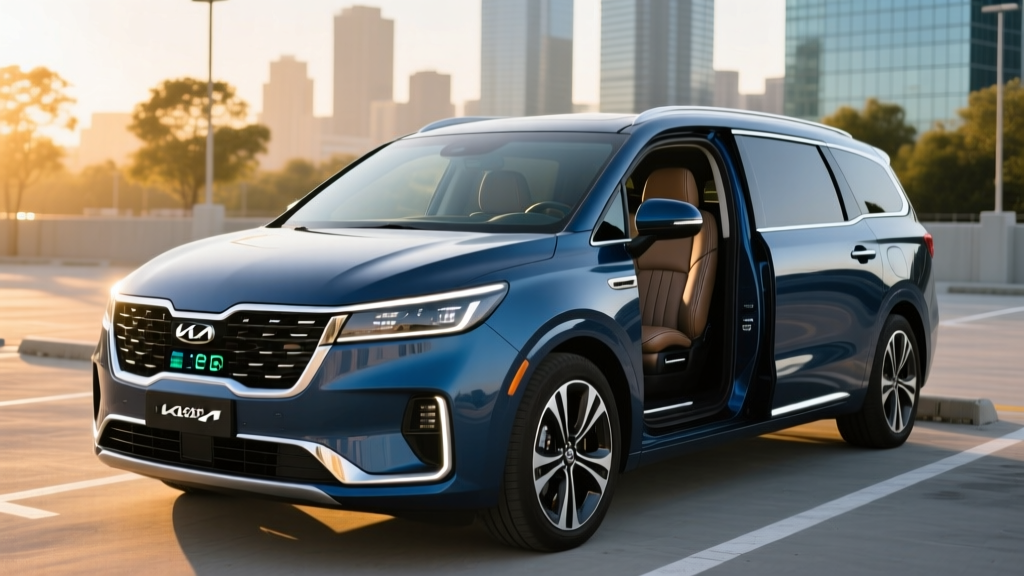
The minivan segment has gone hybrid, and the 2026 Kia Carnival Hybrid sits at the center of the family-hauler conversation. Unlike its turbocharged gas sibling, the Carnival Hybrid pairs a 1.6-liter turbocharged four-cylinder with an electric motor to deliver meaningfully better fuel economy without sacrificing the passenger and cargo space that defines the nameplate. For families logging 15,000+ miles a year on school runs, road trips, and commuting, the MPG gains translate directly into thousands of dollars in fuel savings over the life of the vehicle.
This guide covers everything a buyer needs to know: exact EPA fuel economy figures, the hybrid powertrain layout, real-world MPG expectations, pricing by trim, tax-credit eligibility, and long-term battery reliability. We'll also clarify where the Carnival Hybrid fits against plug-in hybrid and full EV alternatives.
HEV vs PHEV: What the Carnival Hybrid Actually Is
Before diving into specs, it's critical to understand what the 2026 Kia Carnival Hybrid is—and what it is not.
Conventional Hybrid (HEV): The Carnival Hybrid is a self-charging hybrid. It uses regenerative braking and the gasoline engine to charge a small battery pack (approximately 1.49 kWh). You never plug it in. The electric motor assists the gas engine during acceleration and enables brief electric-only driving at low speeds, but the vehicle is primarily powered by gasoline.
Plug-In Hybrid (PHEV): A PHEV has a much larger battery (typically 12–25 kWh), can be plugged into a wall outlet or charger, and offers 25–40 miles of electric-only range before the gas engine kicks in. The 2026 Carnival does not offer a PHEV variant in the US market. Kia currently reserves PHEV powertrains for the Sorento and Sportage in its US lineup.
If you're looking for a minivan you can plug in for electric-only school runs, you'll need to look at the Chrysler Pacifica Hybrid (PHEV) or consider a full BEV like the upcoming electric minivans from Kia and Hyundai. The Carnival Hybrid is strictly a gas-electric HEV—no plug required.
Fuel Economy: EPA Ratings and Real-World MPG
The headline number for the 2026 Kia Carnival Hybrid is a significant improvement over the standard turbocharged Carnival, which returns approximately 22 MPG combined. Here's the EPA-estimated breakdown for the hybrid:
| Metric | EPA Estimate |
|---|---|
| City MPG | 34 |
| Highway MPG | 33 |
| Combined MPG | 34 |
| Estimated Total Range | ~578 miles (17.0-gal tank) |
Source: fueleconomy.gov
Real-World MPG vs. EPA Sticker
Hybrids typically exceed their EPA city estimates in stop-and-go traffic because regenerative braking recaptures energy that would otherwise be lost as heat. Expect 35–37 MPG in urban and suburban driving. Highway MPG, however, often falls slightly below the sticker at sustained 75–80 mph speeds, where aerodynamic drag dominates and the electric motor contributes less. Plan on 30–32 MPG on long interstate road trips with a fully loaded cabin and roof cargo box. In cold weather (below 30°F), expect a 5–10% reduction as the engine runs longer to heat the cabin and the battery operates less efficiently.
Compared to the non-hybrid Carnival's 22 MPG combined, the hybrid saves roughly 4.2 gallons of fuel per 100 miles driven. At $3.40 per gallon (2026 national average for regular unleaded), that's approximately $1,430 in annual fuel savings for a driver covering 15,000 miles per year.
Powertrain Specs: Engine, Motor, and Combined Output
The 2026 Carnival Hybrid uses Kia's proven Smartstream hybrid architecture, shared with the Sorento Hybrid and K5 Hybrid. Here's the full powertrain breakdown:
| Specification | Detail |
|---|---|
| Engine | 1.6L Turbocharged GDI 4-cylinder |
| Engine Power | 180 hp @ 5,500 rpm |
| Engine Torque | 195 lb-ft @ 1,500–4,500 rpm |
| Electric Motor | 47.7 kW (64 hp), integrated in transmission |
| Combined System Output | 245 hp / 271 lb-ft torque |
| Transmission | 6-speed automatic (torque-converter, not CVT) |
| Drivetrain | Front-wheel drive (FWD) |
| Hybrid Battery | ~1.49 kWh lithium-ion polymer |
| 0–60 mph (est.) | ~7.5 seconds |
| Towing Capacity | 3,500 lbs (properly equipped) |
The 6-speed automatic is a deliberate choice over the continuously variable transmissions (CVTs) used by Toyota and Honda in their hybrids. The result is more natural-feeling acceleration without the "rubber-band" drone that some drivers dislike in CVT-equipped minivans. The 245 combined horsepower puts the Carnival Hybrid ahead of the Toyota Sienna (245 hp) and Honda Odyssey (no hybrid option for 2026) in the power department.
One limitation worth noting: the Carnival Hybrid is front-wheel drive only. If you need all-wheel drive for snow-belt commuting, the Toyota Sienna Hybrid (available with AWD) remains the only hybrid minivan offering it in 2026.
Pricing by Trim and Tax Credit Eligibility
The 2026 Kia Carnival Hybrid is offered across multiple trims. Pricing reflects Kia's US MSRP at launch:
| Trim | MSRP (approx.) |
|---|---|
| LX | $41,900 |
| EX | $44,500 |
| SX | $48,500 |
| SX Prestige | $53,000 |
Destination charge: ~$1,395 additional.
Does the Carnival Hybrid Qualify for a Federal Tax Credit?
No. The 2026 Kia Carnival Hybrid is a conventional HEV, not a plug-in vehicle. Under current IRS §30D Clean Vehicle Credit rules, only battery electric vehicles (BEVs) and plug-in hybrids (PHEVs) with sufficient battery capacity qualify for the federal tax credit of up to $7,500. Conventional hybrids do not meet the minimum battery capacity threshold and are ineligible.
Some states and local utilities offer modest rebates for conventional hybrids (typically $250–$1,000), but these vary widely by jurisdiction. Check your state's energy office or your utility provider's website for current programs. A tax professional can confirm any state-level incentives that may apply to your situation.
Reliability, Battery Warranty, and Replacement Costs
Hybrid battery longevity is consistently the top concern among first-time hybrid buyers. Here's what Kia provides:
Kia Hybrid Battery Warranty
- Hybrid Battery: 10 years / 100,000 miles (whichever comes first)
- Hybrid System Components: 10 years / 100,000 miles (inverter, motor, controller)
- Basic Vehicle Warranty: 5 years / 60,000 miles
- Powertrain Warranty: 10 years / 100,000 miles
Kia's 10-year/100,000-mile hybrid battery warranty is among the best in the industry and matches Hyundai's coverage. For context, Toyota covers its hybrid battery for 10 years / 150,000 miles on the Sienna.
The 1.49 kWh battery in the Carnival Hybrid is small compared to a full EV pack (which typically runs 60–100 kWh). This means it undergoes shallower charge/discharge cycles, which dramatically extends its lifespan. Based on data from Kia's earlier hybrid models (Niro, Sorento Hybrid), most hybrid batteries retain well over 90% of their original capacity at 150,000 miles. Premature failures are rare.
If the hybrid battery does need replacement outside of warranty, expect a cost between $2,500 and $4,500 including parts and labor at a Kia dealership. Third-party hybrid battery refurbishers can sometimes perform replacements for $1,500–$2,500. This is a fraction of the $10,000–$20,000+ that large EV battery packs can cost, reflecting the much smaller battery size.
For overall vehicle reliability, Kia's hybrid powertrain has proven durable. The 1.6L turbo engine is well-established across the Kia/Hyundai lineup, and the 6-speed automatic transmission avoids the complexity issues that have occasionally plagued CVT designs. The IIHS and NHTSA ratings should be checked at time of purchase for the latest crash-test results.
Who Should Buy the Carnival Hybrid vs. an EV or Gas Minivan?
Choose the Carnival Hybrid If:
- You drive 12,000–20,000+ miles per year and want to cut fuel costs significantly without changing your refueling habits
- You lack access to home Level 2 charging (no garage outlet, apartment living, or street parking only)
- You regularly take long road trips (400+ miles) and don't want to plan around DC fast-charging stops
- You want a minivan with more power than the Toyota Sienna Hybrid's 245 hp but similar fuel economy
- You tow up to 3,500 lbs and need a proven hybrid powertrain for the task
Choose a Full EV (BEV) Instead If:
- You have reliable home Level 2 charging and your daily driving stays under 250 miles
- You want to eliminate gasoline costs entirely and your electricity rates are favorable
- You qualify for the full $7,500 federal tax credit under §30D (income, MSRP, and battery-sourcing rules apply)
- You're willing to plan road trips around DC fast-charging infrastructure
Stick With the Gas Carnival If:
- Your annual mileage is under 8,000 miles and the hybrid premium won't pay back in fuel savings within your ownership window
- You need all-wheel drive (the hybrid is FWD only)
- You prioritize the lowest possible purchase price and plan to sell within 3–4 years
Pros and Cons at a Glance
Pros
- 34 MPG combined — a 55% improvement over the gas Carnival
- 245 hp provides confident highway merging and passing
- 6-speed automatic avoids CVT drone
- 10-year/100,000-mile hybrid battery warranty
- No charging infrastructure needed — works with any gas station
- Up to 8 passengers, class-leading cargo space behind third row
- 3,500-lb towing capacity
Cons
- FWD only — no AWD option (Sienna Hybrid offers AWD)
- No plug-in hybrid variant available
- Ineligible for federal §30D tax credit
- Hybrid premium adds $1,500–$2,000 over equivalent gas trims
- Highway MPG drops under heavy load at 80 mph
- Third-row space is excellent but roof height limits taller cargo
Frequently Asked Questions
How many MPG does the 2026 Kia Carnival Hybrid get?
The EPA rates it at 34 MPG city, 33 MPG highway, and 34 MPG combined. Real-world city driving often yields 35–37 MPG thanks to regenerative braking, while sustained highway driving at 75–80 mph may return 30–32 MPG.
Does the Carnival Hybrid need to be plugged in?
No. The Carnival Hybrid is a conventional (HEV) hybrid. It charges its small battery through regenerative braking and the gasoline engine. You refuel it exclusively at gas stations with regular unleaded.
How far can the Carnival Hybrid go on electric only?
Because it's an HEV with a ~1.49 kWh battery, electric-only driving is limited to very low-speed creep (under 15 mph) for short distances—typically a few hundred yards in parking lots or stop-and-go traffic. It is not designed for meaningful electric-only range like a PHEV.
Is the 2026 Carnival Hybrid reliable?
Kia's 1.6L turbo hybrid powertrain has been in service across multiple models since 2021 and has proven reliable. The hybrid battery carries a 10-year/100,000-mile warranty. Based on historical data, hybrid battery replacement is rarely needed before 150,000+ miles.
What does a hybrid battery replacement cost?
Out-of-warranty replacement runs approximately $2,500–$4,500 at a dealership, or $1,500–$2,500 through a third-party hybrid specialist. Given the 10-year warranty and the battery's small size, most owners will never face this cost.
Does the Carnival Hybrid qualify for any tax credit?
Not the federal §30D credit, which requires a plug-in vehicle (BEV or PHEV). Some states and utilities offer small rebates for conventional hybrids—check local programs. Consult a tax professional for your specific eligibility.
Carnival Hybrid vs. Toyota Sienna Hybrid: which is better?
The Sienna Hybrid achieves slightly better EPA fuel economy (~36 MPG combined) and offers available AWD, but its 245 hp comes from a naturally aspirated 2.5L engine that can feel strained under heavy load. The Carnival Hybrid offers more cargo volume behind the third row, a more powerful turbocharged engine, and Kia's industry-leading warranty. If AWD is essential, choose the Sienna. If power and space matter more, the Carnival Hybrid wins.
Can the Carnival Hybrid tow?
Yes. When properly equipped, the 2026 Carnival Hybrid is rated to tow up to 3,500 lbs—sufficient for a small boat, lightweight travel trailer, or utility trailer. Expect MPG to drop to the mid-to-high 20s while towing.
Sources: fueleconomy.gov, IRS §30D Clean Vehicle Credit, Kia Motors America official specifications.