Quick Verdict: The Wrangler 4xe Is a PHEV, Not a Conventional Hybrid
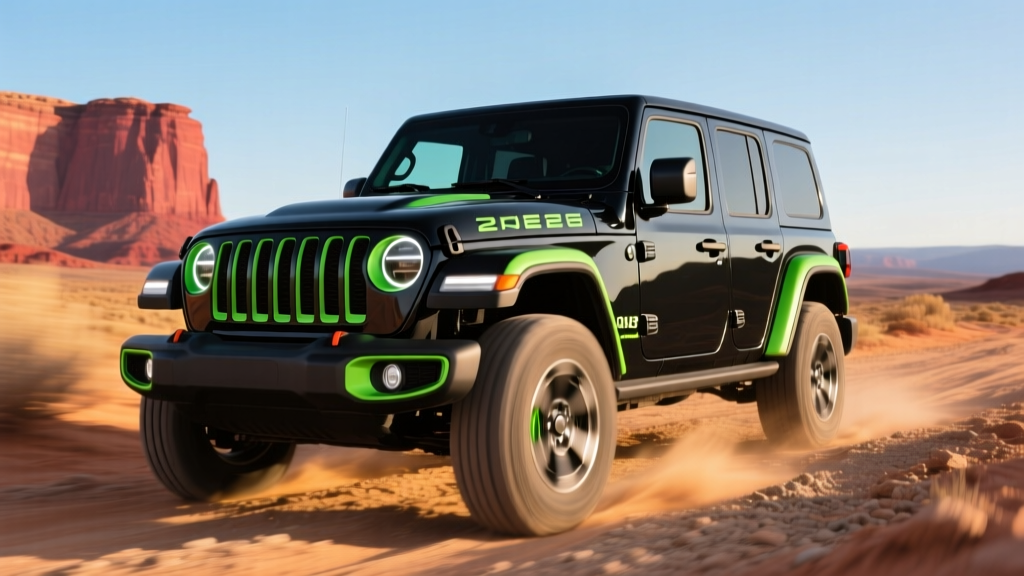
If you're searching for a 2026 Jeep Wrangler hybrid, you're almost certainly looking at the Wrangler 4xe — Jeep's plug-in hybrid (PHEV) variant of its iconic off-roader. Jeep does not sell a conventional self-charging hybrid (HEV) Wrangler. The 4xe pairs a 2.0-liter turbocharged four-cylinder engine with two electric motors and a 17.3 kWh battery pack (gross), delivering 375 combined horsepower and an EPA-estimated 22 miles of electric-only driving before the gas engine takes over.
For 2026, the Wrangler 4xe continues to occupy a unique niche: it's one of very few PHEVs with genuine off-road capability, a removable roof and doors, and solid front and rear axles. But buyers need to understand what the 4xe actually delivers — and where its compromises lie — before signing a purchase agreement.
HEV vs PHEV: What the Wrangler 4xe Actually Is
Conventional Hybrid (HEV): Charges its small battery through regenerative braking and the engine. No plug required. Typical electric-only driving: less than 1 mile. Examples: Toyota RAV4 Hybrid, Honda CR-V Hybrid.
Plug-in Hybrid (PHEV): Has a larger battery you charge by plugging in. Offers meaningful electric-only range (typically 20–40 miles). When the battery depletes, it operates like a regular hybrid. Example: Jeep Wrangler 4xe.
Full EV (BEV): No gas engine. 100% electric, 200–400+ miles of range. Must be plugged in to recharge.
The 2026 Wrangler 4xe is firmly in the PHEV column. You plug it in to access its 22 miles of electric-only range. If you never plug it in, it still drives — but you're carrying 700+ pounds of battery and motors you're not using efficiently, and your fuel economy suffers accordingly.
EPA Fuel Economy and Electric-Only Range
Here's how the 2026 Wrangler 4xe breaks down on efficiency, per fueleconomy.gov:
| Metric | Value |
|---|---|
| Electric-only range | 22 miles |
| MPGe (electric + gas combined) | 49 MPGe |
| Gas-only MPG (city) | 20 MPG |
| Gas-only MPG (highway) | 20 MPG |
| Gas-only MPG (combined) | 20 MPG |
| Total range (electric + gas) | ~370 miles |
| Fuel tank capacity | 17.2 gallons |
Real-world MPG note: The 4xe's 20 MPG combined gas-only figure is honest for a boxy, solid-axle SUV, but expect variation. Highway driving at 75+ mph with the soft top and 35-inch mud-terrain tires can drop this to 17–18 MPG. Conversely, city-heavy commutes under 22 miles where you charge nightly can mean weeks of near-zero gas consumption. The 49 MPGe figure only holds if you plug in regularly — it's not a set-and-forget number.
MPGe explained: MPGe (miles per gallon equivalent) converts the energy in electricity to a gasoline-equivalent figure so you can compare a PHEV's blended efficiency against gas cars. The 49 MPGe applies only when you're using both the battery charge and gasoline. Once the battery depletes, you're on the 20 MPG gas-only figure.
Powertrain, Battery, and Charging
The Wrangler 4xe powertrain is a well-proven setup carried over from prior model years with incremental software refinements:
| Spec | Detail |
|---|---|
| Engine | 2.0L turbocharged inline-4 |
| Engine power | 270 hp / 295 lb-ft torque |
| Electric motors | Two (one integrated in transmission, one engine-mounted) |
| Combined system output | 375 hp / 470 lb-ft torque |
| Battery (gross / usable) | 17.3 kWh gross / ~14.7 kWh usable |
| Battery chemistry | NMC (nickel manganese cobalt) |
| Transmission | 8-speed automatic (TorqueFlite) |
| Drivetrain | 4WD (Selec-Trac or Rock-Trac depending on trim) |
| 0–60 mph | ~6.0 seconds |
| Towing capacity | 3,500 lbs |
Charging the Wrangler 4xe
The 4xe uses a J1772 connector for Level 1 and Level 2 AC charging. It does not support DC fast charging — a common point of confusion. Here's what to expect:
| Level | Power | 0–100% Time | Notes |
|---|---|---|---|
| Level 1 (120V) | ~1.4 kW | ~12 hours | Standard outlet; sufficient for overnight top-up |
| Level 2 (240V) | ~3.6 kW (onboard charger limit) | ~5 hours | Home wallbox or public L2 station |
| DC fast charge | N/A | N/A | Not supported |
kW vs kWh reminder: kW (kilowatts) measures power — how fast energy flows into the battery. kWh (kilowatt-hours) measures energy capacity — how much the battery holds. The 4xe's onboard charger is limited to 3.6 kW, meaning even a 48-amp Level 2 home charger (capable of 11.5 kW) will only push 3.6 kW into the 4xe. A basic 16-amp Level 2 circuit is all you need.
Pricing, Trims, and Federal Tax Credit Eligibility
The 2026 Wrangler 4xe is offered across several trims. Pricing reflects the base MSRP before destination charges or dealer adjustments:
| Trim | Base MSRP |
|---|---|
| Willys 4xe | ~$51,795 |
| Sport S 4xe | ~$53,795 |
| Sahara 4xe | ~$57,795 |
| Rubicon 4xe | ~$60,795 |
| High Altitude 4xe | ~$63,795 |
Does the 2026 Wrangler 4xe Qualify for the Federal Tax Credit?
Under current IRS §30D rules, the Wrangler 4xe has historically qualified for a partial or full federal clean vehicle credit, but eligibility depends on several factors that shift annually:
Federal §30D Tax Credit Checklist (2026):
- MSRP cap: SUVs must be under $80,000 — all 4xe trims qualify.
- Buyer income cap: AGI must not exceed $150,000 (single), $225,000 (head of household), or $300,000 (joint).
- Battery sourcing: Critical minerals and battery components must meet phased-in domestic/FtA-sourcing thresholds. The 4xe's eligibility has fluctuated year to year as these thresholds tighten.
- Point-of-sale transfer: You can apply the credit as an immediate dealer discount (up to $7,500) rather than waiting to claim it on your tax return.
- Assembly: Must be assembled in North America — the Wrangler is built in Toledo, Ohio.
Confirm your specific eligibility at fueleconomy.gov and consult a tax professional. Credit amounts and sourcing rules are subject to change.
Many 4xe buyers in recent years have qualified for the full $7,500 credit, effectively reducing the Willys 4xe to the mid-$44,000 range. But battery-sourcing rules have tightened each year since 2024, so verify current-year status before committing.
Reliability, Battery Warranty, and Replacement Costs
Hybrid Battery Warranty:
- Coverage: 8 years / 100,000 miles (whichever comes first)
- What's covered: Battery capacity below a defined threshold (typically 60–70% of original capacity), defects, and premature degradation
- Bumper-to-bumper: 3 years / 36,000 miles
- Powertrain: 5 years / 60,000 miles
The 4xe's high-voltage NMC battery pack has been in service since the 2021 model year, giving Jeep a multi-year track record. There have been isolated recalls for battery-related software and connector issues, but no widespread pattern of premature battery failure as of early 2026.
Battery replacement cost: If the 4xe's high-voltage battery needs replacement out of warranty, expect a cost in the $5,000–$8,000 range for the pack plus labor, based on current Jeep parts pricing. This is lower than full EV battery replacements because the pack is relatively small at 17.3 kWh gross. The conventional 12V auxiliary battery is separate and costs $200–$350 to replace like any other vehicle.
The gasoline 2.0L turbo engine is also well-understood by Jeep technicians, though it's a more complex powertrain than the naturally aspirated V6 in the non-hybrid Wrangler. Expect slightly higher maintenance costs over a 10-year ownership period compared to the simpler gas-only model, offset by fuel savings if you charge regularly.
Real-World Ownership: Who Should Buy the Wrangler 4xe?
Pros
- 22 miles of silent, zero-emission electric driving for short commutes
- 375 hp / 470 lb-ft — the most torque of any Wrangler variant
- Genuine off-road hardware (solid axles, locking diffs, sway-bar disconnect)
- Qualifies for HOV lane access in several states
- Federal tax credit can reduce effective price by up to $7,500
- Regenerative braking extends range in stop-and-go driving
Cons
- 20 MPG gas-only is poor for a hybrid — the boxy shape and weight work against it
- No DC fast charging — road trips require Level 2 stops or gas-only driving
- 3.6 kW onboard charger is slow even for Level 2
- Higher base price than gas Wrangler ($10,000+ premium over equivalent trims)
- Added weight (~700 lbs over gas model) affects handling and braking feel
- Complex powertrain means more potential failure points long-term
The Decision Framework
Choose the Wrangler 4xe if:
- Your daily commute is under 22 miles round-trip and you can charge at home nightly
- You want Wrangler off-road capability but also want to reduce weekday fuel consumption
- You qualify for the federal tax credit and/or state PHEV incentives
- You value the instant torque for trail crawling (electric motors deliver peak torque at 0 RPM)
Choose the gas Wrangler (3.6L V6) if:
- You can't charge at home or work
- Your typical drives are long highway trips where the 4xe operates gas-only at 20 MPG anyway
- You want lower upfront cost and simpler long-term maintenance
Choose a full EV if:
- You don't need solid-axle off-road capability
- You want 200+ miles of electric range and DC fast charging for road trips
- You want to eliminate gas entirely and minimize maintenance
Frequently Asked Questions
How many MPG does the 2026 Jeep Wrangler 4xe hybrid get?
The EPA rates the Wrangler 4xe at 49 MPGe when using both battery charge and gasoline, and 20 MPG combined (20 city / 20 highway) once the battery is depleted. In real-world driving, expect 17–20 MPG on gas-only highway trips depending on tire choice, top configuration, and speed. If your commute is under 22 miles and you charge nightly, you may use very little gasoline during the week.
How far can the Wrangler 4xe go on electric only?
The EPA rates the 4xe at 22 miles of electric-only range. In practice, expect 18–22 miles in mild weather with gentle driving, and 14–17 miles in cold weather or at highway speeds. The electric-only top speed is approximately 55 mph under moderate acceleration; floor the pedal and the gas engine will engage regardless of battery charge.
Is the 2026 Wrangler 4xe reliable, and what does battery replacement cost?
The 4xe powertrain has been in production since 2021 with no widespread battery failure pattern. The high-voltage battery is warranted for 8 years / 100,000 miles. Out-of-warranty replacement is estimated at $5,000–$8,000. The added complexity of the hybrid system (two electric motors, high-voltage cabling, inverter) means potentially higher repair costs than the gas-only Wrangler after warranty coverage expires.
Does the 2026 Wrangler 4xe qualify for a tax credit?
The Wrangler 4xe has qualified for up to $7,500 in federal clean vehicle credits under §30D in recent years, subject to buyer income caps ($150K single / $300K joint), the $80K SUV MSRP cap, and battery-sourcing requirements that tighten annually. The credit can be applied as a point-of-sale discount at the dealer. Check fueleconomy.gov for the current month's eligibility list before purchasing.
Can I charge the Wrangler 4xe at a DC fast charger?
No. The 4xe only supports AC charging via a J1772 connector — Level 1 (120V, ~12 hours) or Level 2 (240V, ~5 hours). It cannot use CCS, NACS, or CHAdeMO DC fast charging stations. This is typical for PHEVs with smaller batteries; the 17.3 kWh pack doesn't justify the cost and weight of DC fast-charge hardware.
How does the 4xe compare to the gas Wrangler for off-roading?
The 4xe's electric motors provide instant torque at zero RPM, which is excellent for precise rock crawling. The Rubicon 4xe includes all the same hardware as the gas Rubicon — locking differentials, electronic sway-bar disconnect, Rock-Trac 4:1 transfer case. The trade-off is ~700 lbs of additional weight, which you may notice on soft surfaces like sand or deep mud. The battery is mounted under the vehicle in a protective skid plate, and Jeep rates the 4xe for the same water fording depth (30 inches on Rubicon) as the gas model.