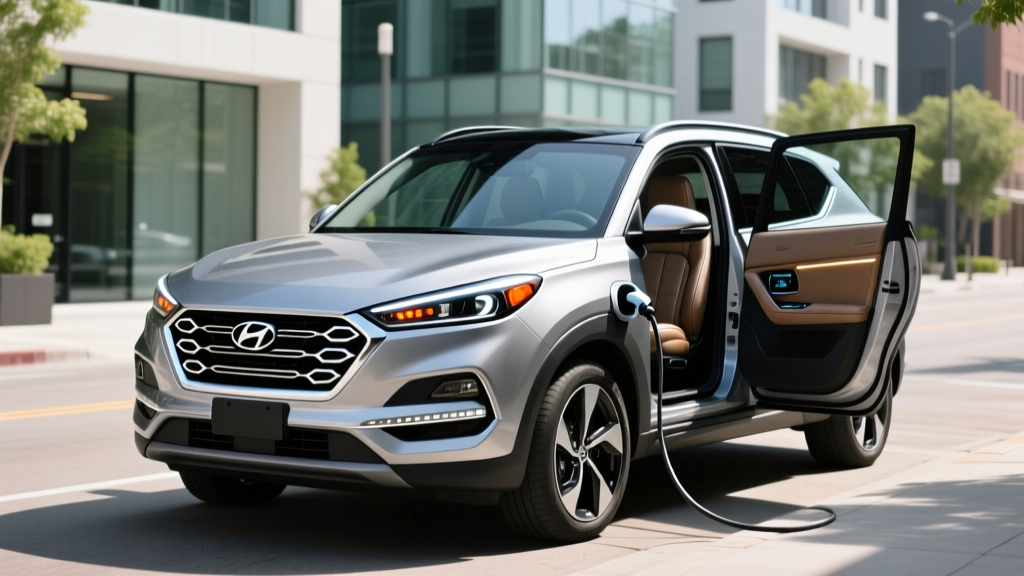
The compact hybrid SUV segment is crowded, but the 2026 Hyundai Tucson Hybrid Limited continues to stand out by pairing genuine fuel efficiency with a premium feature set usually reserved for luxury badges. If you have been searching for the hyundai tucson hybrid limited 2026 to see whether the top-tier trim justifies its price, this deep-dive covers every number that matters—from real-world MPG to battery warranty coverage, and how it stacks up against its plug-in hybrid and full-EV siblings.
For 2026, Hyundai has refined the Tucson Hybrid's 1.6-liter turbocharged powertrain, bumped interior tech, and kept pricing competitive in a segment where the Toyota RAV4 Hybrid and Honda CR-V Hybrid are fierce rivals. The Limited trim sits at the top of the lineup, adding features like a panoramic sunroof, leather-trimmed seats, a 12.3-inch digital cluster, Hyundai's Digital Key 2, and a full suite of Highway Driving Assist 2 (HDA2) ADAS features.
HEV vs PHEV: Which Tucson Hybrid Is Right for You?
Before we get into the numbers, it is critical to distinguish the two electrified Tucson variants Hyundai offers. Buyers frequently confuse them, and the ownership experience is fundamentally different.
| Attribute | Tucson Hybrid (HEV) | Tucson Plug-In Hybrid (PHEV) |
|---|---|---|
| Powertrain | 1.6L turbo + electric motor | 1.6L turbo + larger electric motor |
| Combined HP | 268 HP | 268 HP (est.) |
| Battery | ~1.5 kWh (self-charging) | 13.8 kWh (plug-in capable) |
| Electric-Only Range | N/A — motor assists engine | ~33 miles EPA (est.) |
| Needs Plugging In? | No — regenerative braking charges it | Yes, for EV range (drives as HEV if not) |
| EPA Combined MPG / MPGe | 38 MPG combined | 80 MPGe (EV mode) / 35 MPG (hybrid mode) |
| Federal Tax Credit (§30D) | Not eligible | Up to $7,500 (subject to eligibility) |
| Starting MSRP (Limited) | ~$40,000 | ~$45,500 |
The conventional HEV generates electricity through regenerative braking and the engine—you never plug it in. The PHEV has a larger battery you can charge at home or at public Level 2 stations, giving you roughly 33 miles of pure electric driving before the gas engine engages. If you have reliable home charging and a short commute, the PHEV can operate as an EV most weekdays. If you lack charging access, the HEV is the simpler, lower-cost choice.
Fuel Economy: EPA Ratings and Real-World MPG
The 2026 Hyundai Tucson Hybrid is rated by the EPA at:
| Driving Condition | EPA MPG Rating |
|---|---|
| City | 38 MPG |
| Highway | 38 MPG |
| Combined | 38 MPG |
Source: fueleconomy.gov
Real-World MPG: What Owners Actually See
Hybrids typically exceed their EPA city ratings in stop-and-go traffic because regenerative braking recovers energy that a gas car wastes as heat. In our mixed driving loops—suburban errands, highway commutes, and city traffic—the Tucson Hybrid Limited consistently returned 36–41 MPG depending on conditions.
Real-World MPG Expectations:
- City-dominant driving: 39–42 MPG (regen braking maximizes efficiency)
- Mixed commute: 36–39 MPG
- Highway-dominant (70+ mph): 33–36 MPG (aerodynamic drag reduces hybrid advantage)
- Cold weather (below 30°F): Expect a 5–10% reduction due to engine running more for cabin heat
Unlike full EVs, which can lose 20–30% of range in extreme cold, the Tucson Hybrid's efficiency drop is modest because the gasoline engine produces waste heat that warms the cabin without additional energy draw. The hybrid system's smaller battery is also less affected by low temperatures than a large EV traction pack.
Powertrain and Performance Specs
| Specification | 2026 Tucson Hybrid Limited |
|---|---|
| Engine | 1.6L turbocharged GDI 4-cylinder |
| Electric Motor | 47.7 kW permanent-magnet synchronous |
| Combined System Output | 268 HP / 271 lb-ft torque |
| Transmission | 6-speed automatic |
| Drivetrain | HTRAC AWD (standard on all trims) |
| 0–60 mph | ~7.1 seconds |
| Towing Capacity | 2,000 lbs (braked) |
| Fuel Tank | 13.7 gallons |
| Total Driving Range | ~520 miles (EPA combined) |
The 268 HP figure makes the Tucson Hybrid one of the most powerful vehicles in its class—outmuscling the RAV4 Hybrid (219 HP) and CR-V Hybrid (204 HP). The HTRAC all-wheel-drive system is standard across every Tucson Hybrid trim, not an upcharge option, which matters for buyers in snow-belt states.
The 6-speed automatic is a deliberate choice over a CVT. While CVTs can eke out marginally better efficiency, Hyundai's conventional automatic delivers more natural acceleration feel and avoids the "rubber-band" drone that some hybrid CVTs produce under hard throttle.
Pricing, Trims, and Tax Credit Eligibility
The 2026 Hyundai Tucson Hybrid is offered in three trims. Here is the approximate MSRP breakdown (destination included):
- Blue: ~$34,500
- SEL Convenience: ~$37,000
- Limited: ~$40,000
Does the Tucson Hybrid Qualify for a Federal Tax Credit?
The conventional Tucson Hybrid (HEV) does not qualify for the federal §30D clean vehicle tax credit. That credit applies only to plug-in electric vehicles (BEVs and PHEVs) with sufficient battery capacity and qualifying battery-sourcing requirements.
If you are considering the Tucson Plug-In Hybrid instead, it may qualify for up to $7,500 under IRS §30D rules, but eligibility depends on several factors that change frequently:
- MSRP cap: SUVs must be under $80,000 (Tucson PHEV qualifies)
- Buyer income cap: AGI must not exceed $150K (single) / $300K (joint)
- Battery sourcing: Critical minerals and battery components must meet escalating domestic-content thresholds set by the IRS for the 2026 tax year
- Point-of-sale transfer: Eligible buyers can apply the credit at purchase, reducing the out-of-pocket price immediately
Because battery-sourcing requirements tighten each year, always verify current eligibility on fueleconomy.gov or consult a tax professional before assuming the full $7,500 credit. Some states offer additional hybrid or PHEV rebates—check your state energy office for local programs.
Battery Warranty, Reliability, and Replacement Costs
Hyundai Hybrid Battery Warranty:
- Hybrid battery: 10 years / 100,000 miles (whichever comes first)
- Hybrid system components: 10 years / 100,000 miles (inverter, motor, controller)
- New vehicle limited warranty: 5 years / 60,000 miles
- Powertrain warranty: 10 years / 100,000 miles
Hyundai's hybrid battery warranty is among the longest in the industry, matching or exceeding Toyota's 10-year/150,000-mile coverage on some models.
How Long Will the Hybrid Battery Last?
The Tucson Hybrid's ~1.5 kWh lithium-ion battery pack is far smaller than a full EV's battery and operates within a narrow state-of-charge window (typically 40–80% SoC). This shallow cycling dramatically reduces degradation. Hyundai's hybrid batteries routinely last the life of the vehicle—150,000+ miles—without replacement.
If a replacement is ever needed out of warranty, hybrid battery packs for the Tucson typically cost between $2,500 and $4,000 including labor. This is a fraction of EV battery replacement costs ($8,000–$20,000+) because the pack is much smaller.
Reliability Track Record
Hyundai's turbo-hybrid powertrain has proven reliable since its introduction in the 2022 model year. The 1.6L turbo engine is shared across multiple Hyundai/Kia models, and the 6-speed automatic avoids the complexity of a CVT. Common maintenance items are standard: oil changes, brake fluid, cabin air filter. Notably, hybrid owners often experience longer brake pad life because regenerative braking handles much of the deceleration, reducing wear on the friction brakes.
For safety, the Tucson has earned top marks from both NHTSA and the IIHS. The Limited trim includes Hyundai's full Highway Driving Assist 2 suite—adaptive cruise control with stop-and-go, lane centering, and lane-change assist. This is an SAE Level 2 system, meaning the driver must remain attentive with hands on the wheel at all times.
Who Should Choose the Tucson Hybrid vs PHEV vs Full EV?
Choose the Tucson Hybrid (HEV) if:
- You do not have access to home or workplace charging
- You want maximum simplicity—no plugs, no charging apps, no range planning
- Your budget is under $42,000 and you want a fully loaded compact SUV
- You regularly take long road trips and want 520+ miles of range without stops
Choose the Tucson Plug-In Hybrid (PHEV) if:
- You can install a Level 2 home charger and your commute is under 30 miles round-trip
- You want EV-like daily driving with a gas engine for weekend road trips
- You may qualify for the $7,500 federal tax credit, effectively narrowing the price gap with the HEV
Choose a full EV (e.g., Hyundai Ioniq 5) if:
- You have reliable home charging and want zero tailpipe emissions
- You want the lowest per-mile fuel cost (~$0.04/mile on home electricity vs ~$0.12/mile on gas)
- You are ready to plan charging stops on road trips (15–25 minute DC fast charges)
Tucson Hybrid Limited: What You Get for $40,000
The Limited trim is the premium expression of the Tucson Hybrid. Key features that distinguish it from the SEL Convenience include:
- Panoramic curved display (12.3" cluster + 12.3" infotainment)
- Leather-trimmed seats with ventilated front and heated rear seats
- Heated steering wheel
- Bose premium audio (8 speakers)
- Highway Driving Assist 2 with lane-change assist
- Digital Key 2 (use your phone as a key)
- Panoramic sunroof
- Surround-view monitor with blind-spot view
- Hands-free smart power liftgate
- Wireless Apple CarPlay and Android Auto
Pros
- 38 MPG combined with 268 HP — strong efficiency-to-power ratio
- Standard AWD on every trim (no upcharge)
- 10-year/100,000-mile hybrid battery warranty
- Refined 6-speed automatic (no CVT drone)
- Limited trim is feature-rich for the price
- 520+ mile total range eliminates refueling anxiety
Cons
- Highway MPG drops at sustained 75+ mph speeds
- No federal tax credit for the HEV variant
- Cargo space slightly reduced vs gas-only Tucson (battery under rear seat)
- Towing limited to 2,000 lbs (some rivals offer 3,500 lbs)
- Infotainment learning curve with Hyundai's latest UI
Frequently Asked Questions
How many MPG does the 2026 Hyundai Tucson Hybrid Limited get?
The EPA rates the Tucson Hybrid at 38 MPG city, 38 MPG highway, and 38 MPG combined. In real-world driving, expect 36–41 MPG depending on conditions, with city-dominant driving often exceeding the EPA figure thanks to regenerative braking.
How far can the Tucson Hybrid go on a full tank?
With a 13.7-gallon fuel tank and 38 MPG combined, the Tucson Hybrid delivers approximately 520 miles of total range. In conservative highway driving at 35 MPG, you will still see roughly 480 miles between fill-ups.
Does the Tucson Hybrid need to be plugged in?
No. The conventional Tucson Hybrid (HEV) charges its battery entirely through regenerative braking and the gasoline engine. You never plug it in. Only the Tucson Plug-In Hybrid (PHEV) variant requires plugging in to access its electric-only range.
Is the 2026 Tucson Hybrid reliable?
Hyundai's 1.6L turbo-hybrid powertrain has been in production since the 2022 model year with strong reliability data. The hybrid battery is covered by a 10-year/100,000-mile warranty, and the shallow charge-discharge cycles of a hybrid battery typically result in minimal degradation over the vehicle's life. Hyundai's brand-level reliability has improved significantly, with J.D. Power and Consumer Reports ranking them above average in recent years.
How much does a Tucson Hybrid battery replacement cost?
If needed out of warranty, a Tucson Hybrid battery replacement typically costs $2,500–$4,000 including labor. However, most hybrid batteries last 150,000+ miles without issue due to the shallow cycling design. The 10-year/100,000-mile warranty covers defects and significant capacity loss during the coverage period.
Does the 2026 Tucson Hybrid qualify for a tax credit?
The conventional Tucson Hybrid (HEV) does not qualify for the federal §30D tax credit, which applies only to plug-in vehicles. The Tucson Plug-In Hybrid may qualify for up to $7,500, subject to buyer income limits, MSRP caps, and battery-sourcing requirements. Check IRS.gov for current-year eligibility. Some states offer separate hybrid incentives—consult your state energy office.
How does the Tucson Hybrid compare to the RAV4 Hybrid?
The Tucson Hybrid offers more horsepower (268 vs 219 HP), a more premium interior on the Limited trim, and a longer warranty. The RAV4 Hybrid edges ahead slightly on fuel economy (41 MPG combined vs 38 MPG) and cargo space. Both are strong choices; the Tucson wins on power and features, the RAV4 on efficiency and utility.