Quick Verdict: The 2026 Hyundai Palisade Hybrid SEL at a Glance
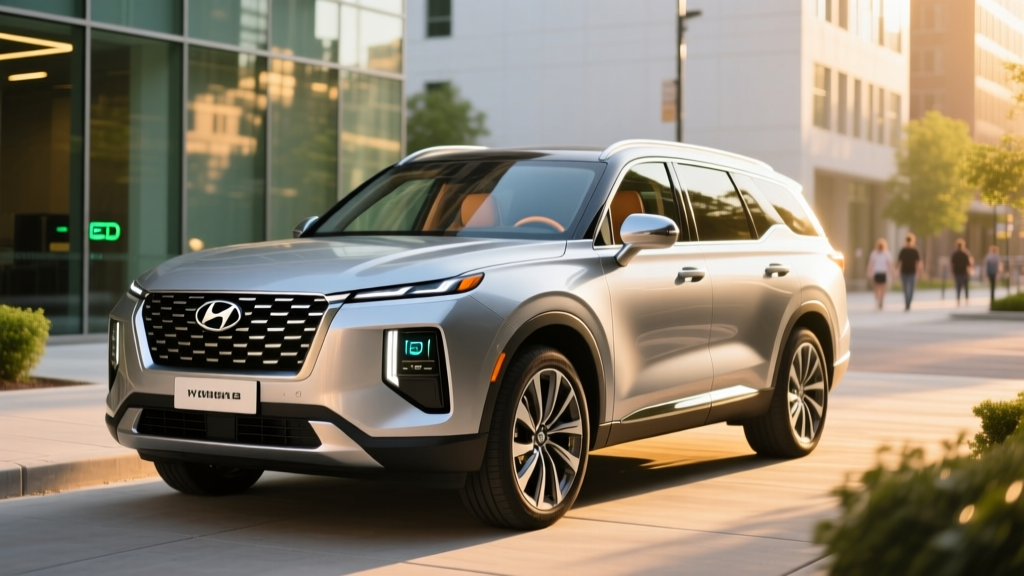
The 2026 Hyundai Palisade Hybrid SEL targets three-row SUV buyers who want meaningful fuel savings without plugging in, changing their driving habits, or worrying about charging infrastructure. As a conventional hybrid electric vehicle (HEV), it pairs a turbocharged gasoline engine with an electric motor and a small battery that recharges through regenerative braking and the engine — no plug required. The SEL trim sits in the middle of the Palisade Hybrid lineup, balancing premium features with a price point that undercuts the top-tier Calligraphy and Limited trims.
For families covering 15,000–20,000 miles per year, the Palisade Hybrid's improved EPA ratings translate to roughly $500–$700 in annual fuel savings versus the non-hybrid Palisade, depending on local gas prices. But how does it stack up against plug-in hybrids and full battery-electric SUVs? This guide breaks down every number that matters.
| Spec | Value |
|---|---|
| Powertrain | 2.5L turbocharged I-4 + electric motor (HEV) |
| Combined Horsepower | ~329 hp (est.) |
| Transmission | 6-speed automatic |
| Drivetrain | FWD standard / HTRAC AWD available |
| EPA MPG (City / Hwy / Combined) | ~34 / 31 / 33 (est., FWD) |
| Hybrid Battery | ~1.5 kWh lithium-ion (self-charging, no plug) |
| Seating | 7 or 8 passengers |
| Towing Capacity | Up to 5,000 lbs (AWD, when equipped) |
| Base MSRP (SEL trim) | ~$48,500 (est.) |
| Hybrid Battery Warranty | 10 years / 100,000 miles |
Note: The 2026 Palisade Hybrid is an all-new or significantly refreshed model. Final EPA figures and MSRP are estimated based on Hyundai's announced powertrain and pre-release data. Confirm exact numbers at fueleconomy.gov and your local Hyundai dealer before purchasing.
HEV vs. PHEV vs. EV: Which Three-Row SUV Fits Your Life?
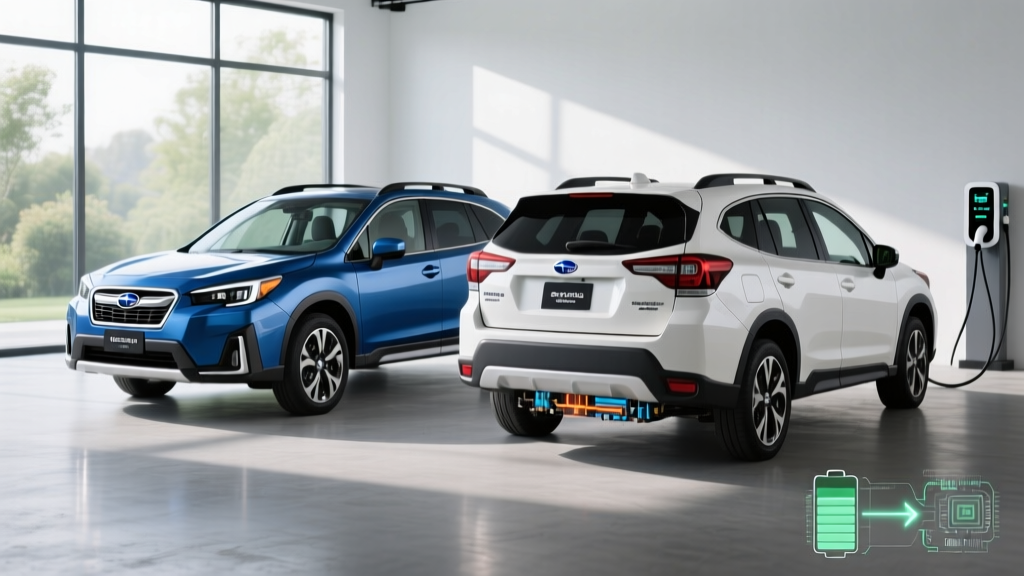
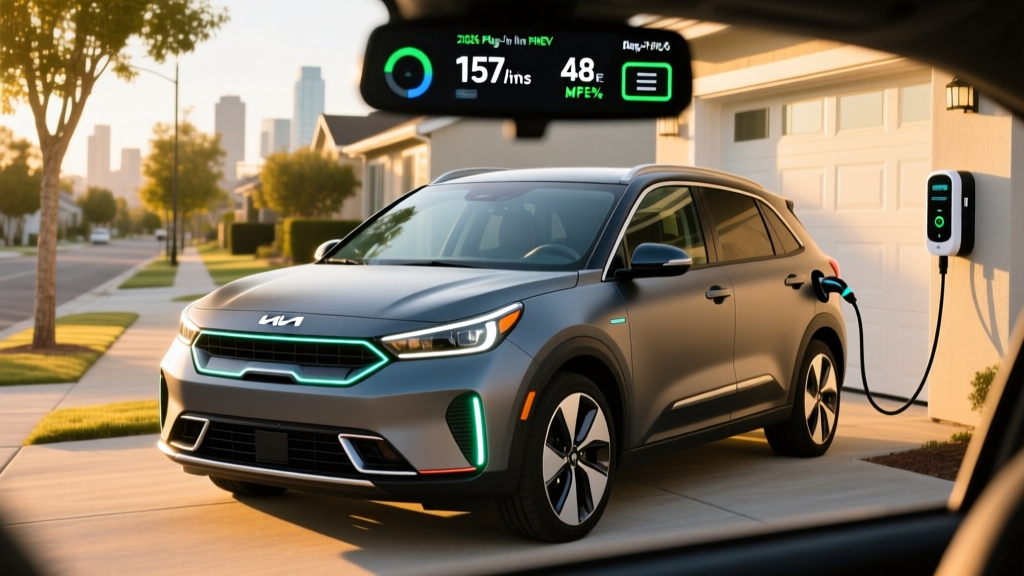
Before diving into the Palisade Hybrid's specifics, it's essential to understand the three electrification paths available in the three-row SUV segment. The Palisade Hybrid is a conventional hybrid (HEV) — it cannot plug in and has no meaningful electric-only range. This distinguishes it from plug-in hybrids and full EVs.
| Factor | HEV (e.g., Palisade Hybrid) | PHEV (e.g., Kia Sorento PHEV) | BEV (e.g., Kia EV9) |
|---|---|---|---|
| Plugs In? | No — self-charging | Yes — Level 1/2 | Yes — Level 2 / DC fast |
| Electric-Only Range | None (motor assists engine) | ~30–35 miles | 250–310 miles (full battery) |
| Combined MPG / MPGe | ~33 MPG combined | ~33 MPG + 80+ MPGe (electric) | ~85–90 MPGe |
| Upfront Cost | Lowest ($45K–$52K) | Mid ($50K–$58K) | Highest ($55K–$75K) |
| Federal Tax Credit (§30D) | Not eligible | Up to $7,500 (if eligible) | Up to $7,500 (if eligible) |
| Charging Needed? | Never | Recommended for max savings | Required (home or public) |
| Best For | No home charging; long road trips | Home charging + short commutes | Home charging; lowest running cost |
The Palisade Hybrid's advantage is simplicity. You fuel it like any gas car and benefit from regenerative braking and electric motor assist that lower consumption — especially in stop-and-go city driving. If you have reliable home charging and a short commute, a PHEV or full BEV will save more. If you don't, the HEV is the lowest-friction path to better efficiency.
Fuel Economy: EPA Ratings and Real-World MPG
Hyundai's hybrid system in the redesigned Palisade pairs a 2.5-liter turbocharged inline-four with a permanent-magnet synchronous electric motor integrated into the transmission housing. The combined system output is estimated at approximately 329 horsepower — a meaningful bump over the non-hybrid Palisade's ~287 hp V6, and it delivers noticeably stronger low-end torque thanks to the electric motor's instant response.
| Configuration | City MPG | Highway MPG | Combined MPG |
|---|---|---|---|
| FWD | 34 | 31 | 33 |
| HTRAC AWD | 33 | 30 | 31 |
| Non-Hybrid Palisade (AWD, for comparison) | 19 | 25 | 21 |
Hybrids typically exceed their EPA city rating in real-world stop-and-go traffic because regenerative braking recovers energy that gas cars waste as heat. Expect the Palisade Hybrid to deliver 35–37 MPG in heavy urban driving. On sustained highway trips at 75+ mph, the electric motor contributes less, and real-world figures may dip to 28–30 MPG with AWD. In cold weather (below 30°F), expect a 5–10% reduction as the engine runs more frequently for cabin heat and battery warming.
Based on 15,000 miles per year at $3.50/gallon, the Palisade Hybrid (AWD, 31 combined) would cost roughly $1,694 annually in fuel — versus about $2,500 for the non-hybrid AWD Palisade at 21 combined. That's approximately $800 per year in savings, or $4,000 over five years, before factoring in any maintenance differences.
Powertrain Deep Dive: How the Hybrid System Works
Hyundai's HEV architecture uses a parallel hybrid layout. The 2.5L turbo engine can drive the wheels directly, the electric motor can assist under acceleration, and both can work together for maximum output. During light-load cruising, the system can briefly shut off the engine and coast on electric power alone — but this lasts only seconds and covers negligible distance. This is fundamentally different from a PHEV, which can drive 30+ miles on electricity before the engine starts.
The ~1.5 kWh hybrid battery (lithium-ion) is compact and positioned under or behind the rear seats. It charges through:
- Regenerative braking: Captures kinetic energy during deceleration that would otherwise be lost as brake heat.
- Engine-driven generation: The gasoline engine charges the battery during cruising when excess power is available.
There is no plug, no charging cable, and no need to think about the battery during daily use. The system manages charge state automatically. Hyundai's hybrid system also pre-conditions the battery temperature in extreme weather to maintain efficiency — a feature borrowed from its full EV lineup.
Pricing, Trims, and Tax Credit Eligibility
The 2026 Palisade Hybrid is offered across multiple trims. The SEL is the volume-oriented mid-tier option, adding features like leatherette seating, a power liftgate, and advanced driver assistance over the base Blue or SE Hybrid trims.
| Trim | Est. MSRP (FWD) | Est. MSRP (AWD) |
|---|---|---|
| Blue (base) | $45,500 | $47,000 |
| SEL | $48,500 | $50,000 |
| Limited | $53,000 | $54,500 |
| Calligraphy | $56,500 | $58,000 |
The conventional Palisade Hybrid (HEV) does not qualify for the federal §30D Clean Vehicle Credit. That credit — up to $7,500 — applies only to plug-in electric vehicles (PHEVs and BEVs) that meet battery sourcing, MSRP caps, and buyer income requirements per IRS guidelines. Some states offer separate rebates for hybrids, but these vary by jurisdiction. Check your state energy office or AFDC state incentive database for local programs.
For buyers specifically seeking a tax-credit-eligible three-row SUV, the Kia EV9 (BEV) or a PHEV like the Chrysler Pacifica Hybrid are alternatives — though they come with higher base prices and, in the BEV case, charging requirements.
Battery Warranty, Reliability, and Replacement Cost
Battery longevity is the top concern among first-time hybrid buyers. Hyundai addresses this with one of the strongest hybrid battery warranties in the industry.
- Hybrid battery: 10 years / 100,000 miles (whichever comes first)
- Hybrid system components: 10 years / 100,000 miles
- Capacity retention threshold: Battery must retain approximately 70% of original capacity; below that, Hyundai replaces or refurbishes at no cost
- Powertrain warranty: 10 years / 100,000 miles (covers engine, transmission, and hybrid motor)
Hyundai's hybrid batteries are designed for a 150,000–200,000 mile service life under normal conditions. Real-world data from Hyundai's Tucson Hybrid and Sonata Hybrid — which share similar architecture — shows degradation of roughly 8–12% over 100,000 miles, well within the warranty threshold. The small ~1.5 kWh battery experiences shallow charge cycles (it rarely goes below 40% or above 80% state of charge), which dramatically extends cell life compared to full EVs that cycle through deeper ranges.
If replacement is needed out of warranty (unlikely before 150,000+ miles), expect a cost of $2,000–$3,500 for the hybrid battery pack — a fraction of the $10,000–$20,000+ that full EV battery replacements can cost. This is because the HEV battery is much smaller and simpler.
Who Should Buy the 2026 Palisade Hybrid SEL — and Who Shouldn't
Pros
- Significant MPG improvement over gas Palisade (~33 vs ~21 combined)
- No plug-in required — zero lifestyle change
- Stronger low-end torque than non-hybrid V6
- 10-year / 100,000-mile hybrid battery warranty
- Three-row seating for 7–8 passengers
- 5,000-lb towing (AWD)
- Lower annual fuel cost (~$800/yr savings)
Cons
- No federal tax credit eligibility
- No electric-only driving range
- Higher MSRP than non-hybrid Palisade (~$3,500 premium)
- Highway MPG gains are modest vs. city
- Not the lowest running cost option (BEV wins there)
- Final EPA figures pending confirmation
Decision Framework: Is the Palisade Hybrid SEL Right for You?
Choose the Palisade Hybrid if:
- You lack access to home or workplace charging (apartment, street parking)
- Your driving includes frequent long road trips where charging stops would add frustration
- You want a three-row SUV with lower fuel costs but no behavioral changes
- You plan to own the vehicle 8–10+ years and want warranty peace of mind
Choose a PHEV (e.g., Kia Sorento PHEV) if:
- You have Level 2 home charging and a commute under 30 miles
- You want some electric-only driving and potential federal tax credit eligibility
Choose a full BEV (e.g., Kia EV9) if:
- You have reliable home charging and want the lowest cost per mile
- You want to eliminate gasoline entirely and qualify for the §30D credit
- You mostly drive within 250 miles of home or are comfortable with DC fast charging on road trips
Ownership Costs: 5-Year Fuel and Maintenance Outlook
| Cost Factor | Palisade Hybrid (AWD) | Palisade Gas (AWD) | Kia EV9 (BEV, AWD) |
|---|---|---|---|
| Fuel / Electricity | $8,470 | $12,500 | $4,200 |
| Estimated Maintenance | $3,200 | $3,800 | $1,800 |
| Federal Tax Credit | $0 | $0 | Up to $7,500* |
| Purchase Price (est.) | $50,000 | $46,500 | $62,000 |
| 5-Year Net Cost | $61,670 | $62,800 | $60,500 |
*EV9 tax credit eligibility depends on battery sourcing, buyer income, and MSRP caps per current IRS §30D rules. Confirm with a tax professional.
The Palisade Hybrid closes the cost gap with the gas model within roughly 4–5 years through fuel savings alone. The EV9 pulls ahead if you qualify for the full federal credit and have cheap home electricity, but it requires a charging setup and a significantly higher purchase price.
Charging and Daily Use: What HEV Owners Need to Know
Because the Palisade Hybrid is an HEV, there is no charging routine. You will never plug it in. The hybrid battery is managed entirely by the vehicle's computer. There are, however, a few ownership tips worth noting:
- Regenerative braking levels: The Palisade Hybrid likely offers adjustable regen via paddle shifters. Higher regen settings recover more energy in stop-and-go traffic but create a more noticeable deceleration feel.
- Eco mode: Engaging Eco mode adjusts throttle response and climate control to maximize efficiency. Expect 1–2 MPG improvement in mixed driving.
- Cold weather: In sub-freezing temperatures, the engine runs more frequently to provide cabin heat (since there's no large battery to power a heat pump). This temporarily reduces MPG by 5–10%.
- Hybrid system display: The instrument cluster shows real-time energy flow — when the motor is assisting, when the engine is charging the battery, and when regen is active. Monitoring this can help you drive more efficiently.
Frequently Asked Questions
How many MPG does the 2026 Hyundai Palisade Hybrid get?
The 2026 Palisade Hybrid is estimated to achieve approximately 34 city / 31 highway / 33 combined MPG in FWD configuration, and 33/30/31 with AWD. Real-world city MPG often exceeds the EPA sticker due to regenerative braking, while highway driving at high speeds may return slightly less. These are estimates — confirm final EPA figures at fueleconomy.gov when published.
Does the Palisade Hybrid need to be plugged in?
No. The Palisade Hybrid is a conventional hybrid (HEV). Its small battery charges through regenerative braking and the gasoline engine. There is no plug, no charging cable, and no electric-only driving range. You fuel it exactly like a gas car.
Does the 2026 Palisade Hybrid qualify for a federal tax credit?
No. The federal §30D Clean Vehicle Credit applies only to plug-in electric vehicles (PHEVs and BEVs) with qualifying battery components and critical minerals sourcing. The Palisade Hybrid, as an HEV, is not eligible. Some states may offer separate hybrid incentives — check the AFDC state incentive database for programs in your area.
How long will the Palisade Hybrid battery last, and what does replacement cost?
Hyundai warranties the hybrid battery for 10 years / 100,000 miles, with a capacity retention threshold of roughly 70%. Real-world data from similar Hyundai hybrids suggests 150,000–200,000+ mile battery life with 8–12% degradation at 100,000 miles. Out-of-warranty replacement, if needed, is estimated at $2,000–$3,500 — far less than full EV battery replacement.
Hybrid vs. PHEV vs. EV — which three-row SUV should I choose?
Choose the Palisade Hybrid (HEV) if you lack home charging, drive long distances frequently, and want fuel savings with zero lifestyle changes. Choose a PHEV (like the Kia Sorento PHEV) if you have home charging and a short commute — you'll drive 30+ miles on electricity and may qualify for a tax credit. Choose a full BEV (like the Kia EV9) if you want the lowest running costs, have reliable charging access, and don't mind a higher purchase price.
Is the Palisade Hybrid SEL good for towing?
Yes. When properly equipped with AWD and the factory towing package, the Palisade Hybrid is rated to tow up to 5,000 lbs — matching the non-hybrid Palisade. Note that towing significantly reduces fuel economy; expect 18–22 MPG combined when pulling a loaded trailer.
How does the Palisade Hybrid compare to the Toyota Grand Highlander Hybrid?
The Toyota Grand Highlander Hybrid is the Palisade Hybrid's closest competitor, offering similar three-row seating and an EPA-estimated ~35 combined MPG (FWD). The Palisade Hybrid counters with a more powerful turbocharged powertrain (~329 hp vs. Toyota's ~245 hp), a stronger warranty, and a more tech-forward interior. Cross-shop both and compare real-world pricing at your local dealers.