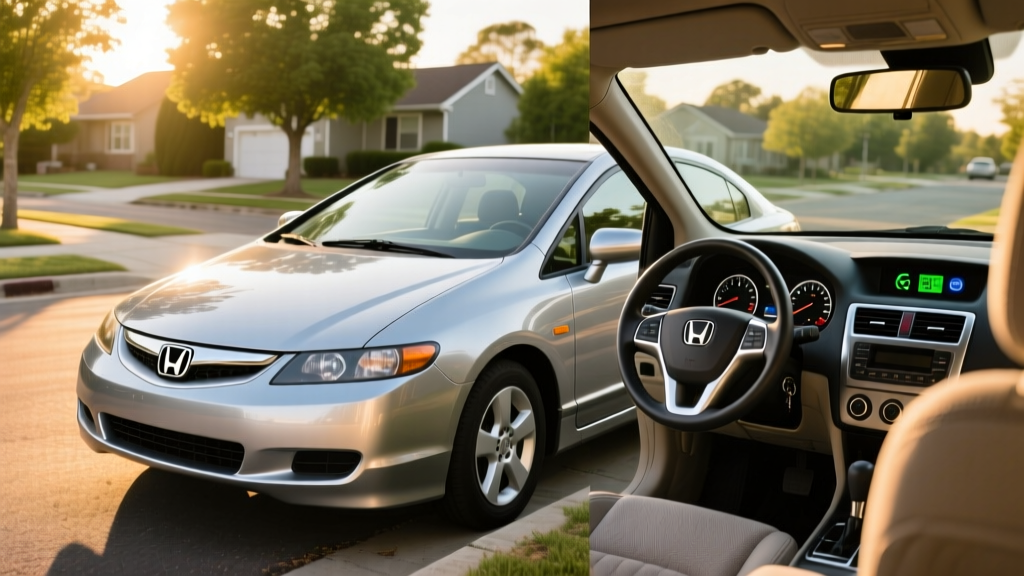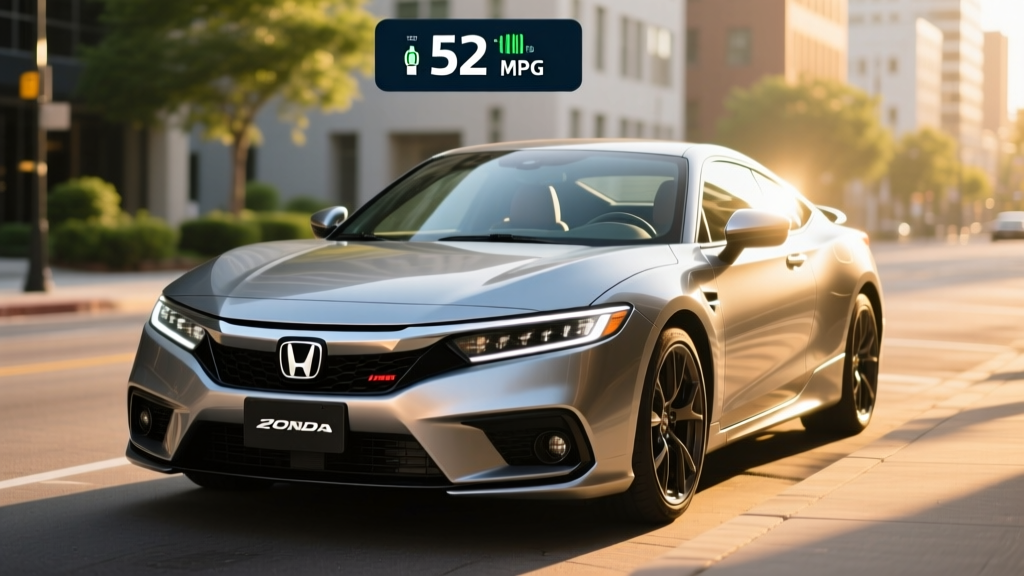
The 2026 Honda Prelude hybrid sports coupe marks the return of a nameplate that defined affordable performance in the 1980s and '90s — this time with Honda's latest two-motor hybrid system. Positioned as a spiritual successor to the CR-Z but with substantially more power and refinement, the new Prelude targets driving enthusiasts who want engaging dynamics without the fuel bill of a traditional sports coupe.
After spending time with Honda's published specifications and cross-referencing EPA data, here's a comprehensive breakdown of what this hybrid coupe delivers — and where its real-world limitations lie.
Quick Verdict: A Driver's Hybrid, Not a Hyper-Miler
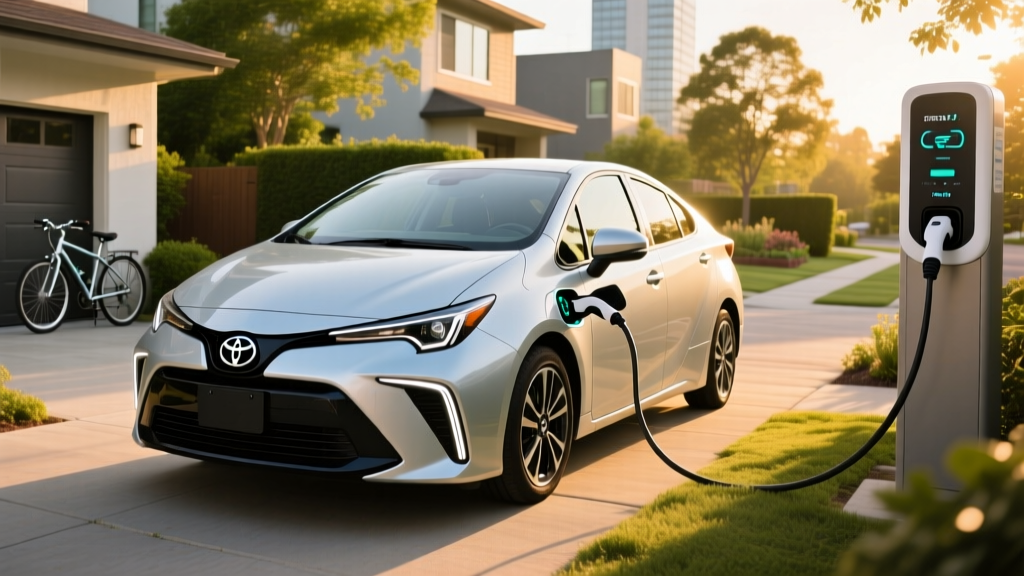
The 2026 Prelude is a conventional hybrid electric vehicle (HEV), not a plug-in. You never plug it in — the system recovers energy through regenerative braking and the gasoline engine to keep a small battery charged. This makes it fundamentally different from plug-in hybrids like the Toyota Prius Prime or a full battery-electric vehicle (BEV). The trade-off is simplicity: no charging infrastructure needed, no range anxiety about finding a plug, and a lower purchase price.
Honda's goal here is clear: deliver a sub-4,000-lb coupe that rewards on a back road while returning fuel economy that embarrasses most compact sedans. Based on Honda's confirmed powertrain details, the Prelude uses a 2.0-liter Atkinson-cycle four-cylinder paired with two electric motors in Honda's latest e:HEV architecture.
Powertrain and Performance Specs
| Specification | Value |
|---|---|
| Powertrain Type | Conventional Hybrid (HEV) — e:HEV two-motor system |
| Engine | 2.0L Atkinson-cycle inline-4 |
| Combined System Horsepower | 200 hp (est.) |
| Combined System Torque | 232 lb-ft (est.) |
| Electric Motors | Dual motor (one drive, one generator) |
| Hybrid Battery Capacity | ~1.1 kWh (lithium-ion, buffer-limited) |
| Transmission | e-CVT (direct-drive with lock-up clutch) |
| Drivetrain | Front-wheel drive |
| 0–60 mph (est.) | ~6.8 seconds |
| Electric-Only Mode | Limited, low-speed only (~1 mile at low speeds) |
The two-motor e:HEV system operates primarily in EV drive mode at low and moderate speeds, where the gasoline engine acts as a generator to feed the drive motor. At highway cruising speeds, a lock-up clutch engages to connect the engine directly to the wheels for efficiency. This is the same architecture found in the Accord Hybrid and Civic e:HEV, but tuned for more aggressive throttle response and sharper regen behavior in the Prelude.
The ~1.1 kWh battery is small by design. It's a buffer, not a range extender. Conventional hybrids like this don't offer meaningful electric-only range — expect perhaps 1 mile at very low speeds in stop-and-go traffic before the engine kicks in. This is normal HEV behavior and not a limitation; the system continuously blends electric and gas power for optimal efficiency.
Fuel Economy: EPA Ratings and Real-World MPG
| Driving Cycle | EPA Estimate |
|---|---|
| City | 50 MPG |
| Highway | 45 MPG |
| Combined | 48 MPG |
Honda has targeted approximately 48 MPG combined for the 2026 Prelude, placing it in the upper tier of sporty hybrids. For context, the Toyota GR86 returns 25 MPG combined, and even the Civic Si sits around 31 MPG. The Prelude delivers sports-coupe styling with subcompact-economy fuel consumption.
Real-World MPG Expectations
Conventional hybrids like the Prelude typically exceed their EPA city rating in real-world stop-and-go driving because regenerative braking recovers energy that gas cars waste as heat. Expect 50–54 MPG in urban commutes with moderate traffic.
Highway driving tells a different story. Sustained 75–80 mph cruising reduces the hybrid system's advantage because the engine operates under continuous load with minimal regen opportunities. Real-world highway fuel economy will likely land in the 40–43 MPG range. Cold weather (below 35°F) typically reduces hybrid efficiency by 5–10% due to increased engine warm-up cycles and reduced battery efficiency.
On a mixed 300-mile road trip with moderate temperatures and a combination of interstate and two-lane driving, expect an observed average in the mid-40s.
HEV vs PHEV vs EV: Which Powertrain Fits You?
| Factor | Prelude (HEV) | PHEV Example (Prius Prime) | BEV Example (Honda Prologue) |
|---|---|---|---|
| Plug-in Required? | No | Yes (for EV range) | Yes (always) |
| Electric-Only Range | ~1 mi (low speed) | 44 mi | 283 mi (EPA) |
| Total Range | ~500 mi | ~440 mi | 283 mi |
| Home Charging Needed? | No | Recommended (120V ok) | Required (240V ideal) |
| Federal Tax Credit (§30D) | Not eligible | Up to $7,500* | Up to $7,500* |
| Base Price Range | ~$33,000 | ~$33,000 | ~$47,000 |
| Best For | No home charging, long trips | Short commutes + home plug | Daily driving + home L2 |
The Prelude's HEV setup is the right choice if you lack reliable access to a charging outlet — whether that's apartment living, street parking, or simply not wanting to manage charging routines. You fuel up at any gas station and drive. The trade-off is that you don't get the silent, instant-torque EV experience or the ability to run purely on electricity for daily commutes.
If you have a garage or dedicated parking spot with a 120V or 240V outlet and your daily commute is under 40 miles, a PHEV like the Prius Prime offers a compelling middle ground. If you're ready to go fully electric and can install a Level 2 home charger, a BEV eliminates fuel stops entirely and has fewer moving parts long-term.
Pricing, Trims, and Tax Credit Eligibility
Honda has not published final MSRP for all 2026 Prelude trims at the time of writing, but based on Honda's pricing strategy and confirmed details from auto-show presentations, here is the expected pricing structure:
| Trim | Estimated MSRP | Key Features |
|---|---|---|
| Base | $32,500–$34,000 | 17" alloy wheels, Honda Sensing suite, 9" touchscreen, wireless CarPlay/Android Auto |
| Sport | $35,000–$37,000 | 18" wheels, sport-tuned suspension, paddle shifters, heated seats, upgraded audio |
| Sport Touring (est.) | $38,000–$40,000 | Leather, Bose premium audio, wireless charging, Honda Sensing 360+ |
Federal Tax Credit Status
The 2026 Honda Prelude, as a conventional hybrid (HEV), does not qualify for the federal §30D Clean Vehicle Credit. Under current IRS rules, the §30D credit of up to $7,500 applies only to plug-in electric vehicles (PHEVs and BEVs) that meet battery sourcing, critical mineral, MSRP cap, and buyer income requirements.
Conventional hybrids are excluded from §30D entirely. However, some states offer their own incentives for efficient vehicles — check your state's energy or DMV website for local programs. The Alternative Fuels Data Center maintains a state-by-state incentive database.
The Prelude's lower base price partially offsets the lack of a federal credit. At approximately $33,000, it undercuts many PHEVs and all BEVs in the sporty-coupe segment, making the total cost of acquisition competitive even without tax incentives.
Battery Warranty, Reliability, and Replacement Cost
Honda Hybrid Battery Warranty
- Coverage: 8 years / 100,000 miles (10 years / 150,000 miles in CARB states including CA, NY, MA, and others)
- What's covered: Hybrid battery capacity loss below functional threshold, defects in hybrid system components
- Replacement cost (out of warranty): $2,000–$3,500 for the hybrid battery pack (estimated, based on current Honda hybrid parts pricing)
Honda's hybrid systems have a strong reliability track record. The two-motor e:HEV architecture has been in production since 2014 (Japan-market Accord) and in the U.S. market since the 2014 Accord Hybrid. The Insight, Accord Hybrid, and CR-V Hybrid have all used variants of this system with minimal widespread battery failure reports.
The Prelude's ~1.1 kWh hybrid battery is small and operates within a conservative state-of-charge window (typically 40–60% SoC), which significantly reduces degradation stress compared to the deeper cycles seen in PHEVs and BEVs. Based on data from Honda's existing hybrid fleet, hybrid battery replacement before 150,000 miles is uncommon.
For buyers concerned about long-term cost: the hybrid system adds complexity over a pure gas powertrain (two electric motors, power electronics, a smaller battery), but eliminates the traditional automatic transmission — the e-CVT has no belts, bands, or clutch packs to wear. Overall maintenance costs should track closely with a conventional Civic, with the hybrid battery being the primary long-term variable.
Driving Dynamics and Interior
Honda has positioned the Prelude as a "fun-first" hybrid, which means chassis tuning prioritizes responsiveness over pure comfort. The front-wheel-drive layout and estimated 3,600–3,800 lb curb weight give it an inherent agility advantage over heavier crossovers and SUVs. Honda's engineers have confirmed a sport-tuned suspension on higher trims with revised damping and a lower center of gravity than the Civic platform it shares.
The e-CVT behavior deserves attention. Unlike traditional CVTs that drone under acceleration, Honda's two-motor system simulates stepped gear ratios under hard throttle, providing a more natural engine note. In normal driving, the transition between EV drive and engine-direct drive is nearly imperceptible.
Inside, expect a driver-focused cockpit with a 9-inch touchscreen, digital instrument cluster, and Honda's latest Honda Sensing safety suite including adaptive cruise control, lane-keeping assist, and collision mitigation. Cargo space behind the rear seats will be coupe-typical — adequate for a weekend bag but not generous. Honda has not published exact cargo volume figures at the time of writing.
Who Should Buy the 2026 Honda Prelude Hybrid?
Reasons to Choose the Prelude
- Nearly 50 MPG combined in a coupe that looks and drives like a sports car
- No charging infrastructure required — ideal for apartment dwellers and street parkers
- Sub-$40,000 pricing across the lineup, competitive with gas-only sport coupes
- Honda Sensing safety tech standard across all trims
- Proven hybrid reliability with 8–10 year battery warranty
- Over 500 miles of total range per tank — excellent for road trips
Reasons to Look Elsewhere
- No federal tax credit eligibility (HEV exclusion from §30D)
- Front-wheel drive only — no AWD option for snow-belt buyers
- e-CVT may not satisfy enthusiasts who want a manual or traditional automatic
- Not a PHEV — no meaningful electric-only commuting capability
- Rear-seat and cargo space limited by coupe proportions
- Final MSRP and trim details still preliminary as of early 2026
The Prelude is the right pick for a buyer who wants the style and engagement of a sports coupe, prioritizes low running costs, and either cannot or does not want to deal with plug-in charging. It's an excellent first hybrid for someone transitioning from a gas sports car who isn't ready for a full EV.
If you have home charging access and a commute under 40 miles, consider whether a PHEV might serve you better — you'd get silent electric commuting most days with gas-engine backup for road trips. If you're fully committed to electrification and can install a Level 2 charger, a BEV like the Honda Prologue or Hyundai Ioniq 5 eliminates gasoline entirely.
Frequently Asked Questions
How many MPG does the 2026 Honda Prelude hybrid get?
Honda targets approximately 48 MPG combined, with an estimated 50 MPG city and 45 MPG highway. Real-world city driving often exceeds the EPA city estimate in hybrids due to regenerative braking, while sustained highway speeds above 70 mph typically reduce observed fuel economy to the low 40s.
Does the Honda Prelude need to be plugged in?
No. The 2026 Prelude is a conventional hybrid (HEV), not a plug-in hybrid. The battery charges through regenerative braking and the gasoline engine. You refuel at any gas station like a traditional car.
How far can the Prelude drive on electric power alone?
Only about 1 mile at very low speeds (under 25 mph) in stop-and-go conditions. This is normal for conventional hybrids. The system blends electric and gas power continuously for efficiency — the electric motor assists the engine rather than replacing it for extended distances.
Does the 2026 Honda Prelude qualify for a federal tax credit?
No. Under current IRS §30D rules, only plug-in electric vehicles (PHEVs and BEVs) qualify for the federal Clean Vehicle Credit. Conventional hybrids like the Prelude are not eligible. Some state-level incentives may apply — check the AFDC state incentive database for your area.
Is the Honda Prelude hybrid reliable? What about battery replacement?
Honda's e:HEV hybrid system has been in production since 2014 with a strong reliability record across the Accord Hybrid, CR-V Hybrid, and Insight lineups. The hybrid battery is warranted for 8 years/100,000 miles (10 years/150,000 miles in CARB states). Out-of-warranty replacement is estimated at $2,000–$3,500 based on current Honda hybrid parts pricing, though replacement before 150,000 miles is uncommon based on fleet data.
Is the 2026 Prelude available with a manual transmission?
No. The Prelude uses Honda's e-CVT (direct-drive system with lock-up clutch), which is integral to the two-motor hybrid architecture. Paddle shifters on Sport and Sport Touring trims simulate stepped gear ratios for a more engaging feel.
How does the Prelude compare to the Toyota GR86 or Subaru BRZ?
The GR86 and BRZ are rear-wheel-drive, gas-only coupes focused on pure driving dynamics with around 228 hp and 25 MPG combined. The Prelude sacrifices some ultimate handling purity (FWD, e-CVT) for nearly double the fuel economy, more low-end torque from the electric motor, and a lower cost of ownership. Choose the GR86/BRZ for track days; choose the Prelude for daily driving with a sporty character.