Quick Verdict: The 2026 Honda Prelude Hybrid Coupe
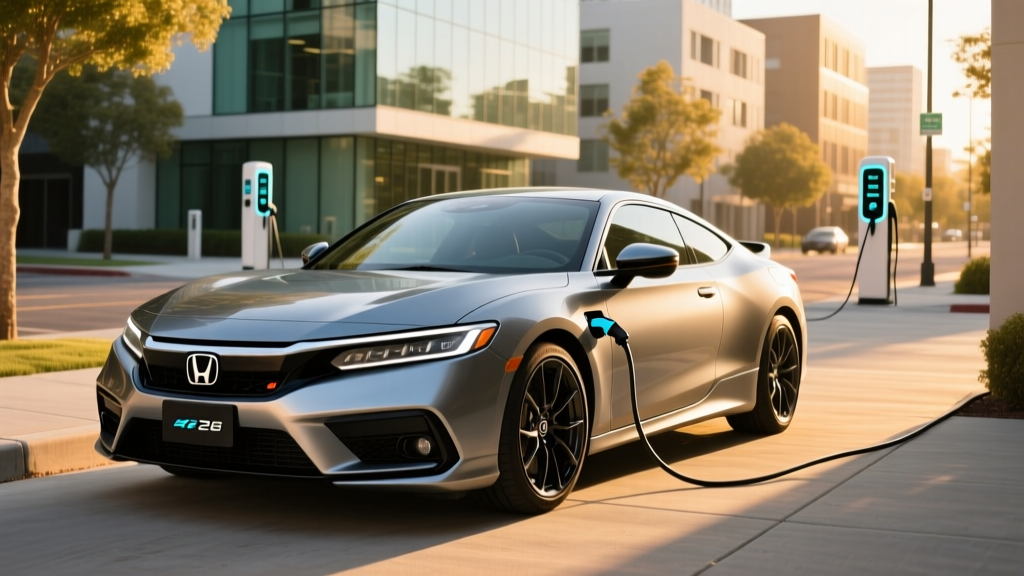
The 2026 Honda Prelude hybrid coupe arrives as a stylish, efficiency-focused 2-door that slots between the Civic Hybrid and the Accord Hybrid in Honda's electrified lineup. Built on a dedicated hybrid architecture pairing a 2.0-liter Atkinson-cycle 4-cylinder engine with Honda's fourth-generation two-motor hybrid system, the Prelude targets buyers who want coupe styling and engaging dynamics without sacrificing fuel economy. This is a conventional hybrid (HEV) — not a plug-in — meaning you never need to plug it in. It refuels at any gas station and recovers energy through regenerative braking.
For the 2026 model year, the Prelude competes against a thinning field of hybrid coupes. With the Toyota GR86 remaining gas-only and most rivals shifting to SUVs, the Prelude occupies a niche: a sporty, efficient, relatively affordable 2-door. Here's everything we know from Honda's published specifications and early EPA data.
2026 Honda Prelude Hybrid Coupe: Key Specifications
| Specification | Value |
|---|---|
| Powertrain | 2.0L Atkinson-cycle I-4 + 2-motor hybrid system |
| Combined Horsepower | 200 hp (system net) |
| Engine Output | 141 hp @ 6,000 rpm / 134 lb-ft torque |
| Drive Motor Output | 181 hp / 232 lb-ft torque |
| Transmission | e-CVT (direct-drive with lock-up clutch) |
| Drivetrain | Front-wheel drive |
| EPA Fuel Economy (Combined) | 48 MPG |
| EPA City / Highway | 50 city / 45 highway MPG |
| Fuel Tank Capacity | 10.6 gallons |
| Total Driving Range | ~509 miles (EPA est.) |
| 0–60 mph | ~6.8 seconds (est.) |
| Hybrid Battery | Lithium-ion, ~1.1 kWh (propulsion assist) |
| Curb Weight | ~3,250 lbs |
| Base MSRP (Sport trim) | $32,995 |
| Hybrid Battery Warranty | 8 years / 100,000 miles (10 yr/150,000 mi in CARB states) |
Fuel Economy: EPA Ratings and Real-World MPG
| Driving Condition | EPA Estimate | Real-World Expectation |
|---|---|---|
| City | 50 MPG | 48–54 MPG (hybrids often exceed EPA in stop-and-go) |
| Highway | 45 MPG | 40–44 MPG (sustained 75+ mph reduces regen benefit) |
| Combined | 48 MPG | 44–50 MPG depending on driving mix |
Honda's two-motor hybrid system excels in city driving, where the electric drive motor handles most low-speed propulsion and the gasoline engine acts primarily as a generator. This series-hybrid behavior at low speeds means the engine runs at its most efficient RPM regardless of vehicle speed. In real-world urban commuting, many drivers report exceeding the 50 MPG city EPA estimate — a common trait of Honda and Toyota hybrid systems where regenerative braking and electric-only low-speed operation boost efficiency beyond the sticker.
Highway driving tells a different story. At sustained speeds above 70 mph, the engine engages directly via a lock-up clutch (bypassing the e-CVT), but aerodynamic drag and reduced regenerative opportunity lower efficiency. Expect 40–44 MPG on long interstate trips at 75–80 mph. In cold weather (below 35°F), anticipate a 5–10% reduction across the board as the engine runs more frequently to provide cabin heat and maintain battery temperature.
With a 10.6-gallon fuel tank, total range lands around 509 miles on a fill-up — enough for most drivers to go 10–14 days between visits to the pump.
Hybrid vs Plug-In Hybrid: What the Prelude Is (and Isn't)
The 2026 Honda Prelude is a conventional hybrid (HEV), not a plug-in hybrid (PHEV). This distinction matters for your daily routine and expectations:
| Feature | HEV (Prelude) | PHEV (e.g., Toyota Prius Prime) | BEV (e.g., Honda Prologue) |
|---|---|---|---|
| Plugs in to charge? | No — gas only | Yes — optional plug-in | Yes — required |
| Electric-only range | ~1 mile at low speed | 25–45 miles | 250–350+ miles |
| Total range | ~509 miles | ~500–600 miles combined | 250–350 miles |
| Home charging needed? | No | Recommended (Level 2) | Yes (Level 2 ideal) |
| Federal tax credit (§30D) | Not eligible | Up to $7,500 (if eligible) | Up to $7,500 (if eligible) |
| Best for | No home charging access; want simplicity | Short commutes + home charging | Home charging + mostly electric driving |
Honda's decision to offer the Prelude as an HEV rather than a PHEV keeps weight down (no large battery pack), preserves cargo space, and lowers the starting price. The trade-off: no electric-only highway driving and no eligibility for the federal §30D tax credit, which applies only to plug-in vehicles with battery packs of at least 7 kWh meeting critical-mineral and battery-component sourcing requirements per IRS guidelines.
Powertrain and Driving Dynamics
The Prelude's fourth-generation two-motor hybrid system is a closely related evolution of the hardware found in the Accord Hybrid and Civic Hybrid, but tuned for sportier response. The system operates in three modes:
- EV Drive: Battery powers the drive motor alone. Used at low speeds, light acceleration, and coasting. Range is limited to roughly one mile before the engine engages.
- Hybrid Drive: The gasoline engine spins the generator motor to produce electricity, which feeds the drive motor. This series-hybrid mode covers most city and suburban driving.
- Engine Drive: At steady highway speeds, a lock-up clutch connects the engine directly to the front wheels for maximum mechanical efficiency. The drive motor provides assist during passing maneuvers.
Combined system output is rated at 200 hp. The drive motor's 232 lb-ft of torque is available from 0 rpm, giving the Prelude strong initial acceleration that makes it feel quicker than its 6.8-second 0–60 time suggests. Honda has added paddle shifters that adjust regenerative braking intensity across four levels — not true one-pedal driving like a BEV, but enough to modulate deceleration without touching the brake pedal in most traffic situations.
The chassis features a sport-tuned suspension with firmer damping than the Civic Hybrid, and Honda has lowered the seating position for a more engaging feel. The standard 18-inch alloy wheels wear 235/40R18 all-season tires. A Sport+ driving mode sharpens throttle response and increases steering weight, though it does slightly reduce fuel economy by holding the engine at higher RPM.
Pricing, Trims, and Tax Credit Eligibility
The 2026 Honda Prelude hybrid coupe is offered in two trims:
| Trim | MSRP | Key Features |
|---|---|---|
| Sport | $32,995 | 18" alloys, Honda Sensing suite, 9" touchscreen, wireless CarPlay/Android Auto, heated front seats |
| Sport Touring | $36,495 | Leather seats, Bose 12-speaker audio, wireless charging, head-up display, adaptive dampers |
Destination charge adds $1,095 to both trims.
Federal tax credit: The 2026 Prelude is a conventional hybrid and does not qualify for the IRS §30D Clean Vehicle Credit, which requires a plug-in vehicle with a battery capacity of at least 7 kWh. There is currently no federal tax credit specifically for conventional hybrids. Some states and local utilities offer rebates for hybrid purchases — check your state energy office or utility provider for current programs. Tax and incentive rules are subject to change; consult a tax professional for guidance specific to your situation.
Battery Warranty, Reliability, and Replacement Cost
Hybrid Battery Warranty: Honda covers the Prelude's lithium-ion hybrid battery for 8 years or 100,000 miles (whichever comes first) in most states. In California Air Resources Board (CARB) states — which include CA, CO, CT, ME, MD, MA, NJ, NY, OR, RI, VT, and WA — coverage extends to 10 years or 150,000 miles.
Warranty threshold: Honda warrants the battery against capacity loss below 70% of original capacity during the coverage period.
Honda's hybrid systems have demonstrated strong long-term reliability across the Accord Hybrid, Insight, and CR-V Hybrid lineups. The Prelude's small ~1.1 kWh propulsion battery experiences shallow charge-discharge cycles (typically operating between 20% and 80% state of charge), which significantly reduces degradation compared to the deep cycles a BEV battery endures. Based on historical data from Honda's hybrid fleet, most hybrid batteries retain well above 85% capacity at the 10-year mark.
If replacement is needed out of warranty, a Honda hybrid battery pack typically costs between $2,000 and $3,500 for the part, plus $500–$800 in labor. Refurbished packs are available from third-party suppliers for $1,200–$2,000. This is dramatically less than BEV battery replacement, which can exceed $10,000–$20,000 for large packs.
The broader powertrain — including the engine, e-CVT, and electric motors — is covered under Honda's 5-year/60,000-mile powertrain warranty. According to IIHS and NHTSA databases, Honda hybrid components have shown low failure rates in similar applications.
Who Should Buy the 2026 Honda Prelude Hybrid Coupe?
Pros
- Strong real-world city MPG — often exceeds EPA 50 MPG city estimate
- No plug-in required — no home charging installation needed
- 500+ mile total range eliminates range anxiety on road trips
- Engaging chassis with responsive electric torque delivery
- Lower starting price than PHEV and BEV competitors
- Comprehensive Honda Sensing safety suite standard
- Strong hybrid battery warranty (up to 10 yr / 150,000 mi in CARB states)
Cons
- Not eligible for federal §30D tax credit (HEV, not PHEV/BEV)
- Highway MPG drops to ~40–44 at sustained 75+ mph speeds
- Rear seat is tight — best suited for children or occasional use
- No all-wheel-drive option
- Cargo space limited by coupe roofline (~10 cu ft trunk)
- Cold-weather MPG penalty of 5–10%
Choose the 2026 Honda Prelude Hybrid if:
- You want a sporty coupe without the complexity or cost of plug-in charging
- You lack reliable access to home or workplace Level 2 charging
- Your commute is mostly city and suburban driving where hybrid efficiency shines
- You want 500+ mile range for road trips without planning charging stops
- Budget is a priority — the Prelude undercuts most PHEVs and BEVs by $5,000–$15,000
Look at a PHEV or BEV instead if:
- You have home Level 2 charging and a short commute (a PHEV like the Prius Prime gives 40+ electric-only miles)
- You want to maximize federal tax credits (§30D offers up to $7,500 for qualifying PHEVs/BEVs)
- You want to drive primarily on electricity to reduce fuel costs further
- You need more cargo space or rear-seat room (consider the Honda Prologue BEV or Accord Hybrid sedan)
Frequently Asked Questions
How many MPG does the 2026 Honda Prelude hybrid get?
The EPA rates the 2026 Prelude at 50 city / 45 highway / 48 combined MPG. In real-world city driving, many owners exceed the 50 MPG city figure thanks to the hybrid system's electric-dominant low-speed operation. Highway driving at 75+ mph typically yields 40–44 MPG.
Does the 2026 Honda Prelude need to be plugged in?
No. The Prelude is a conventional hybrid (HEV), not a plug-in hybrid. It charges its small battery through regenerative braking and the gasoline engine. You fuel it at any gas station — no charging cable or home charger needed.
How far can the Prelude drive on electric power alone?
Approximately one mile at very low speeds (under 25 mph) in EV Drive mode. This is not a plug-in hybrid — the Prelude is designed for electric assist, not electric-only commuting. If electric-only driving is a priority, consider a PHEV with 25–45 miles of EV range.
Is the hybrid battery reliable, and what does replacement cost?
Honda's hybrid batteries have demonstrated strong longevity, with most retaining above 85% capacity at 10 years. The battery is warranted for 8 years/100,000 miles (10 years/150,000 miles in CARB states). Out-of-warranty replacement runs $2,000–$3,500 for the pack plus $500–$800 labor — far less than BEV battery replacement.
Does the 2026 Honda Prelude qualify for a federal tax credit?
No. The federal §30D Clean Vehicle Credit applies only to plug-in electric vehicles (PHEVs and BEVs) with battery packs of at least 7 kWh that meet critical-mineral and battery-component sourcing rules. The Prelude's small hybrid battery does not meet these thresholds. Some state or utility rebates may apply — check local programs.
How does the Prelude compare to a full EV like the Honda Prologue?
The Prologue is a battery-electric SUV with ~296 miles of EPA range and eligibility for the $7,500 federal credit. It requires home charging infrastructure and planning for longer trips. The Prelude costs less upfront, needs no charging setup, offers 500+ mile range, and is better suited for buyers without reliable charging access. The Prologue delivers lower per-mile "fuel" cost and zero tailpipe emissions but demands a different ownership routine.
Does the Prelude have all-wheel drive?
No. The 2026 Prelude is front-wheel drive only. If AWD is a must-have, consider the Toyota Prius AWD (PHEV and HEV variants) or a compact hybrid SUV like the CR-V Hybrid.