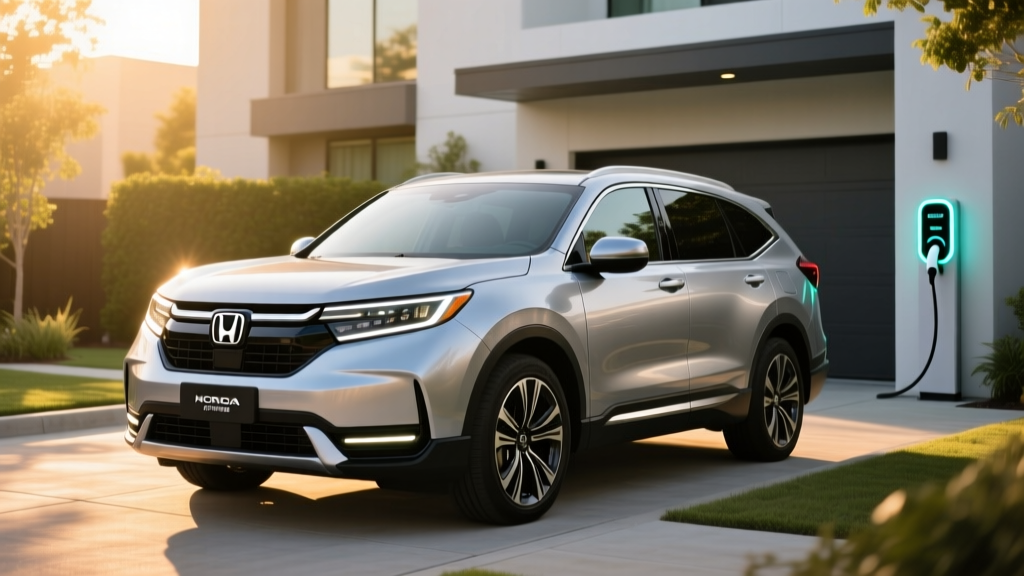
Honda has electrified nearly every nameplate in its lineup — the Accord, Civic, and CR-V all now offer proven hybrid powertrains. That leaves one glaring gap in the three-row family hauler segment: the Pilot. Enthusiasts and efficiency-minded families have been asking when the biggest Honda SUV gets the hybrid treatment, and all signs point to the 2026 Pilot hybrid as the year it finally arrives. As of early 2026, Honda has not published final EPA ratings or MSRP for a hybridized Pilot, but the powertrain architecture is already proven in other Honda products, and the competitive pressure from the Toyota Grand Highlander Hybrid and Hyundai Santa Fe Hybrid makes this one of the most anticipated model-year launches in the segment.
Here is everything we can confidently project based on Honda's current hybrid systems, what competitors deliver, and the regulatory landscape that will shape pricing and tax-credit eligibility.
HEV vs PHEV: What Kind of Hybrid Will the 2026 Pilot Be?
Before diving into specs, it is critical to understand the two hybrid flavors Honda could offer — and why the distinction matters for your wallet and daily routine.
| Feature | HEV (Conventional Hybrid) | PHEV (Plug-In Hybrid) |
|---|---|---|
| Plug-in charging required? | No — regenerative braking + engine charge the battery | Yes — plug in to access electric-only driving |
| Battery size | Small (~1.0–2.0 kWh) | Larger (~13–20 kWh) |
| Electric-only range | None (motor assists engine at all times) | Typically 25–45 miles |
| Fuel economy benefit | 25–40% improvement over gas-only | Can eliminate gas on short commutes; similar to HEV once battery is depleted |
| Federal tax credit (§30D) | Not eligible | Up to $7,500 if sourcing/income/MSRP rules are met |
| Price premium over gas model | Typically $1,500–$2,500 | Typically $5,000–$8,000 before incentives |
Our projection: Honda is most likely to debut the 2026 Pilot hybrid as a conventional HEV, using an evolution of the two-motor system found in the CR-V Hybrid and Accord Hybrid. Honda has been cautious with PHEV deployment in the U.S. market (only the Clarity PHEV was offered previously, and it was discontinued). A conventional hybrid keeps the Pilot's price competitive, avoids the weight penalty of a larger battery, and requires zero behavioral change from buyers upgrading from a gas Pilot. A PHEV variant could follow in a later model year if Honda decides to chase the tax-credit advantage.
Estimated Powertrain Specs: What We Expect Under the Hood
Honda's fourth-generation two-motor hybrid system — currently deployed in the 2026 CR-V Hybrid and Accord Hybrid — pairs a 2.0-liter Atkinson-cycle four-cylinder engine with two electric motors (one for propulsion, one primarily for generation/starter duties). This is the architecture most likely to scale up for the Pilot, potentially with output calibration adjustments for the larger, heavier vehicle.
| Specification | Projected (HEV) | Current Gas Pilot (Reference) |
|---|---|---|
| Engine | 2.0L Atkinson-cycle I-4 + 2-motor hybrid system | 3.5L V6 |
| Combined horsepower | ~230–260 hp (estimated) | 285 hp |
| Combined torque | ~250–280 lb-ft (est.) | 262 lb-ft |
| Transmission | e-CVT (direct-drive with lock-up clutch) | 10-speed automatic |
| Drivetrain | AWD expected standard (rear motor assist) | FWD or AWD |
| Hybrid battery capacity | ~1.3–1.8 kWh (lithium-ion) | N/A |
| Towing capacity | ~3,500–5,000 lbs (est.) | 5,000 lbs |
| 0–60 mph | ~7.0–7.8 seconds (est.) | ~6.7 seconds |
The CR-V Hybrid's system produces 204 combined horsepower, but the Pilot's larger displacement needs will likely push Honda toward a higher-output calibration — possibly similar to the Accord Hybrid's 204 hp but with more aggressive torque delivery from the electric motors. Honda's hybrid system is notable because the electric motor handles most propulsion duties at low and moderate speeds, with the gasoline engine primarily acting as a generator. At highway speeds, a lock-up clutch connects the engine directly to the wheels for efficiency.
Fuel Economy: How Many MPG Will the 2026 Pilot Hybrid Get?
This is the question driving most search traffic, and the honest answer is that official EPA figures have not been published as of early 2026. However, we can build a well-informed estimate using Honda's existing hybrid efficiency data and the competitive landscape.
| Vehicle | City MPG | Highway MPG | Combined MPG | Source |
|---|---|---|---|---|
| 2026 Pilot Hybrid (projected) | ~28–32 | ~27–30 | ~28–31 | Estimated based on CR-V Hybrid scaling |
| 2025 Toyota Grand Highlander Hybrid MAX | 26 | 27 | 27 | fueleconomy.gov |
| 2025 Toyota Grand Highlander Hybrid (standard) | 34 | 34 | 34 | fueleconomy.gov |
| 2025 Hyundai Santa Fe Hybrid | 35 | 31 | 33 | fueleconomy.gov |
Real-World MPG Note: Honda's hybrids historically perform well relative to EPA estimates, particularly in city driving where the electric motor does the heavy lifting. CR-V Hybrid owners frequently report exceeding the EPA city figure by 2–4 MPG in stop-and-go traffic. Highway efficiency is more variable — sustained 75+ mph cruising reduces the hybrid advantage significantly. Expect the Pilot Hybrid to follow this pattern: strong city numbers, more modest highway gains. In cold weather (below 35°F), expect a 5–10% MPG reduction as the engine runs more frequently for cabin heat and battery conditioning.
If Honda targets a combined rating around 29–31 MPG, that would represent roughly a 30–40% improvement over the current gas-only Pilot's 22 MPG combined (AWD). For a family driving 15,000 miles per year, the difference between 22 MPG and 30 MPG at $3.50/gallon gas is approximately $810 in annual fuel savings, or about $4,050 over five years.
Pricing, Trims, and Tax Credit Eligibility
Based on how Honda has positioned hybrid pricing on the CR-V (typically a $1,500–$1,700 premium over equivalent gas trims), we project the 2026 Pilot Hybrid will carry a modest upcharge rather than a radical price jump.
| Trim | Gas Pilot MSRP (2025 ref.) | Projected Hybrid MSRP |
|---|---|---|
| EX-L Hybrid | ~$45,170 | ~$46,700–$47,200 |
| Touring Hybrid | ~$49,290 | ~$50,800–$51,500 |
| Elite Hybrid | ~$53,175 | ~$54,700–$55,500 |
| Black Edition Hybrid | ~$54,470 | ~$56,000–$56,800 |
Federal tax credit status: A conventional HEV Pilot will not qualify for the IRS §30D Clean Vehicle Credit. That credit is reserved for plug-in electric vehicles (BEVs and PHEVs) meeting battery-sourcing, critical-mineral, MSRP cap, and buyer income requirements. If Honda eventually offers a PHEV Pilot, eligibility would depend on whether its battery components and critical minerals satisfy current-year sourcing rules — details that should be verified on irs.gov at the time of purchase.
Some states offer their own rebates for conventional hybrids, though these are far less common than EV incentives. Check your state energy office or AFDC's state incentive database for current programs.
Battery Warranty, Reliability, and Replacement Cost
This is where Honda's track record works in the buyer's favor. Honda's hybrid systems have proven remarkably durable across the Accord, CR-V, and Insight lineups, with many examples exceeding 200,000 miles without hybrid-battery intervention.
Honda Hybrid Battery Warranty: Honda covers its hybrid battery and related components for 8 years or 100,000 miles (whichever comes first) in most states. In California-emissions states (CARB states), coverage extends to 10 years or 150,000 miles. This warranty covers capacity loss below a defined threshold (typically 60–70% of original capacity) and defects.
Replacement cost if out of warranty: Based on current Honda hybrid battery replacement pricing for the CR-V and Accord Hybrid, expect a dealer-installed replacement pack to cost between $2,500 and $4,500 depending on the specific pack and labor rates. Independent hybrid specialists often offer refurbished packs for $1,500–$2,500. Given that Honda's hybrid batteries use a relatively small lithium-ion pack (not the large, expensive packs in BEVs), replacement costs are far more manageable than in full electric vehicles.
For reliability forecasting, the 2026 Pilot Hybrid's powertrain will share architecture with the CR-V Hybrid, which has performed well in early reliability surveys. The two-motor system eliminates the traditional transmission — no torque converter, no planetary gearset complexity — which removes one of the most common failure points in conventional vehicles. We recommend checking IIHS safety ratings and Consumer Reports reliability scores once the production model is available for testing.
2026 Pilot Hybrid vs Toyota Grand Highlander Hybrid vs Hyundai Santa Fe Hybrid
The three-row hybrid SUV segment is no longer a one-horse race. Here is how the projected Pilot Hybrid stacks up against established competitors across the metrics that matter.
| Metric | 2026 Honda Pilot Hybrid (Proj.) | 2025 Toyota Grand Highlander Hybrid | 2025 Hyundai Santa Fe Hybrid |
|---|---|---|---|
| Combined MPG (est./EPA) | ~29–31 | 34 | 33 |
| Combined HP | ~230–260 | 245 (standard) / 362 (MAX) | 232 |
| Third-row usability | Strong (Pilot's known advantage) | Excellent (class-leading) | Tight (best for kids) |
| Cargo (behind 3rd row) | ~18 cu ft (est.) | 20.6 cu ft | 15.5 cu ft |
| Towing capacity | ~3,500–5,000 lbs | 5,000 lbs | 3,500 lbs |
| Starting MSRP (hybrid) | ~$46,700 (est.) | ~$45,320 | ~$39,500 |
| Hybrid battery warranty | 8 yr / 100k mi (10/150k CARB) | 10 yr / 150k mi | 10 yr / 100k mi |
Projected Pros — 2026 Pilot Hybrid
- Best-in-class third-row space and cargo versatility (Pilot's existing strength)
- Proven Honda two-motor hybrid system with strong reliability record
- Electric motor torque fills the low-end gap the V6 leaves
- No plug-in behavior change — fill up and go like a normal SUV
- Strong resale value expected (Pilot historically retains well)
Projected Cons — 2026 Pilot Hybrid
- Likely trails Grand Highlander Hybrid on combined MPG
- No PHEV variant at launch = no federal tax credit
- Hybrid premium adds ~$1,500+ over gas trims
- Slightly less power than the current 285-hp V6 (depending on calibration)
- Unconfirmed — final specs may differ from projections
Who Should Choose the 2026 Pilot Hybrid vs a Full EV or Gas SUV?
Choose the 2026 Pilot Hybrid (HEV) if:
- You want meaningful fuel savings without changing your refueling habits
- You do not have reliable access to home or workplace charging
- You frequently take long road trips where charging infrastructure is sparse
- You need three rows and cargo space that compact EV crossovers cannot provide
- You plan to own the vehicle 8+ years (hybrid fuel savings compound over time)
Stick with the gas Pilot if:
- You drive fewer than 10,000 miles per year (hybrid premium payback exceeds ownership)
- You prioritize maximum towing capacity and are willing to accept higher fuel cost
- Budget is the primary constraint and every dollar of MSRP matters
Consider a full EV (e.g., Kia EV9, Tesla Model X) if:
- You have Level 2 home charging and your daily driving is under 250 miles
- You want the lowest per-mile fuel cost and qualify for the §30D credit
- You value instant torque, silent operation, and zero tailpipe emissions
- You are comfortable planning around DC fast-charging stops on road trips
What We Still Don't Know — and When We Will
As of this writing, Honda has not released official EPA fuel economy data, final MSRP, or complete trim-level specifications for the 2026 Pilot Hybrid. Key details still pending include:
- Exact combined horsepower and torque figures from the production hybrid system
- Official EPA city/highway/combined MPG ratings
- Confirmed towing capacity (hybrid systems can reduce this due to battery weight and thermal limits)
- Whether AWD is standard or optional on hybrid trims
- Availability timeline — Honda typically reveals new model-year details in the summer or fall before the model year begins
We will update this article with verified data as soon as Honda publishes it. Until then, treat all figures above as informed projections based on Honda's existing hybrid architecture and competitive positioning.
Frequently Asked Questions
How many MPG does the 2026 Honda Pilot Hybrid get?
Official EPA ratings are not yet published. Based on Honda's hybrid system performance in the CR-V and Accord, and the Pilot's larger size and weight, we project a combined rating of approximately 28–31 MPG. The Toyota Grand Highlander Hybrid achieves 34 MPG combined for reference. Honda hybrids tend to exceed EPA city estimates in real-world stop-and-go driving.
Is the 2026 Pilot Hybrid a plug-in hybrid (PHEV)?
All available evidence points to the 2026 Pilot Hybrid being a conventional HEV — meaning it does not plug in and has no electric-only driving range. The small hybrid battery charges through regenerative braking and the gasoline engine. A PHEV variant is possible in future model years but has not been announced.
Does the 2026 Pilot Hybrid qualify for a federal tax credit?
No. The IRS §30D Clean Vehicle Credit applies only to plug-in electric vehicles (BEVs and PHEVs) that meet battery sourcing, critical mineral, MSRP cap, and buyer income requirements. A conventional hybrid does not qualify. Check irs.gov for current rules and your state's incentive database for any local hybrid rebates.
Is the hybrid battery reliable, and what does replacement cost?
Honda's hybrid batteries are covered by an 8-year/100,000-mile warranty (10 years/150,000 miles in CARB states). Honda's hybrid systems have demonstrated strong long-term reliability across multiple model lines. Out-of-warranty replacement is estimated at $2,500–$4,500 at a dealer, or $1,500–$2,500 through an independent hybrid specialist — significantly less than a full EV battery replacement.
Will the hybrid Pilot have less power than the gas V6?
Projected combined output is approximately 230–260 hp, which is slightly below the current gas Pilot's 285-hp V6. However, Honda's hybrid system delivers peak torque from the electric motor at zero RPM, which means real-world acceleration feel — particularly in city driving and merging — may be comparable or even more responsive despite the lower peak horsepower figure. Official 0–60 times will clarify this once the production model is tested.
When will the 2026 Pilot Hybrid be available to buy?
Honda has not announced an exact on-sale date. Based on Honda's typical model-year reveal cadence, we expect official specifications and pricing to be published in mid-to-late 2025, with vehicles arriving at dealers in late 2025 or early 2026 as a 2026 model-year vehicle.