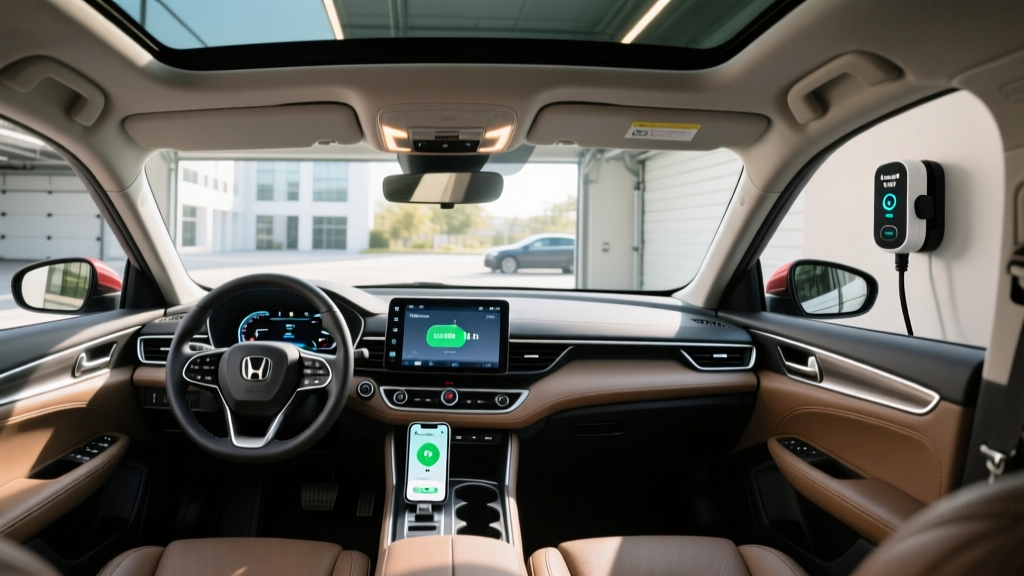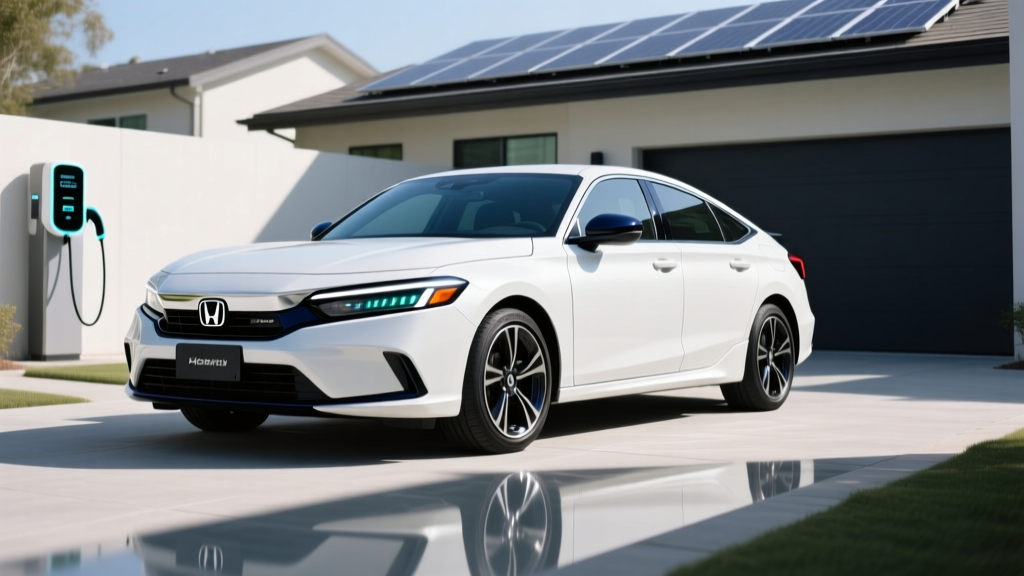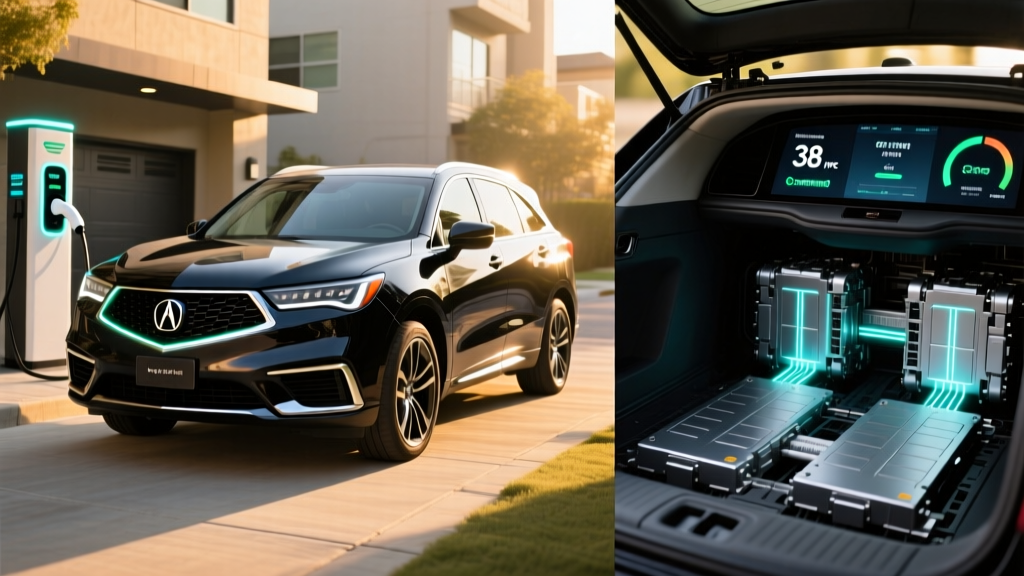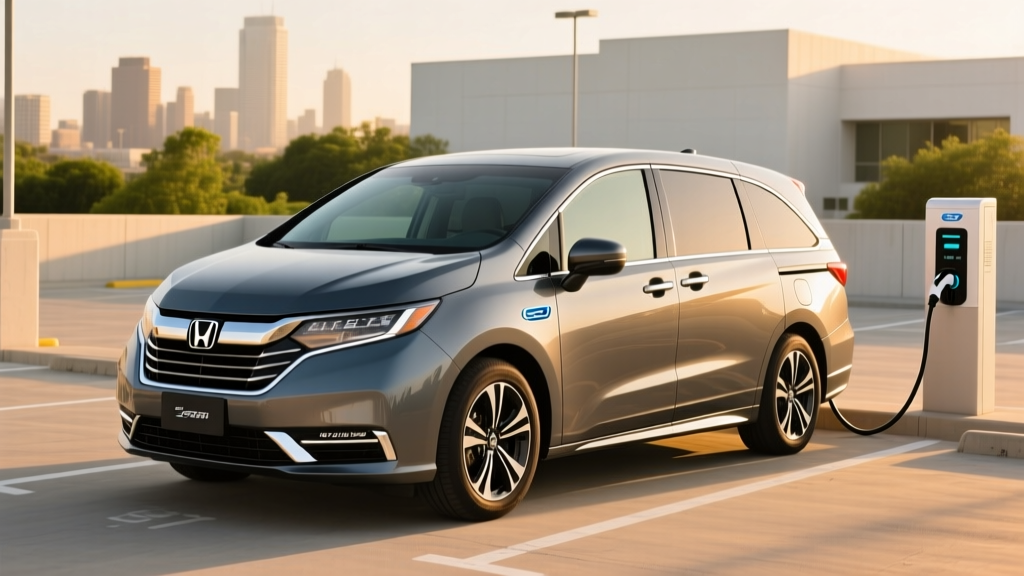
If you've been searching for a Honda Odyssey hybrid, the 2026 model year finally delivers what minivan buyers have requested for over a decade: a gasoline-electric powertrain in Honda's flagship people-mover. The Odyssey Hybrid pairs a 2.0-liter Atkinson-cycle four-cylinder engine with a two-motor hybrid system derived from the Accord Hybrid, targeting families who want substantial fuel savings without range anxiety or plug-in infrastructure.
But does the hybrid Odyssey actually deliver on its efficiency promises? And how does it compare to plug-in hybrid rivals like the Chrysler Pacifica PHEV or a full battery-electric alternative? This guide breaks down every spec that matters — EPA MPG, real-world fuel economy, powertrain output, battery warranty, and total ownership cost — so you can make an informed purchase decision.
2026 Honda Odyssey Hybrid: Core Specs at a Glance
| Specification | 2026 Honda Odyssey Hybrid |
|---|---|
| Powertrain | 2.0L Atkinson-cycle I4 + 2-motor hybrid system |
| Combined Horsepower | 204 hp |
| Transmission | e-CVT (electrically variable) |
| EPA MPG (City / Highway / Combined) | 38 / 34 / 36 MPG |
| Fuel Tank Capacity | 16.0 gallons |
| Total Driving Range | ~576 miles |
| Drivetrain | Front-wheel drive |
| Seating Capacity | 8 passengers |
| Cargo Volume (behind 3rd row) | 38.6 cu ft |
| Max Cargo Volume | 144.9 cu ft |
| Towing Capacity | 3,500 lbs |
| Hybrid Battery Warranty | 10 years / 150,000 miles |
| Starting MSRP | $41,890 (EX Hybrid) |
EPA Fuel Economy vs. Real-World MPG
The EPA rates the 2026 Odyssey Hybrid at 38 MPG city, 34 MPG highway, and 36 MPG combined according to fueleconomy.gov. That's a massive 58% improvement over the outgoing gasoline-only Odyssey, which was rated at 22 MPG combined.
Compared to the Toyota Sienna (which is exclusively hybrid and rated at 36 MPG combined), the Odyssey Hybrid edges slightly ahead on paper, though real-world results will depend heavily on driving patterns and climate.
How the Hybrid Powertrain Works
The Odyssey Hybrid uses Honda's fourth-generation two-motor hybrid system, the same architecture found in the Accord Hybrid and CR-V Hybrid. Here's the breakdown:
- Gasoline Engine: A 2.0-liter Atkinson-cycle four-cylinder producing 146 hp and 134 lb-ft of torque. The Atkinson cycle prioritizes efficiency over peak power by keeping the intake valve open slightly longer during the compression stroke.
- Primary Drive Motor: An electric motor generating 181 hp and 247 lb-ft of torque, responsible for propulsion in most driving conditions.
- Generator Motor: A second motor that primarily functions as a generator, converting engine output to electricity or providing supplemental torque.
- Lithium-Ion Battery Pack: A ~1.3 kWh battery positioned under the second-row floor, preserving cargo and passenger space.
Combined system output is 204 horsepower. The e-CVT transmission isn't a traditional belt-and-pulley CVT — it's a direct-drive system with a single fixed gear ratio for engine-powered cruising, while the electric motor handles acceleration from a stop and low-speed driving. The result is smooth, linear acceleration without the rubber-band sensation of conventional CVTs.
Three drive modes are available: EV Drive (electric-only for short, low-speed bursts up to ~1 mile), Hybrid Drive (engine generates electricity for the motor), and Engine Drive (direct mechanical connection at highway speeds). The system manages these transitions seamlessly — most drivers won't notice when the engine engages.
HEV vs. PHEV: Why the Odyssey Hybrid Is a Conventional Hybrid
Conventional Hybrid (HEV)
2026 Honda Odyssey Hybrid
- No plug required — charges via regenerative braking and the gasoline engine
- Small battery (~1.3 kWh) for brief electric-only assist
- 36 MPG combined regardless of charging habits
- No electric-only highway driving
- Lower upfront cost; no home charger needed
Plug-In Hybrid (PHEV)
e.g., Chrysler Pacifica PHEV
- Requires plug-in charging to access full benefits
- Larger battery (~16 kWh) for 32 miles electric-only
- 82 MPGe on electric; 30 MPG on gas alone
- Can drive highway speeds on electricity alone
- Higher upfront cost; benefits from home Level 2 charging
The Odyssey Hybrid is an HEV — a conventional hybrid. You never plug it in. The battery charges itself through regenerative braking (capturing kinetic energy during deceleration) and excess engine power. This makes it ideal for buyers who lack access to home charging — apartment dwellers, street parkers, or those who simply don't want to think about charging logistics.
If you have reliable home charging and your daily driving is under 30 miles, a PHEV like the Pacifica Hybrid could eliminate most gasoline use on weekdays while retaining a gas engine for road trips. But the PHEV's advantage collapses if you can't charge regularly — you'll be carrying 600+ lbs of dead battery weight and achieving worse fuel economy than the Odyssey Hybrid.
Pricing, Trims, and Tax Credit Eligibility
| Trim Level | MSRP | Key Features |
|---|---|---|
| EX Hybrid | $41,890 | Honda Sensing, power sliding doors, 8" touchscreen |
| EX-L Hybrid | $44,890 | Leather seats, power tailgate, wireless CarPlay/Android Auto |
| Sport-L Hybrid | $46,490 | Blacked-out exterior accents, leather-trimmed sport seats |
| Touring Hybrid | $49,890 | Navigation, rear entertainment, CabinTalk intercom |
| Elite Hybrid | $52,490 | Blue ambient lighting, premium audio, ventilated front seats |
Does the Odyssey Hybrid Qualify for a Federal Tax Credit?
No. The 2026 Honda Odyssey Hybrid does not qualify for the federal §30D Clean Vehicle Credit of up to $7,500. That credit is reserved for battery-electric vehicles (BEVs) and plug-in hybrids (PHEVs) with battery capacities of at least 7 kWh. The Odyssey Hybrid's ~1.3 kWh battery falls far below that threshold.
Some states offer their own hybrid incentives — check your state's energy office or DMV for current programs. However, most state incentives have also shifted toward BEVs and PHEVs, making conventional hybrid tax credits increasingly rare.
Battery Longevity, Warranty, and Replacement Cost
The Odyssey Hybrid's battery is relatively small (~1.3 kWh) and operates within a conservative state-of-charge window — typically between 40% and 80% — which dramatically reduces degradation stress. Honda's hybrid systems in the Accord and CR-V have demonstrated excellent long-term reliability, with many examples surpassing 200,000 miles on the original battery pack.
Replacement cost: If the battery does fail outside warranty, expect a dealer replacement to cost between $2,000 and $4,000 including labor. Independent hybrid battery specialists often offer refurbished or reconditioned packs for $1,500-$2,500. Given the battery's small size and conservative operating parameters, replacement is unlikely during typical ownership.
The rest of the hybrid system — the electric motors, power control unit, and e-CVT — is covered under Honda's standard 5-year / 60,000-mile powertrain warranty, with hybrid-specific components covered for 8 years / 100,000 miles.
Odyssey Hybrid vs. the Competition
| Spec | 2026 Honda Odyssey Hybrid | 2026 Toyota Sienna | 2026 Chrysler Pacifica PHEV |
|---|---|---|---|
| Powertrain | 2.0L HEV | 2.5L HEV | 3.6L V6 PHEV |
| Combined HP | 204 hp | 245 hp | 260 hp |
| EPA Combined MPG | 36 MPG | 36 MPG | 30 MPG (gas) / 82 MPGe |
| Electric-Only Range | ~1 mi (low speed) | ~1 mi (low speed) | 32 miles |
| Plug-In Required? | No | No | Yes (for max benefit) |
| AWD Available? | No | Yes | No |
| Starting MSRP | $41,890 | $39,185 | $51,095 |
| Federal Tax Credit | None | None | Up to $7,500* |
| Max Cargo (cu ft) | 144.9 | 101.0 | 140.5 |
*Pacifica PHEV tax credit eligibility depends on current-year battery sourcing, MSRP caps, and buyer income limits under IRS §30D. Verify at irs.gov before purchasing.
The Toyota Sienna remains the Odyssey Hybrid's closest rival. Both are conventional HEVs with identical combined MPG ratings, but the Sienna offers available AWD (critical for snow-belt buyers) and a lower starting price. The Odyssey counters with more cargo volume (144.9 vs. 101.0 cu ft behind the front seats) and Honda's Magic Slide second-row seats for easier third-row access.
The Chrysler Pacifica PHEV occupies a different niche entirely. With 32 miles of electric-only range, it can handle school runs and commutes on electricity alone — if you can charge at home. The tradeoff is a $9,000+ price premium (partially offset by the tax credit), reduced cargo space due to the larger battery, and 30 MPG on gasoline alone when the battery is depleted.
Who Should Buy the Honda Odyssey Hybrid?
✓ Choose the Odyssey Hybrid If:
- You want minivan space with dramatically lower fuel costs
- You don't have access to home or workplace charging
- You drive 15,000+ miles per year (fuel savings compound)
- You prioritize cargo volume over AWD capability
- You want a proven hybrid system without plug-in complexity
✗ Look Elsewhere If:
- You need AWD for snow/ice (choose Sienna AWD)
- You want electric-only commuting (choose Pacifica PHEV)
- You want a $7,500 federal tax credit (choose a BEV or PHEV)
- You take frequent road trips over 600 miles (consider diesel or a larger fuel tank)
- You need maximum towing capacity (gas-only vans often tow more)
At 15,000 miles per year and $3.50/gallon gasoline, the Odyssey Hybrid saves roughly $1,400 annually compared to the previous gas-only model (36 MPG vs. 22 MPG). That's approximately $7,000 in fuel savings over five years — enough to offset the hybrid premium over a comparably equipped gas minivan.
Frequently Asked Questions
How many MPG does the Honda Odyssey Hybrid get?
The 2026 Honda Odyssey Hybrid is EPA-rated at 38 MPG city, 34 MPG highway, and 36 MPG combined. Real-world results typically fall between 33-42 MPG depending on driving conditions, with city driving favoring the higher end and sustained highway speeds the lower end.
Does the Honda Odyssey Hybrid need to be plugged in?
No. The Odyssey Hybrid is a conventional hybrid (HEV), not a plug-in hybrid (PHEV). The battery charges automatically through regenerative braking and the gasoline engine. You simply fill up at a gas station as you would with any other vehicle.
How far can the Odyssey Hybrid drive on electric power alone?
Approximately 1 mile at low speeds (under 25 MPH) in EV Drive mode. This is useful for creeping through parking lots or residential streets, but the engine will engage for any meaningful acceleration or highway driving. This is normal for conventional hybrids — they are not designed for extended electric-only operation.
Is the Honda Odyssey Hybrid reliable?
Honda's two-motor hybrid system has an excellent reliability track record in the Accord Hybrid and CR-V Hybrid, which share the same architecture. The hybrid battery is warrantied for 10 years / 150,000 miles. The Odyssey also carries top safety ratings from NHTSA and the IIHS. Long-term reliability data specific to the Odyssey Hybrid will accumulate over the coming years, but the underlying powertrain is well-proven.
What does a Honda Odyssey Hybrid battery replacement cost?
Dealer replacement runs $2,000-$4,000 including labor. Independent hybrid specialists may offer refurbished packs for $1,500-$2,500. Given the conservative charge window and small battery size, most Odyssey Hybrids will never need a battery replacement during typical ownership.
Does the Odyssey Hybrid qualify for any tax credits?
Not at the federal level. The IRS §30D Clean Vehicle Credit requires a minimum 7 kWh battery, and the Odyssey Hybrid's ~1.3 kWh pack does not qualify. Some state-level hybrid incentives may exist — check your state energy office for current programs.
Hybrid vs. PHEV vs. full EV — which minivan is right for me?
Choose a conventional hybrid (Odyssey Hybrid, Sienna) if you lack home charging or want simplicity. Choose a PHEV (Pacifica Hybrid) if you have home charging and a short daily commute you want to drive on electricity. Choose a full EV (Kia EV9, upcoming electric minivans) if you want zero gasoline use, have reliable charging access, and your road trips are within the vehicle's range or you're comfortable with DC fast-charging stops.