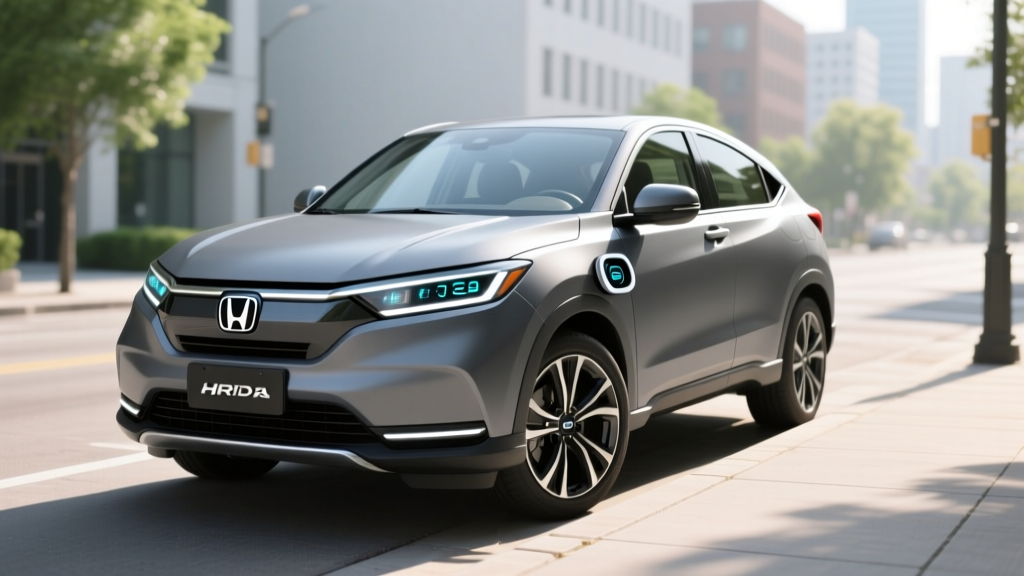
The subcompact crossover segment is crowded, but buyers hunting for maximum fuel efficiency without plugging in keep asking the same question: will Honda finally bring a hybrid HR-V to the United States? For 2026, the answer requires careful parsing. Honda sells the HR-V in the U.S. exclusively with a 2.0-liter four-cylinder gasoline engine. However, the 2026 Honda HR-V Hybrid (marketed as the Vezel Hybrid in Japan and parts of Asia, and based on the e:HEV system sold in Europe) exists in global markets and represents Honda's most efficient subcompact crossover formula. Whether you can buy one depends entirely on your geography — and understanding exactly what this powertrain delivers if you're cross-shopping globally or considering the import/grey-market route.
This guide breaks down everything we know about the 2026 Honda HR-V Hybrid's e:HEV powertrain, real-world MPG expectations, battery longevity, pricing context, and how it stacks up against full EVs, plug-in hybrids, and the conventional gas HR-V sold stateside.
HEV vs PHEV: What the HR-V Hybrid Actually Is
Before evaluating specs, it's essential to establish what the 2026 Honda HR-V Hybrid is — and what it is not. The HR-V Hybrid uses Honda's e:HEV system, which is a conventional full hybrid (HEV), not a plug-in hybrid (PHEV).
Conventional Hybrid (HEV) — Honda HR-V e:HEV
- No plug required. The battery recharges through regenerative braking and the gasoline engine.
- Small battery (~1.0–1.5 kWh usable) — designed for short electric-only assists, not sustained EV driving.
- Electric-only range: typically under 1 mile at low speeds; the motor assists the engine rather than replacing it for long distances.
- No federal tax credit under IRS §30D (that credit applies only to PHEVs and BEVs with ≥7 kWh battery capacity).
Plug-In Hybrid (PHEV) — Not Offered for HR-V
- Requires plug-in charging (Level 1 or Level 2).
- Larger battery (typically 10–20 kWh) enabling 20–40 miles of electric-only driving.
- May qualify for federal tax credits (up to $7,500 under §30D, subject to income, MSRP, and battery-sourcing rules).
- Honda does not currently offer a PHEV version of the HR-V in any market.
If you're looking for a Honda PHEV in the U.S., the closest alternatives are the discontinued Clarity Plug-In Hybrid (used market only) or stepping up to the CR-V Hybrid (also an HEV, not a PHEV). Honda's current U.S. lineup has no PHEV offerings as of the 2026 model year.
2026 Honda HR-V Hybrid Powertrain & Performance
| Specification | 2026 HR-V Hybrid (e:HEV, Global Spec) |
|---|---|
| Powertrain Type | Series-parallel full hybrid (HEV) |
| Engine | 1.5L Atkinson-cycle 4-cylinder |
| Electric Motors | Dual-motor e:HEV system (propulsion + generator) |
| Combined System Output | ~129–131 hp (96–98 kW) |
| Hybrid Battery | ~1.0–1.5 kWh lithium-ion (non-plug-in) |
| Transmission | e-CVT (fixed gear ratio with engine direct-drive clutch) |
| Drivetrain | FWD standard; AWD available in select markets |
| 0–60 mph (est.) | ~9.0–9.5 seconds |
| Curb Weight | ~3,100–3,200 lbs |
Honda's e:HEV system is distinct from Toyota's Hybrid Synergy Drive. The HR-V Hybrid operates primarily as a series hybrid at low and moderate speeds — the gasoline engine spins a generator that feeds electricity to the propulsion motor, which drives the wheels. At highway cruising speeds, a clutch engages to connect the engine directly to the wheels for better efficiency. This means the driving experience feels more like an EV around town (smooth, linear torque delivery) with the engine running quietly in the background as a generator.
Fuel Economy: EPA Estimates vs Real-World MPG
Because the HR-V Hybrid is not officially sold in the U.S., there are no EPA fuel economy ratings published on fueleconomy.gov. However, based on Honda's published WLTP figures for global markets and real-world testing from international automotive outlets, we can estimate equivalent MPG:
| Driving Condition | Estimated MPG (US Equiv.) | Notes |
|---|---|---|
| City | ~45–50 MPG | Hybrids excel in stop-and-go; e:HEV runs on electric motor at low speeds |
| Highway | ~38–42 MPG | Engine direct-drive mode; less advantage over gas models |
| Combined | ~42–46 MPG | WLTP-to-EPA conversion typically reduces figures 10–15% |
For comparison, the U.S.-spec 2026 Honda HR-V with the 2.0L gasoline engine and CVT earns an EPA-estimated 27 city / 32 highway / 29 combined MPG (FWD). The hybrid variant's advantage is substantial — roughly 45–55% better combined fuel economy.
Real-World MPG Considerations
Hybrids frequently exceed their EPA city estimates in real-world stop-and-go driving because regenerative braking recovers energy that a gas car wastes as heat. Owners of Honda e:HEV vehicles (Civic Hybrid, CR-V Hybrid) commonly report city MPG that matches or beats the sticker. However:
- Cold weather (below 40°F): expect a 5–10% MPG drop as the engine runs more frequently to provide cabin heat and maintain battery temperature.
- Sustained highway driving above 75 mph: aerodynamic drag reduces the hybrid advantage; expect highway MPG closer to 36–38.
- Hilly terrain: regen recovers energy on descents, but climbing efficiency depends on load. Net effect is roughly neutral vs flat driving.
Pricing, Availability & Tax Credit Eligibility
Here's the critical issue for U.S. buyers: Honda does not sell the HR-V Hybrid in the United States for the 2026 model year. The U.S. HR-V lineup (LX, Sport, EX-L) is powered exclusively by the 2.0-liter naturally aspirated four-cylinder producing 158 hp, with MSRPs ranging from approximately $25,400 to $29,700.
In markets where the HR-V Hybrid is sold (Japan, Southeast Asia, parts of Europe as the Vezel/HR-V e:HEV), pricing typically converts to $24,000–$30,000 USD equivalent, depending on trim and local taxation.
Federal Tax Credit: Does It Qualify?
No. Under IRS §30D rules, the federal Clean Vehicle Credit (up to $7,500) applies only to battery electric vehicles (BEVs) and plug-in hybrids (PHEVs) with a battery capacity of at least 7 kWh. The HR-V Hybrid's ~1.0–1.5 kWh battery does not meet this threshold. Conventional hybrids (HEVs) have not qualified for the §30D credit since the credit was restructured.
Some states offer their own incentives for hybrid vehicles, though these are increasingly rare as programs shift focus to zero-emission vehicles. Check your state's energy office or DMV for current programs.
Battery Longevity, Warranty & Replacement Cost
Honda Hybrid Battery Warranty
In markets where Honda sells hybrid vehicles, the standard hybrid battery warranty is 8 years / 100,000 miles (or the local equivalent). In California Air Resources Board (CARB) states, Honda's U.S. hybrid models (Civic Hybrid, CR-V Hybrid) carry an extended 10 years / 150,000 miles warranty on hybrid-system components including the battery pack.
How Long Do Honda Hybrid Batteries Last?
Honda's e:HEV system uses a relatively small lithium-ion battery that operates within a conservative state-of-charge window — it rarely charges to 100% or depletes to 0%. This shallow cycling significantly extends battery life. Based on long-term data from Honda and Toyota hybrid owners:
- Expected lifespan: 150,000–200,000+ miles before significant degradation
- Degradation pattern: gradual capacity loss (typically 10–15% over 10 years), not sudden failure
- Real-world evidence: Honda Insight and Civic Hybrid owners routinely report original batteries lasting 150,000+ miles with minimal MPG decline
Battery Replacement Cost
If the hybrid battery does need replacement outside warranty:
- OEM replacement: $2,000–$3,500 (parts + labor), depending on market
- Refurbished/aftermarket: $1,000–$2,000
- Individual cell replacement: some specialty shops can replace failed cells for $500–$1,000
Because the HR-V Hybrid's battery is small (~1.0–1.5 kWh vs 60–100 kWh in a full EV), replacement costs are a fraction of what EV owners face. This is one of the strongest economic arguments for choosing a conventional hybrid over a BEV if long-term battery cost is a concern.
Who Should Choose the HR-V Hybrid vs an EV or Gas Car?
Choose the HR-V Hybrid (or a comparable HEV) if:
- You lack access to home or workplace charging (apartment, street parking, no garage outlet)
- You drive in heavy city traffic where regenerative braking maximizes fuel savings
- You want 40+ MPG without changing your fueling habits — no plugs, no range planning
- You plan to own the vehicle 10+ years and want minimal battery-replacement cost risk
- You frequently drive in areas with sparse charging infrastructure (rural routes, road trips)
Choose a Plug-In Hybrid (PHEV) instead if:
- You have reliable Level 2 home charging and a commute under 30 miles
- You want to drive mostly electric daily but need gas-engine flexibility for longer trips
- You want to qualify for the federal §30D tax credit (up to $7,500, subject to eligibility)
- Consider: Toyota RAV4 Prime (42 mi electric range), Ford Escape PHEV (37 mi), or Hyundai Tucson PHEV (33 mi)
Choose a Full EV (BEV) instead if:
- You have home Level 2 charging and want zero tailpipe emissions
- Your daily driving is under 250 miles and you can plan road-trip charging
- You want the lowest per-mile fuel cost (electricity at $0.14/kWh ≈ $0.04/mile vs gas at $3.50/gal ≈ $0.12/mile at 30 MPG)
- Consider: Chevrolet Equinox EV (315 mi range, ~$33,000), Hyundai Kona Electric (261 mi, ~$32,975), or Honda Prologue (296 mi, ~$47,400)
The U.S. Buyer Reality Check
If you're a U.S. buyer specifically searching for a "2026 Honda HR-V Hybrid," you'll need to consider alternatives since Honda doesn't sell it here. Your closest Honda options are:
- Honda CR-V Hybrid (e:HEV): EPA-estimated 40 city / 34 highway / 37 combined MPG (FWD). Base MSRP ~$34,000. Larger than the HR-V but the same hybrid philosophy.
- Honda Civic Hybrid: EPA-estimated 50 city / 47 highway / 49 combined MPG. Base MSRP ~$29,000. Sedan form factor, outstanding efficiency.
- Gas HR-V: 29 combined MPG, ~$25,400 starting. If you want the HR-V's size and styling, the fuel economy penalty vs the hybrid is meaningful (~$500–$700/year extra in fuel at 12,000 miles/year).
How It Compares: HR-V Hybrid vs Subcompact Hybrid Rivals
| Model | Combined MPG | Powertrain | Starting MSRP (USD) | U.S. Availability |
|---|---|---|---|---|
| Honda HR-V Hybrid (e:HEV) | ~42–46 (est.) | 1.5L HEV | ~$25,000 (global) | Not sold in U.S. |
| Toyota Yaris Cross Hybrid | ~47–50 (est.) | 1.5L HEV | ~$24,000 (global) | Not sold in U.S. |
| Honda HR-V (U.S. Gas) | 29 EPA | 2.0L Gas | $25,400 | Yes |
| Honda CR-V Hybrid | 37–40 EPA | 2.0L HEV | $34,000 | Yes |
| Toyota Corolla Cross Hybrid | 42 EPA | 2.0L HEV | $29,300 | Yes |
| Kia Seltos (Gas) | 29 EPA | 2.0L Gas | $24,390 | Yes (no hybrid) |
For U.S. buyers wanting a subcompact crossover with hybrid efficiency, the Toyota Corolla Cross Hybrid is the closest available equivalent — it offers 42 combined MPG with AWD standard and a starting price around $29,300. It sacrifices some cargo space compared to the HR-V but delivers the hybrid fuel savings the HR-V Hybrid would offer.
Pros & Cons
Pros
- Estimated 42–46 combined MPG — 45%+ better than the gas HR-V
- EV-like smooth acceleration in city driving (series-hybrid mode)
- No plug-in charging required — zero lifestyle change from gas
- Small hybrid battery = low replacement cost ($2,000–$3,500)
- Strong battery warranty (8yr/100k mi minimum)
- Proven Honda e:HEV reliability across global markets
Cons
- Not available in the U.S. for the 2026 model year
- No federal tax credit eligibility (conventional HEV)
- Modest power (~129–131 hp) — not a performance-oriented crossover
- Highway fuel economy advantage narrows at speeds above 75 mph
- No DC fast charging capability (not applicable for HEV)
- Cold-weather MPG penalty of 5–10% without a heat pump
Frequently Asked Questions
How many MPG does the 2026 Honda HR-V Hybrid get?
Based on global-market WLTP data converted to U.S. equivalents, the HR-V Hybrid is estimated to achieve approximately 45–50 MPG city, 38–42 MPG highway, and 42–46 MPG combined. These figures are not EPA-certified because Honda does not sell the HR-V Hybrid in the United States. The U.S.-spec gas HR-V achieves 27/32/29 MPG (city/highway/combined).
How far can the HR-V Hybrid drive on electric only?
Less than 1 mile, and only at very low speeds (under 25 mph). The HR-V Hybrid is a conventional HEV, not a plug-in hybrid. Its small ~1.0–1.5 kWh battery is designed to assist the gasoline engine and enable brief engine-off coasting — not to provide meaningful electric-only range. If you need 20+ miles of electric driving, you need a PHEV or BEV.
Hybrid vs PHEV vs EV — which should I choose?
Choose a conventional hybrid (HEV) if you have no charging access and want maximum MPG with zero lifestyle change. Choose a PHEV if you can charge at home and want electric-only commuting with gas-engine backup for road trips. Choose a full EV (BEV) if you have reliable charging, want the lowest operating cost, and can plan longer trips around DC fast chargers. The HR-V Hybrid is an HEV — best for drivers without charging access.
Is the Honda HR-V Hybrid reliable?
Honda's e:HEV system has been in production since 2020 (debuting in the Japan-market Fit/Jazz) and has accumulated millions of real-world miles across the Accord Hybrid, CR-V Hybrid, and Civic Hybrid lineups. The system is mechanically simpler than a traditional transmission (no multi-speed gearbox, no torque converter), and the hybrid battery's conservative charge window promotes longevity. IIHS and reliability surveys consistently rate Honda hybrid systems among the most dependable in the industry.
What is the hybrid battery replacement cost?
An OEM replacement hybrid battery for a Honda e:HEV vehicle typically costs $2,000–$3,500 including labor. Refurbished options are available for $1,000–$2,000. Because the battery is small (~1.0–1.5 kWh) compared to a full EV (60–100 kWh), costs are manageable. Most owners will never need a replacement — Honda's hybrid batteries routinely last 150,000–200,000+ miles with gradual, not catastrophic, degradation.
Does the HR-V Hybrid qualify for any tax credit?
No. Under current IRS §30D rules, the federal Clean Vehicle Credit (up to $7,500) is available only for BEVs and PHEVs with at least 7 kWh of battery capacity. The HR-V Hybrid's ~1.0–1.5 kWh battery does not qualify. Some states may offer minor incentives for hybrid purchases, but these vary by jurisdiction — check your state's energy office for details.
Will Honda ever sell the HR-V Hybrid in the U.S.?
Honda has not announced plans to bring the HR-V Hybrid to the U.S. market as of early 2026. The company has been expanding its hybrid offerings (Civic Hybrid, CR-V Hybrid, Accord Hybrid) and has stated commitment to electrification, but the U.S. HR-V remains gas-only. If Honda adds a hybrid HR-V to the U.S. lineup in a future model year, it would likely use the same e:HEV system found in the CR-V Hybrid.