The Honda CR-V Hybrid has become one of the best-selling electrified SUVs in America, and for good reason: it delivers strong fuel economy without requiring you to plug in, change your driving habits, or worry about charging infrastructure. But Honda offers the CR-V Hybrid across multiple trims, and the differences in price, features, and value aren't always obvious from the brochure.
This guide breaks down every 2026 Honda CR-V Hybrid trim with exact EPA MPG figures, real-world fuel economy expectations, powertrain specifications, pricing, and long-term battery reliability data — so you can pick the right trim without overpaying for features you don't need.
2026 CR-V Hybrid Trims at a Glance
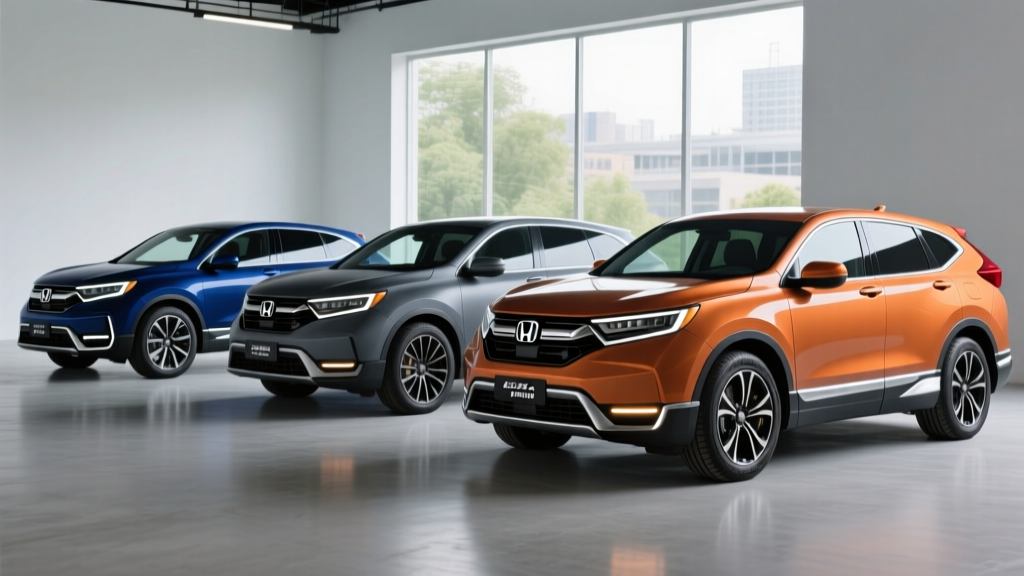
For the 2026 model year, Honda continues to offer the CR-V Hybrid across four trims: the Sport, Sport Touring, Sport-L, and the well-equipped Sport Touring at the top. All trims share the same two-motor hybrid powertrain and all-wheel-drive system. The differences are in interior materials, technology features, and convenience equipment — not in fuel economy or performance.
| Trim | Drivetrain | MSRP (est.) | Key Features |
|---|---|---|---|
| Sport Hybrid | AWD | ~$36,350 | 18" wheels, 7" touchscreen, wireless Apple CarPlay/Android Auto, heated front seats |
| Sport-L Hybrid | AWD | ~$38,850 | Leather-trimmed seats, power liftgate, wireless phone charger, 9" touchscreen |
| Sport Touring Hybrid | AWD | ~$42,350 | Bose 12-speaker audio, navigation, heated rear seats, hands-free power tailgate, 19" wheels |
Note: Pricing is estimated based on the latest Honda MSRP data and may vary by dealer. Destination charge (~$1,350) is additional.
EPA MPG and Real-World Fuel Economy
Every 2026 CR-V Hybrid trim uses the same powertrain, so EPA fuel economy ratings are identical across the lineup. According to fueleconomy.gov, the 2026 CR-V Hybrid AWD achieves:
| Metric | Rating |
|---|---|
| City MPG | 40 MPG |
| Highway MPG | 34 MPG |
| Combined MPG | 37 MPG |
Real-World MPG: What Owners Actually See
The CR-V Hybrid's two-motor system excels in stop-and-go city driving, where the electric motor handles low-speed propulsion and regenerative braking recaptures energy. Many owners report exceeding the EPA city rating, with 42–45 MPG achievable in moderate-temperature urban commuting.
Highway driving is a different story. At sustained speeds above 70 mph, the gasoline engine does most of the work, and real-world highway fuel economy typically lands between 30–33 MPG. Cold weather (below 35°F) reduces fuel economy by roughly 5–10% due to increased engine warm-up time and cabin heating demand. If your commute is mostly highway, expect combined real-world figures closer to 33–35 MPG.
Powertrain Specs: What's Under the Hood
The 2026 CR-V Hybrid uses Honda's fourth-generation two-motor hybrid system, pairing a 2.0-liter Atkinson-cycle four-cylinder engine with two electric motors. This is a conventional hybrid (HEV), not a plug-in hybrid — meaning you never need to plug it in. The system charges its own battery through regenerative braking and the gasoline engine.
| Specification | Value |
|---|---|
| Engine | 2.0L Atkinson-cycle 4-cylinder |
| Engine Output | 145 HP / 134 lb-ft torque |
| Electric Motors | Dual-motor (propulsion + generator) |
| Propulsion Motor Output | 184 HP / 247 lb-ft torque |
| Combined System Output | 204 HP / 247 lb-ft torque |
| Transmission | e-CVT (direct-drive) |
| Drivetrain | Real Time AWD (standard on all Hybrid trims) |
| 0–60 MPH | ~7.6 seconds |
| Towing Capacity | 1,000 lbs |
The propulsion motor delivers instant torque from a stop, which gives the CR-V Hybrid a more responsive feel in city driving than its EPA horsepower figure suggests. The e-CVT eliminates shift shock entirely, though some drivers notice a characteristic drone under hard acceleration — typical of Atkinson-cycle hybrid systems.
Hybrid vs. Plug-In Hybrid vs. Full EV: Which Is Right for You?
The CR-V Hybrid is a conventional hybrid (HEV). It cannot be plugged in and has no electric-only driving range. Honda does not currently offer a CR-V plug-in hybrid (PHEV) in the US market, so if you want plug-in capability from Honda, you'd need to look at the discontinued Clarity PHEV (used market only) or a competitor like the Toyota RAV4 Prime.
- Choose the CR-V Hybrid (HEV) if: You want better fuel economy with zero lifestyle changes — no charging, no range planning, no home electrical upgrades. You drive 10,000–15,000 miles/year and want a proven, low-maintenance SUV.
- Choose a PHEV (e.g., RAV4 Prime) if: You have home charging access, a short commute (25–42 miles), and want electric-only daily driving with a gas engine for road trips. PHEVs cost more upfront but can eliminate most gasoline use.
- Choose a full EV (e.g., Tesla Model Y, Hyundai Ioniq 5) if: You have reliable home Level 2 charging, want to eliminate gasoline entirely, and your daily driving plus road-trip patterns align with 250–320 miles of range and DC fast charging.
The CR-V Hybrid is the lowest-friction path to better fuel economy. You buy it, fuel it like a normal car, and save roughly $500–$800/year in fuel costs compared to the gasoline CR-V (depending on local gas prices and annual mileage).
Battery Warranty, Reliability, and Replacement Cost
Hybrid battery longevity is one of the top concerns for buyers considering their first hybrid. Here's what Honda provides:
- Hybrid battery: 8 years / 100,000 miles (10 years / 150,000 miles in CARB states including CA, NY, MA, and others)
- Hybrid system components: 8 years / 100,000 miles
- Powertrain warranty: 5 years / 60,000 miles
- Limited vehicle warranty: 3 years / 36,000 miles
Honda's hybrid battery packs use lithium-ion cells and are significantly smaller than full EV batteries — typically around 1.0–1.5 kWh of usable capacity. This small size means replacement costs are far lower than EV battery replacements. Based on current parts and labor pricing, a CR-V hybrid battery replacement runs approximately $2,000–$4,000 out of warranty, compared to $10,000–$20,000+ for a full EV battery.
Long-Term Reliability Data
Honda's hybrid systems have proven durable. The two-motor architecture has fewer wear components than a traditional automatic transmission (no torque converter, no multi-speed gear sets). The CR-V Hybrid's e-CVT is essentially a direct-drive system with the propulsion motor connected to the wheels via a fixed-ratio gear and a lock-up clutch for highway cruising.
Real-world data from high-mileage Honda hybrid owners (Accord Hybrid, CR-V Hybrid) suggests the hybrid battery typically retains adequate capacity well beyond 150,000 miles. Complete failure before 100,000 miles is uncommon. According to NHTSA complaint databases, the CR-V Hybrid has not shown systemic hybrid battery failure patterns in model years 2023–2025.
Tax Credits and Incentives
Because the 2026 Honda CR-V Hybrid is a conventional hybrid (HEV) — not a plug-in hybrid or battery electric vehicle — it does not qualify for the federal §30D Clean Vehicle Credit. That credit, which offers up to $7,500, is reserved for vehicles with plug-in capability and minimum battery capacity thresholds (at least 7 kWh for PHEVs, per IRS guidelines).
However, there are still financial considerations:
- State incentives: A handful of states offer rebates or tax credits for conventional hybrids, though these are increasingly rare. Check your state's energy office or department of environmental quality for current programs.
- Employer commuter benefits: Some employers offer pre-tax commuter benefits that can be applied to fuel costs, indirectly benefiting hybrid owners.
- Insurance discounts: Several insurers (notably GEICO and Liberty Mutual) have offered hybrid vehicle discounts of 5–10% in certain states, though availability varies.
- Fuel savings: At 37 MPG combined vs. 29 MPG combined for the gasoline CR-V AWD, the hybrid saves roughly 80 gallons of fuel per year at 12,000 miles/year. At $3.50/gallon, that's approximately $280/year in fuel savings — or about $1,400 over five years.
If federal tax credits are a priority, you'd need to look at a PHEV like the Toyota RAV4 Prime (though check current §30D sourcing and MSRP eligibility rules) or a full EV.
Which CR-V Hybrid Trim Should You Buy?
Best Value: Sport Hybrid
The base Sport Hybrid at ~$36,350 delivers the full hybrid fuel economy benefit, AWD, and modern infotainment at the lowest price point. If you don't need leather or premium audio, this is the smart money.
Sweet Spot: Sport-L Hybrid
At ~$38,850, the Sport-L adds leather, the larger 9" touchscreen, wireless charging, and a power liftgate — features most buyers want — without the $3,500 jump to the Touring. Strong resale value trim.
Fully Loaded: Sport Touring Hybrid
At ~$42,350, the Touring adds Bose audio, navigation, heated rear seats, and 19" wheels. Worth it if you keep vehicles 8+ years and value premium features, but the fuel economy is identical to the base Sport.
Every trim gets the same 204 HP powertrain, the same 37 MPG combined EPA rating, and the same hybrid battery warranty. Your choice comes down to comfort and technology preferences, not mechanical differences.
Frequently Asked Questions
How many MPG does the 2026 CR-V Hybrid get?
The EPA rates the 2026 CR-V Hybrid AWD at 40 MPG city, 34 MPG highway, and 37 MPG combined. Real-world results vary: city-heavy drivers often see 40–45 MPG, while highway-heavy drivers should expect 30–33 MPG.
Does the CR-V Hybrid need to be plugged in?
No. The CR-V Hybrid is a conventional hybrid (HEV). Its small lithium-ion battery recharges through regenerative braking and the gasoline engine. You fuel it exactly like a regular car.
Is there a CR-V plug-in hybrid (PHEV) available?
Not in the US market as of 2026. Honda does not currently sell a CR-V PHEV in North America. If plug-in capability is a priority, consider the Toyota RAV4 Prime (42 miles electric-only range) or the Hyundai Tucson PHEV (33 miles electric-only).
How long will the CR-V Hybrid battery last?
Honda warranties the hybrid battery for 8 years/100,000 miles (10 years/150,000 miles in CARB states). Based on Honda's track record with hybrid systems, most batteries last well beyond the warranty period. Out-of-warranty replacement costs approximately $2,000–$4,000.
Does the CR-V Hybrid qualify for any federal tax credit?
No. The federal §30D Clean Vehicle Credit applies only to plug-in vehicles (PHEVs and BEVs) meeting battery sourcing and MSRP requirements. The CR-V Hybrid is a conventional HEV and is not eligible. Check your state for any local hybrid incentives.
Is the CR-V Hybrid slower than the gas CR-V?
Not meaningfully. The hybrid produces 204 combined HP vs. 190 HP for the 1.5L turbo gas CR-V. The hybrid's electric motor delivers instant torque from a stop, making it feel quicker in city driving despite a similar 0–60 MPH time of ~7.6 seconds.
How much does the CR-V Hybrid cost to maintain?
Maintenance costs are comparable to the gas CR-V. The hybrid system adds no scheduled maintenance items — there's no hybrid-specific fluid to change, and the e-CVT has no transmission fluid service interval under normal driving. Brake pad life is often extended due to regenerative braking handling much of the deceleration.