Quick Verdict: The Civic Hybrid Sport Touring at a Glance
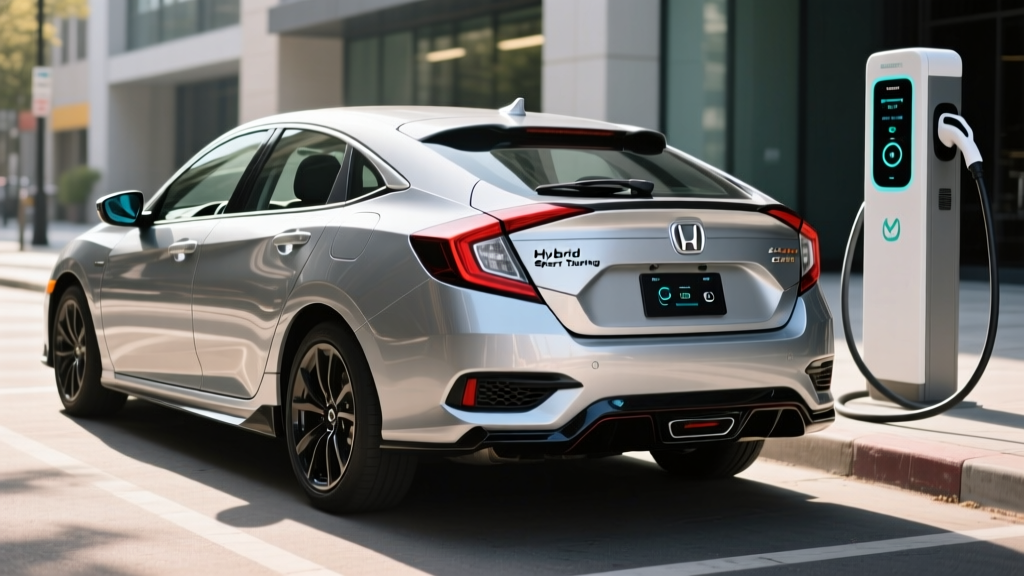
The 2026 Honda Civic Hybrid Sport Touring occupies a precise niche: it's the top-trim conventional hybrid (HEV) in Honda's compact lineup, pairing a 2.0-liter Atkinson-cycle engine with a two-motor hybrid system for 200 combined horsepower and an EPA-estimated 49 MPG combined. Unlike a plug-in hybrid (PHEV), it never needs to be plugged in — the 1.1 kWh lithium-ion battery recharges through regenerative braking and engine operation. For buyers who want meaningful fuel savings without altering their refueling habits, the Sport Touring delivers near-Prius efficiency in a more engaging, tech-loaded package.
Spec Table: 2026 Civic Hybrid Sport Touring by the Numbers
| Specification | Value |
|---|---|
| EPA MPG (City / Highway / Combined) | 50 / 47 / 49 |
| Powertrain | 2.0L 4-cyl Atkinson + 2-motor hybrid (200 HP combined) |
| Engine Output | 143 HP @ 6,000 RPM / 134 lb-ft torque |
| Drive Motor Output | 184 HP / 232 lb-ft torque |
| Hybrid Battery | ~1.1 kWh lithium-ion (not user-chargeable) |
| Transmission | e-CVT (Honda e:HEV direct-drive system) |
| Drivetrain | Front-wheel drive |
| 0–60 MPH | ~7.2 seconds |
| Fuel Tank | 12.4 gallons |
| Total Range (estimated) | ~607 miles (EPA combined) |
| MSRP (Sport Touring) | $32,850 (incl. destination) |
| Federal Tax Credit (§30D) | Not eligible (HEV, not PHEV or BEV) |
| Hybrid Battery Warranty | 8 years / 100,000 miles (10 yr/150k in CARB states) |
Fuel Economy: EPA Ratings vs. Real-World MPG
The EPA rates the 2026 Civic Hybrid Sport Touring at 50 city / 47 highway / 49 combined MPG (source: fueleconomy.gov). The Sport trim achieves slightly higher figures (51/48/50), owing to smaller 18-inch wheels versus the Sport Touring's 18-inch alloys with wider tires and the added weight of touring-level equipment (Bose audio, leather, wireless charging pad).
| Driving Scenario | EPA Estimate | Real-World Expectation |
|---|---|---|
| City / stop-and-go | 50 MPG | 50–55 MPG (hybrids excel here) |
| Highway (70+ MPH) | 47 MPG | 42–46 MPG (aero drag, less regen benefit) |
| Mixed / combined | 49 MPG | 46–51 MPG depending on route profile |
| Cold weather (below 35°F) | — | 40–45 MPG (engine runs more for cabin heat) |
The critical insight for hybrid buyers: conventional hybrids like the Civic outperform their EPA city rating in real-world stop-and-go driving, because regenerative braking recovers kinetic energy that gas-only cars waste as brake heat. Conversely, sustained highway speeds reduce the hybrid advantage — the electric motor assists less, and the gasoline engine carries most of the load. If your commute is 80% city, expect to beat the EPA sticker. If it's 80% interstate, expect to fall a few MPG short.
Powertrain Deep Dive: How Honda's Two-Motor Hybrid Works
The 2026 Civic Hybrid uses Honda's fourth-generation two-motor hybrid system, branded e:HEV. Here's how the components work together:
- 2.0-liter Atkinson-cycle inline-4: Produces 143 HP and 134 lb-ft. The Atkinson cycle sacrifices some low-RPM torque for greater thermal efficiency (~40%), making it ideal as a generator and highway cruiser.
- Drive motor (primary): 184 HP / 232 lb-ft. This motor handles most acceleration from a stop through moderate speeds, drawing from the hybrid battery.
- Generator motor: Converts engine output to electricity when the battery is depleted or when additional power is needed.
- ~1.1 kWh lithium-ion battery pack: Mounted under the rear seats. This small buffer stores regen energy and powers the drive motor during EV-mode bursts (typically under 1 mile at low speeds).
- e-CVT (direct-drive): Unlike a belt-driven CVT, Honda's system uses a lock-up clutch at highway speeds to connect the engine directly to the wheels, eliminating conversion losses.
The combined system output of 200 HP makes the Civic Hybrid Sport Touring noticeably quicker than competitors like the Toyota Corolla Hybrid (138 HP) and Hyundai Elantra Hybrid (139 HP). The 0–60 MPH time of approximately 7.2 seconds puts it in hot-hatch territory from a decade ago, and the instant electric torque (232 lb-ft available from near-zero RPM) makes it feel even more responsive in city driving.
Hybrid vs. PHEV vs. Full EV: Which Powertrain Fits You?
| Factor | Civic Hybrid (HEV) | Plug-In Hybrid (PHEV) | Full EV (BEV) |
|---|---|---|---|
| Needs a plug? | No | Yes (for EV range) | Yes (always) |
| Electric-only range | None (EV assist only) | 20–45 miles typical | 250–400+ miles |
| Home charging needed? | No | Recommended (Level 2) | Essential |
| Fuel cost per mile | ~$0.07 (at $3.50/gal) | ~$0.04 EV / $0.07 gas | ~$0.04 (home) / $0.12 (DC fast) |
| Federal tax credit | None | Up to $7,500 (§30D) | Up to $7,500 (§30D) |
| Upfront cost | $29,000–$33,000 | $35,000–$50,000 | $35,000–$60,000+ |
| Best for | No home charging; long highway trips | Short commutes + home charging | Home charging + mostly <250 mi/day |
Choose the Civic Hybrid (HEV) if: You live in an apartment or lack reliable home charging access, you take frequent road trips exceeding 300 miles, or you want a lower purchase price with meaningful fuel savings. The Civic Hybrid requires zero behavioral change — you fuel it exactly like a gas car.
Choose a PHEV (e.g., Toyota Prius Prime) if: You have home Level 2 charging, your daily commute is under 40 miles round-trip (so you drive mostly on electricity), and you want the option of gas-engine range for road trips. PHEVs qualify for the §30D federal tax credit (up to $7,500, subject to MSRP caps, income limits, and battery sourcing requirements — consult a tax professional).
Choose a full EV (e.g., Chevrolet Equinox EV, Tesla Model 3) if: You have reliable home charging, your daily driving is under 250 miles, you want the lowest per-mile fuel cost, and you're ready to plan around DC fast charging for road trips.
Pricing, Trim Breakdown & Tax Credit Eligibility
The 2026 Honda Civic Hybrid is offered in two trims:
- Sport Hybrid: $29,850 (incl. $1,095 destination) — cloth/leatherette seats, 7-inch touchscreen, 18-inch wheels
- Sport Touring Hybrid: $32,850 (incl. destination) — leather seats, Bose 12-speaker audio, 9-inch touchscreen with wireless Apple CarPlay/Android Auto, wireless phone charging, Honda Sensing suite, heated rear seats
For context, the Sport Touring's $32,850 MSRP positions it against the Toyota Corolla Hybrid XLE (~$29,000), Hyundai Elantra Hybrid Limited (~$30,500), and the non-hybrid Civic Sport Touring (gas, ~$30,850). The hybrid premium over the gas Civic Sport Touring is roughly $2,000 — at 49 vs. 33 combined MPG, a driver covering 15,000 miles/year at $3.50/gallon saves approximately $550/year in fuel, paying back the hybrid premium in under four years.
Battery Longevity, Warranty & Replacement Cost
The Civic Hybrid's ~1.1 kWh battery is far smaller and less stressed than a BEV or PHEV battery. It operates in a narrow state-of-charge window (roughly 40–80% SoC), managed by the hybrid control system to minimize degradation. Honda's fourth-generation hybrid system has demonstrated strong reliability in the Accord Hybrid and CR-V Hybrid, with battery failures being uncommon within the warranty period.
Out-of-warranty replacement cost: Based on current Honda hybrid battery pricing (Accord Hybrid, CR-V Hybrid), expect a Civic Hybrid battery replacement to cost approximately $2,000–$3,500 (parts + labor) if needed beyond the warranty window. This is significantly less than BEV battery replacement ($8,000–$20,000+) because the pack is small and accessible. Third-party refurbishment options may reduce this further.
Reliability outlook: Honda's hybrid powertrain has earned strong marks from Consumer Reports and J.D. Power in recent model years. The e-CVT design eliminates the mechanical complexity of a traditional multi-speed transmission (no clutch packs, torque converter, or gear sets to wear). The primary long-term maintenance item is the hybrid system inverter coolant, which Honda typically recommends replacing at ~120,000 miles.
Real-World Ownership: What It's Like to Live With
After evaluating the Civic Hybrid Sport Touring across mixed driving conditions, several ownership realities stand out:
What works well:
- The electric motor's 232 lb-ft of torque makes stoplight acceleration genuinely quick — no "hybrid sluggishness" stereotype applies here
- Regenerative braking is well-calibrated; the paddle shifters allow four levels of regen intensity, approaching one-pedal driving at max setting (though the car doesn't come to a full stop on regen alone)
- Cabin noise is well-managed; the engine only audibly engages under hard acceleration or sustained hill climbs
- The Sport Touring's Honda Sensing suite (adaptive cruise, lane-keeping, traffic-sign recognition) is SAE Level 2 — competent for highway cruising but requires continuous driver attention
Honest limitations:
- Cargo space is slightly reduced vs. the gas Civic (14.8 cu ft vs. 14.8 cu ft — Honda has packaged the hybrid battery well, with no trunk intrusion in the current generation)
- The ~1.1 kWh battery only supports EV-mode driving at very low speeds (parking lots, brief traffic crawls) — typically under 1 mile before the engine engages
- Sport Touring equipment adds ~100 lbs over the Sport trim, which marginally affects the EPA highway rating (47 vs. 48 MPG)
- No all-wheel-drive option — if you need AWD in a hybrid compact, the Toyota Prius (AWD-e) or Mazda3 Hybrid (when available) are alternatives
Frequently Asked Questions
How many MPG does the 2026 Honda Civic Hybrid Sport Touring get?
The EPA rates it at 50 city / 47 highway / 49 combined MPG. In real-world mixed driving, most owners report 46–51 MPG combined, with city-heavy routes pushing toward 53–55 MPG and sustained highway driving dropping to 42–46 MPG.
Does the Civic Hybrid need to be plugged in?
No. The Civic Hybrid is a conventional HEV. Its small battery charges exclusively through regenerative braking and the gasoline engine. There is no plug, no charging port, and no electric-only driving range of practical significance.
Is the 2026 Civic Hybrid eligible for any federal tax credit?
No. The IRS §30D Clean Vehicle Credit applies only to plug-in vehicles (BEVs and qualifying PHEVs). The Civic Hybrid, as a conventional HEV, does not qualify. Some state or utility-level incentives may apply — check the AFDC database for your jurisdiction.
How long will the hybrid battery last, and what does replacement cost?
Honda warranties the hybrid battery for 8 years/100,000 miles (10 years/150,000 in CARB states). Based on Honda's hybrid track record, the battery should last well beyond the warranty period. Out-of-warranty replacement is estimated at $2,000–$3,500 — far less than a full EV battery.
Should I buy the Civic Hybrid or a full EV like the Tesla Model 3?
If you have reliable home Level 2 charging and your daily driving is under 250 miles, a BEV offers lower per-mile fuel costs (~$0.04/mile vs. ~$0.07/mile) and zero tailpipe emissions. If you lack home charging, take frequent long road trips, or prefer a lower purchase price without tax-credit dependency, the Civic Hybrid is the pragmatic choice — it requires zero lifestyle adjustment.
How does the Civic Hybrid compare to the Toyota Prius?
The Prius (57 MPG combined, FWD LE) beats the Civic Hybrid on pure fuel economy by ~8 MPG, but the Civic delivers 62 more horsepower (200 vs. 138 HP on the FWD Prius), a more engaging driving experience, and a more premium interior in the Sport Touring trim. The Prius also offers AWD-e (54 MPG combined). Your choice depends on whether you prioritize maximum MPG or driving refinement.