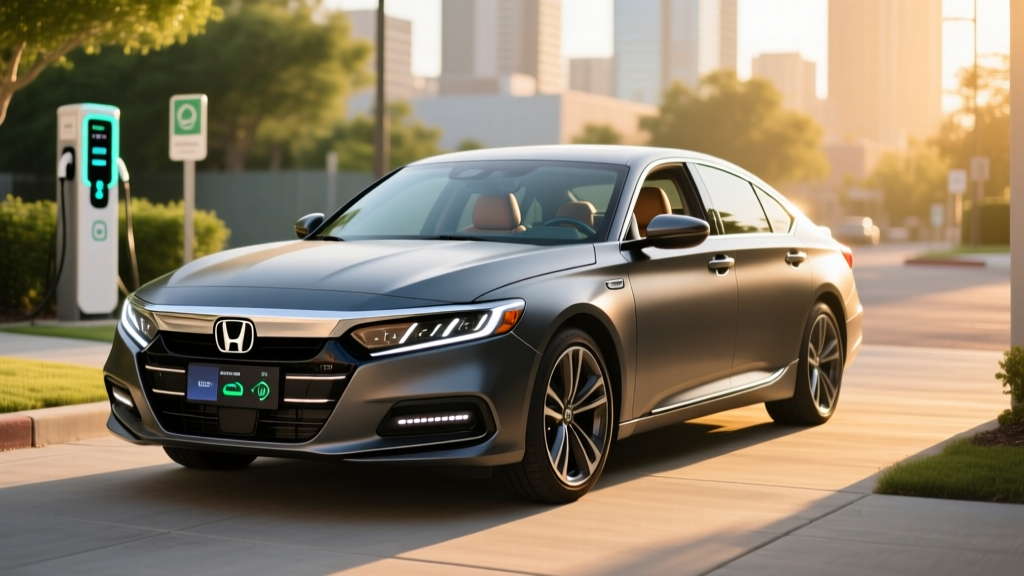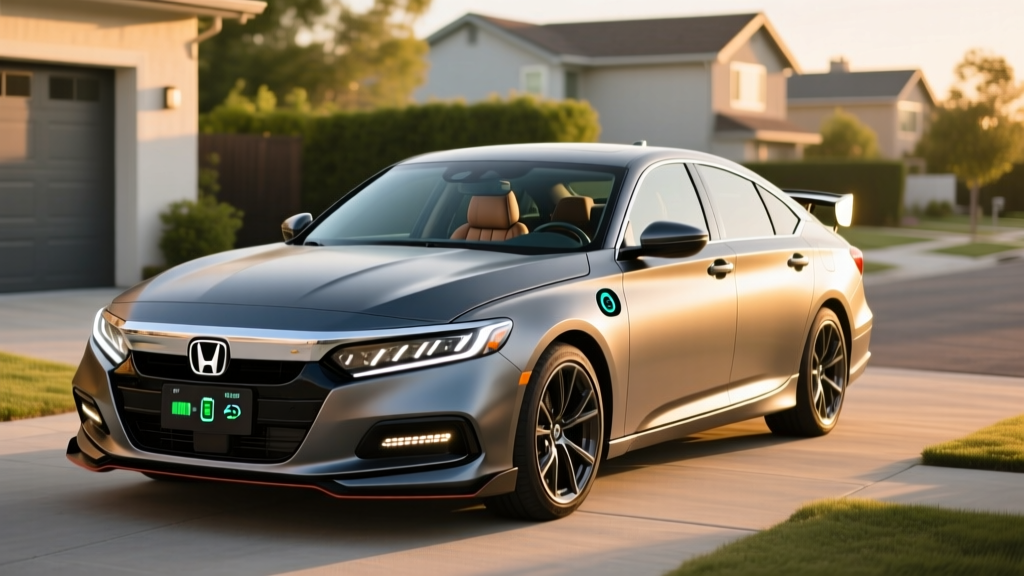
The 2026 Honda Accord Hybrid Sport-L occupies a specific niche: buyers who want the fuel savings of electrification without ever plugging in. As a conventional hybrid electric vehicle (HEV), it uses regenerative braking and an integrated motor-generator system to achieve EPA-estimated 48 MPG combined — no charging cable required. But does the Sport-L trim's sport-tuned suspension and leather-trimmed interior justify its position in the Accord Hybrid lineup? Here's the complete spec breakdown, real-world efficiency data, and ownership analysis.
HEV vs PHEV: Why the Accord Hybrid Is Not a Plug-In
Before diving into specs, it's critical to understand what the 2026 Accord Hybrid is — and what it isn't. Honda offers the Accord exclusively as a conventional hybrid (HEV). There is no plug-in hybrid (PHEV) Accord variant for 2026, and Honda has not announced one. This distinction matters for buyers cross-shopping against PHEV sedans like the Hyundai Sonata Plug-In Hybrid or the Toyota Prius Prime.
HEV (Accord Hybrid) vs PHEV vs BEV — Quick Reference
| Feature | HEV (Accord Hybrid) | PHEV (e.g., Prius Prime) | BEV (e.g., Tesla Model 3) |
|---|---|---|---|
| Plugs in? | No | Yes | Yes |
| Electric-only range | ~1 mi (low-speed assist) | 30–45 mi typical | 250–360 mi |
| Battery size | ~1.06 kWh (lithium-ion) | 13–18 kWh | 60–82 kWh |
| Federal tax credit (§30D) | Not eligible | Up to $7,500* | Up to $7,500* |
| Home charging needed | No | Recommended (Level 2) | Required |
*§30D eligibility subject to MSRP caps, buyer income limits, and battery-sourcing requirements. See IRS clean vehicle credits for current rules.
The Accord Hybrid's small 1.06 kWh lithium-ion battery is charged entirely through regenerative braking and the 2.0-liter gasoline engine. You fuel it like any conventional car — at a gas station — and the hybrid system handles the rest. If you need 30+ miles of electric-only commuting, you'll want to look at a PHEV or BEV instead.
Fuel Economy: EPA Ratings and Real-World MPG
The 2026 Accord Hybrid Sport-L carries EPA-estimated ratings of 51 MPG city / 44 MPG highway / 48 MPG combined, according to fueleconomy.gov. These figures are identical across all Accord Hybrid trims (Sport, Sport-L, EX-L, Sport Touring) because they share the same two-motor hybrid powertrain.
| Driving Cycle | EPA Estimate | Real-World Expectation |
|---|---|---|
| City | 51 MPG | 49–54 MPG |
| Highway | 44 MPG | 40–44 MPG |
| Combined | 48 MPG | 45–50 MPG |
Real-world context: Honda's two-motor hybrid system excels in stop-and-go city driving, where regenerative braking recaptures energy and the electric motor handles low-speed propulsion. Many Accord Hybrid owners report exceeding the EPA city estimate in warm-weather urban commuting — 52–54 MPG is achievable with moderate acceleration. Highway driving at 75+ MPH sees efficiency drop closer to 40–42 MPG due to increased aerodynamic drag and the engine operating more frequently at sustained loads. Cold weather (below 35°F) typically reduces combined efficiency by 5–10%, consistent with all hybrids as the engine runs longer to maintain cabin heat and battery temperature.
For comparison, the non-hybrid 2026 Accord 1.5T (turbo gas) returns an EPA 33 MPG combined — the hybrid delivers roughly 45% better fuel economy with nearly identical trunk space and no range-anxiety trade-offs.
Powertrain Specs: Two-Motor Hybrid System
| 2026 Honda Accord Hybrid Sport-L — Powertrain Specifications | |
|---|---|
| Engine | 2.0L DOHC Atkinson-cycle 4-cylinder |
| Engine output | 146 hp @ 6,100 rpm / 134 lb-ft torque |
| Electric motors | Two-motor system (propulsion + generator) |
| Propulsion motor output | 181 hp / 247 lb-ft torque |
| Combined system horsepower | 204 hp |
| Transmission | e-CVT (electronically controlled) |
| Drivetrain | Front-wheel drive |
| Hybrid battery | ~1.06 kWh lithium-ion |
| 0–60 mph | ~7.5 seconds (est.) |
| Fuel tank | 12.8 gallons |
| Total driving range | ~614 miles (EPA combined) |
The Accord Hybrid uses Honda's fourth-generation two-motor hybrid system. In most driving scenarios below ~45 MPH, the propulsion motor does the work while the gasoline engine acts as a generator. At highway speeds, a lockup clutch mechanically connects the engine to the front wheels for more efficient direct drive. The result is seamless acceleration with no traditional gearshift feel — the e-CVT modulates motor and engine contribution continuously.
The Sport-L trim adds paddle shifters that adjust regenerative braking intensity across four levels, though it does not offer true one-pedal driving (the car will not come to a complete stop using regen alone). The Sport-L's sport-tuned suspension tuning is marginally firmer than the EX-L, but the 204 hp combined output is identical across all Hybrid trims.
Pricing: 2026 Accord Hybrid Sport-L MSRP and Trim Context
The 2026 Honda Accord Hybrid Sport-L carries a starting MSRP of $34,650 (including $1,150 destination charge). Here's how it sits in the Hybrid lineup:
| Trim | MSRP (incl. dest.) | Key Additions over Sport-L |
|---|---|---|
| Sport | $32,350 | Base hybrid — cloth seats, no leather |
| Sport-L | $34,650 | Leather-trimmed seats, heated front seats, leather-wrapped steering wheel |
| EX-L | $35,650 | Moonroof, power passenger seat, heated rear seats |
| Sport Touring | $38,950 | Bose 12-speaker audio, navigation, wireless CarPlay/Android Auto, ventilated front seats |
Tax Credit Eligibility
The 2026 Accord Hybrid does not qualify for the federal §30D clean vehicle tax credit. That credit applies exclusively to plug-in electric vehicles (PHEVs and BEVs) with battery capacities of at least 7 kWh. The Accord Hybrid's ~1.06 kWh battery falls far below this threshold. No federal incentive is available for conventional HEVs as of 2026.
Some states and local utilities offer modest rebates for hybrids, but these vary significantly by jurisdiction and change frequently. Check your state energy office and local utility for current programs. For federal plug-in credit rules, consult the IRS clean vehicle credits page.
Battery Warranty, Lifespan, and Replacement Cost
Honda Hybrid Battery Warranty
- Coverage: 8 years / 100,000 miles (10 years / 150,000 miles in CARB states including CA, NY, MA, and others)
- What's covered: Defects and capacity loss below functional thresholds
- Hybrid system components: Inverter, motor, and control electronics also covered under the 8yr/100k-mi powertrain warranty
Honda's hybrid battery is engineered to last the life of the vehicle under normal use. Unlike BEV batteries that experience measurable range degradation over time, the Accord Hybrid's small 1.06 kWh battery operates in a narrow state-of-charge window (roughly 20%–80%), which significantly reduces stress on the cells. Honda does not publish a specific capacity-retention threshold for warranty replacement, but real-world data from third-generation Accord Hybrids (2018–2022) shows most batteries retain 90%+ of original capacity at 100,000 miles.
Replacement cost: If the hybrid battery fails outside warranty, dealer replacement typically runs $2,000–$4,000 including labor, depending on market and parts availability. Independent hybrid specialists can sometimes source refurbished packs for $1,200–$2,500. For context, this is substantially less than a BEV battery replacement ($8,000–$20,000+), reflecting the Accord Hybrid's much smaller battery.
Who Should Buy the Accord Hybrid Sport-L?
Choose the Accord Hybrid Sport-L if:
- You drive 15,000+ miles per year and want to minimize fuel costs without changing refueling habits
- You lack access to home or workplace EV charging (apartment, street parking, no garage outlet)
- You want a midsize sedan with strong resale value and Honda's reliability track record
- You commute primarily in city/suburban traffic where hybrid efficiency peaks (51 MPG city)
- You want leather seats and heated front seats without stepping up to the EX-L or Touring trims
Look at a PHEV or BEV instead if:
- You have home Level 2 charging and want 30+ miles of electric-only commuting (consider Prius Prime, Sonata PHEV)
- You want to qualify for the $7,500 federal tax credit (requires a PHEV or BEV with ≥7 kWh battery)
- You want zero tailpipe emissions for daily driving (BEV required)
- You drive under 10,000 miles/year — the fuel savings may not offset the hybrid's ~$1,500 premium over a gas Accord
The Sport-L is the value-oriented leather-trim option. You get the hybrid powertrain's efficiency, leather upholstery, heated front seats, and Honda Sensing (adaptive cruise, lane-keeping, automatic emergency braking) for roughly $1,000 less than the EX-L. The trade-off: no moonroof and no power passenger seat. For most buyers, the Sport-L hits the sweet spot between feature content and price.
Pros and Cons at a Glance
Pros
- 48 MPG combined — among the best in midsize sedans
- 614-mile total range; fewer fuel stops
- No charging infrastructure needed
- Strong 8yr/100k-mi hybrid battery warranty
- Spacious rear seat and 16.7 cu-ft trunk (matching gas Accord)
- Honda Sensing ADAS suite standard on all trims
Cons
- No federal tax credit eligibility (HEV, not PHEV)
- No electric-only driving mode (unlike PHEV competitors)
- Highway MPG drops to ~40–42 at 75+ MPH
- CVT drone under hard acceleration (no stepped gears)
- FWD only — no AWD option (Toyota Camry Hybrid offers AWD)
- Sport-L lacks moonroof (EX-L or above required)
Frequently Asked Questions
How many MPG does the 2026 Honda Accord Hybrid Sport-L get?
The EPA rates the 2026 Accord Hybrid Sport-L at 51 MPG city, 44 MPG highway, and 48 MPG combined. In real-world city driving with moderate temperatures, many owners report 49–54 MPG. Highway driving at sustained speeds above 70 MPH typically yields 40–44 MPG. Cold weather reduces these figures by roughly 5–10%.
Does the Accord Hybrid have an electric-only driving mode?
No. The Accord Hybrid is a conventional HEV, not a plug-in hybrid. The electric motor assists the gasoline engine and can propel the car at very low speeds for brief distances (under 1 mile), but there is no EV mode button and no meaningful electric-only range. For 30+ miles of electric commuting, you need a PHEV like the Toyota Prius Prime or a full BEV.
Does the 2026 Accord Hybrid qualify for any tax credit?
No. The federal §30D clean vehicle credit requires a plug-in vehicle with a battery capacity of at least 7 kWh. The Accord Hybrid's ~1.06 kWh battery does not qualify. Some state or utility programs offer small hybrid rebates, but these vary by location. Check your state energy office for current programs.
How reliable is the Accord Hybrid, and what does a battery replacement cost?
Honda's hybrid system has proven reliable across three generations (2014–present). The hybrid battery carries an 8-year/100,000-mile warranty (10yr/150k-mi in CARB states). Out-of-warranty replacement costs $2,000–$4,000 at a dealer, or $1,200–$2,500 through independent hybrid specialists. Most hybrid batteries outlast 150,000 miles with minimal degradation due to the narrow state-of-charge operating window.
Is the Accord Hybrid Sport-L worth the premium over the Sport trim?
The $2,300 step from Sport ($32,350) to Sport-L ($34,650) adds leather-trimmed seats, heated front seats, and a leather-wrapped steering wheel. If you live in a cold climate or prefer leather over cloth, the Sport-L is the most cost-effective way to get those features in the Hybrid lineup. If you don't need leather, the Sport trim delivers identical fuel economy and powertrain performance for less.
How does the Accord Hybrid compare to the Toyota Camry Hybrid?
The 2026 Camry Hybrid (all trims are hybrid-only) returns an EPA-estimated 51 MPG combined on FWD trims and offers available AWD — a key advantage in snow-belt states. The Accord Hybrid offers slightly more rear legroom (40.8 vs 38.7 inches), a larger trunk, and a more refined ride. Both carry strong hybrid warranties. If AWD is essential, the Camry wins. If interior space and highway refinement matter more, the Accord edges ahead.
Sources: EPA Fuel Economy, Honda Accord Hybrid specifications, IRS Clean Vehicle Credits. Specifications and pricing reflect 2026 model year data available at time of publication. Always verify current pricing and incentive eligibility with your local dealer and tax professional.