Quick Verdict: The 2026 Ford Escape PHEV at a Glance
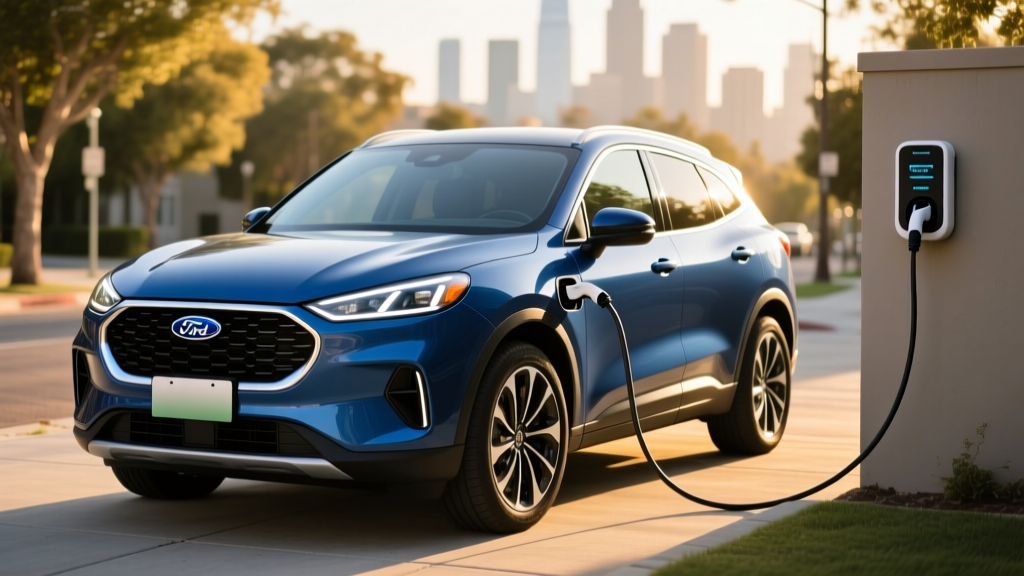
The 2026 Ford Escape Plug-In Hybrid (PHEV) occupies a narrow but practical lane in the compact crossover segment: a small SUV you can drive as an EV for your daily commute, then switch to hybrid mode for road trips without ever hunting for a charger. With an EPA-rated 37 miles of electric-only range and 40 MPG combined once the battery depletes, it targets buyers who want meaningful electrification without the commitment of a full battery-electric vehicle.
Ford carries over the Escape PHEV's proven powertrain into 2026 with minor trim and packaging adjustments. The front-wheel-drive-only layout and 14.4 kWh battery pack remain unchanged — which is either a sign of a formula that works or evidence that Ford is waiting for its next-generation platform before investing in an AWD option or larger pack. Either way, the Escape PHEV remains one of the few plug-in hybrids in its class that offers genuine all-electric commuting range paired with strong hybrid fuel economy.
| Spec | Value |
|---|---|
| EPA Electric-Only Range | 37 miles |
| EPA MPGe (EV Mode) | 105 MPGe combined |
| EPA MPG (Hybrid Mode) | 40 combined / 42 city / 37 highway |
| Total Combined Range | ~520 miles |
| Battery Capacity | 14.4 kWh (usable ~12.5 kWh) |
| Battery Chemistry | NMC (Nickel Manganese Cobalt) |
| Combined Horsepower | 210 hp |
| Engine | 2.5L Atkinson-cycle 4-cylinder + electric motor |
| Drivetrain | FWD only (eCVT) |
| 0-60 mph | ~8.0 seconds |
| Level 2 Charge Time (240V) | ~3.5 hours (3.3 kW onboard charger) |
| DC Fast Charging | Not available |
| Battery Warranty | 8 years / 100,000 miles |
| Starting MSRP | ~$39,095 |
HEV vs. PHEV: Understanding the Escape Lineup
Ford sells the 2026 Escape in three powertrain flavors, and the distinction matters for your wallet and your daily routine:
| Attribute | Gas (2.0L EcoBoost) | Hybrid (HEV) | Plug-In Hybrid (PHEV) |
|---|---|---|---|
| Needs Plugging In? | No | No | Yes (optional but recommended) |
| Electric-Only Range | 0 miles | ~1 mile (low speed) | 37 miles (EPA) |
| EPA MPG Combined | 26 MPG | 39 MPG | 40 MPG (hybrid) / 105 MPGe (EV) |
| Battery Size | 12V only | ~1.1 kWh | 14.4 kWh |
| Horsepower | 250 hp | 198 hp | 210 hp |
| AWD Available? | Yes | Yes | No (FWD only) |
| Starting MSRP | ~$30,995 | ~$34,095 | ~$39,095 |
The conventional hybrid (HEV) never needs to be plugged in. It uses regenerative braking and the engine to keep its small battery charged, and it delivers strong fuel economy automatically — ideal if you lack home charging access. The plug-in hybrid (PHEV) has a much larger battery that you charge from a wall outlet or Level 2 station, giving you 37 miles of gas-free driving before the engine kicks in. If you charge nightly, most weekday commutes happen entirely on electricity.
The critical trade-off: the PHEV is FWD-only, while both the gas and HEV models offer AWD. If you live in a snowy climate where AWD is non-negotiable, the HEV is the better fit. If you have a garage or driveway outlet and a sub-35-mile commute, the PHEV's electric range will slash your fuel spend to near zero on weekdays.
Electric-Only Range and Real-World MPGe
The EPA rates the 2026 Escape PHEV at 37 miles of electric-only range and 105 MPGe combined when operating in EV mode. That range figure is competitive within the compact PHEV SUV class — it beats the Toyota RAV4 Prime's 42-mile rating only slightly behind, and it comfortably exceeds the Hyundai Tucson PHEV's 33-mile estimate.
EPA 37 miles electric-only is the baseline. In practice:
- Mild weather, city driving (under 45 mph): Expect 35-39 miles — the EPA cycle favors PHEVs in stop-and-go conditions where regen braking recaptures energy.
- Highway driving (65-75 mph): Expect 25-30 miles. Aerodynamic drag and higher speeds drain the pack faster.
- Cold weather (below 32°F): Expect 22-28 miles. Battery chemistry is less efficient in cold, and cabin heating draws from the pack unless you precondition while plugged in.
Once the battery depletes, the Escape PHEV seamlessly transitions to hybrid mode, where the EPA rates it at 40 MPG combined (42 city / 37 highway). This is where Ford's Atkinson-cycle 2.5L engine paired with the eCVT earns its keep — city mileage actually exceeds highway because the electric motor assists heavily at low speeds and regenerative braking recaptures energy in traffic.
Real-World MPG: What Owners Actually See
Hybrid and PHEV fuel economy is highly dependent on driving style, terrain, and — for the PHEV — charging habits. Here's what to expect beyond the sticker:
| Driving Scenario | Expected Efficiency | Notes |
|---|---|---|
| Daily commute under 30 mi, charged nightly | 80-100+ MPGe effective | Engine rarely starts; fuel use near zero |
| Mixed driving, charging 3-4x/week | 50-70 MPGe effective | EV mode covers most city miles |
| Road trip, no charging (hybrid mode only) | 37-42 MPG | Hybrids often beat EPA on flat highway |
| Cold weather, short trips, no preconditioning | 32-38 MPG (hybrid mode) | Engine runs more for cabin heat |
| Never plugged in (operating as a heavy hybrid) | 35-40 MPG | Extra battery weight slightly hurts vs. HEV |
The most important insight for PHEV ownership: charging frequency determines your actual cost per mile. A driver who plugs in every night and commutes 25 miles round-trip may visit a gas station once every two months. A driver who never plugs in is essentially hauling 300+ pounds of battery they never use — the conventional Escape HEV at 39 MPG combined would actually be the more rational choice in that scenario.
Charging the Escape PHEV: What You Need to Know
The 2026 Escape PHEV uses a standard J1772 connector for AC charging. Here's the charging reality:
| Charging Level | Power | 0-100% Time | Where |
|---|---|---|---|
| Level 1 (120V household) | ~1.4 kW | ~10-11 hours | Any standard outlet |
| Level 2 (240V home/public) | 3.3 kW (onboard limit) | ~3.5 hours | Home wallbox, public AC stations |
| DC Fast Charging | N/A | N/A | Not supported |
A critical detail: the Escape PHEV's onboard charger is limited to 3.3 kW. Even if you plug into a 7.2 kW or 11.5 kW Level 2 station, the car will only accept 3.3 kW. This means a full charge takes roughly 3.5 hours regardless of the station's rated output. For overnight charging at home, this is irrelevant — you'll wake up to a full battery every morning. But it means a midday top-up at a public charger is slower than some competitors (the RAV4 Prime accepts up to 6.6 kW on higher trims).
No DC fast charging. Like nearly all PHEVs in this class, the Escape PHEV does not support DC fast charging (CCS or otherwise). The battery is simply too small to justify the hardware cost, and the use case — overnight home charging — doesn't require it. If you're considering public fast-charging infrastructure as part of your routine, a full BEV is the appropriate choice.
Level 1 charging is viable. At ~1.4 kW from a standard 120V outlet, you'll add roughly 4-5 miles of range per hour. For a driver who parks in a garage overnight and commutes 25 miles, a standard outlet provides enough replenishment to cover most daily needs — no electrician required. Ford includes a 120V mobile charge cord with the vehicle.
Powertrain and Performance
The Escape PHEV pairs a 2.5-liter Atkinson-cycle four-cylinder engine with an electric motor integrated into the eCVT (electronically controlled continuously variable transmission). Combined output is 210 horsepower, sent exclusively to the front wheels.
The Atkinson cycle sacrifices some low-end torque for greater thermal efficiency — the engine is optimized for fuel economy, not acceleration. The electric motor fills in the torque gap off the line, giving the Escape PHEV respectable around-town responsiveness. The 0-60 mph time of roughly 8.0 seconds is adequate for merging and passing but won't win any stoplight sprints.
Driving modes include EV Now (pure electric), EV Later (save battery for later use — useful when entering a city after a highway stretch), Auto EV/PHEV (the car decides the optimal blend), and a charge mode that uses the engine to recharge the battery while driving (at a significant fuel-economy penalty).
Ride quality is comfortable and composed, with the added weight of the battery pack (roughly 300 lbs over the gas model) giving the Escape PHEV a slightly more planted feel through corners compared to its lighter siblings. The eCVT is smooth and drone-free under normal acceleration — Ford has avoided the rubber-band effect that plagued earlier CVT designs.
Pricing, Trims, and Tax Credit Eligibility
The 2026 Ford Escape PHEV is offered in a single well-equipped trim:
| Trim | MSRP | Key Features |
|---|---|---|
| PHEV (base) | ~$39,095 | 14.4 kWh battery, power liftgate, 13.2" touchscreen, Ford Co-Pilot360, heated front seats, wireless CarPlay/Android Auto |
| PHEV + Premium Package | ~$42,500 | Adds panoramic sunroof, B&O audio, 360° camera, ventilated front seats |
Destination charge adds approximately $1,495.
The 2026 Ford Escape PHEV may qualify for up to $3,750 under the IRS §30D Clean Vehicle Credit, but eligibility depends on several factors that change periodically:
- MSRP cap: SUVs must be under $80,000 — the Escape PHEV passes easily.
- Buyer income cap: AGI must not exceed $150,000 (single), $225,000 (head of household), or $300,000 (joint).
- Battery sourcing requirements: A portion of the credit ($3,750) depends on critical minerals sourcing, and the other $3,750 on battery component manufacturing. As of 2026, the Escape PHEV's battery sourcing may qualify for one or both halves — check the latest IRS eligible vehicle list before purchasing.
- Point-of-sale transfer: You can transfer the credit to the dealer at purchase to reduce your out-of-pocket cost, rather than waiting to claim it on your tax return.
Caveat: Tax credit rules and eligible vehicle lists update frequently. Consult IRS.gov or a tax professional before relying on a specific credit amount. State and utility incentives may also apply — check AFDC for local programs.
Reliability, Battery Warranty, and Replacement Cost
Ford covers the Escape PHEV's high-voltage battery for 8 years or 100,000 miles (whichever comes first), with a capacity retention threshold of 70%. If the battery degrades below 70% of its original capacity within that period, Ford will repair or replace it at no cost. In CARB states (California and states adopting California emissions standards), the warranty extends to 10 years / 150,000 miles.
Ford's eCVT-based hybrid powertrain has proven durable across the brand's lineup. The 2.5L Atkinson-cycle engine is mechanically simple — no turbocharger, no high-stress components — and the electric motor has essentially no wear items. The eCVT has no traditional belts or clutches to fail.
Battery degradation in practice: Ford's PHEV battery management system maintains a buffer at the top and bottom of the pack (the 14.4 kWh total capacity yields roughly 12.5 kWh usable) to protect long-term health. Real-world data from earlier Ford PHEV models (Fusion Energi, Escape PHEV prior generations) shows typical degradation of 8-12% over 100,000 miles — well within the warranty threshold. Owners who avoid routinely charging to 100% in extreme heat and who use preconditioning in cold weather will see even less degradation.
Battery replacement cost: If the battery fails out of warranty, replacement currently runs between $8,000 and $12,000 including labor and programming at a Ford dealer. However, out-of-warranty failures on Ford's hybrid battery packs are rare based on historical data. Individual module replacement (rather than the full pack) may be possible and significantly cheaper if only a subset of cells degrades.
The conventional powertrain warranty covers 3 years / 36,000 miles (bumper-to-bumper) and 5 years / 60,000 miles (powertrain), which is standard for the segment.
Who Should Choose the Escape PHEV vs. a Full EV or Gas Car
Choose the 2026 Ford Escape PHEV if:
- Your round-trip commute is under 35 miles and you can charge at home (even a 120V outlet works overnight).
- You take regular road trips where charging infrastructure is sparse or unreliable.
- You want to reduce fuel costs significantly without committing to a full EV.
- You live in a region with extreme cold where EV range loss is a concern.
- You need a compact SUV with strong cargo space (34.4 cu ft behind the rear seats).
Choose the Escape HEV (conventional hybrid) if:
- You cannot charge at home or at work.
- You need AWD for snow or off-pavement driving.
- You want hybrid efficiency without ever thinking about plugging in.
- Your budget is tighter — the HEV starts ~$5,000 lower.
Choose a full EV (e.g., Ford Mustang Mach-E, Hyundai Ioniq 5) if:
- You have reliable home Level 2 charging and your daily driving is under 250 miles.
- You want zero tailpipe emissions and minimal maintenance (no oil changes, no engine).
- You want access to DC fast charging for road trips.
- You qualify for the full $7,500 federal tax credit, narrowing the price gap.
Choose the gas Escape if:
- You drive very few miles annually (under 8,000) and fuel cost savings won't offset the higher purchase price.
- You need AWD and the lowest possible purchase price.
- 37 miles EV range covers most commutes gas-free
- 40 MPG in hybrid mode is excellent for the class
- No range anxiety — gas engine provides 520+ total miles
- Charges on a standard 120V outlet overnight
- Comfortable ride with good cargo space
- Strong battery warranty (8yr/100k, 10yr/150k CARB)
- FWD only — no AWD option
- 3.3 kW onboard charger limits Level 2 speed
- No DC fast charging capability
- Single trim limits customization
- Premium pushes price above $42K
- Electric range drops significantly in cold weather
Frequently Asked Questions
How many MPG does the 2026 Ford Escape PHEV get?
In hybrid mode (after the battery depletes), the EPA rates the Escape PHEV at 40 MPG combined, 42 city, and 37 highway. In electric mode, it achieves 105 MPGe combined. Real-world hybrid-mode results of 37-43 MPG are common depending on terrain, speed, and temperature. Source: fueleconomy.gov.
How far can the 2026 Escape PHEV go on electric only?
The EPA rates it at 37 miles of electric-only range. In real-world conditions, expect 35-39 miles in mild city driving, 25-30 miles at highway speeds, and 22-28 miles in freezing temperatures. The total combined range (electric + gas) is approximately 520 miles.
Does the 2026 Escape PHEV qualify for a federal tax credit?
It may qualify for up to $3,750 under the §30D Clean Vehicle Credit, depending on current battery sourcing requirements and your income level. The SUV MSRP cap ($80,000) is easily met. Check the IRS eligible vehicle list for the latest status, as sourcing rules update periodically. The credit can be transferred to the dealer at point of sale.
Is the 2026 Ford Escape PHEV reliable?
Ford's 2.5L Atkinson-cycle hybrid powertrain and eCVT have a strong reliability track record. The engine is naturally aspirated and low-stress, and the eCVT has no traditional wear components. The high-voltage battery is warrantied for 8 years/100,000 miles (10 years/150,000 in CARB states) with a 70% capacity retention threshold. Historical data from Ford's PHEV lineup shows typical battery degradation of 8-12% over 100,000 miles.
What does it cost to replace the Escape PHEV battery?
Out-of-warranty replacement runs $8,000-$12,000 at a Ford dealer. However, complete battery failures outside the warranty period are uncommon based on historical Ford hybrid data. Partial module replacement may be available at lower cost if only some cells degrade.
Can I charge the Escape PHEV on a regular household outlet?
Yes. Level 1 charging from a standard 120V outlet delivers roughly 1.4 kW, adding about 4-5 miles of range per hour. A full charge takes 10-11 hours, which is sufficient for overnight replenishment if your daily commute is under 30 miles. Ford includes a 120V mobile charge cord.
Hybrid vs. PHEV vs. EV — which is right for me?
If you can charge at home and commute under 35 miles, the PHEV gives you EV-like daily driving with gas-engine backup for road trips. If you can't charge at home, the conventional HEV delivers nearly identical hybrid MPG without the plug. If you have home charging, drive under 250 miles daily, and want zero tailpipe emissions with minimal maintenance, a full EV is the better long-term choice — but requires comfort with public charging for longer trips.
Does the 2026 Escape PHEV have AWD?
No. The PHEV is front-wheel drive only. If AWD is essential, consider the Escape HEV (available with AWD) or the gas-powered Escape EcoBoost (AWD available).
Sources: EPA fueleconomy.gov, IRS §30D Clean Vehicle Credits, Ford Motor Company specifications. Pricing and tax credit eligibility reflect 2026 model year data and are subject to change. Verify all figures with your dealer and tax professional before purchasing.