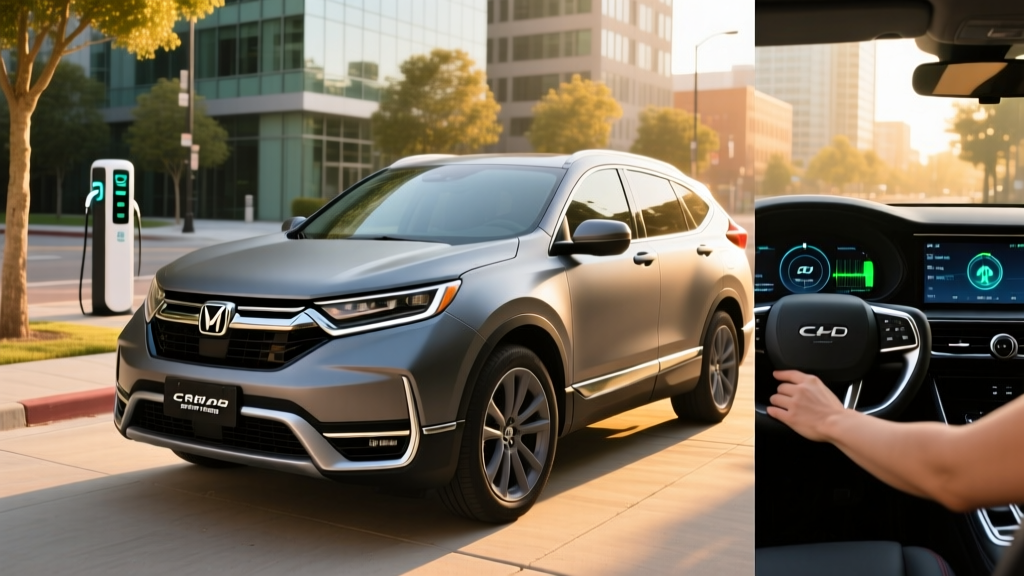
Quick Verdict: The 2026 CR-V Sport Hybrid at a Glance
The 2026 Honda CR-V Sport Hybrid slots into the sweet spot of the compact SUV segment: a conventional hybrid (HEV) that requires no plug, no range anxiety, and no behavior change from a gas-car owner — yet returns fuel economy that rivals many plug-in hybrids once you account for real-world driving patterns. With 204 combined horsepower, standard all-wheel drive on most trims, and EPA-estimated ratings of 40 MPG combined, the Sport Hybrid is the efficiency play in Honda's best-selling SUV lineup.
But the CR-V lineup can confuse shoppers. The Sport and Sport Touring trims are hybrids; the EX and EX-L are not. And Honda does not currently offer a plug-in hybrid (PHEV) version of the CR-V in the United States for the 2026 model year. This guide breaks down exactly what the 2026 CR-V Sport Hybrid delivers — and whether a conventional hybrid, a PHEV from a competitor, or a full battery-electric vehicle (BEV) is the right call for your driveway.
2026 CR-V Sport Hybrid: Core Specifications
| Spec | 2026 CR-V Sport Hybrid (FWD) | 2026 CR-V Sport Hybrid (AWD) |
|---|---|---|
| Powertrain | 2.0L Atkinson-cycle 4-cyl + 2 electric motors | 2.0L Atkinson-cycle 4-cyl + 2 electric motors |
| Combined Horsepower | 204 hp | 204 hp |
| Combined Torque | 247 lb-ft (electric motor) | 247 lb-ft (electric motor) |
| Transmission | e-CVT (direct-drive) | e-CVT (direct-drive) |
| EPA City MPG | 43 | 40 |
| EPA Highway MPG | 36 | 34 |
| EPA Combined MPG | 40 | 37 |
| Fuel Tank Capacity | 14.0 gal | 14.0 gal |
| Total Range (est.) | ~560 mi | ~518 mi |
| 0–60 mph | ~7.8 sec | ~8.0 sec |
| Towing Capacity | 1,000 lb | 1,000 lb |
| Cargo Volume (rear seats up) | 36.3 cu ft | 36.3 cu ft |
| Cargo Volume (rear seats folded) | 76.5 cu ft | 76.5 cu ft |
| Base MSRP (Sport FWD) | ~$36,350 | ~$37,850 |
Source: fueleconomy.gov and Honda Newsroom. Pricing is approximate MSRP before destination; verify with your dealer for exact 2026 figures.
Fuel Economy: EPA Numbers vs. Real-World MPG
How many MPG does the 2026 CR-V Sport Hybrid get? The EPA rates the front-wheel-drive model at 43 city / 36 highway / 40 combined, while the all-wheel-drive version drops to 40 city / 34 highway / 37 combined. These are strong numbers for a compact SUV, and they reflect the inherent advantage of Toyota/Honda-style series-parallel hybrid systems: electric motors handle low-speed and stop-and-go driving where gasoline engines are least efficient.
The city-highway split is important. Unlike battery-electric vehicles, which lose efficiency at high speeds, the CR-V Hybrid is at its best in traffic and around town. If your commute is 80% highway at 75 mph, a diesel or a PHEV with a long electric-only range might serve you better. But for the typical suburban driver mixing errands, school runs, and some highway miles, the real-world numbers align closely with EPA estimates.
How the Hybrid Powertrain Works
The 2026 CR-V Sport Hybrid uses Honda's fourth-generation two-motor hybrid system. Here is the operating logic:
- EV Drive: At low speeds and light loads, the electric motor alone propels the vehicle using energy from the hybrid battery. The gasoline engine stays off.
- Hybrid Drive: Under moderate acceleration, the gasoline engine generates electricity to feed the drive motor. The engine is not mechanically connected to the wheels in this mode.
- Engine Drive: At steady highway cruising speeds, a lock-up clutch mechanically links the 2.0L engine to the front wheels — this is more efficient than converting to electricity and back again at constant velocity.
- Regenerative Braking: During deceleration, the drive motor acts as a generator, converting kinetic energy into electricity stored in the hybrid battery.
The 2.0-liter Atkinson-cycle four-cylinder produces 146 hp on its own, but the system combines it with two electric motors (one for propulsion, one for generation) for a net 204 hp. Peak electric motor torque of 247 lb-ft is available from zero RPM, which gives the CR-V Hybrid a responsive, torquey feel off the line that the non-hybrid 1.5L turbo (190 hp) cannot match in stop-and-go traffic.
HEV vs. PHEV vs. BEV: Which Fits Your Life?
The CR-V Sport Hybrid is a conventional hybrid (HEV). It has a small battery (approximately 1.1 kWh usable) that charges exclusively through regenerative braking and the gasoline engine. You never plug it in. This is fundamentally different from a plug-in hybrid (PHEV) or a battery-electric vehicle (BEV).
| Factor | HEV (CR-V Sport Hybrid) | PHEV (e.g., Toyota RAV4 Prime) | BEV (e.g., Tesla Model Y) |
|---|---|---|---|
| Plug-in Required? | No | Yes (for EV range) | Yes (always) |
| Electric-Only Range | ~1 mi at low speed | 35–42 mi | 260–330 mi |
| Total Range | ~520–560 mi | ~500–600 mi (gas+electric) | 260–330 mi |
| Home Charging Needed? | No | Recommended (Level 2) | Essential (Level 2) |
| Upfront Cost Premium | +$1,000–$1,500 vs gas | +$5,000–$8,000 vs gas | +$8,000–$15,000 vs gas |
| Federal Tax Credit (§30D) | No | Up to $7,500 (if eligible) | Up to $7,500 (if eligible) |
| Best For | No home charging access, long road trips | Short commute + home charging + road trips | Home charging + mostly under 250 mi/day |
| Maintenance | Oil changes + less brake wear | Oil changes + less brake wear + battery care | Minimal — no oil, fewer fluids |
- Choose the CR-V Sport Hybrid (HEV) if: You lack access to home or workplace charging, you drive more than 40 miles per day in mixed conditions, you take regular road trips beyond 300 miles, or you want hybrid efficiency with zero lifestyle change.
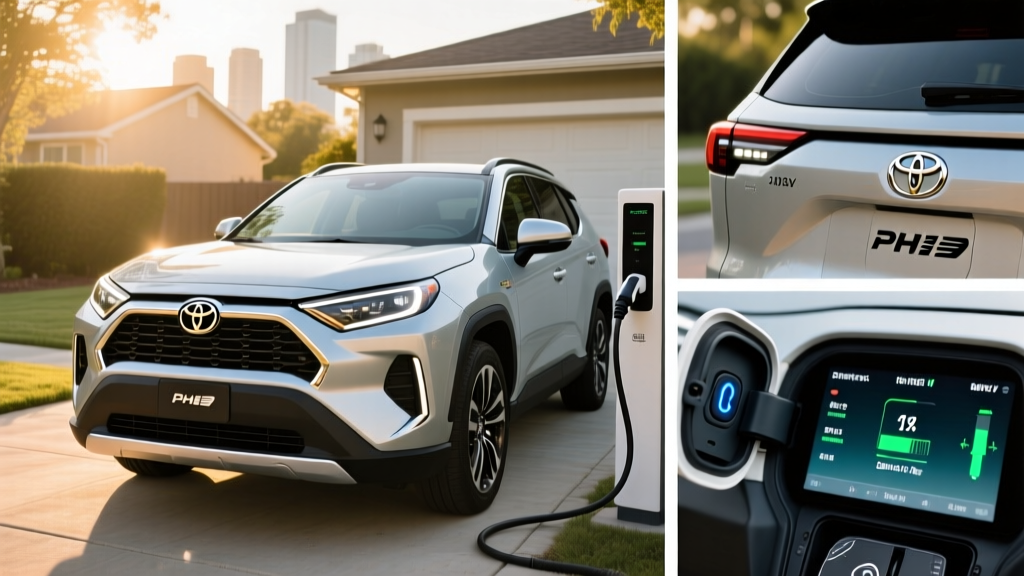
- Choose a PHEV (like the RAV4 Prime or Hyundai Tucson PHEV) if: You can install a Level 2 charger at home, your daily commute is under 40 miles (covering it entirely on electricity), but you still want gas-engine backup for weekend trips.
- Choose a BEV (like the Model Y or Ioniq 5) if: You have reliable home charging, your daily driving is under 250 miles, you want the lowest per-mile energy cost, and you are comfortable planning around DC fast charging on road trips.
Battery Warranty, Lifespan, and Replacement Cost
Hybrid battery longevity is the single most common concern among first-time hybrid buyers. Here is what you need to know about the 2026 CR-V Sport Hybrid's battery:
Real-world longevity: Honda's hybrid systems have been in production since the early 2000s (starting with the Insight and Civic Hybrid). Third-generation and fourth-generation systems, as used in the current CR-V, have proven highly durable. Fleet data and owner reports suggest hybrid batteries commonly last 150,000–200,000+ miles before significant degradation. The battery in an HEV is relatively small (~1.1 kWh usable), so it cycles less deeply than a PHEV or BEV battery — shallow cycling is one of the best predictors of long lithium-ion battery life.
Replacement cost if out of warranty: A replacement hybrid battery for the CR-V Hybrid typically costs between $2,000 and $4,000 installed at a dealership, depending on labor rates. Third-party refurbished battery options can reduce this to $1,500–$2,500. This is dramatically less than a BEV traction battery replacement ($8,000–$20,000+), which is one reason HEVs carry lower long-term financial risk for battery-related repairs.
For comparison, the hybrid system's electric motors and power control unit (inverter) are also covered under the hybrid-system warranty. The gasoline engine retains its standard 5-year/60,000-mile powertrain warranty.
Pricing, Trims, and Tax Credit Eligibility
The 2026 CR-V Sport Hybrid is available in two main hybrid trims:
- CR-V Sport Hybrid (FWD): ~$36,350 MSRP + destination
- CR-V Sport Hybrid (AWD): ~$37,850 MSRP + destination
- CR-V Sport Touring Hybrid (AWD standard): ~$41,850 MSRP + destination
The Sport trim includes Honda Sensing (adaptive cruise control, lane-keeping assist, automatic emergency braking), a 7-inch touchscreen with wireless Apple CarPlay and Android Auto, heated front seats, dual-zone climate control, and LED headlights. The Sport Touring adds a 9-inch touchscreen with built-in navigation, wireless phone charging, a premium audio system, heated rear seats, and a hands-free power tailgate.
Does the 2026 CR-V Sport Hybrid Qualify for a Federal Tax Credit?
No. The federal §30D Clean Vehicle Credit applies only to plug-in electric vehicles — battery-electric vehicles (BEVs) and plug-in hybrids (PHEVs) with a minimum battery capacity of 7 kWh. The CR-V Sport Hybrid's battery is approximately 1.1 kWh, which disqualifies it entirely from §30D.
However, hybrid buyers should check for:
- State-level incentives: A handful of states offer rebates or HOV-lane access for conventional hybrids, though these are increasingly targeted at PHEVs and BEVs. Check your state's energy office or Alternative Fuels Data Center for current programs.
- Manufacturer incentives: Honda occasionally offers loyalty cash or low-APR financing on hybrid trimes. Check Honda's current offers page.
- Fuel savings as the real incentive: At 40 MPG combined vs. the gas CR-V's 30 MPG combined, and with regular unleaded at ~$3.40/gallon (national average), a driver covering 15,000 miles annually saves approximately $425 per year in fuel. Over a 5-year ownership period, that is roughly $2,125 in savings — partially offsetting the hybrid's ~$1,000–$1,500 price premium over the gas EX trim.
Reliability, Ownership Costs, and Who Should Buy
Honda's hybrid powertrain has a strong reliability track record. The fourth-generation two-motor system eliminates the conventional transmission entirely — the e-CVT is not a belt-and-pulley CVT but a direct-drive system with a fixed gear ratio and a lock-up clutch. There are fewer wear components than in a traditional automatic transmission.
Ownership cost highlights:
- Insurance: Expect premiums 5–10% higher than the gas CR-V due to the higher MSRP and hybrid-specific repair costs after collisions.
- Brake life: Regenerative braking significantly reduces wear on the friction brakes. Owners commonly report original brake pads lasting 80,000–100,000+ miles.
- Oil changes: The gasoline engine still requires regular oil changes (Honda recommends every 7,500–10,000 miles under normal conditions), but the engine runs less often than in a gas-only vehicle, which can extend oil life in practice.
- Tires: Hybrid models are slightly heavier, which can increase tire wear by ~5–10% compared to gas trims.
- Depreciation: Hybrid CR-Vs have held residual value well, often depreciating less than gas-only trims over 3–5 years due to strong demand in the used market.
Pros
- 40 MPG combined (FWD) — top-tier for the segment
- 204 hp feels responsive in city driving
- No plug required — zero lifestyle change
- 8–10 year hybrid battery warranty
- Spacious cargo area (36.3 cu ft behind rear seats)
- Standard Honda Sensing safety suite
- Strong resale value
Cons
- AWD drops combined MPG to 37
- No federal tax credit eligibility
- Towing limited to 1,000 lb
- Engine noise under hard acceleration (e-CVT drone)
- 7-inch screen on Sport trim feels dated for the price
- No PHEV option in the CR-V lineup
Who Should Choose the 2026 CR-V Sport Hybrid?
This hybrid is ideal for suburban families, commuters with mixed city/highway routes, and buyers who want lower fuel bills without the complexity of plug-in charging. It is especially compelling for apartment dwellers or street-parkers who cannot install a home charger. If you drive 12,000–18,000 miles per year in mixed conditions, the fuel savings are meaningful and the ownership experience is virtually identical to a gas car — just with fewer stops at the gas station.
Who Should Look Elsewhere?
If your daily commute is under 30 miles and you have access to home charging, a PHEV like the Toyota RAV4 Prime (42 miles EV range) or Hyundai Tucson PHEV (33 miles EV range) will let you drive most days on electricity alone while still offering gas-engine flexibility. If you want the lowest possible per-mile cost and have reliable home charging, a BEV like the Hyundai Ioniq 5 or Tesla Model Y eliminates gasoline entirely. And if you need serious towing (3,500+ lb), neither the CR-V Hybrid nor most compact SUVs will suffice — look at body-on-frame hybrids like the Toyota Tacoma i-FORCE MAX or a full-size SUV.
Frequently Asked Questions
How many MPG does the 2026 CR-V Sport Hybrid get in real-world driving?
The EPA rates the FWD model at 43 city / 36 highway / 40 combined, and AWD at 40/34/37. In real-world mixed suburban driving, FWD owners typically achieve 39–43 MPG. Highway-only driving at 75+ mph tends to return 31–34 MPG. Cold weather (below 30°F) can reduce economy by 5–10% due to increased engine idling for cabin heat and reduced battery efficiency.
Does the CR-V Sport Hybrid need to be plugged in?
No. The CR-V Sport Hybrid is a conventional hybrid (HEV). Its small battery charges entirely through regenerative braking and the gasoline engine. You fuel it like any other car — at a gas station. There is no charging port and no electric-only range beyond about one mile at very low speeds.
How long will the CR-V Hybrid battery last?
Honda warrants the hybrid battery for 8 years/100,000 miles (10 years/150,000 miles in CARB states). Real-world data from Honda's hybrid fleet suggests these batteries commonly last 150,000–200,000+ miles. The shallow charge-discharge cycles of an HEV battery are far less stressful than the deep cycles in a BEV, contributing to longevity.
What does a CR-V Hybrid battery replacement cost?
Out-of-warranty replacement typically runs $2,000–$4,000 at a dealership (parts and labor). Refurbished third-party batteries can cost $1,500–$2,500 installed. This is significantly less than BEV battery replacements and is rarely needed within the first 150,000 miles.
Does the 2026 CR-V Sport Hybrid qualify for any tax credits?
No federal §30D tax credit applies — the credit requires a plug-in vehicle with at least 7 kWh of battery capacity. Some states may offer minor hybrid incentives; check the Alternative Fuels Data Center for your jurisdiction. The primary financial benefit is fuel savings (~$425/year vs. the gas CR-V at 15,000 miles annually).
Is the CR-V Sport Hybrid faster than the gas CR-V?
In city driving, yes — the electric motor's instant 247 lb-ft of torque makes the hybrid feel quicker off the line. In a 0–60 mph test, the hybrid runs approximately 7.8–8.0 seconds, comparable to or slightly quicker than the 1.5L turbo gas model (~8.2–8.5 seconds). At sustained highway speeds, both feel similar, though the hybrid's e-CVT can produce noticeable engine drone under hard acceleration.
Should I get FWD or AWD on the CR-V Sport Hybrid?
If you live in a region with mild winters and mostly dry roads, FWD saves you $1,500 upfront and gains 3 MPG combined (40 vs. 37). If you deal with snow, ice, or unpaved roads regularly, AWD's traction advantage is worth the trade-off. The AWD system uses a rear-mounted electric motor — there is no mechanical driveshaft — so the efficiency penalty is relatively modest compared to a traditional mechanical AWD system.
Sources: fueleconomy.gov (EPA ratings), Honda CR-V official page, IRS §30D Clean Vehicle Credit rules.