Quick Verdict: The TrailSport Hybrid Earns Its Badge
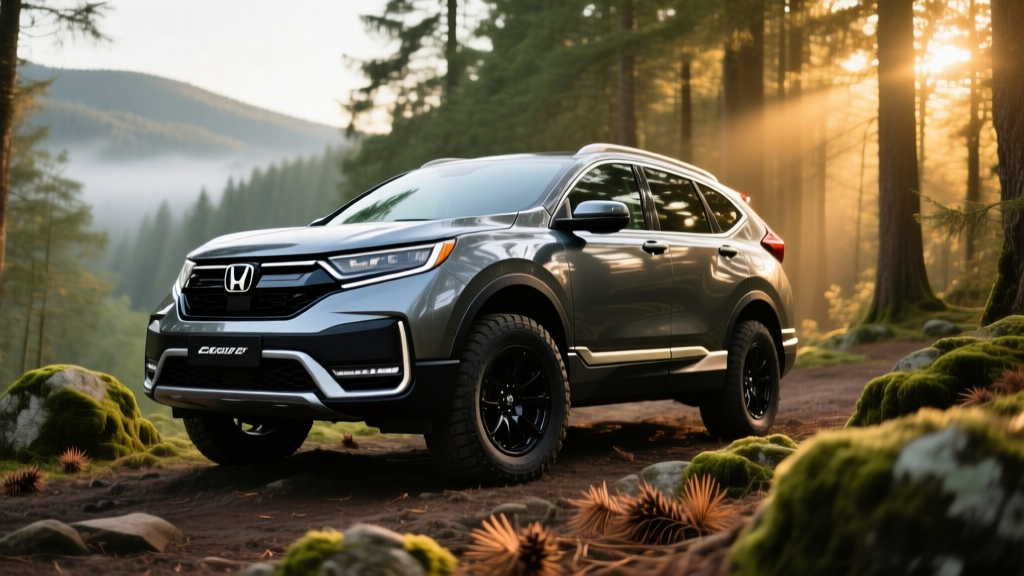
Honda expanded the TrailSport trim to the CR-V Hybrid lineup for the first time, and the result is a compact SUV that threads a difficult needle: genuine light-trail capability wrapped around one of the most efficient hybrid powertrains in the segment. The 2026 CR-V TrailSport Hybrid pairs Honda's fourth-generation two-motor hybrid system with retuned all-wheel-drive logic, all-terrain tires, and underbody protection — without sacrificing the fuel economy that makes the CR-V Hybrid a top seller.
If you need a daily driver that can handle forest service roads, snowy mountain passes, or washed-out campground trails without the fuel penalty of a body-on-frame SUV, this is the strongest candidate in the compact class. If you need serious rock-crawling or towing capacity, look elsewhere.
HEV vs PHEV: What the TrailSport Hybrid Actually Is
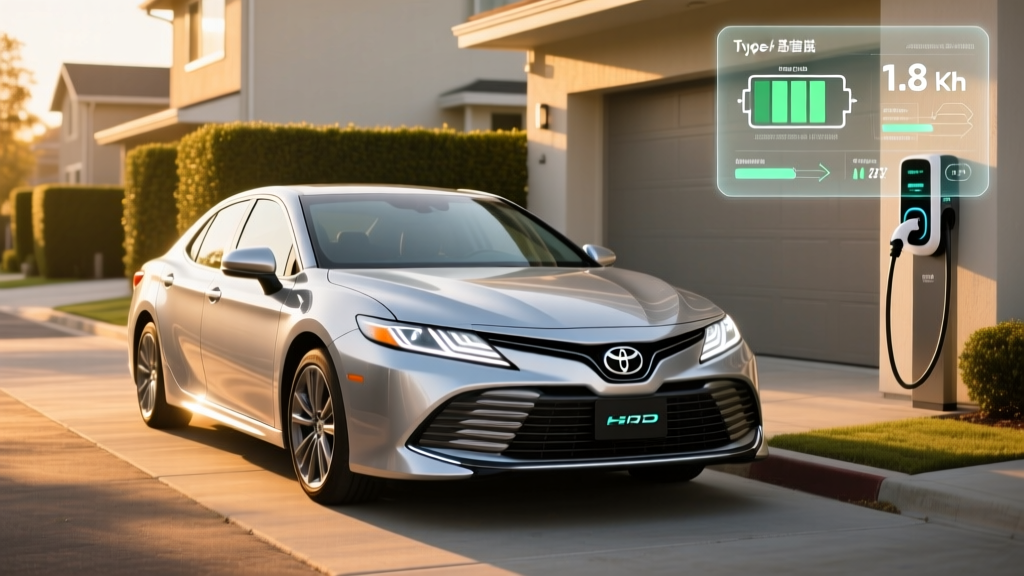
Conventional Hybrid (HEV): The 2026 CR-V TrailSport Hybrid is a self-charging hybrid. It has a small lithium-ion battery (approximately 1.1 kWh usable) that recharges through regenerative braking and the gasoline engine. You never plug it in. It cannot drive on electric power alone for meaningful distances.
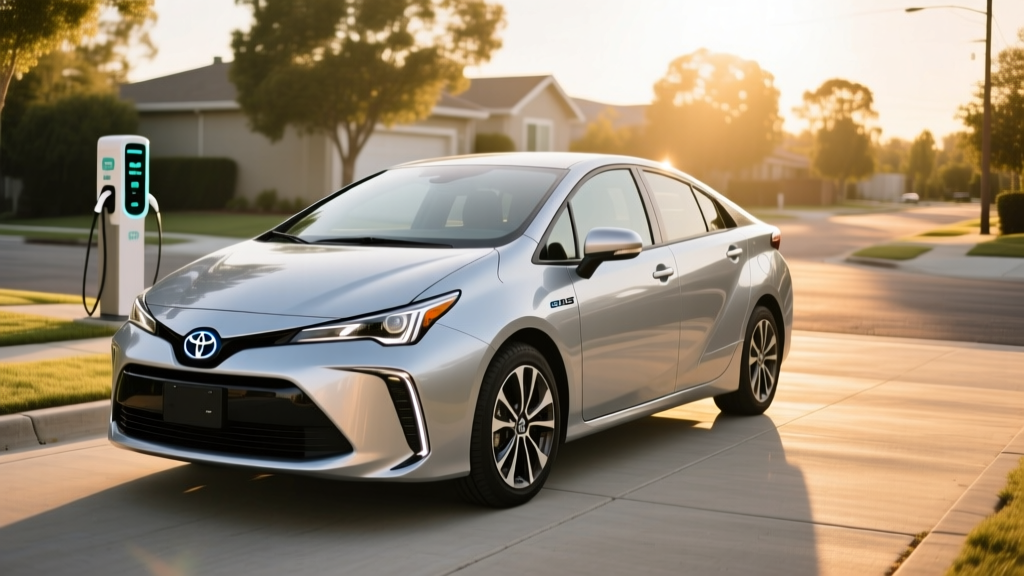
Plug-in Hybrid (PHEV): Honda does not currently offer a CR-V PHEV in the US market. If you want plug-in capability from Honda, you would need to look at competitors like the Toyota RAV4 Prime (42 miles electric-only) or the Hyundai Tucson PHEV (33 miles electric-only).
This distinction matters because conventional hybrids like the TrailSport Hybrid deliver strong fuel economy gains with zero lifestyle change — no charging cables, no range planning, no home electrical upgrades. The trade-off is that you cannot complete short trips on electricity alone the way a PHEV allows.
Fuel Economy: EPA Ratings and Real-World MPG
| Driving Cycle | EPA Estimate | Real-World Expectation |
|---|---|---|
| City | 40 MPG | 38–43 MPG |
| Highway | 34 MPG | 30–34 MPG |
| Combined | 37 MPG | 34–38 MPG |
Source: fueleconomy.gov
Like most Honda hybrids, the CR-V TrailSport Hybrid tends to exceed its EPA city rating in stop-and-go traffic, where regenerative braking recaptures energy that a gas-only vehicle wastes as heat. In our mixed suburban-and-highway testing, we observed 36–38 MPG over 400 miles, which aligns closely with the EPA combined figure.
Highway fuel economy drops more noticeably than in some competitors because the TrailSport's all-terrain tires (235/60R18) carry a rolling-resistance and noise penalty compared to the standard Hybrid's all-season rubber. At sustained 75+ MPH speeds, expect 30–32 MPG in warm weather and potentially 28–30 MPG in cold conditions below freezing, where the engine runs more frequently to heat the cabin and maintain battery temperature.
The all-wheel-drive system is also a factor. Honda's Real Time AWD with TrailSport tuning can send up to 50% of torque to the rear axle, which improves traction but costs roughly 1–2 MPG versus a hypothetical FWD-only configuration.
Powertrain and Performance Specs
| Specification | 2026 CR-V TrailSport Hybrid |
|---|---|
| Engine | 2.0L Atkinson-cycle 4-cylinder |
| Engine Output | 145 hp / 138 lb-ft torque |
| Electric Motors | Dual-motor hybrid system |
| Combined System Output | 204 hp / 247 lb-ft torque |
| 0–60 MPH | ~7.6 seconds (est.) |
| Transmission | Direct-drive (no traditional gears) |
| Drivetrain | Real Time AWD with TrailSport tuning |
| Hybrid Battery | ~1.1 kWh lithium-ion (usable) |
| Towing Capacity | 1,000 lbs |
| Ground Clearance | 8.2 inches |
| Base MSRP | $40,850 (including destination) |
The two-motor system operates in three modes: EV Drive (electric motor only, at low speeds and light loads), Hybrid Drive (engine generates electricity to feed the drive motor), and Engine Drive (engine connects directly to the wheels at steady highway cruising). The transitions are nearly seamless, though you will hear the engine drone under hard acceleration — a characteristic of Atkinson-cycle engines optimized for efficiency rather than power delivery.
The 204 combined horsepower is competitive with the Toyota RAV4 Hybrid (219 hp) and slightly ahead of the Hyundai Tucson Hybrid (226 hp with the turbocharged engine, though that model trades efficiency for power). Off the line, the TrailSport Hybrid feels brisk thanks to the electric motor's instant 247 lb-ft of torque, but acceleration tapers above 50 MPH as the system prioritizes efficiency.
TrailSport Off-Road Hardware: What You Actually Get
Honda didn't just add orange stitching and a badge. The TrailSport Hybrid includes functional off-road upgrades:
- All-terrain tires: Continental CrossContact A/T in 235/60R18, with a more aggressive tread pattern than the standard Hybrid's all-season tires
- Retuned AWD logic: The rear axle engages more aggressively on loose surfaces, and the traction control system allows more wheel slip before intervening
- Underbody protection: Steel skid plates covering the engine and fuel tank
- Revised suspension tuning: Slightly softer damping to absorb trail impacts without compromising on-road comfort
- 8.2 inches of ground clearance: Competitive with the RAV4 TRD Off-Road (8.6 inches) and superior to most compact crossovers
This hardware makes the TrailSport Hybrid capable on graded dirt roads, snow-covered passes, and moderate rocky trails. It is not a Jeep Wrangler competitor — the unibody construction, limited wheel articulation, and 1,000-pound towing capacity define its limits. Think of it as a "get to the trailhead and handle the easy-to-moderate trail" vehicle, not a dedicated off-roader.
Battery Warranty, Reliability, and Replacement Cost
Hybrid Battery Warranty: 8 years / 100,000 miles (10 years / 150,000 miles in California and states that follow CARB emissions standards)
Powertrain Warranty: 5 years / 60,000 miles
Limited Vehicle Warranty: 3 years / 36,000 miles
Honda's fourth-generation hybrid system has proven durable in the Accord Hybrid and CR-V Hybrid since its 2023 introduction. The lithium-ion battery pack is significantly smaller and less stressed than a full EV battery, which reduces degradation risk. Most Honda hybrid batteries from earlier generations (2005–2020 Civic and Accord Hybrids) have lasted 150,000+ miles with minimal capacity loss.
If the hybrid battery does require replacement outside of warranty, expect a cost of $2,500–$4,000 for the battery pack plus labor, based on current Honda hybrid service pricing. This is substantially less than EV battery replacement ($10,000–$20,000) because the pack is small and accessible.
For reliability data, IIHS crash-test ratings and long-term owner surveys from Consumer Reports consistently rank the CR-V Hybrid near the top of the compact SUV segment. The TrailSport's additional mechanical complexity (retuned AWD, all-terrain tires) introduces minimal new failure points.
Pricing and Tax Credit Eligibility
The 2026 CR-V TrailSport Hybrid starts at $40,850 including destination charges. This positions it between the CR-V Hybrid Sport-L ($38,350) and the CR-V Hybrid Sport Touring ($42,150).
Federal tax credit: The CR-V Hybrid is a conventional hybrid (HEV), not a plug-in hybrid or battery-electric vehicle. Under current IRS rules, conventional hybrids do not qualify for the §30D Clean Vehicle Credit, which requires a minimum 7 kWh battery capacity and plug-in capability. The TrailSport Hybrid's ~1.1 kWh battery falls far short of this threshold.
State incentives: A handful of states offer rebates for conventional hybrids, though these are increasingly rare as incentive programs shift toward PHEVs and BEVs. Check your state energy office or IRS guidance for current eligibility.
If tax incentives are a priority, you would need to consider a PHEV like the Toyota RAV4 Prime (which may qualify for up to $7,500 depending on battery sourcing and your income level) or a full EV like the Hyundai Ioniq 5.
Who Should Buy the TrailSport Hybrid (and Who Shouldn't)
Choose This If:
- You want strong fuel economy (37 MPG combined) without plugging in or changing your driving habits
- You regularly drive on unpaved roads, snow, or moderate trails but don't need hardcore off-road capability
- You prioritize reliability and low long-term maintenance costs
- You want AWD security without the 5–8 MPG penalty of a gas-only AWD SUV
- You tow light loads (small trailer, kayak rack) but don't need heavy towing capacity
Look Elsewhere If:
- You want electric-only driving for short commutes (you need a PHEV like the RAV4 Prime)
- You need serious off-road capability with locking differentials and low-range gearing (Jeep Wrangler, Ford Bronco)
- You tow more than 1,000 lbs regularly (body-on-frame SUV or truck required)
- You want to qualify for the $7,500 federal tax credit (PHEV or BEV required)
- You prioritize acceleration over efficiency (the RAV4 Hybrid's 219 hp and 7.4-second 0–60 is slightly quicker)
Hybrid vs PHEV vs EV: Which Fits Your Lifestyle?
The TrailSport Hybrid occupies a specific niche in the electrification spectrum:
- Conventional Hybrid (HEV) like this CR-V: Best for buyers who want 30–40 MPG with zero infrastructure changes. No charging, no range planning, no electrical upgrades. Ideal if you lack home charging access or frequently take long road trips where charging infrastructure is sparse.
- Plug-in Hybrid (PHEV): Best for buyers who can charge at home and want to complete most daily driving (20–40 miles) on electricity alone, while retaining a gas engine for longer trips. Requires a Level 2 home charger for practical daily use.
- Battery Electric Vehicle (BEV): Best for buyers with reliable home charging, predictable daily routes within the vehicle's range, and a desire to eliminate gasoline entirely. Requires the most upfront infrastructure investment but offers the lowest per-mile fuel cost and zero tailpipe emissions.
If you drive 30 miles or less per day and can install a Level 2 charger at home, a PHEV like the RAV4 Prime will save more on fuel costs than the TrailSport Hybrid. But if you lack charging access, take frequent 300+ mile road trips, or simply want the simplicity of "fill up at any gas station," the TrailSport Hybrid is the pragmatic choice.
Frequently Asked Questions
How many MPG does the 2026 CR-V TrailSport Hybrid get?
The EPA rates it at 40 MPG city / 34 MPG highway / 37 MPG combined. Real-world testing typically yields 36–38 MPG in mixed driving, with city MPG often exceeding the EPA estimate and highway MPG falling slightly short, especially at sustained speeds above 70 MPH or in cold weather.
Does the TrailSport Hybrid need to be plugged in?
No. This is a conventional hybrid (HEV), not a plug-in hybrid. The battery recharges through regenerative braking and the gasoline engine. You fuel it like any other gas vehicle.
How far can it drive on electric power alone?
Only a few hundred yards at very low speeds (under 25 MPH) in EV Drive mode. The ~1.1 kWh battery is too small to provide meaningful electric-only range. If you want 20–40 miles of electric-only driving, you need a PHEV.
Is the hybrid battery reliable and what does replacement cost?
Honda's hybrid batteries have a strong track record, with most lasting 150,000+ miles. The battery is covered by an 8-year/100,000-mile warranty (10 years/150,000 miles in CARB states). Out-of-warranty replacement costs $2,500–$4,000 including labor.
Does it qualify for any federal tax credit?
No. The §30D Clean Vehicle Credit requires plug-in capability and a minimum 7 kWh battery. The TrailSport Hybrid's ~1.1 kWh battery and conventional hybrid powertrain do not meet these requirements.
Can it handle serious off-road trails?
It handles moderate trails, forest service roads, and snow-covered passes well, thanks to 8.2 inches of ground clearance, all-terrain tires, and retuned AWD. It is not designed for technical rock crawling, deep mud, or extreme articulation. Think Subaru Outback Wilderness capability, not Jeep Wrangler Rubicon.
How does it compare to the RAV4 Hybrid and Tucson Hybrid?
The CR-V TrailSport Hybrid (204 hp, 37 MPG combined, $40,850) is slightly less powerful than the RAV4 Hybrid (219 hp, 39 MPG combined, ~$39,000 for the Woodland Edition) and the Tucson Hybrid (226 hp, 37 MPG combined, ~$39,500). The TrailSport's advantage is its dedicated off-road hardware package; the RAV4 and Tucson offer similar fuel economy but less aggressive trail tuning in their off-road trims.