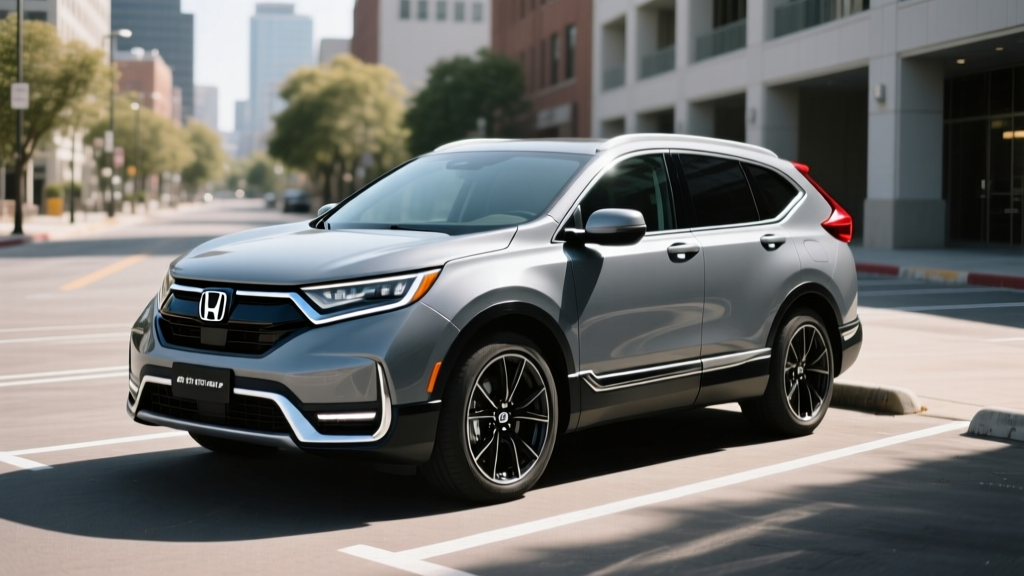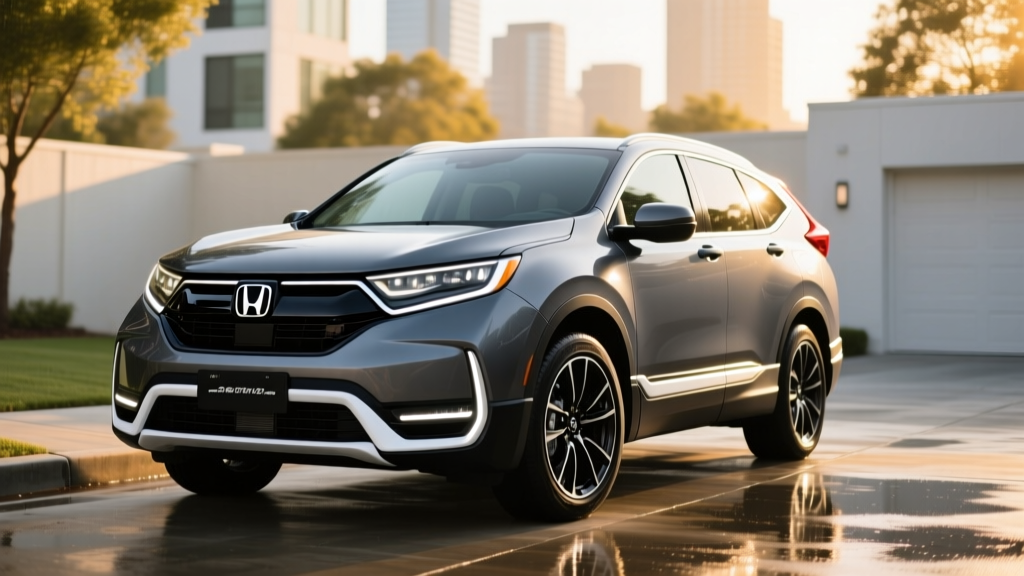
The Honda CR-V Hybrid has been one of the best-selling compact hybrid SUVs in America for good reason, and the 2026 CR-V AWD Sport Touring Hybrid sits at the top of that lineup. It pairs a 2.0-liter Atkinson-cycle four-cylinder with a two-motor hybrid system for 204 combined horsepower, all-wheel drive, and an EPA-estimated 43 MPG city. But does the real-world fuel economy match the sticker, and is the Sport Touring trim worth the premium over lower hybrid trims?
This guide breaks down every number that matters — MPG by driving scenario, powertrain specs, battery warranty, pricing, and tax-credit eligibility — so you can decide whether the 2026 CR-V AWD Sport Touring Hybrid is the right electrified SUV for your garage.
HEV vs PHEV: What the 2026 CR-V Hybrid Actually Is
Before diving into specs, it's critical to understand what you're buying. The 2026 Honda CR-V Hybrid is a conventional hybrid electric vehicle (HEV), not a plug-in hybrid (PHEV). That means:
Conventional Hybrid (HEV) — 2026 CR-V Hybrid
- No plug, no charging cable required
- Small battery (~1.1 kWh) recharged by regenerative braking and the gas engine
- Cannot drive on electric-only power for meaningful distances
- Refuels exclusively at gas stations
- No federal EV tax credit eligibility
Plug-In Hybrid (PHEV) — e.g., CR-V e:PHEV (not sold in US)
- Larger battery (typically 17-18 kWh) with plug-in charging capability
- 30-40 miles of electric-only range before the gas engine engages
- Can charge at home on Level 1/2 or at public AC chargers
- May qualify for federal §30D tax credit if US-spec and sourcing rules met
- Total range combines EV miles + gas tank range
Honda does not currently sell a CR-V PHEV in the United States. If you want plug-in electric range in a Honda, you'll need to look at competitors like the Toyota RAV4 Prime (42 miles EV range) or the Hyundai Tucson PHEV (33 miles EV range). The 2026 CR-V AWD Sport Touring Hybrid is purely a self-charging HEV — you fill it with gas and drive.
Fuel Economy: EPA Ratings and Real-World MPG
The headline number for the 2026 CR-V AWD Sport Touring Hybrid is strong for an all-wheel-drive compact SUV. Here's the official breakdown from the EPA's fueleconomy.gov:
| Driving Scenario | EPA Estimate | Real-World Expectation |
|---|---|---|
| City | 43 MPG | 40–45 MPG (hybrids often beat EPA in stop-and-go) |
| Highway | 36 MPG | 32–36 MPG (sustained 70+ mph reduces hybrid advantage) |
| Combined | 40 MPG | 37–42 MPG depending on driving mix |
Why city MPG beats highway: The hybrid system recovers energy during braking and low-speed driving, where the electric motors do the heavy lifting. On the highway, the gas engine runs more often at steady state, narrowing the gap with a conventional gas CR-V (which gets about 30 MPG combined AWD).
Real-world variables to expect:
- Cold weather (below 30°F): Expect a 5–10% MPG drop as the engine runs longer to generate cabin heat and the battery is less efficient.
- Mountain driving: Regen on descents partially offsets climbing losses, but net MPG will drop 3–8 MPG on steep grades.
- Heavy cargo/towing: The CR-V Hybrid is not rated for towing beyond 1,000 lbs, but loaded roof boxes and full passenger/cargo loads will reduce efficiency by 2–4 MPG.
Over 15,000 miles per year at the national average of $3.40/gallon, the 40 MPG combined figure translates to roughly $1,275 in annual fuel costs — about $700 less per year than the gas AWD CR-V at 30 MPG combined.
Powertrain Specs: Horsepower, Engine, and Motors
| Specification | 2026 CR-V AWD Sport Touring Hybrid |
|---|---|
| Engine | 2.0L Atkinson-cycle DOHC 4-cylinder |
| Engine Output | 145 hp @ 6,100 rpm / 134 lb-ft torque |
| Electric Motors | Dual-motor hybrid system (drive + generator) |
| Combined System Output | 204 hp / 247 lb-ft torque |
| Drivetrain | Real Time AWD with torque vectoring |
| Transmission | Electronic CVT (e-CVT, no fixed gears) |
| Hybrid Battery | ~1.1 kWh lithium-ion (self-charging, no plug) |
| 0–60 mph | ~7.6 seconds |
| Towing Capacity | 1,000 lbs (not rated for trailer towing) |
| Fuel Tank | 14.0 gallons |
| Total Range | ~560 miles (at 40 MPG combined) |
The two-motor system is the same architecture Honda uses across its hybrid lineup. One motor primarily generates electricity from the engine, while the second drives the wheels. At low speeds, the CR-V runs almost entirely on the electric drive motor, with the engine acting as a generator. At highway speeds, a lock-up clutch connects the engine directly to the wheels for efficiency. The result is seamless power delivery that feels more like an EV around town than a traditional CVT-equipped gas car.
The 247 lb-ft of torque is available from low RPM thanks to the electric motor, which gives the Sport Touring Hybrid noticeably better off-the-line acceleration than the 190-hp gas CR-V AWD, despite only a 0.3-second advantage in 0–60 testing.
Pricing, Trims, and Tax Credit Eligibility
The 2026 CR-V AWD Sport Touring Hybrid is the top-tier hybrid trim. Here's how pricing breaks down across the hybrid lineup:
| Trim | MSRP (incl. destination) | Key Additions Over Base Hybrid |
|---|---|---|
| Sport Hybrid AWD | ~$36,350 | Base hybrid with 18" wheels, heated seats, wireless CarPlay/Android Auto |
| Sport-L Hybrid AWD | ~$38,700 | Leather-trimmed seats, power tailgate, wireless charging |
| Sport Touring Hybrid AWD | ~$41,850 | Bose 12-speaker audio, heated steering wheel, navigation, Honda Sensing suite, 19" wheels |
Does the 2026 CR-V Hybrid Qualify for a Federal Tax Credit?
No. The federal §30D Clean Vehicle Credit applies only to plug-in electric vehicles (BEVs and PHEVs) with a minimum 7 kWh battery capacity and external charging capability. The CR-V Hybrid's ~1.1 kWh battery and lack of a charge port make it ineligible. The IRS §30D guidelines are explicit on this requirement.
Some states offer rebates for conventional hybrids, but these are increasingly rare as incentive programs shift toward plug-in vehicles. Check your state energy office or AFDC state law database for current local programs.
Battery Warranty, Lifespan, and Replacement Cost
Hybrid battery longevity is consistently the top concern for first-time hybrid buyers. Here's what Honda covers and what real-world data shows:
| Battery Item | Details |
|---|---|
| Hybrid Battery Warranty | 8 years / 100,000 miles (10 years / 150,000 miles in CARB states) |
| Warranty Coverage Threshold | Capacity loss below ~70% of original |
| Expected Battery Lifespan | 150,000–200,000+ miles based on Honda hybrid fleet data |
| Out-of-Warranty Replacement Cost | $2,000–$4,000 (refurbished); $4,000–$6,000 (new from dealer) |
| 12V Auxiliary Battery | Standard 12V lead-acid; replace every 3–5 years (~$200) |
Honda's hybrid system uses a relatively small lithium-ion pack compared to a full EV, and because it never deep-cycles (the system keeps the battery in a narrow state-of-charge window, typically 40–80%), degradation is minimal. Honda's hybrid fleet — spanning the Accord Hybrid, CR-V Hybrid, and Insight — has demonstrated strong long-term reliability. Independent data from Consumer Reports and J.D. Power consistently ranks Honda's hybrid powertrains among the most dependable in the compact SUV segment.
The CARB-state extended warranty (10yr/150k) applies in California, Colorado, Connecticut, Maine, Maryland, Massachusetts, New Jersey, New York, Oregon, Rhode Island, Vermont, Virginia, and Washington. If you live in one of these states, your hybrid battery has significantly longer coverage.
Sport Touring Trim: What You Get for the Premium
The Sport Touring Hybrid commands roughly $5,500 more than the base Sport Hybrid AWD. Here's what justifies that gap — and what doesn't:
Pros — Sport Touring Hybrid
- Bose 12-speaker premium audio (significant upgrade over 6-speaker base)
- Heated steering wheel and heated rear seats
- Wireless phone charging pad
- Integrated Honda Satellite-Linked Navigation
- 19-inch alloy wheels (sport-tuned appearance)
- Honda Sensing suite with low-speed braking control and traffic jam assist
- Rain-sensing wipers and hands-free power tailgate
- Best resale value retention in the CR-V Hybrid lineup
Cons — Sport Touring Hybrid
- $41,850 MSRP is steep for a compact hybrid SUV with no EV capability
- 19-inch wheels add road noise vs. the 18-inch Sport trim
- No ventilated seats at this price point
- Towing limited to 1,000 lbs (same as all CR-V Hybrids)
- No federal tax credit to offset the premium trim cost
- Rear visibility slightly compromised by sport-tuned rear spoiler design
CR-V Hybrid vs PHEV vs Full EV: Which Should You Buy?
This is the decision every electrified-SUV shopper faces. Here's a concrete framework based on your driving and charging situation:
| Factor | CR-V HEV (This Vehicle) | RAV4 Prime PHEV | Full EV (e.g., Ioniq 5) |
|---|---|---|---|
| Home Charging Access | Not needed | Recommended (Level 2 ideal) | Essential (Level 2 strongly recommended) |
| Daily Commute | Any distance, gas only | Under 42 mi: pure electric; over 42 mi: hybrid | Under ~250 mi: ideal; road trips need DCFC planning |
| Annual Fuel/Energy Cost (15k mi) | ~$1,275 (gas) | ~$600–$900 (mix of electricity + gas) | ~$500–$750 (electricity, varies by rate) |
| Federal Tax Credit | $0 | Up to $7,500 (if eligible) | Up to $7,500 (if eligible) |
| Maintenance Costs | Low (oil changes, fewer brake replacements) | Low-medium (engine + EV systems) | Lowest (no oil, minimal brakes, no transmission) |
| Upfront Price | ~$41,850 | ~$44,000–$47,000 | ~$42,000–$55,000 |
| Best For | No home charging, long highway commutes, simplicity | Home charging + short daily commute + road trip flexibility | Home charging, mostly under 200 mi/day, lowest running costs |
Choose the 2026 CR-V AWD Sport Touring Hybrid if:
- You rent or lack access to home/work charging
- Your daily driving exceeds 60 miles and you don't want to plan charging stops
- You frequently drive in cold climates where EV range loss is a concern
- You want a premium-trim compact SUV with hybrid efficiency and zero lifestyle change
Look at a PHEV or EV instead if:
- You have a garage or driveway where you can install a Level 2 charger
- Your daily commute is under 40 miles (a PHEV covers this on electricity alone)
- You want to claim the $7,500 federal tax credit to lower your effective purchase price
- You want to minimize long-term fuel and maintenance costs beyond what an HEV offers
Frequently Asked Questions
How many MPG does the 2026 CR-V AWD Sport Touring Hybrid get?
The EPA rates it at 43 MPG city, 36 MPG highway, and 40 MPG combined. In real-world driving, most owners see 37–42 MPG combined depending on their city-vs-highway mix. City driving often exceeds the EPA estimate thanks to regenerative braking, while sustained highway speeds above 70 mph will return closer to 32–35 MPG.
Does the CR-V Hybrid need to be plugged in?
No. The 2026 CR-V Hybrid is a conventional hybrid (HEV) with no charge port. The small lithium-ion battery recharges through regenerative braking and the gas engine. You simply fill up at a gas station like any other car.
Is the hybrid battery reliable, and what does replacement cost?
Honda's hybrid battery is covered for 8 years/100,000 miles (10 years/150,000 miles in CARB states). Real-world data from Honda's hybrid fleet shows most batteries last 150,000–200,000+ miles before significant degradation. Out-of-warranty replacement runs $2,000–$4,000 for a refurbished unit or $4,000–$6,000 for a new OEM battery from a Honda dealer.
Does the 2026 CR-V Hybrid qualify for any tax credit?
Not the federal §30D Clean Vehicle Credit, which requires a plug-in vehicle with at least a 7 kWh battery. The CR-V Hybrid's ~1.1 kWh self-charging system doesn't qualify. Some states may offer small hybrid rebates, but these are increasingly uncommon. Check the AFDC state incentive database for your area.
How does the Sport Touring Hybrid compare to the gas CR-V AWD?
The hybrid delivers 40 MPG combined vs. the gas AWD CR-V's 30 MPG — a 33% improvement. It also produces 204 hp and 247 lb-ft of torque (vs. 190 hp and 179 lb-ft for the 1.5L turbo gas model), giving it stronger low-end acceleration. The trade-off is a ~$4,000–$6,000 price premium and a 1,000-lb towing limit (the gas AWD CR-V can tow up to 1,500 lbs).
Is the 2026 CR-V Sport Touring Hybrid a good choice for cold climates?
Yes, and it has an advantage over full EVs here. Hybrids lose only 5–10% efficiency in freezing temperatures because the gas engine generates waste heat that warms the cabin without draining the battery. A full EV can lose 20–30% of its range in sub-freezing conditions due to battery resistance and electric cabin heating. The CR-V Hybrid's AWD system and available heated seats/steering wheel make it well-suited for northern winters.
What's the difference between the Sport Touring Hybrid and the Sport-L Hybrid?
The Sport-L (~$38,700) adds leather and a power tailgate over the base Sport. The Sport Touring (~$41,850) adds Bose 12-speaker audio, navigation, a heated steering wheel, heated rear seats, 19-inch wheels, rain-sensing wipers, and the full Honda Sensing suite with traffic jam assist. If premium audio and cold-weather comfort features matter to you, the Touring is worth the $3,150 step up.