Quick Verdict: The 2026 Corolla Hybrid Delivers Where It Counts
If your primary question is how many MPG the 2026 Toyota Corolla Hybrid gets, the short answer is 50 MPG combined for the front-wheel-drive LE trim — making it one of the most fuel-efficient non-plug-in vehicles you can buy new in 2026. The all-wheel-drive variant drops only slightly to 47 MPG combined, a trade-off most buyers in snow-belt states will gladly accept.
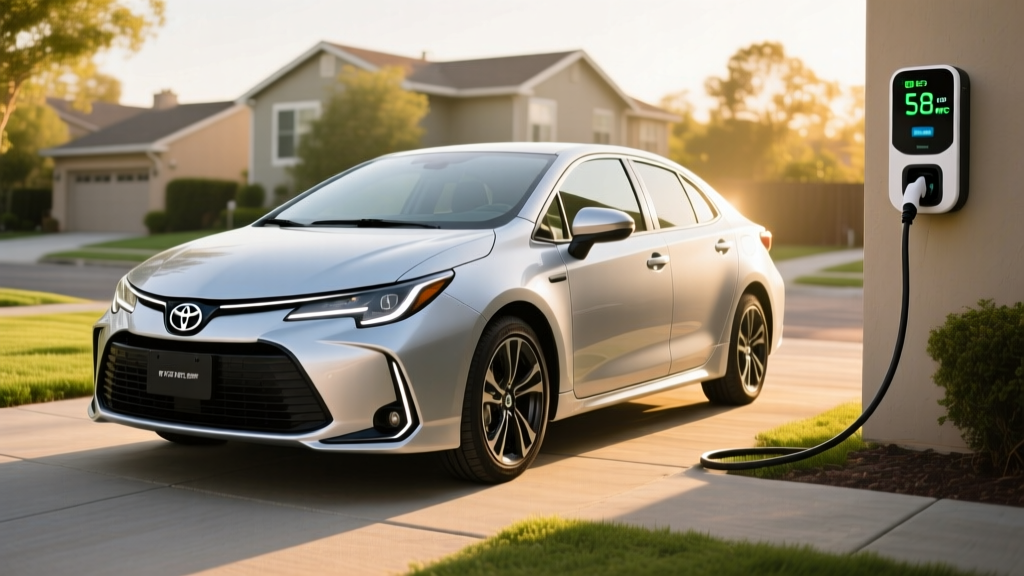
The Corolla Hybrid remains a conventional hybrid electric vehicle (HEV), meaning it requires no plug, no charging routine, and no range-anxiety calculus. It captures energy through regenerative braking and its gasoline engine to keep a small battery charged automatically. For buyers who want electric-only driving without the commitment of a full battery-electric vehicle (BEV), Toyota offers the RAV4 Prime and Prius Prime as plug-in alternatives — but the Corolla lineup stays HEV-only for 2026.
| Specification | LE (FWD) | LE (AWD) | XLE (FWD) |
|---|---|---|---|
| EPA City MPG | 53 | 50 | 53 |
| EPA Highway MPG | 46 | 43 | 46 |
| EPA Combined MPG | 50 | 47 | 50 |
| Combined Horsepower | 138 hp | 138 hp | 138 hp |
| Engine | 1.8L 4-cyl + electric motor | 1.8L 4-cyl + dual electric motors | 1.8L 4-cyl + electric motor |
| Drivetrain | FWD | AWD (e-motor rear axle) | FWD |
| Base MSRP | $24,725 | $26,125 | $27,925 |
| Fuel Tank | 11.4 gal | 11.4 gal | 11.4 gal |
| Est. Total Range | ~570 mi | ~535 mi | ~570 mi |
Breaking Down the 2026 Corolla Hybrid MPG Numbers
The EPA rates the FWD Corolla Hybrid LE at 53 city / 46 highway / 50 combined MPG (source: fueleconomy.gov). The AWD version, which uses a second electric motor on the rear axle for traction rather than a mechanical driveshaft, sacrifices three combined MPG for the added grip.
| Driving Scenario | EPA Estimate (FWD) | Real-World Expectation |
|---|---|---|
| City / stop-and-go | 53 MPG | 52–58 MPG (hybrids often exceed EPA in city) |
| Highway (70 mph cruise) | 46 MPG | 42–46 MPG (aerodynamic drag limits regen gains) |
| Combined mixed driving | 50 MPG | 48–53 MPG |
| Cold weather (below 32°F) | — | 40–45 MPG (engine runs more for cabin heat) |
Toyota's fifth-generation hybrid system is optimized for urban efficiency. In city driving, the electric motor handles low-speed propulsion extensively, and the gasoline engine shuts off at stops. This is where the Corolla Hybrid frequently exceeds its EPA city rating — something uncommon with gasoline-only vehicles. On the highway, the smaller 1.8L Atkinson-cycle engine and modest battery mean less electric assist at sustained speeds, so expect highway numbers to land at or slightly below the EPA sticker.
Cold weather is the great equalizer for all hybrids. Below freezing, the gasoline engine must run more frequently to provide cabin heat (the Corolla Hybrid uses engine waste heat rather than an electric heat pump), which typically drops real-world MPG by 10–15%. Drivers in northern climates should budget for 40–45 MPG combined during winter months.
Powertrain: How Toyota's Fifth-Gen Hybrid System Works
The 2026 Corolla Hybrid pairs a 1.8-liter four-cylinder Atkinson-cycle engine with one or two electric motor-generators, depending on drivetrain. The combined system output is 138 horsepower — adequate for commuting and merging, though not sporty. The 0-60 mph time lands around 9.0 seconds, which is competitive with other compact hybrids but noticeably slower than the Prius (which uses a larger 2.0L hybrid system producing 194 hp).
The AWD-e system is worth understanding: it adds a separate 30 kW electric motor on the rear axle with no mechanical connection to the front engine. This motor engages from a stop and during low-traction conditions up to approximately 43 mph, then disengages to minimize drag. The result is confident all-weather traction without the drivetrain losses of a traditional AWD system.
The hybrid battery in the Corolla is a compact lithium-ion pack (approximately 0.9 kWh usable capacity) positioned under the rear seat. Unlike a plug-in hybrid or full EV, this battery is never charged from an external source — it charges exclusively through regenerative braking and the gasoline engine. There is no charging port, no plug, and no electric-only driving mode beyond very low-speed, short-distance creep.
HEV vs PHEV vs EV: Which Powertrain Fits Your Life?
The Corolla Hybrid is a conventional HEV — it will never drive on electricity alone at meaningful speeds or distances. If you're cross-shopping, here's how the three electrified categories compare:
| Factor | HEV (Corolla Hybrid) | PHEV (e.g., Prius Prime) | BEV (e.g., Tesla Model 3) |
|---|---|---|---|
| Plug-in charging required? | No | Yes (for EV range) | Yes (always) |
| Electric-only range | ~0 mi (low-speed creep only) | 39–44 mi (Prius Prime) | 250–360 mi (varies) |
| Home charging needed? | No | Recommended (Level 2 ideal) | Essential |
| Fuel cost per mile | ~$0.08 (at $3.40/gal, 50 MPG) | ~$0.04 (electric) / ~$0.09 (gas) | ~$0.04 (at $0.16/kWh) |
| Federal tax credit (§30D) | Not eligible | Up to $7,500 (if eligible) | Up to $7,500 (if eligible) |
| Upfront price premium | Low (~$1,500 over gas Corolla) | Medium (~$5,000–$8,000) | High (~$10,000+) |
| Best for | No home charging, simple ownership | Short commutes + road trips | Home charging + daily EV driving |
Choose the Corolla Hybrid (HEV) if: you don't have access to home or workplace charging, want the simplest possible ownership experience, drive a mix of city and highway, and prioritize low upfront cost with strong fuel savings.
Choose a PHEV if: you have Level 2 charging at home, your daily commute is under 40 miles round-trip, and you still want the flexibility of a gas engine for road trips.
Choose a full BEV if: you have reliable home charging, want the lowest per-mile fuel cost, are eligible for the full federal tax credit, and are comfortable planning DC fast-charging stops on longer trips.
Pricing, Trims, and Tax Credit Eligibility
The 2026 Corolla Hybrid starts at $24,725 for the LE FWD, including destination charge. The AWD LE adds $1,400, and the XLE FWD — with SofTex seats, a larger touchscreen, and wireless charging — starts at $27,925. Fully loaded, an XLE AWD with options stays under $31,000.
Because the Corolla Hybrid is a conventional HEV (not a plug-in), it does not qualify for the federal §30D clean vehicle tax credit. That credit, currently up to $7,500, applies only to battery-electric vehicles and plug-in hybrids that meet specific battery-sourcing, critical-mineral, MSRP, and buyer-income requirements (source: IRS.gov). Conventional hybrids were excluded from §30D starting in 2023.
Some states offer their own incentives for hybrids, though these are increasingly rare as state programs shift toward PHEVs and BEVs. Check your state's energy or environmental agency website for current programs. The Corolla Hybrid's value proposition doesn't depend on incentives — its fuel savings alone pay back the modest price premium over the gas-only Corolla in approximately 2–3 years for a driver covering 15,000 miles annually.
Reliability, Battery Warranty, and Replacement Cost
Toyota's hybrid system is among the most proven in the industry, with over 25 years of continuous production since the original Prius. The Corolla Hybrid carries Toyota's standard hybrid battery warranty: 10 years or 150,000 miles (whichever comes first), covering defects and significant capacity loss. This applies nationwide regardless of state emissions rules.
Toyota Hybrid Battery Warranty: 10 years / 150,000 miles. Covers battery pack defects and capacity degradation below a defined threshold. The 12V auxiliary battery is covered under the separate 3-year/36,000-mile basic warranty.
In practice, Toyota hybrid batteries routinely last well beyond their warranty period. Fleet data and owner surveys show many first- and second-generation Prius batteries exceeding 200,000 miles before requiring replacement. The Corolla Hybrid's smaller, less stressed lithium-ion pack should follow this pattern.
If replacement is eventually needed out of warranty, expect to pay between $2,000 and $4,000 for a new OEM hybrid battery pack, including labor. Refurbished and aftermarket options are available for $1,000–$2,000. This is a fraction of the cost of replacing a BEV traction battery (which can exceed $10,000–$15,000) because the Corolla Hybrid's pack is small — under 1 kWh versus 60–85 kWh in a typical EV.
Beyond the battery, the Corolla Hybrid benefits from Toyota's reputation for mechanical durability. The planetary gearset that manages power between the engine and motors has no traditional transmission clutches or bands to wear out. Brake pads often last 80,000+ miles thanks to regenerative braking handling most deceleration. Toyota's Safety Sense 3.0 suite (automatic emergency braking, lane-keeping assist, adaptive cruise control) is standard across all trims, and the Corolla consistently earns top marks from the IIHS.
Daily Ownership: What Living With the Corolla Hybrid Actually Feels Like
The Corolla Hybrid drives almost identically to the gas-only Corolla, which is precisely the point. There's no plug to manage, no charging app to open, no route-planning for road trips. You fill up at any gas station and go. The transition between electric and gasoline power is nearly imperceptible in normal driving — the only telltale sign is the silence at stoplights when the engine shuts off.
Acceleration from the 138-hp combined system is linear and adequate. The electric motor provides instant torque off the line, making the car feel quicker than its 0-60 time suggests in city driving. Highway passing requires planning — the CVT drones noticeably under hard throttle — but it's never dangerously slow.
The 11.4-gallon fuel tank, combined with 50 MPG, yields an estimated 570 miles of total range on a tank. That's roughly two fill-ups per month for a 15,000-mile/year driver, and each fill-up costs approximately $38 at $3.40/gallon. Annual fuel cost lands around $1,020 — compared to approximately $1,700 for the gas-only Corolla (at 33 MPG combined) or $600 for a BEV charged at the national average electricity rate.
Pros
- 50 MPG combined EPA — among the best non-plug-in vehicles available
- No charging infrastructure needed — works for apartment dwellers and street parkers
- AWD available with minimal MPG penalty (47 combined)
- 10-year / 150,000-mile hybrid battery warranty
- Low starting price ($24,725) with standard Toyota Safety Sense 3.0
- Proven hybrid system with exceptional long-term reliability data
- ~570 miles of total range per tank
Cons
- 138 hp feels modest for highway merging; CVT drones under hard acceleration
- No electric-only driving capability (not a PHEV)
- Not eligible for the federal §30D tax credit
- Rear seat and trunk space slightly reduced vs. gas Corolla (battery placement)
- Infotainment system functional but not class-leading
- Cold-weather MPG drop of 10–15% (no heat pump)
Frequently Asked Questions
How many MPG does the 2026 Corolla Hybrid get?
The EPA rates the FWD Corolla Hybrid at 53 city / 46 highway / 50 combined MPG. The AWD version is rated at 50 city / 43 highway / 47 combined. Real-world results typically match or slightly exceed EPA figures in city driving, with highway MPG occasionally falling 2–4 MPG below the sticker, especially at speeds above 70 mph.
Does the Corolla Hybrid need to be plugged in?
No. The Corolla Hybrid is a conventional HEV (hybrid electric vehicle), not a plug-in hybrid. It charges its own battery through regenerative braking and the gasoline engine. There is no charging port and no plug. If you want plug-in electric driving, look at the Toyota Prius Prime (44 miles electric-only) or RAV4 Prime (42 miles electric-only).
Does the 2026 Corolla Hybrid qualify for any tax credit?
The Corolla Hybrid does not qualify for the federal §30D clean vehicle tax credit, which is reserved for plug-in hybrids and battery-electric vehicles meeting specific battery-sourcing and MSRP requirements. Some states may offer separate incentives for hybrids, but these vary by jurisdiction and are increasingly rare. Check your state's energy office for current programs.
How long will the Corolla Hybrid battery last, and what does replacement cost?
Toyota covers the hybrid battery for 10 years or 150,000 miles. Historical data from Toyota's hybrid lineup shows many batteries lasting 200,000+ miles with normal use. If replacement is needed out of warranty, expect $2,000–$4,000 for a new OEM pack — significantly less than a full EV battery replacement due to the Corolla Hybrid's small (~0.9 kWh) battery.
Is the Corolla Hybrid better than a full EV for my situation?
If you lack access to home or workplace charging, drive long highway routes frequently, or want the lowest possible upfront cost, the Corolla Hybrid is likely the better choice. If you have reliable Level 2 home charging, a commute under 40 miles, and qualify for the $7,500 federal tax credit, a BEV or PHEV will deliver lower per-mile operating costs. The Corolla Hybrid wins on simplicity — no charging logistics, no range planning, just exceptional fuel economy at a modest price.
How does the Corolla Hybrid compare to the Prius?
The 2026 Prius uses a larger 2.0L hybrid system producing 194 hp and achieves up to 57 MPG combined (FWD). It's quicker (0-60 in ~7.0 seconds), more aerodynamic, and slightly more efficient — but starts approximately $3,000 higher and offers less rear-seat and cargo room. The Corolla Hybrid is the value pick; the Prius is the efficiency-and-performance pick. Both share Toyota's proven hybrid architecture and 10-year battery warranty.