Quick Verdict: A Hot Hatch That Sips Fuel Like a Prius
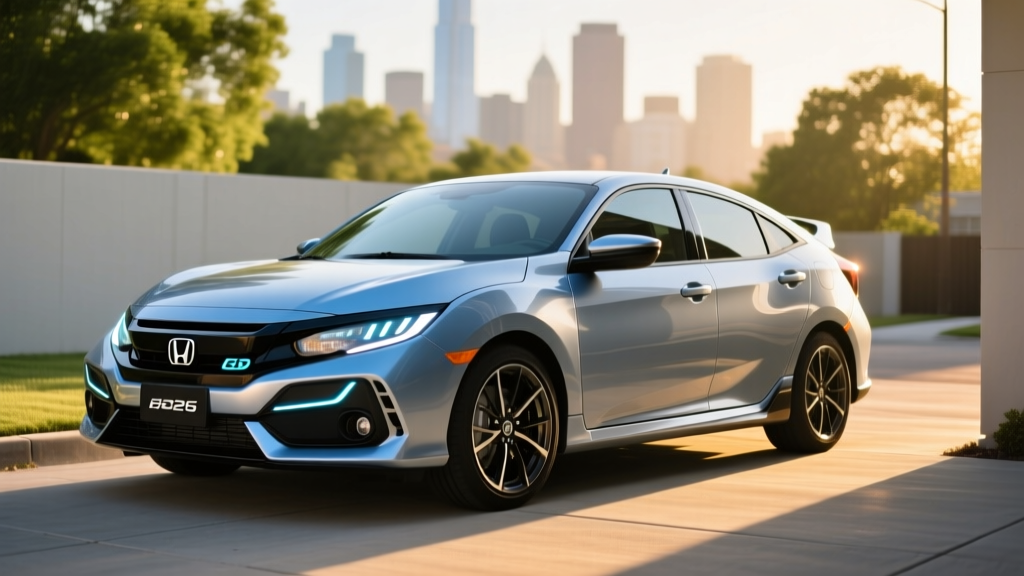
The 2026 Civic Hatchback Hybrid is Honda's answer to a question most automakers haven't bothered asking: can a compact hatchback be genuinely fun to drive while returning 50+ MPG in daily commuting? The answer, after examining EPA data and real-world driving patterns, is a qualified yes — with some caveats around highway efficiency and trim pricing that buyers need to understand before signing paperwork.
This is a conventional hybrid (HEV), not a plug-in hybrid (PHEV). You never plug it in. The system recovers energy through regenerative braking and the gasoline engine, storing it in a small lithium-ion battery that assists acceleration and enables brief electric-only driving at low speeds. If you're looking for 30+ miles of electric-only range, you'll need to look at a PHEV like the Toyota Prius Prime or a full BEV. The Civic Hatchback Hybrid is engineered for maximum fuel efficiency with zero lifestyle change.
| Specification | 2026 Civic Hatchback Hybrid |
|---|---|
| Powertrain | 2.0L Atkinson-cycle 4-cyl + 2 electric motors |
| Combined Horsepower | 200 hp |
| Combined Torque | 232 lb-ft (electric motor peak) |
| Transmission | e-CVT (direct drive with lock-up clutch) |
| EPA MPG (City / Hwy / Combined) | 50 / 45 / 48 MPG (Sport Touring); 50 / 47 / 49 MPG (Sport) |
| Fuel Tank | 10.6 gallons |
| Total Range | ~508–519 miles |
| 0–60 mph | ~7.2 seconds (estimated) |
| Drivetrain | Front-wheel drive |
| Cargo Volume (rear seats up / down) | 24.5 / 46.2 cu ft |
| Hybrid Battery Warranty | 8 years / 100,000 miles |
| Base MSRP | ~$30,750 (Sport); ~$34,050 (Sport Touring) |
HEV vs PHEV vs EV: Where the Civic Hatchback Hybrid Fits
Before diving into fuel economy, it's essential to place this vehicle correctly in the electrification spectrum. Honda currently offers the Civic Hatchback exclusively as a conventional hybrid (HEV) — there is no plug-in hybrid (PHEV) variant and no fully electric version in the 2026 lineup.
| Factor | HEV (Civic Hatchback Hybrid) | PHEV (e.g., Prius Prime) | BEV (e.g., Chevy Bolt EV) |
|---|---|---|---|
| Plug-in Required? | No | Yes (for EV range) | Yes (always) |
| Electric-Only Range | ~1 mile at low speed | 35–44 miles | 200–300+ miles |
| Total Range | ~510+ miles | ~500+ miles (gas + electric) | 200–300+ miles |
| Home Charging Needed | No | Recommended (Level 1 or 2) | Required (Level 2 ideal) |
| Federal Tax Credit (§30D) | Not eligible | Up to $7,500 (if eligible) | Up to $7,500 (if eligible) |
| Best For | No home charging; max simplicity | Short commutes + home charging | Home charging + daily EV driving |
Choose the Civic Hatchback Hybrid if: You lack access to home or workplace charging, you want a single-vehicle solution for both city commuting and long road trips, and you don't want to think about charging logistics. The HEV system is invisible in daily use — you just drive and refuel at any gas station.
Look at a PHEV instead if: You have a garage or driveway where you can install a Level 2 charger and your daily commute is under 40 miles round-trip. A PHEV lets you drive on electricity most days while retaining a gas engine for longer trips.
Consider a full BEV if: You have reliable home charging, your daily driving is under 250 miles, and you want the lowest per-mile fuel cost and minimal maintenance.
Fuel Economy: EPA Numbers vs Real-World MPG
The EPA rates the 2026 Civic Hatchback Hybrid at 50 MPG city, 45–47 MPG highway, and 48–49 MPG combined, depending on trim. These are strong numbers that put the Civic within striking distance of the Toyota Prius, though the Prius still holds a slight edge in combined efficiency.
| Trim | City MPG | Highway MPG | Combined MPG | Source |
|---|---|---|---|---|
| Sport | 50 | 47 | 49 | fueleconomy.gov |
| Sport Touring | 50 | 45 | 48 | fueleconomy.gov |
Real-world expectations: Honda's two-motor hybrid system excels in stop-and-go city driving, where the electric motors handle most low-speed propulsion and the gasoline engine acts primarily as a generator. Many Civic Hybrid owners report exceeding the EPA city estimate — 52–55 MPG is achievable in warm-weather urban driving with moderate acceleration. However, highway fuel economy tends to fall slightly below the EPA sticker. At sustained 75–80 mph on the interstate, expect 41–44 MPG, especially with headwinds, elevation changes, or cold temperatures. In sub-freezing winter conditions, city MPG can drop to 44–46 as the engine runs more frequently to provide cabin heat and maintain battery temperature.
The Sport Touring trim's 2 MPG highway penalty versus the Sport trim comes down to wider 235/40R18 tires (vs 225/45R17 on the Sport), additional sound insulation weight, and the extra electronics load of the premium audio and navigation systems.
Powertrain Deep Dive: Honda's Two-Motor Hybrid System
The 2026 Civic Hatchback Hybrid uses Honda's latest-generation two-motor hybrid system, pairing a 2.0-liter Atkinson-cycle four-cylinder engine with two electric motors integrated into the transmission housing. Combined system output is 200 horsepower and 232 lb-ft of torque — a significant step up from the 129 hp in the previous-generation Insight and competitive with turbocharged compact hatches.
The system operates in three modes:
- EV Drive: The battery powers the propulsion motor directly for brief, low-speed movement (parking lots, stoplight creep). The gasoline engine is off.
- Hybrid Drive: The gasoline engine spins the generator motor, which feeds electricity to the propulsion motor. This is the primary mode for city and suburban driving. The engine runs at its most efficient RPM regardless of vehicle speed.
- Engine Drive: At steady highway speeds (typically above 55 mph), a lock-up clutch connects the gasoline engine directly to the front wheels, bypassing the electric motors for maximum efficiency at cruise.
This architecture means the Civic Hatchback Hybrid doesn't have a traditional geared transmission. The e-CVT provides seamless, stepless acceleration with no shift shock. Honda has programmed simulated shift points under hard acceleration to avoid the monotonous drone associated with older CVT designs, and the result is a powertrain that feels more natural than Toyota's hybrid system under aggressive throttle inputs.
The lithium-ion hybrid battery pack is modestly sized — roughly 1.1 kWh of usable capacity — because the system doesn't need to store large amounts of energy for extended EV driving. It buffers energy captured from regenerative braking and generator output, deploying it in quick bursts for acceleration assist.
Pricing, Trims, and Tax Credit Eligibility
The 2026 Civic Hatchback Hybrid is offered in two trims:
- Sport: ~$30,750 MSRP (including destination). Includes 17-inch alloy wheels, Honda Sensing suite, 7-inch touchscreen with wireless Apple CarPlay/Android Auto, heated front seats, dual-zone climate control, and LED headlights.
- Sport Touring: ~$34,050 MSRP. Adds 18-inch alloy wheels, leather-trimmed seats, 9-inch touchscreen with embedded navigation, Bose 12-speaker premium audio, wireless phone charging, heated rear seats, and a power moonroof.
Federal tax credit: The 2026 Civic Hatchback Hybrid does not qualify for the federal §30D new clean vehicle tax credit. Under current IRS rules, the §30D credit applies only to plug-in electric vehicles (PHEVs and BEVs) with a battery capacity of at least 7 kWh. As a conventional hybrid with a ~1.1 kWh battery, the Civic Hatchback Hybrid is ineligible regardless of buyer income or vehicle MSRP.
Some states offer rebates or incentives for conventional hybrids, but these vary widely and change frequently. Check your state's energy office or department of environmental quality for current programs. Honda also occasionally offers manufacturer incentives or low-APR financing on hybrid trims — check Honda's official site for current offers.
Pros
- 50 MPG city — among the best non-PHEV compacts
- 200 hp provides genuinely quick acceleration
- Hatchback utility: 24.5 cu ft cargo, 46.2 with seats folded
- No plug-in charging required — zero lifestyle adjustment
- Refined powertrain with minimal CVT drone
- Honda Sensing ADAS standard on all trims
Cons
- No PHEV variant available — can't drive on electricity for commutes
- No federal tax credit eligibility
- Highway MPG drops below EPA estimate at 75+ mph
- Sport Touring pricing pushes into entry-luxury territory
- Front-wheel drive only — no AWD option
- Rear visibility somewhat limited by hatchback design
Battery Longevity, Warranty, and Replacement Cost
Hybrid battery reliability is consistently the top concern among first-time hybrid buyers. Here's what the data shows:
Honda Hybrid Battery Warranty: 8 years or 100,000 miles (whichever comes first), covering defects and capacity loss below functional thresholds. In states that follow California Air Resources Board (CARB) standards — including California, New York, Oregon, Washington, and others — the warranty extends to 10 years or 150,000 miles.
Honda's two-motor hybrid system is now in its fourth generation, and the lithium-ion battery packs have demonstrated excellent longevity in real-world use. Unlike early nickel-metal hydride (NiMH) packs in the first-generation Insight and Civic Hybrid, modern lithium-ion cells with active thermal management experience slower degradation. Based on fleet data and owner reports from the Accord Hybrid and CR-V Hybrid (which share this architecture), battery replacement within the first 150,000 miles is uncommon.
If a replacement is needed out of warranty, expect a cost between $2,500 and $4,500 for the battery pack, depending on whether you source a new OEM unit, a refurbished pack, or an aftermarket replacement. Labor adds approximately $500–$800. Independent hybrid-specialty shops often offer refurbished pack installations for significantly less than dealer pricing.
It's worth noting that the hybrid battery is not the only high-voltage component. The power control unit (inverter) and the two electric motors are also covered under the hybrid system warranty. These components rarely fail, but their coverage provides additional peace of mind.
Driving Dynamics and Daily Livability
The Civic Hatchback Hybrid's 200 hp and 232 lb-ft of torque — most of which is available from near-zero RPM thanks to the electric motors — make it one of the quickest vehicles in the high-MPG compact segment. The 0–60 mph time of approximately 7.2 seconds puts it ahead of the Toyota Prius (~7.5 sec for the AWD model) and in the same ballpark as turbocharged gas hatchbacks like the Volkswagen Golf GTI.
Handling benefits from the Civic's already-capable chassis. The hybrid battery pack is mounted under the rear cargo floor, keeping the center of gravity low and preserving the full 24.5 cu ft of cargo space (identical to the gas Civic Hatchback). The Sport Touring's 18-inch wheels and lower-profile tires provide sharper turn-in at the cost of slightly firmer ride quality over rough pavement.
Inside, the cabin is well-assembled with soft-touch materials on the dashboard and door uppers. The Sport Touring's 9-inch touchscreen is responsive and includes wireless Apple CarPlay and Android Auto. Rear seat space accommodates adults comfortably on shorter trips, though legroom is tighter than a midsize sedan. The honeycomb mesh vent design across the dashboard is distinctive and functional.
The Honda Sensing suite is standard and includes adaptive cruise control with low-speed follow, lane-keeping assist, lane-departure warning, automatic emergency braking with pedestrian detection, and traffic sign recognition. This is an SAE Level 2 driver-assist system — the driver must remain fully engaged and cannot remove hands from the steering wheel for extended periods.
Who Should Buy the 2026 Civic Hatchback Hybrid?
This is the right car if you:
- Want 48–50 MPG without ever plugging in
- Need hatchback cargo flexibility for gear, pets, or groceries
- Commute in stop-and-go traffic where hybrids shine brightest
- Take regular road trips exceeding 300 miles and don't want to plan around charging
- Value a responsive, 200-hp powertrain over maximum efficiency at any cost
Look elsewhere if you:
- Have home charging and want to eliminate most gasoline use (consider a PHEV)
- Need all-wheel drive (the Civic Hybrid is FWD only — consider the Toyota Prius AWD or a Subaru hybrid)
- Want the absolute lowest fuel cost per mile (a BEV at ~$0.04–$0.06/mile beats any hybrid at ~$0.07–$0.09/mile at current gas prices)
- Require more than 46 cu ft of cargo space (consider a compact SUV hybrid like the CR-V Hybrid)
Frequently Asked Questions
How many MPG does the 2026 Civic Hatchback Hybrid actually get?
The EPA rates it at 50 city / 45–47 highway / 48–49 combined depending on trim. In real-world city driving, many owners report 52–55 MPG in warm weather. Highway driving at 75+ mph typically yields 41–44 MPG. Cold weather reduces city efficiency to approximately 44–46 MPG.
Does the Civic Hatchback Hybrid need to be plugged in?
No. This is a conventional hybrid (HEV), not a plug-in hybrid (PHEV). The battery charges through regenerative braking and the gasoline engine. You refuel at any gas station, exactly like a conventional car.
Can the Civic Hatchback Hybrid drive on electric power alone?
Only for very short distances at low speeds — roughly up to 1 mile at under 25 mph, such as creeping through a parking lot. It cannot sustain highway speeds on electric power alone. If you need meaningful electric-only commuting range, you need a PHEV or BEV.
Is the hybrid battery reliable, and what does replacement cost?
Honda's fourth-generation hybrid system has a strong reliability record. The battery is warrantied for 8 years/100,000 miles (10 years/150,000 miles in CARB states). Out-of-warranty replacement costs $2,500–$4,500 for the pack plus $500–$800 labor, but premature failure is uncommon based on fleet data from the Accord and CR-V Hybrid.
Does the 2026 Civic Hatchback Hybrid qualify for any tax credit?
It does not qualify for the federal §30D clean vehicle tax credit, which requires a plug-in vehicle with at least 7 kWh of battery capacity. Some states may offer hybrid-specific rebates — check your state energy office for current programs.
How does the Civic Hatchback Hybrid compare to the Toyota Prius?
The Prius achieves slightly higher combined MPG (up to 57 on the LE trim) and offers an AWD option, but produces less power (194 hp for AWD) and has a liftback design with less rear headroom. The Civic Hatchback Hybrid offers more engaging driving dynamics, a more conventional hatchback cargo area, and a slightly more premium interior on the Sport Touring trim.
Is the Honda Sensing system self-driving?
No. Honda Sensing is an SAE Level 2 driver-assist system. It provides adaptive cruise control and lane-keeping assist, but the driver must remain fully attentive, keep hands on the wheel, and supervise the system at all times. It does not drive the car autonomously.