Quick Verdict: The 2026 Camry SE Hybrid at a Glance
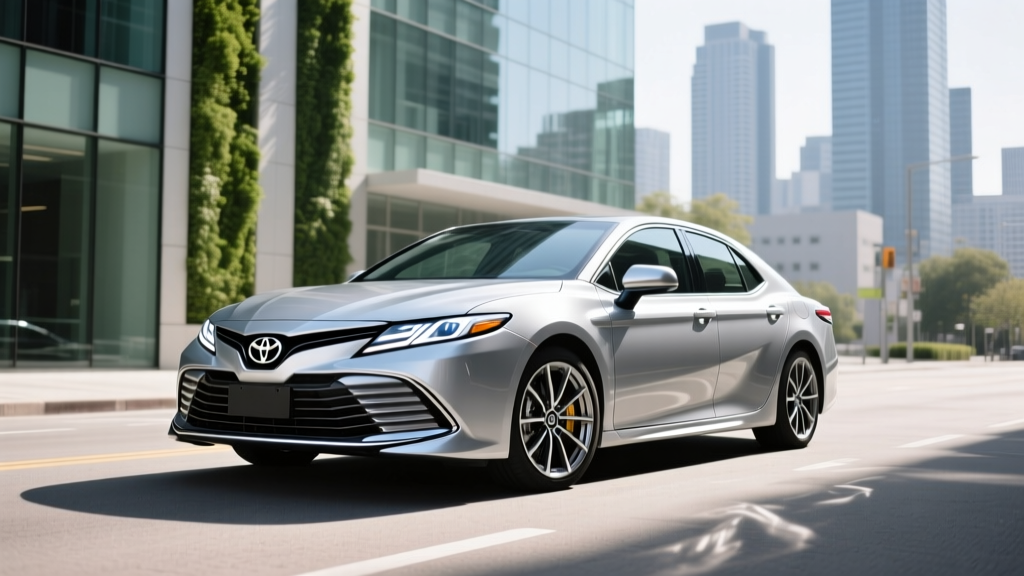
The 2026 Toyota Camry SE Hybrid sits in the sweet spot of Toyota's midsize sedan lineup: sport-tuned suspension, aggressive styling cues, and a fifth-generation hybrid powertrain that squeezes every drop from a gallon without ever asking you to plug in. For buyers who want the efficiency of an electrified vehicle but aren't ready for charging infrastructure dependence, the SE Hybrid trim delivers a compelling balance of engagement and economy.
This is a conventional hybrid (HEV), not a plug-in hybrid (PHEV). That distinction matters. The Camry Hybrid charges its own small battery through regenerative braking and the gasoline engine — you fuel it like any other car at a gas station and never think about charging cables. In return, you get EPA-estimated fuel economy that routinely beats 50 MPG in city driving, making it one of the most efficient non-plug-in vehicles on the road.
| Spec | Value |
|---|---|
| Powertrain | 2.5L 4-cyl + electric motor (5th-gen hybrid) |
| Combined Horsepower | 225 hp (net) |
| Drivetrain | FWD standard / AWD available |
| EPA MPG (FWD) | 51 city / 49 highway / 50 combined |
| EPA MPG (AWD) | 48 city / 47 highway / 47 combined |
| Fuel Tank | 13.2 gallons |
| Total Range (FWD est.) | ~660 miles |
| 0–60 mph | ~7.2 seconds |
| Hybrid Battery | Lithium-ion, ~1.6 kWh (self-charging) |
| Base MSRP (SE Hybrid) | ~$31,495 |
| Hybrid Battery Warranty | 10 years / 150,000 miles |
HEV vs. PHEV: Understanding What the Camry SE Hybrid Is (and Isn't)
Conventional Hybrid (HEV) — What the Camry SE Hybrid Is
- No plug required. The battery recharges via regenerative braking and the gas engine.
- Small battery (~1–2 kWh usable). Enough to assist acceleration and enable brief low-speed electric-only crawling, not sustained EV driving.
- Fuel economy advantage is constant. The hybrid system optimizes engine load at all speeds, delivering 47–51 MPG combined regardless of whether you "charge" it.
- No electric-only range to manage. You simply drive and refuel normally.
Plug-In Hybrid (PHEV) — What the Camry SE Hybrid Is Not
- PHEVs (like the Toyota RAV4 Prime or Prius Prime) have larger batteries (13–18 kWh) and can drive 25–45 miles on electricity alone.
- PHEVs require plug-in charging to realize their efficiency advantage.
- PHEVs qualify for partial or full federal tax credits under IRS §30D if they meet battery sourcing, MSRP, and income requirements.
- The Camry lineup does not currently offer a PHEV variant in the U.S. market.
Bottom line: If you're searching for a Camry you can plug in for electric-only commuting, it doesn't exist in 2026. The Camry SE Hybrid is strictly a self-charging HEV. That's a feature, not a bug — it means zero charging hassle and consistently excellent MPG.
Fuel Economy: EPA Numbers vs. Real-World MPG
| Drivetrain | City MPG | Highway MPG | Combined MPG |
|---|---|---|---|
| FWD | 51 | 49 | 50 |
| AWD | 48 | 47 | 47 |
Source: EPA / fueleconomy.gov
Toyota's hybrid system excels in stop-and-go traffic, where the electric motor handles low-speed propulsion and the engine operates only at its most efficient load points. In real-world city driving, many Camry Hybrid owners report matching or slightly exceeding the EPA city figure — 52–54 MPG is achievable with moderate acceleration and regular regenerative braking.
Highway driving tells a different story. At sustained 70–80 mph speeds, aerodynamic drag dominates and the engine does most of the work. Expect 43–47 MPG on the highway in the FWD model, particularly in colder weather or with headwinds. The AWD model loses roughly 2–3 MPG across the board due to the rear motor's additional weight and drivetrain losses.
Cold-weather impact: In sub-freezing temperatures, hybrid fuel economy typically drops 5–10%. The engine runs more frequently to provide cabin heat and maintain battery temperature. A 50 MPG combined rating may dip to 44–46 MPG in sustained winter conditions — still exceptional, but worth budgeting for.
Powertrain Deep Dive: 225 hp Fifth-Generation Hybrid System
The 2026 Camry SE Hybrid uses Toyota's fifth-generation hybrid system, pairing a 2.5-liter Dynamic Force inline-four engine with one or two electric motors (one for FWD, an additional rear motor for AWD). Combined net output is 225 horsepower — competitive with turbocharged four-cylinder rivals and more than adequate for confident highway merging and passing.
The SE trim specifically gets sport-tuned shock absorbers and a slightly firmer suspension calibration compared to the LE and XLE Hybrid trims. You won't confuse it for a sports sedan, but the SE handles corners with less body roll and communicates road texture more clearly through the steering wheel. The hybrid system's instant electric torque (available from 0 RPM) gives the Camry SE Hybrid a responsive feel off the line that belies its efficiency-first engineering.
The continuously variable transmission (eCVT) uses Toyota's planetary gearset design rather than a belt-and-cone CVT. This means there's no rubber-band sensation under hard acceleration — the power delivery is direct and linear, with the engine settling into a steady drone under full-throttle acceleration rather than hunting through ratios.
Pricing, Trims, and Tax Credit Eligibility
The 2026 Camry SE Hybrid carries a starting MSRP of approximately $31,495 for the FWD model, with AWD adding roughly $1,500. Key standard equipment includes:
- 18-inch alloy wheels with sport-tuned suspension
- 8-inch Toyota Audio Multimedia touchscreen (wireless Apple CarPlay / Android Auto)
- Toyota Safety Sense 3.0 (adaptive cruise, lane-keeping, automatic emergency braking, blind-spot monitoring)
- Smart Key with push-button start
- LED headlights and taillights
Options that push the price toward $35,000–$37,000 include the panoramic glass roof, JBL premium audio, navigation, and the Technology Package with a 12.3-inch digital instrument cluster.
No. The IRS §30D New Clean Vehicle Credit applies to battery electric vehicles (BEVs) and plug-in hybrids (PHEVs) with a minimum battery capacity of 7 kWh. The Camry SE Hybrid's self-charging hybrid system uses a battery far below this threshold — typically around 1.6 kWh — and cannot be plugged in. It does not qualify for the federal EV tax credit.
Some states and local utilities offer incentives for conventional hybrids, but these are increasingly rare as incentive programs shift focus to BEVs and PHEVs. Check your state energy office or utility provider for any current hybrid rebates.
Hybrid Battery Longevity, Warranty, and Replacement Cost
Toyota covers the Camry SE Hybrid's lithium-ion hybrid battery for 10 years or 150,000 miles (whichever comes first) in all 50 states. This warranty covers defects and capacity loss that causes the battery to fall below a functional threshold. California-emissions states may offer additional hybrid-system component coverage under the 10-year/150,000-mile emissions warranty.
Toyota's hybrid battery reliability record is among the best in the industry. The Prius — which uses a fundamentally similar hybrid architecture — has demonstrated battery lifespans routinely exceeding 200,000 miles with minimal degradation. The fifth-generation system's lithium-ion chemistry and improved thermal management further reduce degradation risk compared to older nickel-metal-hydride packs.
If replacement is needed out of warranty: A new OEM hybrid battery for the Camry Hybrid typically costs between $2,500 and $4,000 including labor at a Toyota dealership. Refurbished or aftermarket replacement batteries are available for $1,500–$2,500 installed. Individual cell modules can sometimes be replaced for a few hundred dollars if only a portion of the pack has degraded. This is a fraction of the $10,000–$20,000+ that a full BEV traction battery replacement would cost.
Practical takeaway: The vast majority of Camry Hybrid owners will never replace the hybrid battery during their ownership. With a 10-year/150,000-mile warranty and a track record of batteries lasting well beyond 200,000 miles, battery longevity should not be a purchase barrier.
Camry SE Hybrid vs. Full EV vs. Gas: Which Is Right for You?
Choose the 2026 Camry SE Hybrid if:
- You want maximum fuel economy without changing your refueling habits
- You don't have reliable access to home or workplace charging
- You take regular long road trips where charging infrastructure is sparse
- You want lower upfront cost than a comparable EV ($31K vs. $40K+)
- You live in an area with extreme cold where EV range loss is significant
- You want Toyota's proven hybrid reliability and strong resale value
Choose a Full EV (e.g., Tesla Model 3, Hyundai Ioniq 6) if:
- You can charge at home with a Level 2 charger
- Your daily commute is under 200 miles round-trip
- You want zero tailpipe emissions and lower per-mile "fuel" cost (electricity vs. gas)
- You want access to the $7,500 federal tax credit (subject to IRS §30D eligibility)
- You value instant torque, quiet operation, and minimal maintenance
Choose a Conventional Gas Camry (non-hybrid) if:
- You drive very few miles annually (under 8,000) where fuel savings don't offset the hybrid premium
- You want the lowest possible purchase price (the gas Camry LE starts ~$3,000 lower)
- You prioritize maximum highway horsepower over efficiency
For the majority of midsize sedan buyers who drive 12,000–15,000 miles per year, the Camry SE Hybrid's ~$3,000 premium over the gas model pays for itself in fuel savings within 3–4 years at current gas prices — and the hybrid continues saving money for every year after that.
Ownership Costs: 5-Year Fuel Savings vs. Gas Camry
Let's run the numbers. Assuming 15,000 miles per year, $3.50/gallon regular unleaded, and a 55% city / 45% highway driving mix:
| Metric | Camry SE Hybrid (50 MPG) | Camry SE Gas (28 MPG) |
|---|---|---|
| Annual Fuel Use | 300 gallons | 536 gallons |
| Annual Fuel Cost | $1,050 | $1,876 |
| 5-Year Fuel Cost | $5,250 | $9,380 |
| 5-Year Savings (Hybrid) | $4,130 | |
The hybrid's ~$3,000 price premium is recouped in roughly 3.6 years through fuel savings alone. Factor in typically lower maintenance costs (regenerative braking extends pad life, no turbocharger or complex transmission to service) and the total cost of ownership advantage widens further. According to IIHS data, the Camry also maintains strong crash-test ratings, which helps keep insurance premiums competitive.
Frequently Asked Questions
How many MPG does the 2026 Camry SE Hybrid get?
The EPA rates the FWD Camry SE Hybrid at 51 city / 49 highway / 50 combined MPG. The AWD version drops slightly to 48/47/47 MPG. Real-world city driving often matches or slightly exceeds the EPA city figure thanks to Toyota's efficient hybrid system, while highway driving at 75+ mph may yield 43–47 MPG.
Can I plug in the Camry SE Hybrid?
No. The Camry SE Hybrid is a conventional hybrid (HEV), not a plug-in hybrid (PHEV). Its battery charges automatically through regenerative braking and the gasoline engine. There is no charging port and no electric-only driving range to manage. You refuel it at a gas station like any conventional car.
Does the 2026 Camry SE Hybrid qualify for a federal tax credit?
No. The IRS §30D New Clean Vehicle Credit requires a minimum battery capacity of 7 kWh and plug-in charging capability. The Camry SE Hybrid's ~1.6 kWh self-charging battery does not meet these requirements. Only BEVs and qualifying PHEVs are eligible.
Is the hybrid battery reliable, and what does replacement cost?
Toyota's hybrid batteries have an excellent longevity record, with many lasting well beyond 200,000 miles. The battery is warranted for 10 years / 150,000 miles. Out-of-warranty replacement costs $2,500–$4,000 for a new OEM battery, or $1,500–$2,500 for a refurbished unit. Most owners will never need a replacement.
Hybrid vs. PHEV vs. EV — which fits my lifestyle?
If you lack home charging access or regularly drive long distances in areas with sparse charging infrastructure, the Camry SE Hybrid (HEV) is the most practical electrified choice. If you can charge at home and commute under 200 miles daily, a full EV offers lower running costs and tax credits. A PHEV (like the Prius Prime) splits the difference — electric-only commuting with gas-engine backup — but the Camry does not currently offer a PHEV option.
Is the AWD system worth the MPG penalty?
If you regularly drive in snow or rain, the electronic AWD system provides meaningful traction confidence with only a 3 MPG combined penalty. For buyers in mild climates, the FWD model's 50 MPG combined and lower price make it the smarter pick.