Quick Verdict: The New Camry Hybrid Sets the Midsize Sedan Benchmark
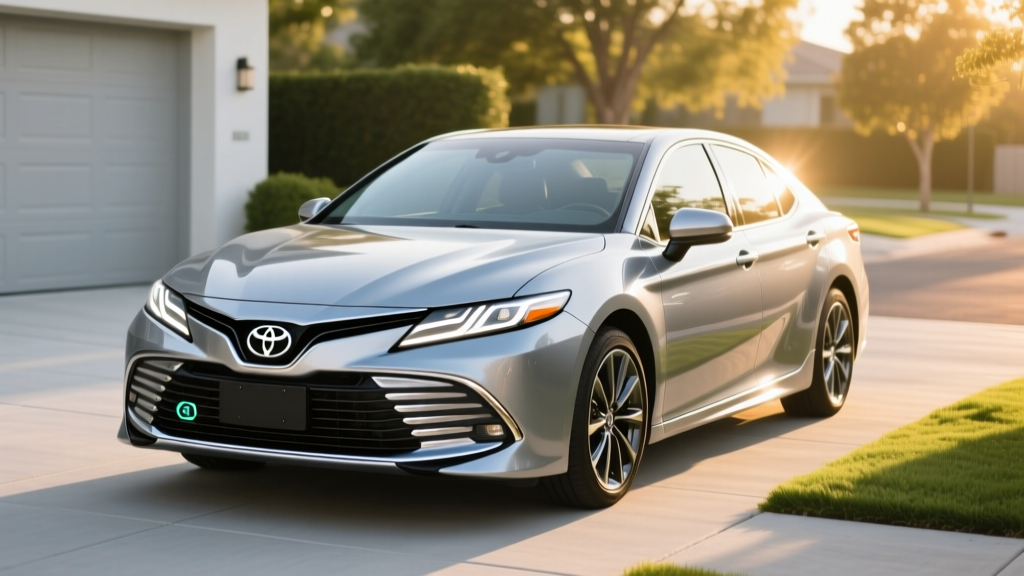
The 2026 Toyota Camry Hybrid enters its second model year on the all-hybrid ninth-generation platform, and it remains the most efficient midsize sedan you can buy without plugging in. With an EPA-rated 51 MPG combined on front-wheel-drive trims and a starting MSRP of $28,995, it undercuts competitors on price while outperforming them on fuel economy. For buyers searching for a camry hybrid new model, the 2026 lineup offers four trims, standard all-wheel-drive availability, and Toyota's proven hybrid powertrain with a 10-year/150,000-mile battery warranty.
This is a conventional hybrid (HEV), not a plug-in. You never plug it in — it generates and recovers its own electricity through regenerative braking and the gasoline engine. That simplicity is its biggest selling point for apartment dwellers and drivers without home charging access.
Conventional Hybrid (HEV): The Camry Hybrid uses a small battery (~1.6 kWh) charged by the engine and regen braking. No plug needed. You get 51 MPG but zero electric-only miles.
Plug-in Hybrid (PHEV): Vehicles like the Toyota RAV4 Prime or Prius Prime have larger batteries (13-18 kWh), offer 25-42 miles of electric-only driving, and require plugging in to unlock full efficiency. The Camry is NOT available as a PHEV.
Full EV (BEV): Battery electric vehicles like the Tesla Model 3 or Hyundai Ioniq 6 have no gas engine, require charging infrastructure, and deliver 250-360+ miles of range.
2026 Camry Hybrid Fuel Economy: EPA Ratings and Real-World MPG
| Drivetrain | City MPG | Highway MPG | Combined MPG |
|---|---|---|---|
| FWD (LE, SE) | 53 | 50 | 51 |
| AWD (SE, XLE, XSE) | 51 | 49 | 50 |
Source: fueleconomy.gov (EPA estimates).
Real-World MPG: What to Actually Expect
Toyota hybrids consistently overperform their EPA city ratings in stop-and-go traffic because regenerative braking recovers energy that gas cars waste as heat. In urban driving, owners regularly report 54-58 MPG on FWD trims. Highway driving is a different story: at sustained 75-80 mph speeds, expect 44-47 MPG as aerodynamic drag dominates and the engine works harder.
Cold weather reduces hybrid efficiency by roughly 5-10% due to thicker fluids, cabin heating demands, and reduced battery charge acceptance. In sub-30°F conditions, plan on 45-48 MPG combined for FWD models. This is still dramatically better than any non-hybrid competitor.
With a 13.2-gallon fuel tank and 51 MPG combined, the FWD Camry Hybrid delivers approximately 670 miles of total range per fill-up. Highway-only at 46 MPG: ~607 miles. Cold-weather city driving: ~620 miles. You will visit gas stations roughly once every two to three weeks on a typical commute.
Powertrain Specs: 225 Horsepower from Toyota's Fifth-Gen Hybrid System
| Specification | FWD | AWD |
|---|---|---|
| Combined Horsepower | 225 hp | 232 hp |
| Engine | 2.5L 4-cylinder Dynamic Force (184 hp) | |
| Front Electric Motor | 100 kW (134 hp) | |
| Rear Electric Motor (AWD only) | N/A | 30 kW (40 hp) |
| Hybrid Battery | ~1.6 kWh lithium-ion | |
| Transmission | eCVT (planetary gearset) | |
| 0-60 mph | ~7.1 sec | ~6.9 sec |
| Drivetrain | Front-wheel drive | Electronic AWD |
The AWD system uses a dedicated rear electric motor rather than a mechanical driveshaft — it engages only when traction is needed (acceleration, slippery surfaces) and decouples at cruising speed to minimize drag. This is fundamentally different from a conventional AWD system and contributes to the minimal fuel-economy penalty (only 1 MPG combined) versus FWD.
The eCVT is not a belt-driven continuously variable transmission like those in some competitors. Toyota's planetary gearset design has no belts or pulleys to wear, which is a key reason these powertrains routinely exceed 200,000 miles without major service.
Pricing, Trims, and Tax Credit Eligibility
| Trim | Drivetrain | MSRP |
|---|---|---|
| LE | FWD | $28,995 |
| SE | FWD | $30,995 |
| SE | AWD | $32,395 |
| XLE | AWD | $34,995 |
| XSE | AWD | $36,495 |
Federal Tax Credit: Does the Camry Hybrid Qualify?
No. The 2026 Camry Hybrid does not qualify for the federal §30D clean vehicle tax credit (up to $7,500). Under current IRS rules, the credit applies only to plug-in electric vehicles (BEVs and PHEVs) with batteries of at least 7 kWh and external charging capability. The Camry Hybrid's ~1.6 kWh battery and lack of a plug disqualify it entirely.
Some states offer modest hybrid incentives — for example, certain utility companies provide rebates of $250-$500 for purchasing any hybrid. Check your state energy office and local utility for current programs. These vary by jurisdiction and change frequently.
Total Cost of Ownership Advantage
While the Camry Hybrid misses the federal tax credit, its ownership math remains compelling. At 51 MPG and $3.25/gallon regular unleaded, fuel cost per mile is approximately $0.064. Compare that to a 30 MPG gas-only midsize sedan at $0.108/mile. Over 15,000 annual miles, the Camry Hybrid saves roughly $660 per year in fuel versus a typical non-hybrid competitor — and about $9,900 over a 15-year ownership period.
Battery Warranty, Lifespan, and Replacement Cost
Toyota covers the 2026 Camry Hybrid battery for 10 years or 150,000 miles (whichever comes first) in all 50 states. This applies to all California-emissions and federal-emissions vehicles equally — Toyota unified its hybrid battery warranty nationally starting with the 2020 model year. The hybrid system components (inverter, motor, control module) carry the same 10-year/150,000-mile coverage.
How Long Will the Battery Actually Last?
Toyota's hybrid batteries are engineered for longevity rather than maximum energy density. The ~1.6 kWh pack uses a conservative state-of-charge window — the system never fully charges or fully depletes the battery, keeping it in the 40-80% SoC sweet spot that minimizes degradation. Real-world data from millions of Toyota hybrids on the road shows most original batteries last 150,000-200,000+ miles before needing replacement.
Taxi fleets using Toyota hybrid powertrains routinely report 300,000+ miles on original batteries. The key factors affecting longevity are extreme heat exposure (Arizona/Texas vehicles may see earlier degradation) and frequent deep cycling — neither of which is typical for a Camry Hybrid used as a daily commuter.
Battery Replacement Cost
If your battery does need replacement outside warranty coverage, expect to pay $2,500-$4,500 for a new OEM battery pack installed at a Toyota dealer. Refurbished/remanufactured units from third-party providers cost $1,500-$2,500 installed. Individual cell module replacement (only the degraded cells) can cost as little as $500-$1,200 at a hybrid specialist shop. Given the 10-year warranty and proven longevity, battery replacement is a low-probability expense for most owners.
Camry Hybrid vs PHEV vs Full EV: Which Is Right for You?
| Factor | Camry Hybrid (HEV) | PHEV (e.g., Prius Prime) | Full EV (e.g., Ioniq 6) |
|---|---|---|---|
| Plug-in Required? | No | Yes (for max benefit) | Yes |
| Electric-Only Range | 0 miles | 25-44 miles | 250-360+ miles |
| Federal Tax Credit | $0 | Up to $7,500* | Up to $7,500* |
| Home Charging Needed? | No | Recommended | Essential |
| Road Trip Complexity | None (gas stations) | None (gas stations) | Plan DC stops |
| Maintenance Cost | Low (oil changes) | Low (oil changes) | Very low (no oil) |
| Starting Price | $28,995 | ~$33,000 | ~$38,000+ |
*§30D credit eligibility depends on MSRP caps, buyer income limits, battery sourcing requirements, and point-of-sale transfer rules. Verify at irs.gov and with a tax professional.
Choose the Camry Hybrid If:
- You live in an apartment or lack access to home/workplace charging
- You want maximum fuel savings with zero lifestyle change
- Your budget is under $35,000 and you want a midsize sedan
- You regularly drive 400+ mile road trips and don't want to plan charging stops
- You live in a region with extreme cold where EV range loss is significant
Choose a PHEV (Prius Prime) If:
- You can charge at home and have a commute under 40 miles round-trip
- You want electric-only daily driving but gas flexibility for road trips
- You qualify for the $7,500 federal tax credit (check income and sourcing rules)
Choose a Full EV If:
- You have reliable home Level 2 charging
- Your daily driving is under 200 miles and you road-trip infrequently
- You want zero tailpipe emissions and minimal maintenance
- You qualify for federal and state EV incentives that offset the higher upfront cost
Pros and Cons
Pros
- Best-in-class 51 MPG combined (FWD)
- 225 hp — genuinely quick for a hybrid sedan
- $28,995 entry price undercuts Honda Accord Hybrid
- 10-year/150,000-mile hybrid battery warranty
- AWD available across multiple trims
- No plug-in required — works anywhere
- 670+ miles of total range per tank
- Toyota Safety Sense 3.0 standard
Cons
- No federal tax credit eligibility
- No PHEV variant available
- eCVT drone under hard acceleration
- Rear seat slightly tighter than Accord Hybrid
- No DC fast charging capability (not applicable to HEV)
- Cargo space reduced slightly vs gas Camry (hybrid battery placement)
- Infotainment still uses Toyota's older interface on base LE
Frequently Asked Questions
How many MPG does the 2026 Camry Hybrid get?
The FWD Camry Hybrid achieves an EPA-rated 53 city / 50 highway / 51 combined MPG. AWD trims rate at 51 city / 49 highway / 50 combined. In real-world city driving, many owners report 54-58 MPG thanks to aggressive regenerative braking. Highway driving at 75+ mph typically yields 44-47 MPG.
Does the Camry Hybrid need to be plugged in?
No. The Camry Hybrid is a conventional hybrid (HEV), not a plug-in hybrid (PHEV). It charges its own battery through regenerative braking and the gasoline engine. You simply fill it with regular unleaded gas like any other car. There is no plug, no charging cable, and no electric-only driving mode.
Is the Camry Hybrid reliable and what does a battery replacement cost?
Toyota's hybrid powertrain is among the most reliable in the industry, backed by decades of data from millions of vehicles. The hybrid battery carries a 10-year/150,000-mile warranty. Out-of-pocket replacement costs $2,500-$4,500 for a new OEM unit, but most original batteries last 150,000-200,000+ miles. The eCVT planetary gearset has no wear-prone belts or clutches.
Does the 2026 Camry Hybrid qualify for any tax credit?
The Camry Hybrid does not qualify for the federal §30D clean vehicle tax credit because it is not a plug-in vehicle. The credit requires a battery of at least 7 kWh and external charging capability. Some state utility companies offer small hybrid rebates ($250-$500) — check your local programs. The Camry Hybrid's value proposition is its low purchase price and exceptional fuel economy, not tax incentives.
How does the Camry Hybrid compare to the Honda Accord Hybrid?
The Camry Hybrid (51 MPG combined, $28,995 base) edges the Accord Hybrid (48 MPG combined, ~$30,000 base) on both fuel economy and starting price. The Accord Hybrid offers slightly more rear legroom and a more refined interior feel. Both use proven hybrid systems with strong reliability records. The Camry's AWD availability (the Accord Hybrid is FWD only) is a differentiator in snow-belt states.
Is AWD worth the 1 MPG penalty?
For most buyers, no — the FWD Camry Hybrid handles rain and light snow competently with good all-season tires. The AWD system adds $1,400 to the SE trim and costs 1 MPG combined. If you live in a region with frequent snow, ice, or steep grades, the electronic AWD provides meaningful traction benefits. The rear motor engages only when needed, so there's no mechanical drag penalty during normal cruising.