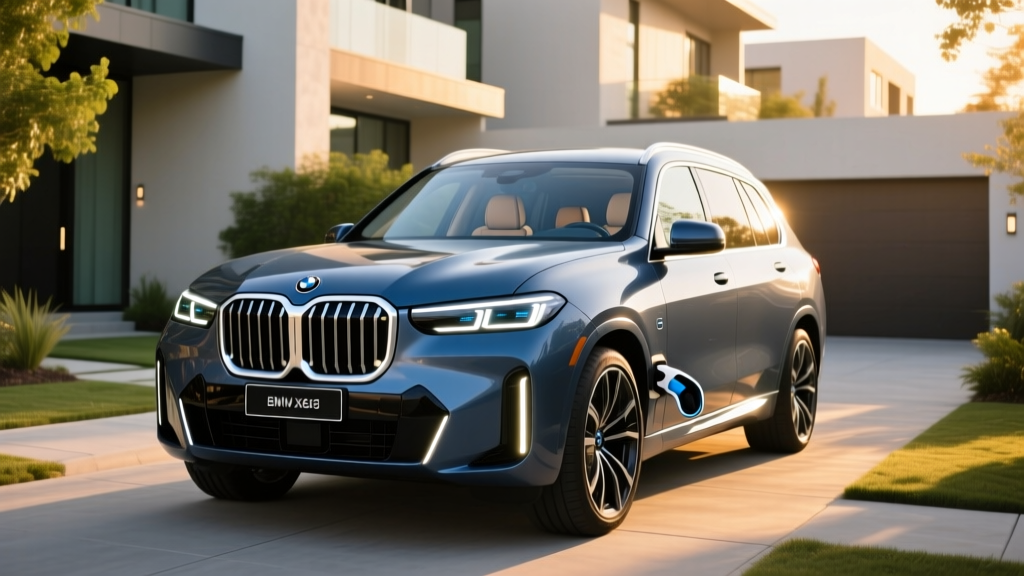
Quick Verdict: The 2026 BMW X5 xDrive60e PHEV
The 2026 BMW X5 xDrive60e is a plug-in hybrid (PHEV) luxury SUV that pairs a turbocharged inline-six with a 29.5 kWh battery to deliver 38 miles of electric-only driving and 483 combined horsepower. For buyers who want daily EV commuting without sacrificing cross-country road-trip capability, it occupies a compelling middle ground. The X5 PHEV starts at $69,900 MSRP before destination, and while it does not qualify for the federal §30D new EV tax credit (PHEVs must meet battery sourcing and critical-mineral requirements that BMW has not confirmed for 2026), it remains one of the most capable luxury plug-in hybrids on the market.
2026 BMW X5 xDrive60e: Full Specifications
| Specification | 2026 BMW X5 xDrive60e |
|---|---|
| Powertrain Type | Plug-in Hybrid (PHEV) |
| Engine | 3.0L Turbocharged Inline-6 + Electric Motor |
| Combined Horsepower | 483 hp |
| Combined Torque | 516 lb-ft |
| Battery Capacity | 29.5 kWh (usable) |
| Battery Chemistry | NMC (Nickel Manganese Cobalt) |
| EPA Electric-Only Range | 38 miles |
| Total Combined Range | ~440 miles |
| EPA MPGe (Electric+Gas) | 56 MPGe |
| EPA MPG (Gas Only, Charge-Sustaining) | 27 MPG combined (24 city / 29 hwy) |
| 0-60 mph | 4.6 seconds |
| Max AC Charging (Level 2) | 7.4 kW |
| DC Fast Charging | Not available |
| Level 2 Charge Time (0-100%) | ~4.25 hours |
| Base MSRP (before destination) | $69,900 |
| Battery Warranty | 8 years / 80,000 miles |
| Powertrain Warranty | 4 years / 50,000 miles |
Fuel Economy and Electric-Only Range: Real-World Expectations
The EPA rates the 2026 BMW X5 xDrive60e at 38 miles of electric-only range and 56 MPGe when operating in blended mode. Once the battery is depleted, the inline-six operates in charge-sustaining mode, returning an EPA-estimated 27 MPG combined (24 city / 29 highway).
| Driving Mode | EPA Estimate | Real-World Expectation |
|---|---|---|
| Electric-Only Range | 38 miles | 30-35 mi (highway); 36-40 mi (city, mild weather) |
| MPGe (Blended) | 56 MPGe | 48-54 MPGe (depends on charging frequency) |
| Gas-Only MPG (City) | 24 MPG | 22-26 MPG |
| Gas-Only MPG (Highway) | 29 MPG | 26-31 MPG |
| Gas-Only MPG (Combined) | 27 MPG | 24-28 MPG |
Charging the X5 xDrive60e: What You Need to Know
The 2026 X5 xDrive60e charges exclusively via AC power — there is no DC fast-charging capability. This is typical for most PHEVs, which prioritize smaller batteries that don't require the infrastructure of a full BEV.
| Charging Level | Power | Time (0-100%) | Notes |
|---|---|---|---|
| Level 1 (120V Household) | ~1.4 kW | ~22 hours | Emergency/trickle only |
| Level 2 (240V Home/Public) | 7.4 kW | ~4.25 hours | Recommended daily charging |
| DC Fast Charge | N/A | N/A | Not supported on X5 PHEV |
For daily use, a Level 2 home charger (such as a BMW Wallbox or a universal unit like the ChargePoint Home Flex) will replenish the 29.5 kWh battery overnight with time to spare. Installation of a 240V/40A circuit typically costs $500-$1,500 depending on your electrical panel's proximity to the garage — factor this into your purchase budget. Consult a licensed electrician for a site-specific quote.
The X5 xDrive60e uses a J1772 connector for AC charging, which is the standard for all non-Tesla PHEVs and EVs in North America. An adapter is needed only if you want to use Tesla destination chargers (Level 2).
Powertrain and Performance: 483 HP With Electric Torque Fill
BMW's PHEV powertrain in the X5 xDrive60e combines a 3.0-liter turbocharged inline-six engine producing 312 hp with an electric motor integrated into the 8-speed automatic transmission, contributing an additional 184 hp. The combined system output is 483 hp and 516 lb-ft of torque, routed through BMW's xDrive all-wheel-drive system.
The result is a 0-60 mph time of 4.6 seconds — genuinely quick for a luxury SUV of this size and weight. The electric motor provides immediate torque fill at low RPMs, eliminating the turbo lag inherent to the inline-six and making the X5 feel responsive around town on electric-only power.
Driving modes include:
- Electric: Pure EV mode, up to ~84 mph top speed on battery alone
- Hybrid: System optimizes between gas and electric automatically
- Hybrid Eco Pro: Maximizes efficiency with coasting and aggressive regen
- Sport: Full combined output, aggressive throttle mapping
- Battery Control: Gas engine maintains or recharges battery to a set SoC level (useful before entering a zero-emission zone or for saving battery for city driving later)
HEV vs PHEV vs Full EV: Which Powertrain Fits You?
Choosing between a conventional hybrid, a plug-in hybrid like the X5 xDrive60e, and a full battery-electric vehicle depends on your driving patterns, charging access, and priorities.
Conventional Hybrid (HEV)
How it works: Small battery recharged by the engine and regenerative braking. Never plugs in.
Best for: Drivers without home charging who want better MPG with zero behavior change.
Example: Toyota Highlander Hybrid (35 MPG combined)
Plug-in Hybrid (PHEV)
How it works: Larger battery you plug in to charge. Drives on electricity for 25-50 mi, then switches to gas hybrid mode.
Best for: Home chargers with short commutes who also take road trips. The X5 xDrive60e lives here.
Example: 2026 BMW X5 xDrive60e (38 mi electric, 27 MPG gas)
Full Electric (BEV)
How it works: Large battery, no gas engine. Charges from grid, 250-400+ mi range.
Best for: Reliable home charging, mostly under 300-mi daily needs, or access to DC fast charging for road trips.
Example: BMW iX xDrive50 (324 mi EPA, 105 MPGe)
- Choose the X5 xDrive60e PHEV if: You can charge at home, your daily driving is under 40 miles, and you regularly take trips exceeding 300 miles where DC fast-charging infrastructure may be sparse.
- Choose a full EV (BMW iX) if: You have reliable Level 2 home charging, rarely drive more than 250 miles in a day, and want zero gasoline costs and minimal maintenance.
- Choose a conventional hybrid if: You cannot charge at home or at work and want improved fuel economy with no plug-in requirement.
Pricing, Trims, and Tax Credit Eligibility
The 2026 BMW X5 xDrive60e starts at $69,900 MSRP before the $1,175 destination charge, placing it at $71,075 out the door before options. Key trims and packages include:
| Trim / Configuration | MSRP (before destination) |
|---|---|
| xDrive60e (base PHEV) | $69,900 |
| xDrive60e + Premium Package | ~$73,400 |
| xDrive60e + Executive Package | ~$77,200 |
| xDrive60e M Sport Package | ~$74,500 |
Federal Tax Credit (§30D) Eligibility
Under current IRS rules, the §30D Clean Vehicle Credit offers up to $7,500 for qualifying new PHEVs and BEVs. However, eligibility for the 2026 BMW X5 xDrive60e depends on several factors that buyers should verify at the time of purchase:
- MSRP Cap: SUVs must have an MSRP at or below $80,000. The base X5 xDrive60e qualifies; heavily optioned units may exceed the cap.
- Buyer Income Cap: Adjusted gross income must not exceed $150,000 (single), $225,000 (head of household), or $300,000 (married filing jointly).
- Battery Sourcing: The battery's critical minerals and components must meet phased-in percentage thresholds for North American or FTA-partner sourcing. BMW has not publicly confirmed that the X5 xDrive60e's battery meets 2026 sourcing requirements.
- Point-of-Sale Transfer: If eligible, the $7,500 credit can be transferred to the dealer at purchase, reducing your out-of-pocket cost immediately rather than waiting for tax filing.
Always confirm current eligibility on the IRS Clean Vehicle Credit page and consult a tax professional before relying on the credit in your purchase decision. The fueleconomy.gov tax credit lookup is also a reliable source for updated eligibility lists.
Battery Warranty, Reliability, and Replacement Cost
PHEV battery degradation is generally modest because the system uses only a portion of the battery's total capacity (the buffer protects the cells from deep cycling). Based on data from earlier BMW PHEV generations (such as the X5 xDrive45e), owners typically see 5-10% range loss over the first 5 years — translating to roughly 2-4 fewer electric miles after half a decade of use.
Out-of-warranty battery replacement for the X5 PHEV is estimated at $8,000-$12,000 including labor, based on current BMW high-voltage battery pricing. However, most PHEV batteries outlast the vehicle's useful life, and individual module replacement (rather than the full pack) may be possible at lower cost.
Overall reliability for the G05-generation X5 has been average to above-average in owner surveys. The PHEV powertrain adds complexity (electric motor, power electronics, onboard charger) but eliminates the conventional starter motor and reduces brake wear through regenerative braking. BMW's 4-year/50,000-mile bumper-to-bumper warranty is shorter than competitors like Genesis (5yr/60,000 mi) and Hyundai (5yr/60,000 mi).
Pros, Cons, and Who Should Buy the X5 xDrive60e
Pros
- 38 miles electric range covers most daily commutes
- 483 hp with smooth electric torque fill
- No range anxiety — 440+ total miles with gas engine
- Premium interior, excellent build quality
- Strong towing capacity (up to 5,900 lbs with factory hitch)
- Regenerative braking reduces brake wear
- xDrive AWD standard
Cons
- No DC fast charging — road-trip charging impractical
- Base price near $71K; options push past $80K MSRP cap
- Federal tax credit eligibility uncertain for 2026 sourcing
- Heavy: ~5,300 lbs impacts tire wear and handling
- 4-year/50K bumper-to-bumper warranty is below luxury average
- Cargo space slightly reduced vs. gas X5 due to battery placement
- Electric-only top speed limited to ~84 mph
Frequently Asked Questions
How many MPG does the 2026 BMW X5 hybrid get?
The 2026 BMW X5 xDrive60e is rated at 56 MPGe in blended electric-gas mode and 27 MPG combined (24 city / 29 highway) when running on gasoline alone after the battery is depleted. Real-world gas-only MPG typically ranges from 24-28 combined depending on driving style and conditions.
How far can the X5 xDrive60e go on electric power only?
The EPA rates the X5 xDrive60e at 38 miles of electric-only range. In real-world driving, expect 30-35 miles on the highway and up to 36-40 miles in city driving during mild weather. Cold temperatures (below 32°F) can reduce electric range to approximately 25-30 miles.
Is the BMW X5 PHEV reliable, and what does battery replacement cost?
The G05-generation X5 PHEV has average to above-average reliability based on owner surveys and BMW's PHEV track record. The high-voltage battery is warranted for 8 years / 80,000 miles at a minimum 70% capacity threshold. Out-of-warranty replacement is estimated at $8,000-$12,000, though most PHEV batteries last the life of the vehicle.
Does the 2026 BMW X5 xDrive60e qualify for the $7,500 federal tax credit?
Eligibility depends on current IRS §30D rules, including battery critical-mineral sourcing requirements, the $80,000 SUV MSRP cap, and buyer income limits. BMW has not publicly confirmed 2026 sourcing compliance for the X5 xDrive60e. Verify eligibility at IRS.gov and with your dealer at the time of purchase.
Can I charge the X5 xDrive60e at a DC fast charger?
No. The X5 xDrive60e supports only AC charging (Level 1 and Level 2) up to 7.4 kW. There is no DC fast-charging port. This is standard for most PHEVs — the 29.5 kWh battery is small enough that overnight Level 2 charging is sufficient for daily use.
Should I buy the X5 PHEV or the all-electric BMW iX?
If you have reliable home charging, drive under 250 miles daily, and want the lowest operating costs, the BMW iX (324 mi EPA range, 105 MPGe) is the better long-term EV choice. If you frequently take 400+ mile road trips, lack DC fast-charging access along your routes, or want the flexibility of gasoline, the X5 xDrive60e PHEV provides a practical bridge. For a detailed comparison of total ownership costs, see our fueleconomy.gov side-by-side tool.