Quick Verdict: The BMW Plug-In Hybrid X3 for 2026
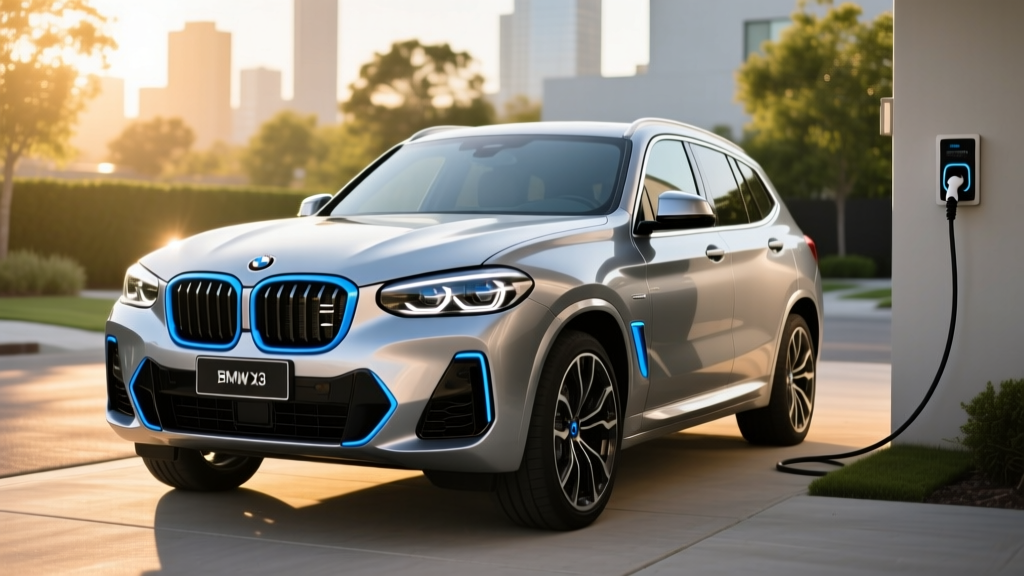
The 2026 BMW X3 xDrive50e represents a calculated middle ground. It pairs a turbocharged four-cylinder engine with a more powerful electric motor and a larger battery than its predecessor, delivering an EPA-estimated 35 miles of electric-only driving before the gas engine wakes up. For buyers who want the premium-badge compact SUV experience but aren't ready to commit to a full battery-electric vehicle — or who lack reliable home charging — this plug-in hybrid (PHEV) format has genuine appeal.
The xDrive50e replaces the older xDrive30e in BMW's lineup, bringing a combined 295 horsepower, a revised eight-speed automatic with an integrated electric motor, and a 22.0 kWh battery pack (approximately 18.7 kWh usable). The trade-off is a starting MSRP that pushes well past $50,000 and federal tax credit eligibility that depends heavily on battery sourcing rules and buyer income limits. Let's break down the exact numbers.
| Spec | Value |
|---|---|
| Powertrain | 2.0L turbo I-4 + electric motor (8-speed auto integrated) |
| Combined Horsepower | 295 hp / 332 lb-ft torque |
| Battery (Gross / Usable) | 22.0 kWh / ~18.7 kWh (NMC chemistry) |
| EPA Electric-Only Range | 35 miles |
| EPA MPGe (Electric + Gas) | 64 MPGe combined |
| EPA MPG (Gas Only, Charge-Depleted) | 28 combined (26 city / 30 highway) |
| Total Combined Range | ~420 miles |
| Level 2 Charging (AC) | 7.4 kW max, ~2.75 hours (0–100%) |
| DC Fast Charging | Not available |
| 0–60 mph | 6.1 seconds |
| Drivetrain | xDrive AWD |
| Cargo Volume (rear seats up) | 31.5 cu ft |
| Base MSRP (xDrive50e) | $52,200 + $995 destination |
| Hybrid Battery Warranty | 8 years / 80,000 miles |
HEV vs. PHEV: Why the BMW Plug-In Hybrid X3 Is Not a Conventional Hybrid
Before diving into efficiency numbers, a critical distinction. A conventional hybrid (HEV) like the Toyota RAV4 Hybrid uses a small battery that charges only through regenerative braking and the gas engine — you never plug it in. A plug-in hybrid (PHEV) like the BMW X3 xDrive50e carries a substantially larger battery that you charge from a wall outlet or Level 2 charger, enabling meaningful electric-only driving before the engine engages.
| Feature | Conventional Hybrid (HEV) | Plug-In Hybrid (PHEV) |
|---|---|---|
| Plugs in? | No | Yes |
| Battery Size | ~1.0–1.6 kWh | ~15–22 kWh |
| Electric-Only Range | 0–1 mile (low speed only) | 20–45 miles typical |
| Federal Tax Credit | None (current §30D rules) | Up to $7,500 (eligibility varies) |
| Home Charging Needed | No | Recommended for full benefit |
| Best For | No home charging access | Short commutes + road trip capability |
If you can charge at home or at work and your daily driving falls under 35 miles round-trip, the X3 xDrive50e will run almost entirely on electricity most days. If you can't plug in regularly, you're carrying 400+ pounds of battery you never use — and a conventional hybrid or efficient gas vehicle may serve you better.
Fuel Economy: EPA MPG, MPGe, and Real-World Expectations
| Mode | City | Highway | Combined |
|---|---|---|---|
| Electric + Gas (MPGe) | 72 MPGe | 58 MPGe | 64 MPGe |
| Gas Only (charge-depleted) | 26 MPG | 30 MPG | 28 MPG |
The MPGe figure of 64 combined applies only when you're regularly charging and blending electric and gas miles. Once the battery depletes to its hold threshold (roughly 5–8% state of charge, which BMW preserves as a buffer), the X3 operates as a heavy hybrid, returning an EPA-estimated 28 MPG combined.
Real-world MPG reality check: In charge-depleted hybrid mode, owners on forums and long-term tests report 25–27 MPG combined in mixed driving, with highway cruising at 70+ mph yielding closer to 26–28 MPG. Cold weather (below 40°F) drops electric-only range by roughly 20–30%, meaning your 35-mile electric range may shrink to 24–28 miles in winter. This is normal for all PHEVs — the battery is smaller and has less thermal mass than a full EV pack.
According to fueleconomy.gov, the X3 xDrive50e's combined MPGe places it ahead of most luxury compact PHEV rivals but below the Toyota RAV4 Prime's 94 MPGe — though the BMW delivers a more premium driving experience and stronger acceleration.
Electric-Only Range and Charging: What 35 Miles Actually Means
The EPA rates the 2026 X3 xDrive50e at 35 miles of electric-only range. That's a meaningful improvement over the previous-generation xDrive30e (which managed roughly 22–24 miles EPA). The larger 22.0 kWh pack stores more energy, and BMW's updated powertrain management is more aggressive about keeping the engine off.
EPA Electric Range: 35 miles
Real-world expectation: 28–33 miles in moderate weather at city/suburban speeds; 22–28 miles at sustained highway speeds (70+ mph) or in cold weather below 40°F. Electric-only top speed is limited to ~84 mph before the engine engages.
Charging specifics:
- Level 1 (120V household outlet): ~1.4 kW — approximately 13–14 hours for a full charge. Fine for overnight top-ups if you drive less than 20 miles daily.
- Level 2 (240V home charger): 7.4 kW max — approximately 2 hours 45 minutes from 0–100%. This is the practical standard for PHEV owners.
- DC fast charging: Not supported. The X3 xDrive50e does not have a CCS or NACS DC inlet. This is standard for most PHEVs — the battery is too small to benefit meaningfully from DC fast charging, and adding the hardware would increase cost and weight.
For a PHEV, the lack of DC fast charging is not a practical limitation. You charge overnight at home, and the battery is small enough that Level 2 replenishes it fully in under three hours. The bigger question is whether your home electrical panel can support a 240V/40A circuit for a Level 2 charger — expect $500–$2,000 for a professional installation depending on panel proximity and local permit requirements. Consult a licensed electrician for a site-specific quote.
Powertrain and Performance: 295 HP and the Driving Experience
The 2026 X3 xDrive50e pairs a 2.0-liter turbocharged inline-four (producing roughly 184 hp on its own) with an electric motor integrated into the eight-speed automatic transmission housing. Combined system output is 295 horsepower and 332 lb-ft of torque, routed through BMW's xDrive all-wheel-drive system.
The result is a 0–60 mph time of 6.1 seconds — genuinely quick for a compact luxury SUV, and noticeably faster than the previous xDrive30e's 7.6-second run. The electric motor fills in torque at low RPM before the turbo spools, eliminating the lag that plagues some four-cylinder luxury vehicles.
In practice, the PHEV powertrain shines in two modes:
- Electric mode (city/suburban): Silent, smooth, and responsive up to ~84 mph. The 18.7 kWh usable battery provides enough energy for most daily errands without the engine starting.
- Hybrid mode (highway/mixed): The engine and motor blend seamlessly. Under hard acceleration, both power sources combine for the full 295 hp. The eight-speed auto shifts smoothly, and BMW's tuning prioritizes refinement over sportiness unless you select Sport mode.
The trade-off is weight. At approximately 4,700 lbs, the xDrive50e is roughly 500 lbs heavier than a gas-only X3 xDrive30i. You feel it in corners — this is not a sports SUV despite the M Sport package availability — but the low center of gravity from the under-floor battery keeps body roll reasonable.
Pricing, Trims, and Federal Tax Credit Eligibility
The 2026 BMW X3 xDrive50e starts at an MSRP of $52,200, plus a $995 destination charge, for a total of $53,195. That's a significant jump from the outgoing xDrive30e but includes more standard equipment (adaptive LED headlights, BMW Curved Display with iDrive 9, heated front seats, and the Driving Assistant package).
Higher trims and option packages push the price quickly:
- M Sport Package: ~$3,500 (sport bumpers, M steering wheel, adaptive suspension)
- Premium Package: ~$3,200 (head-up display, Harman Kardon audio, panoramic roof)
- Executive Package: ~$4,100 (ventilated seats, gesture control, parking assistant plus)
A well-equipped X3 xDrive50e with popular packages lands in the $58,000–$64,000 range before incentives.
Federal §30D Tax Credit: Does the X3 PHEV Qualify?
The BMW X3 xDrive50e may qualify for a partial or full federal plug-in hybrid tax credit under IRS §30D, but eligibility is complex and subject to change. Key requirements for 2026:
- MSRP cap: SUVs must have an MSRP at or below $80,000 (the X3 qualifies)
- Buyer income cap: Modified AGI must not exceed $150,000 (single) / $300,000 (joint)
- Battery sourcing: Critical minerals and battery components must meet escalating domestic/free-trade sourcing percentages — BMW's supply chain compliance varies by production batch
- Credit amount: Up to $3,750 (critical minerals) + $3,750 (battery components) = $7,500 max, but many PHEVs qualify for only $3,750 or $0 depending on current sourcing rules
- Point-of-sale transfer: Eligible buyers can transfer the credit to the dealer for an upfront price reduction starting 2024
Always verify current eligibility on IRS.gov's qualified vehicle list before purchasing. Tax credit rules change, and a vehicle's eligibility can shift mid-year based on battery sourcing updates. Consult a tax professional for your specific situation.
Reliability, Battery Longevity, and Warranty Coverage
BMW's hybrid battery warranty covers the high-voltage pack for 8 years or 80,000 miles, whichever comes first. This is the federal minimum mandated by the EPA for emissions-related components, and BMW matches it. The warranty guarantees the battery will retain a minimum capacity threshold (typically 70% of original capacity) during the coverage period.
Hybrid Battery Warranty: 8 years / 80,000 miles (capacity retention above ~70%)
Powertrain Warranty: 4 years / 50,000 miles
Roadside Assistance: 4 years / unlimited miles
Long-term degradation expectations: PHEV batteries are smaller and cycle more frequently than full EV batteries (a 19 kWh usable pack cycles through a full charge/discharge daily, whereas an 80 kWh EV pack might cycle every 3–4 days). Based on data from earlier BMW PHEVs (330e, X5 xDrive45e) and industry-wide NMC chemistry studies, expect approximately 10–15% capacity loss over 8–10 years of regular use. That means your 35-mile electric range might shrink to 30–32 miles after 5 years — noticeable but not debilitating.
Battery replacement cost: Out-of-warranty replacement for the X3 xDrive50e's battery pack is estimated at $8,000–$12,000 including labor, based on current BMW PHEV parts pricing. This is a legitimate concern for second-owners who purchase the vehicle used after the 8-year warranty expires. However, complete battery failure is rare — most degradation is gradual capacity loss, not catastrophic failure.
BMW's overall reliability ratings have improved in recent years. The X3 platform (G45 generation for 2025+) is newer, so long-term data is still accumulating. IIHS and NHTSA crash-test results for the 2026 model year should be checked closer to on-sale availability, as the redesigned X3 may not yet have full ratings published.
Who Should Buy the BMW Plug-In Hybrid X3 — and Who Shouldn't
Pros
- 35-mile electric range covers most daily commutes gas-free
- 295 hp provides strong acceleration (6.1 sec 0–60)
- No range anxiety — gas engine enables 420+ mile road trips
- Premium interior with BMW's latest iDrive 9 infotainment
- xDrive AWD standard for all-weather confidence
- Potential federal tax credit reduces effective price
Cons
- $53,195 starting MSRP is steep for the segment
- No DC fast charging (standard for PHEVs, but limiting for some)
- Gas-only MPG (28 combined) trails dedicated hybrids like RAV4 Prime
- Heavy at ~4,700 lbs — handling compromised vs. gas X3
- Tax credit eligibility uncertain due to battery sourcing rules
- Home Level 2 charger installation adds $500–$2,000 upfront cost
Choose the BMW X3 xDrive50e PHEV if:
- You have home or workplace Level 2 charging access
- Your daily commute is under 35 miles round-trip
- You want a premium-badge SUV but take road trips too often for a full EV
- You live in an area with limited DC fast-charging infrastructure
- You want to reduce gas consumption without committing to full electrification
Choose a full EV (like the BMW iX3 or Tesla Model Y) if:
- You have reliable home charging and rarely drive more than 250 miles in a day
- You want zero tailpipe emissions and lower per-mile fuel costs
- You want to avoid engine maintenance (oil changes, spark plugs, timing chain)
Choose a conventional hybrid (like the Lexus NX 350h) if:
- You cannot charge at home or at work
- You want maximum MPG without plugging in
- Lower purchase price is a priority over electric-only driving
Frequently Asked Questions
How many MPG does the BMW X3 plug-in hybrid get?
The 2026 BMW X3 xDrive50e achieves an EPA-estimated 28 MPG combined (26 city / 30 highway) when operating in charge-depleted hybrid mode after the battery is exhausted. When regularly charged, it earns 64 MPGe combined blending electric and gas miles. Real-world hybrid-mode fuel economy averages 25–27 MPG in mixed driving based on owner reports.
How far can the BMW X3 PHEV go on electric only?
The EPA rates the X3 xDrive50e at 35 miles of electric-only range. In real-world conditions, expect 28–33 miles in moderate temperatures at city speeds, and 22–28 miles at highway speeds or in cold weather below 40°F. The electric-only top speed is approximately 84 mph.
Does the BMW X3 plug-in hybrid qualify for a federal tax credit?
The X3 xDrive50e may qualify for a partial or full §30D federal tax credit (up to $7,500) depending on current battery sourcing compliance, your modified adjusted gross income (must be under $150K single / $300K joint), and the vehicle's MSRP (must be under $80,000 for SUVs). Eligibility changes as supply chains shift. Always verify on the fueleconomy.gov tax credit page and consult a tax professional before relying on the credit.
Is the BMW X3 PHEV reliable, and what does battery replacement cost?
BMW's hybrid powertrain has proven reasonably reliable in recent generations, with the high-voltage battery covered by an 8-year/80,000-mile warranty. Gradual battery degradation of 10–15% over 8–10 years is typical for NMC chemistry in PHEV use. Out-of-warranty battery replacement is estimated at $8,000–$12,000 including labor. Complete battery failure is rare — most owners experience only gradual range reduction.
Can I charge the BMW X3 PHEV at a DC fast charger?
No. The 2026 X3 xDrive50e supports only AC charging: Level 1 (120V, ~1.4 kW) and Level 2 (240V, up to 7.4 kW). DC fast charging is not available, which is standard for nearly all plug-in hybrids. The battery is small enough that Level 2 charging fully replenishes it in under three hours, making DC fast charging unnecessary for daily use.
How does the BMW X3 PHEV compare to the BMW iX3 full electric?
The iX3 (where available) offers 200+ miles of electric range and zero gas engine maintenance but requires reliable charging access and costs more upfront. The X3 xDrive50e PHEV sacrifices some electric range for the security of a gas engine on road trips. If you can charge at home and rarely exceed 200 miles daily, the iX3 delivers lower operating costs. If you regularly take longer trips or lack charging access, the PHEV is the more flexible choice.
Do I need to install a home charger for the BMW X3 PHEV?
You don't strictly need one — a standard 120V outlet provides ~4 miles of range per hour of charging, which can cover light daily use. However, a 240V Level 2 home charger (7.4 kW) replenishes the full battery in under three hours and is strongly recommended to maximize the PHEV's electric-driving benefit. Installation typically costs $500–$2,000 depending on your electrical panel's capacity and proximity to the parking spot.