BMW's Plug-In Hybrid Sedans in 2026: Two Paths to Electrified Luxury
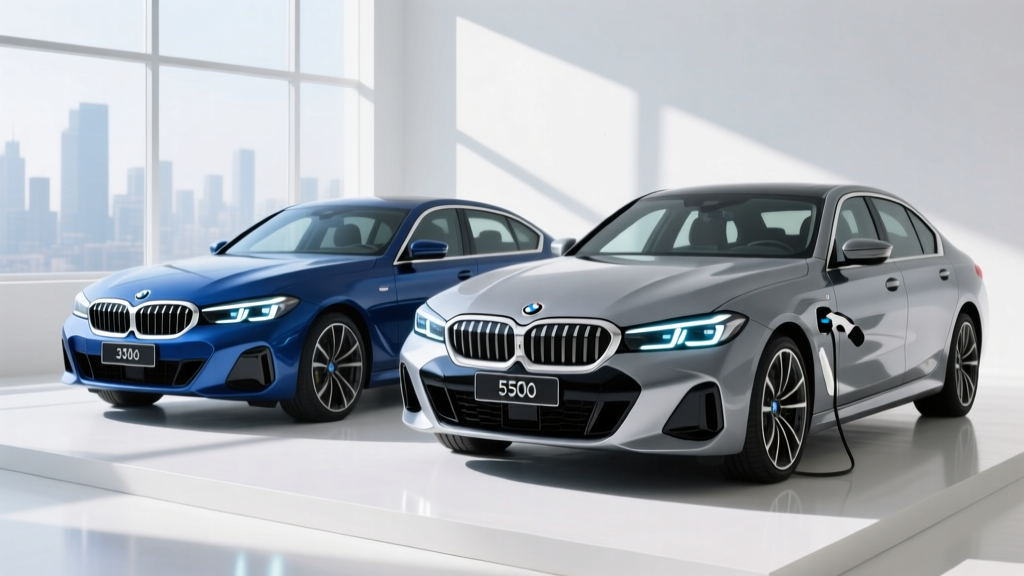
BMW currently offers two plug-in hybrid electric (PHEV) sedans in the U.S. market: the compact 330e and the midsize 550e xDrive. Both pair a turbocharged gasoline engine with an electric motor and a lithium-ion battery you can recharge from a wall outlet or public charger. Neither is a conventional hybrid (HEV) — BMW discontinued the non-plug-in hybrid variants years ago, committing its sedan lineup to full PHEV or full BEV architectures.
If you're researching a BMW hybrid sedan, this guide breaks down exactly what each model delivers in range, efficiency, charging speed, pricing, and real-world usability — with the numbers BMW's marketing brochures tend to gloss over.
A conventional hybrid (HEV), like the Toyota Prius, uses a small battery recharged solely by regenerative braking and the engine. You never plug it in. Electric-only driving is limited to brief low-speed bursts.
A plug-in hybrid (PHEV), like the BMW 330e and 550e xDrive, carries a larger battery (typically 18–26 kWh) that you recharge by plugging in. This gives you 20–40 miles of genuine electric-only range before the gas engine kicks in. Both BMW sedans discussed here are PHEVs.
Spec Table: 2026 BMW 330e vs 550e xDrive at a Glance
| Specification | 2026 BMW 330e | 2026 BMW 550e xDrive |
|---|---|---|
| Powertrain | 2.0L turbo I4 + electric motor | 3.0L turbo I6 + electric motor |
| Combined Horsepower | 288 hp | 483 hp |
| Combined Torque | 310 lb-ft | 516 lb-ft |
| Battery (usable) | 19.5 kWh (NMC) | 22.1 kWh (NMC) |
| EPA Electric-Only Range | 23 miles | 38 miles |
| EPA Total Range | ~420 miles | ~480 miles |
| EPA MPGe (electric + gas) | 75 MPGe | 64 MPGe |
| EPA MPG (gas-only, combined) | 28 MPG | 25 MPG |
| 0–60 mph | 5.6 seconds | 4.2 seconds |
| Max AC Charging (Level 2) | 3.7 kW | 7.4 kW |
| DC Fast Charging | Not available | Not available |
| Level 2 Charge Time (0–100%) | ~5.5 hours | ~3.25 hours |
| Drivetrain | RWD (xDrive AWD optional) | xDrive AWD standard |
| Base MSRP | $47,200 | $70,900 |
| Federal Tax Credit (§30D) | Up to $3,750 | Up to $3,750 |
| Hybrid Battery Warranty | 8 years / 80,000 miles | 8 years / 80,000 miles |
Sources: fueleconomy.gov, BMW USA product specifications. EPA figures are estimates; real-world results vary with driving style, temperature, and terrain.
Electric-Only Range and MPGe: What the Numbers Mean in Practice
The BMW 330e earns an EPA-rated 23 miles of electric-only range from its 19.5 kWh usable battery. That covers most short commutes — a round-trip of 20 miles or less can be completed without burning a drop of gasoline, provided you charge at home or work.
The BMW 550e xDrive leverages its larger 22.1 kWh pack and more efficient powertrain management to deliver 38 miles EPA electric-only. In real-world mixed driving at moderate temperatures (65–80°F), expect roughly 30–35 miles before the inline-six awakens. In cold weather (below 30°F), cabin heating and battery thermal management can reduce that figure to 22–28 miles.
EPA electric range for PHEVs is tested under ideal conditions. For the 330e, plan on 18–22 miles of electric range in highway driving at 70 mph or in winter conditions. The 550e xDrive typically delivers 30–35 miles in fair weather and 22–28 miles when temperatures drop below freezing. City driving with regenerative braking often exceeds EPA estimates.
Once the battery is depleted, both sedans operate as conventional hybrids. The 330e returns an EPA 28 MPG combined (25 city / 33 highway), while the heavier, more powerful 550e xDrive manages 25 MPG combined (23 city / 27 highway). In real-world city driving, PHEVs frequently exceed their EPA highway numbers thanks to regenerative braking recapturing energy at low speeds. Highway fuel economy tends to run 1–3 MPG below the sticker, especially at speeds above 70 mph.
How Many MPG Does a BMW Hybrid Sedan Get?
| Model | City MPG (gas-only) | Highway MPG (gas-only) | Combined MPG | Combined MPGe |
|---|---|---|---|---|
| 330e | 25 | 33 | 28 | 75 |
| 550e xDrive | 23 | 27 | 25 | 64 |
MPGe (miles per gallon equivalent) measures efficiency when the battery is charged and the car is running on a mix of electricity and gasoline. A higher MPGe means lower energy cost per mile. Once the battery is empty, only the gas-only MPG column matters.
Charging: Level 2 Only, No DC Fast Charging
Neither the 330e nor the 550e xDrive supports DC fast charging. This is common for PHEVs — the battery packs are small enough that Level 2 AC charging refills them overnight, and adding DC fast-charge hardware would increase cost, weight, and packaging complexity.
| Charging Method | 330e | 550e xDrive |
|---|---|---|
| Level 1 (120V household outlet, ~1.4 kW) | ~14 hours (0–100%) | ~16 hours (0–100%) |
| Level 2 (240V, 3.7 kW) | ~5.5 hours (0–100%) | N/A (supports higher rate) |
| Level 2 (240V, 7.4 kW) | N/A (limited to 3.7 kW) | ~3.25 hours (0–100%) |
| DC Fast Charge (CCS/NACS) | Not supported | Not supported |
The 330e's onboard charger tops out at 3.7 kW, meaning even a 48-amp Level 2 home charger won't speed things up — the car physically can't accept more than 3.7 kW. The 550e xDrive accepts up to 7.4 kW, roughly halving charge time compared to the 330e on a capable Level 2 circuit.
Practical recommendation: Install a 240V / 40-amp Level 2 charger at home. Both cars will fully recharge overnight. A standard 120V outlet works in a pinch but requires 14–16 hours for a full charge — feasible only if the car sits parked for extended periods.
Powertrain and Performance
The 330e pairs BMW's B48 2.0-liter turbocharged four-cylinder with an electric motor integrated into the 8-speed Steptronic transmission. Combined output is 288 horsepower and 310 lb-ft of torque. Rear-wheel drive is standard; xDrive all-wheel drive is optional. The 0–60 mph sprint takes 5.6 seconds — brisk for a compact luxury sedan.
The 550e xDrive uses BMW's B58 3.0-liter turbocharged inline-six, widely regarded as one of the smoothest engines in production, paired with a more powerful electric motor. Total system output reaches 483 horsepower and 516 lb-ft of torque, routed through xDrive all-wheel drive. The result is a 4.2-second 0–60 time that rivals many sports sedans, let alone luxury hybrids.
Both models offer BMW's driving modes — Hybrid (automatic blending), Electric (battery-only up to ~84 mph), and Sport (maximum combined power). In Electric mode, the 330e and 550e are whisper-quiet, making them excellent for residential neighborhoods and early-morning departures.
Pricing and Federal Tax Credit Eligibility
The 2026 BMW 330e starts at $47,200 (including destination), while the 550e xDrive opens at $70,900. Both sit below BMW's full-electric i4 and i5 sedans in price, though option packages can push either model well above base figures.
Under current IRS rules, both the 330e and 550e xDrive may qualify for a federal plug-in hybrid tax credit of up to $3,750. The full $7,500 credit is generally reserved for vehicles meeting both critical-mineral and battery-component sourcing requirements — BMW's supply chain currently satisfies one of the two criteria for these models, yielding the partial credit.
- MSRP cap: Sedans must be under $55,000. The 330e qualifies; the 550e xDrive (base $70,900) does NOT qualify unless BMW restructures pricing or the buyer selects a lower-MSRP configuration (unlikely).
- Income cap: Modified AGI must not exceed $150,000 (single) / $300,000 (joint).
- Point-of-sale transfer: Eligible buyers can apply the credit as an immediate discount at the dealership rather than waiting for a tax refund.
Tax rules change frequently. Verify current eligibility at irs.gov or consult a tax professional before purchasing.
Some states offer additional rebates for PHEVs — California's Clean Fuel Reward, for example, has historically provided up to $1,000 for qualifying plug-in vehicles. Check your state's energy or environmental agency for current programs.
Battery Warranty, Reliability, and Replacement Cost
BMW covers the high-voltage hybrid battery in both the 330e and 550e xDrive for 8 years or 80,000 miles, whichever comes first. The warranty guarantees the battery will retain at least 70% of its original capacity during that period. If degradation drops below this threshold, BMW will repair or replace the battery at no cost.
BMW's PHEV batteries use NMC (nickel manganese cobalt) chemistry, which offers high energy density in a compact package. Long-term degradation data for the current-generation packs (introduced with the G20 3 Series and G60 5 Series) is still accumulating, but earlier-generation BMW PHEV batteries (e.g., the 2018–2021 330e) have shown modest degradation of 5–10% over 5–6 years in typical use.
Out-of-warranty hybrid battery replacement costs for BMW PHEVs typically range from $8,000 to $14,000 depending on the model, including parts and labor. This is a significant expense, though it's worth noting that complete battery failure is rare — most degradation is gradual capacity loss, not catastrophic failure.
Is the BMW Hybrid Sedan Reliable?
BMW's B48 and B58 engines have strong reliability track records. The electric motor and power electronics add complexity but have few moving parts. The primary reliability question centers on the high-voltage battery and the 8-speed transmission's integration with the electric motor. J.D. Power and Consumer Reports have rated recent BMW 3 Series and 5 Series models as average to above-average in predicted reliability. For a luxury PHEV, the ownership risk is moderate — the powertrain warranty and 8-year battery coverage provide meaningful protection.
Who Should Buy a BMW PHEV Sedan?
- Your daily commute is under 25 miles round-trip
- You want luxury-badge efficiency under $50K
- You can charge at home every night
- You want tax credit eligibility (MSRP under $55K cap)
- You take occasional long road trips and want zero range anxiety
- Your commute is 30–40 miles and you want most of it electric
- You prioritize inline-six smoothness and 483 hp performance
- You need standard AWD for snow or rain
- You value rear-seat space and trunk volume over the 3 Series
- Budget exceeds $70K and tax credit ineligibility is acceptable
- You have reliable home charging and your daily driving is under 200 miles
- You want zero gasoline costs and near-zero drivetrain maintenance
- You want DC fast charging for road trips (200+ kW capability)
- You want the full $7,500 federal credit (i4/i5 may qualify depending on sourcing)
- You cannot charge at home or at work
- Your daily driving exceeds 60+ miles (the PHEV premium won't pay back)
- You want a lower purchase price and simpler ownership
- You live in an area with very low gasoline prices and high electricity rates
Frequently Asked Questions
How far can the BMW 330e and 550e go on electric only?
The 2026 BMW 330e delivers an EPA-rated 23 miles of electric-only range; expect 18–22 miles in real-world highway or cold-weather driving. The 550e xDrive provides 38 miles EPA-rated, with real-world expectations of 30–35 miles in fair weather and 22–28 miles in winter.
Do BMW hybrid sedans need to be plugged in?
Yes. Both the 330e and 550e xDrive are plug-in hybrids (PHEVs), meaning you must plug them in to access their electric-only range. If you never plug in, they operate as conventional hybrids — but you'll forfeit the efficiency and cost benefits that justify the PHEV price premium.
Does the BMW 550e xDrive qualify for the federal tax credit?
Under 2026 IRS §30D rules, the 550e xDrive's base MSRP of $70,900 exceeds the $55,000 sedan cap, making it ineligible for the federal clean vehicle credit. The 330e (base $47,200) may qualify for up to $3,750 depending on battery sourcing compliance and buyer income limits. Always verify at irs.gov.
What is the battery replacement cost for a BMW PHEV?
Out-of-warranty replacement runs $8,000–$14,000 including labor. However, BMW's 8-year/80,000-mile battery warranty covers capacity loss below 70%, and complete battery failure is uncommon. Most owners will sell or trade the vehicle before the battery requires replacement.
Can I DC fast charge a BMW hybrid sedan?
No. Neither the 330e nor the 550e xDrive supports DC fast charging. Both rely on Level 2 AC charging (240V) for full recharges in 3–6 hours, depending on the model and charger amperage. This is standard for PHEVs across the industry — the battery packs are small enough that overnight Level 2 charging is sufficient.
Hybrid vs PHEV vs EV — which BMW sedan fits me?
If you can charge at home and your daily driving is under 40 miles, the 550e xDrive PHEV lets you commute electric while keeping a gas tank for road trips. If your commute is under 25 miles and budget matters, the 330e is the value pick. If you have reliable charging access and want the lowest operating cost with no gasoline dependency, BMW's i4 or i5 full-electric sedans are worth evaluating — they offer 250–300+ miles of range and DC fast charging.