Quick Verdict: The BMW 3 Series Goes Plug-In
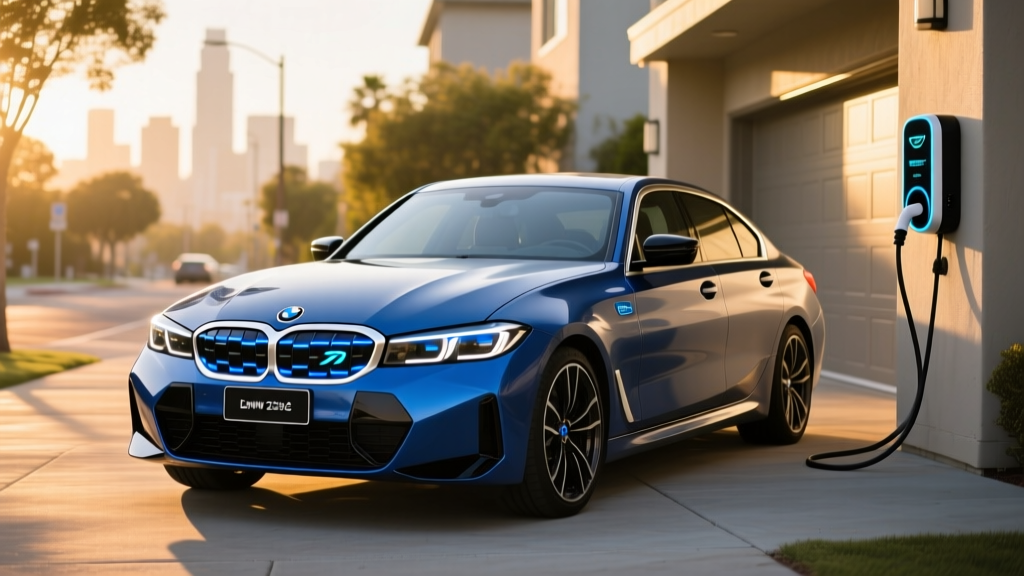
The 2026 BMW 330e xDrive represents the electrified evolution of BMW's iconic 3 Series sedan. Unlike a conventional hybrid (HEV) that you never plug in, the 330e is a plug-in hybrid (PHEV) — meaning it can drive roughly 22 miles on electricity alone before the turbocharged gas engine kicks in. For commuters with short drives and home charging access, this translates to weeks of gas-free commuting wrapped in a sport sedan that still delivers BMW's signature driving dynamics.
But is the 330e the right electrified choice for you, or should you look at a full EV like the BMW i4? Let's break down every number that matters.
HEV vs PHEV: Understanding What the 330e Actually Is
Conventional Hybrid (HEV): Vehicles like the Toyota Prius use a small battery charged only by regenerative braking and the gas engine. You never plug them in. Electric-only driving is limited to low speeds and short distances (typically under 1 mile).
Plug-in Hybrid (PHEV): The BMW 330e has a larger battery you can charge from a wall outlet or charging station. It offers meaningful electric-only range (22 miles EPA) before operating as a conventional hybrid. This is the key distinction — PHEVs give you an EV experience for short trips and a gas car for long ones.
BMW does not currently offer a conventional hybrid version of the 3 Series. If you want electrification in a 3, the 330e PHEV is your only option — the other paths are the full-electric i4 or the traditional gas 330i/M340i.
Fuel Economy: EPA MPG and Real-World Numbers
| Driving Mode | EPA Estimate | Real-World Expectation |
|---|---|---|
| Combined (hybrid mode) | 28 MPG | 26-30 MPG (varies by charge frequency) |
| City (hybrid mode) | 25 MPG | 27-32 MPG (regen helps in stop-and-go) |
| Highway (hybrid mode) | 32 MPG | 29-33 MPG |
| Electric-only efficiency | 75 MPGe | 70-78 MPGe |
The critical insight for PHEV ownership: your actual fuel economy depends entirely on how often you charge. If you plug in nightly and drive under 22 miles daily, you might use gas only on weekend road trips — achieving an effective 100+ MPG over a month. If you never charge, you're driving a heavy conventional hybrid getting roughly 28 MPG combined.
In real-world testing, PHEVs often exceed their EPA city estimates when regularly charged because electric motors are far more efficient in stop-and-go traffic than the EPA test cycle fully captures. Highway efficiency is closer to sticker, and cold weather (below 35°F) can reduce electric-only range by 20-30%.
Electric-Only Range and Charging Specs
| Specification | 2026 BMW 330e xDrive |
|---|---|
| EPA electric-only range | 22 miles |
| Total range (electric + gas) | ~380 miles |
| Battery capacity (usable) | 19.5 kWh (lithium-ion) |
| Level 1 charging (120V) | ~2.3 kW, 8-9 hours to full |
| Level 2 charging (240V) | 3.7 kW, ~5 hours to full |
| DC fast charging | Not supported |
| Charging connector | J1772 (Level 1/2) |
No DC fast charging: This is a significant limitation for road trips. You cannot use 150+ kW public fast chargers to quickly top up the battery. However, for a PHEV with only 22 miles of electric range, this matters less — you'll primarily charge at home overnight on Level 2, which fully replenishes the battery while you sleep.
The 3.7 kW onboard charger is relatively slow by 2026 standards. Some competitors offer 7.4 kW Level 2 charging, which cuts charge time in half. If you're installing a home Level 2 charger (typically $500-1,500 installed), the 330e will fully charge in about 5 hours — adequate for overnight but not quick enough for mid-day top-ups if you drain the battery in the morning.
Powertrain: Combining Electric and Gas Power
The 2026 330e xDrive pairs a 2.0-liter turbocharged four-cylinder engine with an electric motor integrated into the eight-speed automatic transmission. Here's the breakdown:
- Gas engine: 184 hp, 258 lb-ft torque
- Electric motor: 113 hp, 184 lb-ft torque
- Combined system output: 292 hp, 310 lb-ft torque
- 0-60 mph: 5.6 seconds (with xDrive AWD)
- Drivetrain: All-wheel drive (xDrive standard)
The electric motor provides instant torque from standstill, making the 330e feel quicker than its 0-60 time suggests in urban driving. BMW's XtraBoost function temporarily combines maximum output from both power sources for overtaking or spirited driving. The transition between electric and gas power is seamless — you won't feel the engine start unless you're watching the tachometer.
Compared to the gas-only 330i xDrive (255 hp, 0-60 in 5.4 seconds), the 330e offers more total power but slightly slower acceleration due to the ~350-pound weight penalty from the battery pack. The M340i xDrive (382 hp, 0-60 in 4.1 seconds) remains the performance choice if electrification isn't a priority.
Pricing and Tax Credit Eligibility
| Trim | 2026 MSRP | After Potential Credits |
|---|---|---|
| 330e (RWD) | $46,995 | Varies by eligibility |
| 330e xDrive (AWD) | $48,995 | Varies by eligibility |
Federal tax credit status: As of 2026, the BMW 330e does not qualify for the full $7,500 federal EV tax credit under IRS §30D. The credit has strict battery sourcing and critical minerals requirements, and BMW's supply chain for the 330e does not currently meet these thresholds. Some buyers may qualify for a partial credit or state-level incentives, but you should not factor the federal credit into your purchase decision.
Always verify current eligibility on the IRS clean vehicle credits page, as sourcing requirements and eligible vehicle lists update periodically. State incentives vary widely — California's CVRP program, for example, has historically offered rebates for PHEVs, but availability depends on funding and income caps.
Destination charges, options (Premium Package, M Sport Package, larger wheels), and dealer markups can push a well-equipped 330e xDrive into the $55,000-60,000 range. The MSRP cap for SUVs under §30D is $80,000, but sedans like the 330e face a $55,000 cap — another reason the credit doesn't apply here.
Reliability and Battery Warranty
BMW PHEV Battery Warranty: 8 years or 80,000 miles (whichever comes first), covering defects and capacity loss below 70% of original capacity.
Powertrain Warranty: 4 years or 50,000 miles
Limited Vehicle Warranty: 4 years or 50,000 miles
BMW's hybrid battery warranty meets the federal minimum mandated for emissions-related components, which includes PHEV batteries. The 70% capacity retention threshold is industry-standard — if your battery degrades to hold less than 14 kWh (70% of the 19.5 kWh usable capacity) within the warranty period, BMW will repair or replace it.
Real-world reliability: BMW's PHEV systems have proven generally reliable since the 330e's introduction in 2020. The lithium-ion battery uses a conservative state-of-charge buffer (you never actually use 100% or drop to 0%), which extends lifespan. Most PHEV batteries outlast their warranty periods with 85-90% capacity retention at 100,000 miles.
Battery replacement cost: If the battery fails outside warranty, replacement costs range from $8,000-12,000 including parts and labor. This is a significant expense, but given BMW's track record and the protective buffer management, most 330e batteries will last the vehicle's lifetime.
For comparison, conventional hybrids like the Toyota Prius have demonstrated 150,000-200,000+ mile battery lifespans, but PHEV batteries face more stress from deeper discharge cycles. Still, with proper care (avoiding frequent 100% charges, using Level 2 over Level 1 when possible), longevity should not be a major concern.
Who Should Choose the BMW 330e?
Pros
- 22 miles electric covers most daily commutes gas-free
- Seamless powertrain transitions, strong combined acceleration
- No range anxiety — gas engine for road trips
- BMW driving dynamics and premium interior
- xDrive AWD standard for all-weather capability
Cons
- No federal tax credit eligibility (2026)
- Slow 3.7 kW Level 2 charging
- No DC fast charging capability
- Reduced trunk space vs gas 330i (battery placement)
- Higher MSRP than gas 330i xDrive with similar performance
Choose the 330e if:
- Your daily commute is under 25 miles round-trip and you can charge at home
- You want electric driving for short trips but need gas flexibility for road trips
- You value BMW's sport sedan dynamics and premium features
- You're not ready to commit to a full EV due to charging access or range concerns
Consider a full EV (like the BMW i4) if:
- You drive 40+ miles daily and want to eliminate gas entirely
- You have reliable home or workplace charging
- You want access to DC fast charging for road trips (i4 offers 200+ kW)
- You qualify for the $7,500 federal credit on eligible EVs
Stick with the gas 330i if:
- You can't charge at home or work
- You prioritize trunk space and lower upfront cost
- You drive mostly highway miles where PHEV benefits diminish
Hybrid vs PHEV vs EV: Which Fits Your Lifestyle?
The 330e sits in the middle ground between conventional hybrids and full EVs. Here's how to think about the choice:
Conventional hybrid (HEV): Best for drivers who can't charge at home and want better MPG without changing habits. You never plug in, just drive. MPG gains are modest (typically 10-20% better than gas). BMW doesn't offer this in the 3 Series.
Plug-in hybrid (PHEV) like the 330e: Ideal if you can charge at home and most daily driving is under 20-30 miles. You get EV benefits for commutes and gas flexibility for longer trips. The trade-off is complexity (two powertrains), higher cost, and limited electric range.
Full EV (BEV) like the BMW i4: Best if you have home charging, drive under 300 miles daily, and want to eliminate gas entirely. EVs have lower operating costs, access to federal tax credits, and DC fast charging for road trips. The downside is range anxiety on long trips and charging time (20-40 minutes at fast chargers vs 5 minutes at gas stations).
For most 3 Series buyers in 2026, the decision comes down to charging access. If you can install a Level 2 charger at home (typically $500-1,500) and your commute fits within 22 miles, the 330e offers a compelling blend. If you're charging-dependent on public infrastructure or drive 50+ miles daily, the i4's 300-mile range and fast charging make more sense.
FAQ: BMW 330e Hybrid Questions Answered
How many MPG does the BMW 330e get?
The 2026 BMW 330e xDrive achieves 28 MPG combined (25 city / 32 highway) when operating as a hybrid. However, if you charge regularly and drive under 22 miles daily, you'll use far less gas — potentially achieving an effective 50-100+ MPG over a month depending on your driving patterns.
How far can the BMW 330e go on electric only?
The EPA rates the 330e at 22 miles of electric-only range. In real-world conditions, expect 18-22 miles in moderate weather, dropping to 15-17 miles in cold weather (below 35°F) due to battery efficiency loss and cabin heating demands.
Does the BMW 330e qualify for a tax credit?
As of 2026, the BMW 330e does not qualify for the $7,500 federal EV tax credit under IRS §30D due to battery sourcing requirements. State incentives may be available — check your state's energy office or the fueleconomy.gov tax incentives page for current programs.
Is the BMW 330e reliable?
BMW's PHEV system has proven generally reliable since 2020. The hybrid battery carries an 8-year/80,000-mile warranty covering capacity loss below 70%. Most PHEV batteries last well beyond warranty with proper care. The main reliability considerations are the added complexity of two powertrains versus a conventional gas car.
What is BMW hybrid battery replacement cost?
Outside warranty, a BMW 330e battery replacement costs $8,000-12,000 including parts and labor. However, most PHEV batteries retain 85-90% capacity at 100,000 miles and rarely require full replacement. BMW's conservative battery management (buffers preventing full charge/discharge) extends lifespan significantly.
Can I charge the BMW 330e at a public charging station?
Yes, but only at Level 2 public chargers (J1772 connector). The 330e does not support DC fast charging, so you cannot use 150+ kW chargers at Electrify America, EVgo, or similar networks. For a PHEV with 22 miles of range, this is less limiting than it sounds — most owners charge exclusively at home overnight.
How long does it take to charge the BMW 330e?
On a standard 120V outlet (Level 1), expect 8-9 hours for a full charge. On a 240V Level 2 charger, it takes about 5 hours at the 330e's 3.7 kW maximum charge rate. This is slower than some competitors — the Toyota RAV4 Prime, for example, charges in 2.5 hours with its optional 6.6 kW onboard charger.
The 2026 BMW 330e xDrive makes sense for a specific buyer: someone with home charging access, a sub-25-mile commute, and a desire for BMW's sport sedan experience without full EV commitment. If that's you, the 330e delivers genuine gas savings and electric refinement for daily driving. If your commute is longer or you lack charging access, the gas 330i or full-electric i4 may serve you better.