Quick Verdict: A Performance Hybrid, Not an Efficiency Play
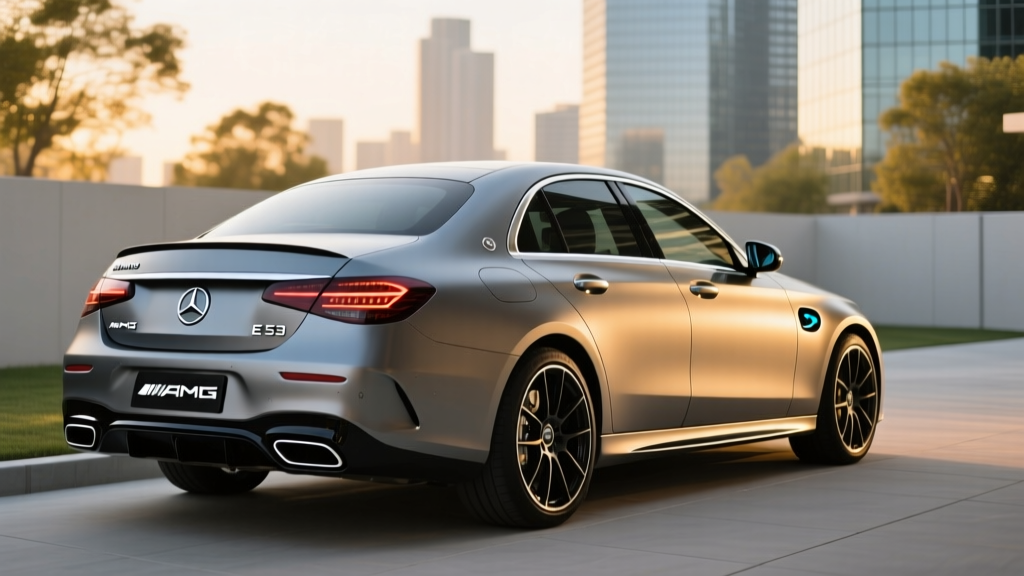
The 2026 AMG E 53 Hybrid Sedan is Mercedes-AMG's electrified executive express — a plug-in hybrid that pairs a turbocharged inline-six with a 120 kW electric motor for a combined 577 horsepower. Unlike mainstream PHEVs designed to maximize electric-only commuting, the E 53 uses its 21.2 kWh battery to fill torque gaps, enable silent neighborhood departures, and shave tenths off the 0-60 sprint. It's a performance car that happens to have a plug, not an efficiency champion wearing an AMG badge.
For buyers cross-shopping this against a BMW M550e xDrive or a Porsche Panamera E-Hybrid, the E 53 occupies a specific niche: luxury performance sedan with enough electric range for short errands and the inline-six character that AMG enthusiasts expect. Here's every spec, cost, and ownership factor you need before signing.
HEV vs PHEV: Where the E 53 Fits
The 2026 AMG E 53 is a plug-in hybrid electric vehicle (PHEV), not a conventional hybrid (HEV). The distinction matters for how you'll own it:
| Feature | Conventional Hybrid (HEV) | Plug-In Hybrid (PHEV) — E 53 |
|---|---|---|
| Plug-in charging | No — charges via regen and engine | Yes — Level 2 AC plug required for full EV range |
| Battery size | 1–2 kWh | 21.2 kWh usable |
| Electric-only driving | Minimal (under 1 mile at low speed) | EPA-estimated ~45 miles |
| Tax credit eligibility | Generally none under §30D | May qualify (subject to sourcing, income, MSRP caps) |
| Complexity | Simpler — no charging hardware | More complex — onboard charger, EV systems |
If you cannot install a Level 2 charger at home or at work, a PHEV like the E 53 will operate as a heavy conventional hybrid once the battery depletes — negating much of its efficiency advantage. Confirm your charging access before committing.
Powertrain Specs: 577 HP From Six Cylinders and Electrons
| Specification | 2026 AMG E 53 Hybrid Sedan |
|---|---|
| Engine | 3.0L turbocharged inline-6 + 48V ISG |
| Electric Motor | 120 kW (161 hp) permanently excited synchronous |
| Combined Output | 577 hp / 553 lb-ft torque |
| Transmission | AMG SPEEDSHIFT TCT 9-speed automatic |
| Drivetrain | 4MATIC+ all-wheel drive |
| 0–60 mph | 3.7 seconds (manufacturer) |
| Top Speed | 155 mph (electronically limited) |
| Battery Capacity | 21.2 kWh (usable), lithium-ion NMC |
| Onboard AC Charger | 7.4 kW (Level 2) |
| DC Fast Charging | Not available |
| EPA Electric-Only Range | ~45 miles (estimated) |
| Total Combined Range | ~420 miles (est. with 17.4-gal tank) |
| Base MSRP | $82,900 (est.) |
The powertrain architecture places the electric motor between the engine and transmission, enabling pure-electric driving at speeds up to 87 mph. The 48-volt integrated starter-generator (ISG) provides an additional brief torque boost and enables seamless stop-start operation. AMG tunes the system for performance: the electric motor fills the turbo lag gap, delivering instant torque while the inline-six spools up.
Fuel Economy: EPA MPG and Real-World Expectations
| Mode | City | Highway | Combined |
|---|---|---|---|
| Charge-Sustaining (Hybrid) | 22 MPG | 28 MPG | 24 MPG |
| Charge-Depleting (EV + Hybrid) | MPGe: ~55 MPGe combined (est.) | ||
| Electric-Only Energy Use | ~38 kWh/100 mi (est.) | ||
Real-world MPG reality check: When the battery is depleted and you're driving on the engine alone, expect roughly 22–24 MPG combined in mixed driving. Highway cruising at 75+ mph will push that closer to 26–28 MPG thanks to the inline-six's efficiency at steady load. City driving with frequent regen braking can push charge-sustaining economy slightly higher — around 23–25 MPG.
Electric-Only Range: EPA vs Real World
EPA estimate: ~45 miles on a full charge. In real-world testing, expect 35–40 miles at highway speeds (65–75 mph) or in cold weather (below 40°F). Gentle city driving at moderate temperatures can yield the full 45+ miles. Climate control use — especially cabin heating — will reduce range by 15–25%.
If your daily commute is under 35 miles round-trip and you charge nightly, you'll burn almost zero gasoline on weekdays. Owners who never plug in will see a $2,500–$4,000 fuel bill annually at 12,000 miles/year — similar to a non-hybrid E-Class.
Charging: Level 2 Only, No DC Fast Charging
The E 53 supports AC charging only — there is no DC fast-charge port. Here's what to expect:
| Charging Level | Power | 0–100% Time | Notes |
|---|---|---|---|
| Level 1 (120V household) | ~1.4 kW | ~15 hours | Emergency/trickle only |
| Level 2 (240V, 32A) | 7.4 kW | ~2 hours 45 min | Recommended home setup |
| DC Fast Charge | N/A | N/A | Not supported |
A 240V Level 2 home charger is essentially mandatory for PHEV ownership at this tier. Plan for a professional installation: expect $800–$2,000 for a dedicated 40A circuit with a quality EVSE (ChargePoint Home Flex, Emporia Vue, or Mercedes-Benz Wallbox). If your electrical panel needs a 200A upgrade, add $1,500–$3,000. Consult a licensed electrician familiar with NEC Article 625 for your specific situation.
The 7.4 kW onboard charger is adequate for overnight replenishment but means you cannot top up quickly at public Level 2 stations during the day. For a performance PHEV, this is standard — most competitors (BMW M550e, Panamera E-Hybrid) also lack DC fast charging at this battery size.
Pricing, Tax Credits, and Ownership Costs
The 2026 AMG E 53 Hybrid Sedan is expected to start around $82,900 MSRP before destination and options. Well-equipped examples with the AMG Performance Package, MANUFAKTUR paint, and Driver Assistance Package can reach $95,000–$105,000.
Federal §30D Tax Credit Eligibility
PHEVs may qualify for up to $7,500 under the IRS §30D Clean Vehicle Credit, but eligibility depends on multiple requirements:
- MSRP Cap: Sedans must be under $55,000 — the E 53 exceeds this, making it ineligible for the new-vehicle §30D credit.
- Battery Sourcing: Critical minerals and battery components must meet phased-in domestic/content thresholds per IRS guidance.
- Buyer Income Cap: AGI must not exceed $150K (single) / $300K (joint).
- Point-of-Sale Transfer: Eligible credits can be transferred to the dealer at purchase for an upfront price reduction.
Always verify current rules at irs.gov and consult a tax professional before relying on credit eligibility.
Bottom line on incentives: At $82,900+, the E 53 is well above the $55,000 sedan MSRP cap for §30D. Buyers should not expect any federal purchase credit. Some states (California, Colorado, New York) offer separate PHEV rebates — check your state energy office for current programs, but amounts vary and may also have price caps.
Five-Year Ownership Cost Estimate
| Category | Estimated 5-Year Cost |
|---|---|
| Depreciation (est. 45%) | ~$37,300 |
| Fuel (gas + electricity, 60K mi) | ~$8,500–$11,000 |
| Insurance (AMG premium) | ~$15,000–$20,000 |
| Maintenance | ~$4,500–$6,000 |
| Home Charger Install | ~$1,000–$2,500 (one-time) |
| Estimated Total | ~$66,300–$76,800 |
Battery Warranty, Reliability, and Replacement Cost
Hybrid Battery Warranty: Mercedes-Benz covers the high-voltage battery for 6 years or 62,000 miles (whichever comes first) against defects and excessive capacity loss. California-emissions states may see extended coverage to 10 years / 150,000 miles per CARB requirements — verify your state's classification.
Powertrain Warranty: 4 years / 50,000 miles (standard Mercedes coverage).
Reliability outlook: The M256 inline-six and its hybrid integration have been in production since 2018 across multiple Mercedes models (S-Class, GLE, E-Class). The architecture is mature, and major failure modes are well-documented. The 48V ISG system has had occasional software-related recalls but no widespread mechanical failures. AMG-specific tuning adds thermal stress — regular maintenance (oil, coolant, transmission fluid) is non-negotiable.
Battery replacement cost: If the 21.2 kWh pack requires replacement out of warranty, expect $12,000–$18,000 for the battery module plus labor. This is a worst-case scenario — NMC lithium-ion packs in Mercedes PHEVs have shown degradation of approximately 8–12% over the first 5 years in fleet data, well within warranty thresholds (typically 70% capacity retention).
Who Should Buy the E 53 Hybrid — And Who Shouldn't
Choose the 2026 AMG E 53 Hybrid Sedan if:
- You want AMG performance (sub-4-second 0-60) with the option of silent electric commuting for short trips
- You have Level 2 charging at home and a commute under 40 miles
- You value the inline-six character and don't want a fully electric powertrain (yet)
- You need a luxury sedan that can handle cross-country road trips without charging-infrastructure planning
Choose a full EV (like the Mercedes EQE or BMW i5) if:
- You want zero tailpipe emissions and lower per-mile energy costs
- You have reliable home and workplace charging
- You prefer fewer maintenance items (no oil changes, no transmission fluid, no exhaust system)
Choose a conventional hybrid (HEV) like the E 350 if:
- You cannot install a Level 2 charger and don't want to depend on public charging
- You want simpler ownership with no plug-in hardware to maintain
- Your priority is fuel economy over performance
Pros and Cons
Pros
- 577 hp with electric torque fill — genuinely quick (3.7s 0-60)
- ~45 miles EV range covers most daily commutes
- Silent electric departure in residential areas
- No range anxiety — gas engine covers 375+ additional miles
- AMG ride/handling dynamics with adaptive dampers
- Mature powertrain with years of production refinement
Cons
- $82,900+ MSRP exceeds §30D tax credit cap — no federal incentive
- Only 7.4 kW AC charging — no DC fast charge option
- Charge-sustaining MPG (~24 combined) is mediocre for a hybrid
- Heavy curb weight (~4,900 lbs) affects tire wear and braking
- Battery replacement cost ($12K–$18K) is a long-term liability
- Insurance premiums 15–25% higher than non-AMG E-Class
Frequently Asked Questions
How many MPG does the 2026 AMG E 53 Hybrid get?
In charge-sustaining mode (battery depleted), the E 53 returns an EPA-estimated 22 city / 28 highway / 24 combined MPG. When regularly charged and driven within its electric range, effective efficiency rises to approximately 55 MPGe combined. Real-world charge-sustaining MPG typically falls between 22–26 depending on driving style and conditions.
How far can the E 53 go on electric power alone?
The EPA-estimated electric-only range is approximately 45 miles. Real-world results vary: expect 35–40 miles at highway speeds or in cold weather, and up to 45+ miles in gentle city driving at moderate temperatures. The electric motor can propel the car up to 87 mph before the engine engages.
Does the 2026 AMG E 53 qualify for a federal tax credit?
No. The IRS §30D Clean Vehicle Credit caps sedan eligibility at $55,000 MSRP. At $82,900+, the E 53 does not qualify. Some state-level incentives may apply — check your state energy office. Always consult irs.gov and a tax professional for your specific situation.
Is the AMG E 53 Hybrid reliable, and what does battery replacement cost?
The M256-based hybrid powertrain has been in production since 2018 and is considered mature. Mercedes covers the high-voltage battery for 6 years/62,000 miles (10 years/150,000 miles in CARB states). Out-of-warranty battery replacement runs $12,000–$18,000. Degradation data suggests 8–12% capacity loss over 5 years — well within warranty thresholds.
Hybrid vs PHEV vs EV — which is right for me?
If you have home Level 2 charging and a short commute, the E 53 PHEV gives you electric daily driving with gas-engine freedom for road trips. If you want zero emissions and minimal maintenance, consider a full EV like the EQE. If you can't charge at home and want simplicity, a conventional hybrid (HEV) avoids plug-in complexity. The E 53 specifically targets buyers who want performance first and electrification as a bonus.
Can the E 53 use DC fast chargers?
No. The 2026 AMG E 53 supports only AC charging — Level 1 (120V, ~1.4 kW) and Level 2 (240V, up to 7.4 kW). DC fast charging is not available. A full charge on Level 2 takes approximately 2 hours and 45 minutes.
What's the total driving range?
With a full battery and the 17.4-gallon fuel tank, estimated total range is approximately 420 miles (45 miles electric + ~375 miles on gasoline in charge-sustaining mode). Highway driving at steady speeds may extend the gasoline portion slightly.