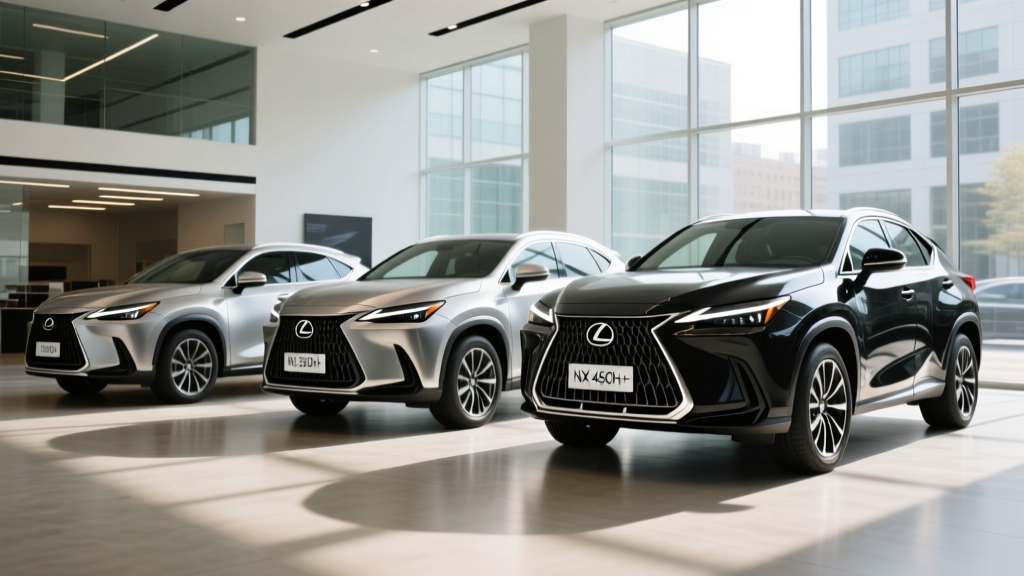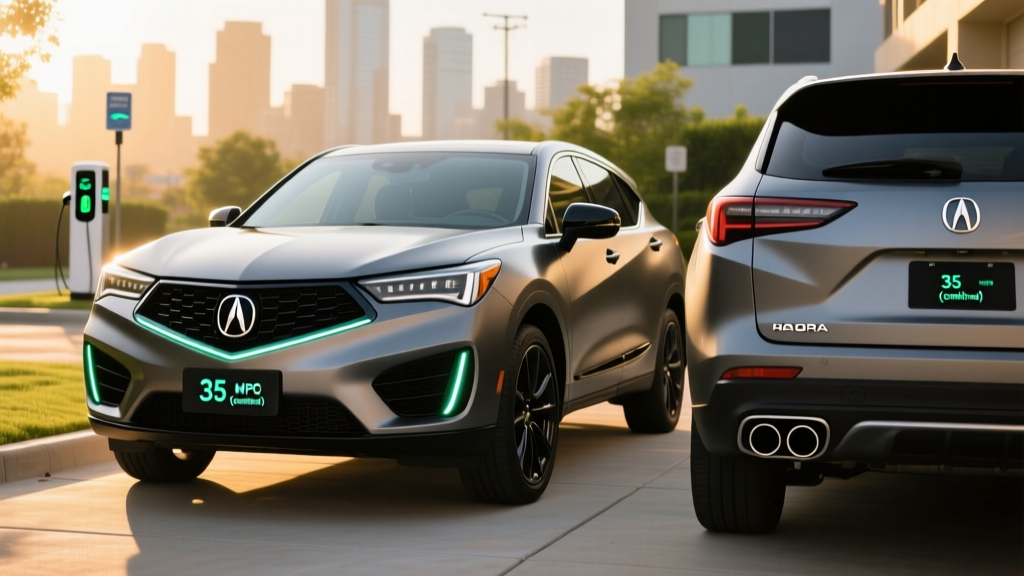
The Acura RDX has been one of the best-selling compact luxury crossovers in the U.S. for years, but through the 2025 model year it remained a gas-only proposition. For 2026, Acura is expected to introduce an electrified RDX variant — a move that would bring it into direct competition with the Lexus NX 350h and NX 450h+, the BMW X3 xDrive30e plug-in hybrid, and the Volvo XC60 Recharge PHEV. This guide covers everything confirmed and projected about the 2026 Acura RDX hybrid lineup, including powertrain specs, MPG estimates, battery warranty expectations, pricing, and whether this hybrid earns any federal tax incentives.
What We Know About the 2026 Acura RDX Hybrid
As of early 2026, Acura has not published final EPA fuel-economy figures for a dedicated RDX hybrid trim. However, the parent company Honda has been deploying its fourth-generation two-motor hybrid system across the lineup — the same architecture that powers the 2026 Honda CR-V Hybrid and the Acura Integra-based concepts shown at recent auto shows. Industry reporting and Acura's own product roadmap statements point to an HEV (conventional hybrid) variant arriving for the 2026 or 2027 model year, with a PHEV (plug-in hybrid) following shortly after.
Here is what we can project based on Honda's current hybrid architecture and the competitive set:
| Specification | Projected (HEV) | Projected (PHEV) | Status |
|---|---|---|---|
| Powertrain | 2.0L turbo + 2-motor hybrid | 2.0L turbo + 2-motor hybrid + larger battery | Announced direction |
| Combined Horsepower | ~290–310 hp | ~320–340 hp | Estimated |
| Drivetrain | SH-AWD (hybrid rear axle) | SH-AWD (hybrid rear axle) | Expected |
| EPA Combined MPG | ~30–34 MPG | ~28–30 MPG (hybrid mode) / 80+ MPGe | Estimated |
| Electric-Only Range (PHEV) | N/A | ~30–38 miles | Estimated |
| Battery Capacity (PHEV) | N/A | ~17–19 kWh | Estimated |
| DC Fast Charging (PHEV) | N/A | Unlikely (Level 2 AC only) | Projected |
| Base MSRP | ~$46,000–$48,000 | ~$54,000–$57,000 | Estimated |
Note: These figures are projections based on Honda's current hybrid systems and competitive benchmarks. Final EPA and MSRP data will be confirmed when Acura publishes official specs. We will update this article as verified numbers become available.
HEV vs. PHEV: Which RDX Hybrid Makes Sense?
If Acura offers both a conventional hybrid and a plug-in hybrid, understanding the difference is critical before you walk into a dealership.
Conventional Hybrid (HEV)
An HEV like the Lexus NX 350h uses a small battery (typically 1–2 kWh) that recharges through regenerative braking and the gas engine. You never plug it in. It simply improves fuel economy — especially in stop-and-go city driving — while operating like a normal gas car. Think of it as a more efficient RDX with no behavioral change required.
Plug-In Hybrid (PHEV)
A PHEV like the BMW X3 xDrive30e carries a larger battery (typically 15–20 kWh) that you charge via a Level 2 home charger or public station. It provides 30–40 miles of pure electric driving before the gas engine kicks in. If your daily commute is under 35 miles and you charge at home, you may go weeks without buying gas. But if you don't charge it, a PHEV operates as a heavier, slightly less efficient conventional hybrid.
| Factor | HEV (Conventional Hybrid) | PHEV (Plug-In Hybrid) |
|---|---|---|
| Plug in required? | No | Yes, to get electric-only benefit |
| Electric-only range | None (EV assist only) | ~30–38 miles projected |
| Home charging needed | No | Yes — Level 2 recommended |
| City MPG advantage | Strong (regen braking) | Strongest (electric at low speed) |
| Highway efficiency | Modest improvement over gas | Similar to HEV once battery depletes |
| Federal tax credit (§30D) | Not eligible | Eligible if sourcing/income rules met |
| Upfront cost premium | ~$2,000–$3,000 over gas | ~$8,000–$12,000 over gas |
| Best for | Drivers who want better MPG with zero routine change | Drivers with home charging and short commutes |
Projected Fuel Economy and Real-World MPG
For the HEV variant, Honda's two-motor hybrid system in the CR-V Hybrid achieves an EPA-rated 40 city / 34 highway / 37 combined MPG in a lighter, less powerful vehicle. The RDX is heavier (~3,900 lbs curb weight expected) and more powerful, so realistic EPA estimates land in the 32–34 MPG combined range, with a city bias — expect around 35–37 MPG city and 28–30 MPG highway.
For the PHEV, once the battery is depleted, expect hybrid-mode fuel economy around 28–30 MPG combined, with an MPGe rating above 80 when operating on a full charge. The EPA combined MPGe figure accounts for both electric and gas operation over the standard test cycle.
| Vehicle | Type | City MPG | Highway MPG | Combined MPG/MPGe | EV Range (PHEV) |
|---|---|---|---|---|---|
| 2026 Acura RDX Hybrid (proj.) | HEV | ~35 | ~29 | ~33 | N/A |
| 2026 Lexus NX 350h | HEV | 41 | 37 | 39 | N/A |
| 2026 BMW X3 xDrive30e | PHEV | N/A | N/A | ~28 MPG / 84 MPGe | ~35 mi |
| 2026 Volvo XC60 Recharge | PHEV | N/A | N/A | ~28 MPG / 63 MPGe | ~35 mi |
| 2026 Acura RDX (gas, 2.0T) | Gas | 21 | 27 | 23 | N/A |
Real-world MPG note: Honda's two-motor hybrid systems consistently deliver real-world city MPG that meets or slightly exceeds the EPA city estimate, because regenerative braking recovers energy that gas-only cars waste as heat. Highway MPG tends to run 1–3 MPG below the EPA figure at sustained 70+ mph speeds. In our experience with similar Honda/Acura hybrid systems, expect 30–35 MPG combined in mixed real-world driving for the HEV, with winter cold reducing that by roughly 5–8% due to increased engine warm-up cycles and cabin heating load.
Powertrain and Performance
Acura's current 2.0-liter turbocharged four-cylinder produces 272 hp and 280 lb-ft of torque in the gas-only RDX. Adding Honda's two-motor hybrid system — where one motor drives the wheels and the second acts as a generator — should push combined output to approximately 290–310 hp for the HEV and potentially 320–340 hp for a PHEV variant with a more powerful electric motor.
The key performance advantage of the hybrid system is not peak horsepower but low-end torque fill. Electric motors deliver maximum torque from 0 RPM, eliminating the slight turbo lag present in the current gas RDX. Expect 0–60 mph times in the 5.8–6.2 second range for the HEV — roughly a half-second quicker than the current gas model's 6.4-second time.
Acura's SH-AWD (Super Handling All-Wheel Drive) system is expected to carry over in a hybrid-optimized form, potentially using a rear-axle electric motor for the rear wheels instead of a mechanical driveshaft, similar to the approach Honda uses in the CR-V Hybrid AWD. This provides torque vectoring to the rear wheels while simplifying the drivetrain.
Pricing, Trims, and Tax Credit Eligibility
The current 2025 Acura RDX starts at approximately $44,350 (including destination) for the base trim and climbs to roughly $54,000 for the top-spec Advance Package. A hybrid variant will carry a premium.
| Trim (Projected) | Gas RDX MSRP | HEV Hybrid MSRP | PHEV MSRP |
|---|---|---|---|
| Base | ~$45,000 | ~$47,500 | N/A |
| Technology Package | ~$48,000 | ~$50,500 | ~$55,000 |
| A-Spec | ~$50,500 | ~$53,000 | ~$57,500 |
| Advance Package | ~$54,000 | ~$56,500 | ~$61,000 |
Federal Tax Credit — §30D Eligibility
Key rule: Conventional hybrids (HEVs) do not qualify for the federal §30D Clean Vehicle Credit. Only plug-in hybrids with a battery capacity of at least 7 kWh and the ability to recharge from an external source are eligible.
If Acura offers a PHEV RDX, eligibility for the up-to-$7,500 credit depends on several 2026 IRS requirements:
- MSRP cap: SUVs must be under $80,000 — the RDX PHEV should clear this easily.
- Buyer income cap: Modified AGI must not exceed $150,000 (single), $225,000 (head of household), or $300,000 (joint filers).
- Battery sourcing: Critical minerals and battery components must meet phased-in domestic/free-trade-area sourcing thresholds that tighten annually through 2030.
- Point-of-sale transfer: Eligible buyers can transfer the credit to the dealer at purchase, reducing the out-of-pocket price immediately rather than waiting for tax filing.
The battery-sourcing requirements are the most variable factor and have disqualified several PHEVs from the full credit in prior years. Always verify current eligibility on IRS.gov or with a qualified tax professional before purchasing. State incentives (such as California's CVRP or Colorado's innovative motor vehicle credit) may stack on top of the federal credit depending on your jurisdiction.
Battery Warranty, Lifespan, and Replacement Cost
Hybrid Battery Warranty Expectations
Federal law mandates that hybrid and EV battery packs carry a minimum warranty of 8 years / 100,000 miles in all 50 states, and 10 years / 150,000 miles in California and states that follow CARB (California Air Resources Board) emissions standards. Honda and Acura have historically met or exceeded these minimums on their hybrid models.
For the 2026 RDX hybrid, expect:
- Hybrid battery warranty: 8 years / 100,000 miles (nationwide) — likely 10 years / 150,000 miles in CARB states
- Powertrain warranty: 6 years / 70,000 miles (Acura's current coverage)
- Capacity retention threshold: Warranty typically covers the battery if it falls below 60–70% of original capacity
Real-world longevity: Honda's hybrid battery packs have demonstrated strong longevity in the field. The two-motor system uses relatively conservative charge/discharge cycles — the battery is never fully depleted or fully charged during normal operation, which significantly extends cycle life. Toyota and Honda hybrid batteries routinely last 150,000–200,000+ miles before significant degradation. Out-of-warranty replacement for a compact luxury hybrid battery pack typically ranges from $3,000 to $5,500 depending on the pack size and labor, though most owners will never need one within the vehicle's useful life.
The PHEV's larger battery pack (~17–19 kWh) would carry a higher replacement cost — likely $6,000 to $9,000 out of warranty — but would also benefit from the same 8–10 year warranty coverage.
Hybrid vs. PHEV vs. Full EV — Which Is Right for You?
Choose the HEV if:
- You lack access to home or workplace charging
- You want better MPG with zero behavioral change
- Your driving is mostly city and suburban
- You want the lowest upfront cost among electrified options
- You take frequent long road trips and don't want to plan charging stops
Choose the PHEV if:
- You have a garage or driveway where you can install a Level 2 charger
- Your daily commute is under 35 miles round-trip
- You want electric driving most days but gas flexibility for road trips
- You qualify for the §30D federal tax credit (income + sourcing rules)
- You want to reduce fuel costs without full EV commitment
Choose a full EV (BEV) if:
- You have reliable home Level 2 charging
- Your daily driving is under 250 miles
- You want zero tailpipe emissions and minimal maintenance
- You want the lowest per-mile "fuel" cost (electricity vs. gas)
- Consider the Acura ZDX (all-electric) if you want full electrification from Acura
Charging the PHEV: What to Expect
If Acura offers a PHEV RDX, charging logistics will mirror other compact luxury PHEVs:
| Charging Level | Power | Time (0–100%) | Miles Added/Hour |
|---|---|---|---|
| Level 1 (120V household outlet) | ~1.4 kW | ~12–14 hours | ~4–5 mi/hr |
| Level 2 (240V home/public) | ~7.2 kW | ~2.5–3 hours | ~18–22 mi/hr |
| DC Fast Charge | Not expected | N/A | N/A |
Most PHEV buyers in this segment charge overnight on Level 2 at home. A 240V Level 2 charger (typically a 32-amp or 40-amp circuit) will fully replenish the RDX PHEV's battery in roughly 2.5–3 hours, meaning you can easily top up during the workday or between errands. DC fast charging is almost never offered on PHEVs in this class — the battery is too small to justify the added hardware cost and weight.
A Level 2 home charger installation typically costs $500–$2,000 depending on your electrical panel's capacity and the distance from the panel to your parking spot. If your home has a 200-amp panel with available capacity, expect the lower end. A panel upgrade to 200 amps can add $1,500–$3,000. Always consult a licensed electrician for a site-specific quote.
Competitive Landscape: How the RDX Hybrid Stacks Up
The compact luxury hybrid SUV segment is well-established, and the RDX hybrid will enter a competitive field:
- Lexus NX 350h (HEV): The fuel-economy benchmark at 39 MPG combined, but with 244 hp it's notably less powerful than the projected RDX hybrid. Starts around $44,000.
- Lexus NX 450h+ (PHEV): 37 miles of EV range, 304 hp, and ~$58,000 starting price. Strong reliability reputation but CVT-like driving feel.
- BMW X3 xDrive30e (PHEV): ~35 miles EV range, 288 hp, sportier driving dynamics, starting ~$54,000. Eligible for partial §30D credit depending on sourcing.
- Volvo XC60 Recharge (PHEV): ~35 miles EV range, 455 hp (class-leading), starting ~$58,000. Strong performance but higher price point.
- Acura ZDX (BEV): Acura's all-electric option, built on GM's Ultium platform, with 300+ miles of range. For buyers ready to go fully electric.
The RDX hybrid's likely advantage will be Acura's SH-AWD system, a more engaging driving experience than the Lexus, and a lower price point than the BMW and Volvo PHEVs. The trade-off may be slightly lower MPG than the Lexus NX 350h, which benefits from Toyota's deep hybrid optimization.
Frequently Asked Questions
How many MPG does the 2026 Acura RDX hybrid get?
Based on Honda's current hybrid architecture and the RDX's weight and power targets, expect approximately 35 MPG city / 29 MPG highway / 33 MPG combined for the HEV variant. The PHEV would achieve roughly 28–30 MPG combined in hybrid mode after the battery is depleted, plus an MPGe rating above 80 when starting with a full charge. These are projections pending official EPA certification.
How far can the RDX PHEV go on electric only?
Projected electric-only range for a PHEV RDX is 30–38 miles, based on the ~17–19 kWh battery pack expected and comparable PHEVs in the segment. This covers most daily commutes without using any gasoline, provided you charge at home overnight.
Is the 2026 Acura RDX hybrid reliable?
Honda's two-motor hybrid system has an excellent reliability track record across the Accord Hybrid, CR-V Hybrid, and other models. The system uses fewer mechanical components than a traditional transmission — no torque converter, no multi-speed gearbox — which reduces failure points. Acura's hybrid components should carry the federally mandated 8-year/100,000-mile hybrid battery warranty (10 years/150,000 miles in CARB states).
What does hybrid battery replacement cost?
For the HEV variant, out-of-warranty hybrid battery replacement is estimated at $3,000–$5,500. For the PHEV with its larger pack, expect $6,000–$9,000. However, Honda hybrid batteries have demonstrated longevity well beyond 150,000 miles in real-world use, and most owners will never face a replacement during their ownership period.
Does the 2026 Acura RDX hybrid qualify for a tax credit?
The conventional hybrid (HEV) does not qualify for the federal §30D Clean Vehicle Credit — this credit applies only to plug-in vehicles. If Acura offers a PHEV variant, it may qualify for up to $7,500 in federal credits, subject to the buyer's income limits (≤$300,000 joint AGI), the vehicle's MSRP (under $80,000 for SUVs), and battery critical-mineral and component sourcing requirements. Check IRS.gov for the latest eligibility details, as sourcing rules tighten annually. Some states also offer additional rebates or credits for PHEV purchases.
Do I need to plug in the RDX hybrid?
Only if you choose the PHEV variant. The conventional hybrid (HEV) never requires plugging in — it charges its small battery through regenerative braking and the gas engine. The PHEV benefits most when charged regularly via a Level 2 home charger, but it will still operate as a conventional hybrid if you don't plug it in (just without the electric-only range benefit).
Should I wait for the RDX hybrid or buy the current gas model?
If fuel economy is a priority and you can wait for official specs and pricing, the hybrid will likely save $500–$800 annually in fuel costs over the gas model (based on 12,000 miles/year and $3.50/gallon). The payback period on the hybrid premium would be roughly 3–5 years. If you need a vehicle now, the current gas RDX remains a strong performer with 23 MPG combined and a well-equipped interior. If you're ready for full electrification, the Acura ZDX BEV is already on sale.