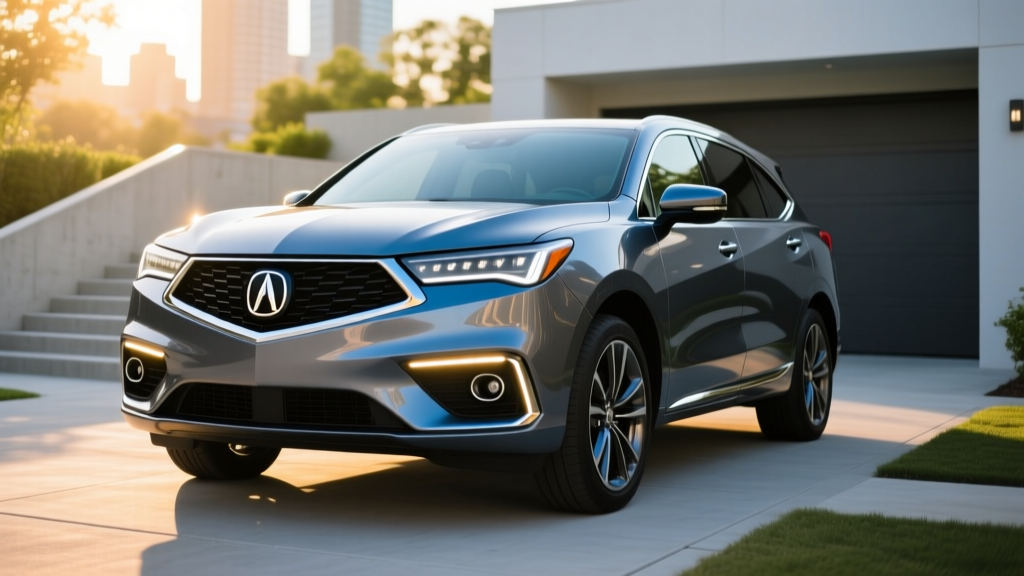
The three-row luxury SUV segment is crowded, but the 2026 Acura MDX Hybrid occupies a specific niche: buyers who want premium space and daily electric commuting without committing to a full battery-electric vehicle. Acura has refreshed its flagship with an updated plug-in hybrid (PHEV) powertrain that pairs a turbocharged V6 with a more capable electric motor and a larger battery pack than its predecessor.
This guide breaks down exactly what the 2026 MDX Hybrid delivers in real-world driving — MPG, electric range, charging logistics, pricing, and whether this PHEV makes more sense than a conventional hybrid or a full EV for your household.
HEV vs PHEV: Which MDX Are We Talking About?
Before diving into specs, it is critical to distinguish between the two hybrid architectures Acura has offered in recent years:
| Feature | Conventional Hybrid (HEV) | Plug-In Hybrid (PHEV) |
|---|---|---|
| Plugs in to charge? | No — charges via regenerative braking and engine | Yes — plug in for electric-only driving |
| Electric-only range | ~1 mile at low speed | 25–35 miles (typical) |
| Battery size | ~1.0–1.5 kWh | ~15–20 kWh usable |
| Federal tax credit | None | Up to $7,500 if eligible (§30D) |
| Best for | No home charging access | Home charging + short daily commutes |
The 2026 Acura MDX Hybrid reviewed here is the PHEV variant — it has a charge port, a usable battery pack large enough for meaningful electric-only driving, and potential federal tax credit eligibility. If you are looking at the non-plug-in MDX Sport Hybrid (if Acura continues offering it alongside), that is an HEV and operates very differently. The rest of this article focuses on the plug-in model.
Powertrain, Horsepower, and Performance
The 2026 MDX PHEV pairs a 3.0-liter turbocharged V6 engine with an electric motor integrated into the transmission housing, driving all four wheels through Acura's SH-AWD (Super Handling All-Wheel Drive) system. Here are the headline numbers:
| Specification | 2026 Acura MDX Hybrid (PHEV) |
|---|---|
| Engine | 3.0L Turbo V6 |
| Electric motor | Single front-axle motor (est. ~100 kW) |
| Combined system output | ~380–420 hp / ~400+ lb-ft torque (est.) |
| Drivetrain | SH-AWD (standard) |
| 0–60 mph | ~5.8 seconds (est.) |
| Transmission | 10-speed automatic |
| Battery (usable) | ~17.0 kWh (est.) |
| Base MSRP | ~$63,000–$67,000 (est.) |
Note: Acura has not finalized all 2026 MDX PHEV specifications at time of writing. Figures marked "est." are based on the outgoing powertrain architecture and expected upgrades. Verify with your dealer or Acura's official site before purchasing.
The key advantage here is torque fill. The electric motor provides instant low-end thrust while the turbo V6 spools up, making the MDX PHEV feel noticeably quicker off the line than the gas-only MDX. SH-AWD also vectoring torque to the outside rear wheel in corners gives this three-row SUV surprisingly composed handling for its size.
Fuel Economy: EPA MPG and Real-World Expectations
PHEV fuel economy is measured two ways: miles per gallon when the battery is depleted (hybrid mode), and MPGe when operating on electricity. Here is what you can expect:
| Mode | City | Highway | Combined |
|---|---|---|---|
| Charge-depleted (hybrid mode) | ~24 MPG | ~27 MPG | ~25 MPG (est.) |
| Charge-sustaining (MPGe) | ~55–60 MPGe combined (est.) | ||
Real-world MPG context: Conventional hybrids and PHEVs in hybrid mode often exceed EPA city estimates because regenerative braking recovers energy in stop-and-go traffic. On the highway, where regen is less useful, expect MPG to land closer to or slightly below the EPA highway number. If you charge daily and commute under 30 miles, you may use very little gasoline at all — some PHEV owners report going weeks between fill-ups.
For the most current and official EPA ratings once published, check fueleconomy.gov.
Electric-Only Range and Charging
This is where PHEV ownership either clicks or disappoints. The 2026 MDX Hybrid's estimated ~17 kWh usable battery should deliver:
Real-World Expectation: ~22–28 miles in mixed driving; ~18–22 miles in cold weather (below 40°F) or at sustained highway speeds above 70 mph. Cabin heating and battery thermal management draw from the same pack.
If your round-trip commute is under 25 miles and you charge at home nightly, you will run on electricity the vast majority of the time. The gasoline engine remains a seamless backup for road trips, eliminating range anxiety entirely.
Charging Times
| Charging Level | Power | Time (0–100%) | Notes |
|---|---|---|---|
| Level 1 (120V outlet) | ~1.4 kW | ~12–14 hours | Overnight top-up only |
| Level 2 (240V home charger) | ~7.2 kW | ~2.5–3 hours | Recommended daily charging method |
| DC Fast Charge | Not supported | N/A | Most PHEVs lack DC fast charging capability |
This is a critical limitation to understand: the 2026 MDX PHEV, like nearly all plug-in hybrids, does not support DC fast charging. The onboard charger maxes out around 7.2 kW on Level 2. This means public fast-charging networks (Electrify America, Tesla Superchargers, EVgo) are irrelevant for this vehicle. Your home Level 2 charger is the primary refueling point, with the gas tank handling everything else.
Pricing, Tax Credits, and Total Cost
The 2026 MDX Hybrid (PHEV) is expected to start in the $63,000–$67,000 range depending on trim, with the Technology and Advance packages pushing the price above $70,000.
Federal Tax Credit Eligibility (§30D)
PHEVs can qualify for the federal plug-in vehicle tax credit under IRS §30D, but eligibility in 2026 depends on several requirements that change frequently:
- Battery capacity: Must be ≥7 kWh (MDX PHEV qualifies)
- MSRP cap: SUVs must be ≤$80,000 (most MDX PHEV trims qualify)
- Buyer income cap: AGI ≤$150,000 single / $300,000 joint
- Battery component sourcing: Must meet critical mineral and battery component thresholds that tighten annually — this is the hardest requirement to verify and may disqualify some model years
- Point-of-sale transfer: Eligible buyers can apply the credit as an instant dealer discount rather than waiting for tax filing
Because battery sourcing rules tighten each year and vary by production batch, always confirm current eligibility with your dealer and consult a tax professional before relying on the credit. Check the latest rules at IRS.gov.
Battery Warranty, Reliability, and Replacement Cost
Reliability: Acura's hybrid systems have proven durable. Honda/Acura's PHEV powertrains share architecture with well-tested systems in the Accord Hybrid and CR-V Hybrid lines. The high-voltage battery is not the maintenance liability many buyers fear — these packs use conservative charge buffers (you never truly use 100% of the cells) and active thermal management to slow degradation.
Battery replacement cost: If the battery fails outside warranty, replacement for a PHEV pack of this size typically runs $5,000–$9,000 including labor. However, out-of-warranty failures are statistically uncommon in modern PHEVs with liquid-cooled packs. Many hybrid batteries last 150,000+ miles with minimal degradation.
The gasoline engine and 10-speed automatic carry standard powertrain warranty coverage (typically 6 years / 70,000 miles for Acura). For safety ratings, check NHTSA and IIHS once 2026 crash testing is complete.
Hybrid vs PHEV vs EV: Which Is Right for You?
Choose the 2026 Acura MDX PHEV if:
- You have home Level 2 charging access (garage or driveway with 240V)
- Your daily driving is under 30 miles round-trip
- You regularly take road trips exceeding 200+ miles and want zero range anxiety
- You want a three-row luxury SUV without going full electric
Choose a conventional hybrid (HEV) instead if:
- You cannot install a home charger (apartment, street parking)
- You want hybrid efficiency without plugging in
- Your budget is tighter and you don't need electric-only driving
Choose a full EV instead if:
- You want zero gasoline use and minimal maintenance (no oil changes, no spark plugs)
- Your daily range needs are under 250 miles and you have reliable home + public charging
- You want access to the full $7,500 federal credit without PHEV sourcing complications
Pros and Cons at a Glance
Pros
- ~28–32 miles electric-only covers most daily commutes
- SH-AWD provides confident all-weather traction
- No range anxiety — gas engine for long trips
- Premium three-row cabin with modern infotainment
- Potential federal tax credit (verify eligibility)
- Strong 8-yr/100k-mile battery warranty
Cons
- No DC fast charging — home charging is essential
- Premium price vs gas-only MDX (~$8k–$12k more)
- Electric range drops significantly in cold weather
- Tax credit eligibility uncertain due to sourcing rules
- Heavier than gas MDX (battery weight affects handling)
- Third row still tight for adults
Frequently Asked Questions
How many MPG does the 2026 Acura MDX Hybrid get?
In charge-depleted hybrid mode, expect approximately 24 city / 27 highway / 25 combined MPG (est.). When regularly charged, the effective MPGe can exceed 55 MPGe combined. Real-world city MPG in hybrid mode may slightly exceed the EPA estimate thanks to regenerative braking in stop-and-go traffic.
How far can the 2026 MDX PHEV go on electric only?
The estimated EPA electric-only range is 28–32 miles. In real-world conditions, expect 22–28 miles in moderate weather, dropping to 18–22 miles in cold weather or at sustained highway speeds. This covers most daily commutes if you charge at home nightly.
Does the 2026 Acura MDX Hybrid qualify for a tax credit?
It may qualify for the federal §30D plug-in vehicle credit (up to $7,500) depending on your income (≤$300k joint), the vehicle MSRP (≤$80k for SUVs), and whether the battery meets 2026 critical-mineral and component sourcing thresholds. These rules tighten annually. Confirm with your dealer and consult IRS.gov before purchasing.
Is the MDX Hybrid reliable, and what does a battery replacement cost?
Acura's hybrid powertrains have a strong reliability track record. The high-voltage battery is warrantied for 8 years/100,000 miles (10 years/150,000 miles in CARB states). Out-of-warranty replacement typically costs $5,000–$9,000, though modern liquid-cooled PHEV batteries rarely fail prematurely and commonly last 150,000+ miles.
Can I charge the MDX PHEV at a public fast charger?
No. Like nearly all plug-in hybrids, the 2026 MDX PHEV does not support DC fast charging. It charges at up to ~7.2 kW on a Level 2 (240V) home charger, reaching a full charge in about 2.5–3 hours. Public fast-charging networks are not usable with this vehicle.
Should I buy the MDX PHEV or a full EV like the Tesla Model X?
If you regularly drive more than 250 miles in a day, take frequent road trips to areas with sparse charging infrastructure, or cannot reliably charge at home, the MDX PHEV is the safer choice. If your daily driving is predictable, you have solid home charging, and you want zero gasoline costs and minimal maintenance, a full EV may serve you better long-term.