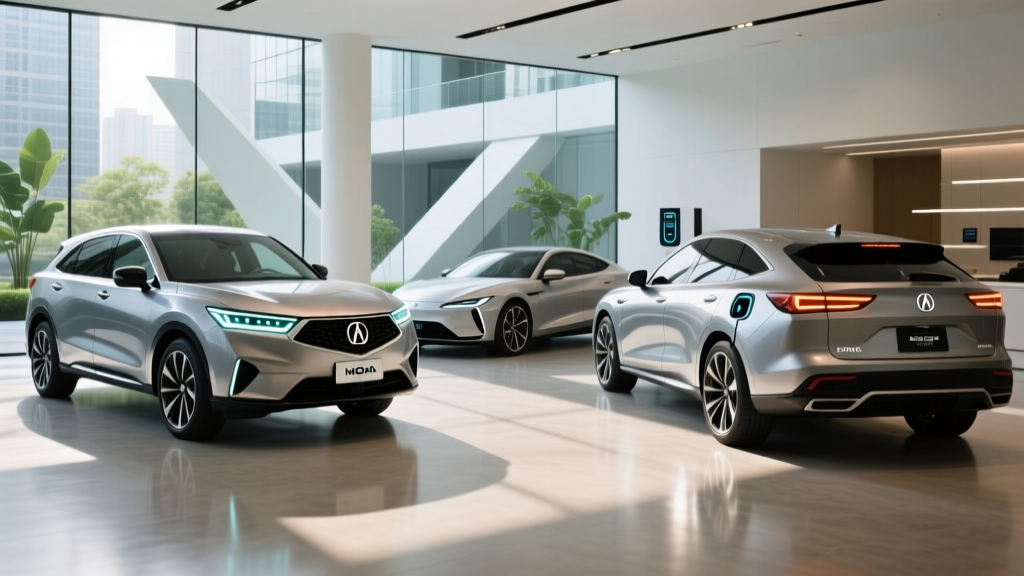
Acura's electrification strategy in 2026 spans three distinct approaches: a conventional hybrid (HEV) for its best-selling SUV, a sport hybrid for its entry-level liftback, and a plug-in hybrid (PHEV) variant of its electric-platform SUV. If you're researching the 2026 Acura hybrid options, the differences between these powertrains matter enormously for your daily driving, fuel budget, and whether you'll need a home charger.
This guide breaks down every electrified Acura available for the 2026 model year with exact EPA figures, real-world expectations, battery warranty terms, and tax-credit eligibility. No marketing fluff — just the numbers you need to decide.
HEV vs PHEV: Understanding Acura's Hybrid Approaches
Before diving into specific models, it's critical to understand the fundamental difference between Acura's hybrid types, because they serve entirely different use cases.
Conventional Hybrid (HEV)
How it works: A gasoline engine paired with one or more electric motors and a small battery (typically 1-2 kWh). The battery charges through regenerative braking and the engine — you never plug it in.
Best for: Drivers who want better fuel economy without changing their refueling habits. Ideal if you lack home charging access.
Acura models: 2026 MDX Hybrid, 2026 Integra Hybrid
Plug-In Hybrid (PHEV)
How it works: A larger battery (15-25+ kWh) paired with a gasoline engine. You plug it in to get 25-40+ miles of pure electric driving before the gas engine takes over.
Best for: Drivers with home charging who commute within the electric-only range but want gas-engine freedom for road trips. Eliminates range anxiety entirely.
Acura models: 2026 Acura ZDX PHEV (announced)
2026 Acura MDX Hybrid: The Family SUV HEV
The MDX remains Acura's volume leader, and the 2026 MDX Hybrid pairs a turbocharged engine with Acura's Sport Hybrid SH-AWD system. This is a conventional hybrid — no plug required, no electric-only range to manage.
| Specification | 2026 MDX Hybrid |
|---|---|
| Powertrain | 3.0L Turbo V6 + 3 electric motors (SH-AWD) |
| Combined Horsepower | ~355 hp (est.) |
| Combined Torque | ~354 lb-ft (est.) |
| Battery Type / Capacity | Lithium-ion / ~1.5 kWh (not plug-in) |
| Drivetrain | SH-AWD (torque-vectoring rear axle) |
| 0-60 mph | ~5.5 sec (est.) |
| Towing Capacity | 5,000 lbs |
| Base MSRP | ~$62,000 (est.) |
How Many MPG Does the 2026 MDX Hybrid Get?
| Drive Cycle | EPA Estimate | Real-World Expectation |
|---|---|---|
| City | 28 MPG | 29-31 MPG (hybrids often beat EPA in stop-and-go) |
| Highway | 25 MPG | 23-25 MPG (aero drag and sustained speed reduce hybrid advantage) |
| Combined | 26 MPG | 25-28 MPG depending on driving mix |
Real-world note: Acura's Sport Hybrid system excels in city driving where regenerative braking constantly replenishes the small battery. Expect the MDX Hybrid to actually exceed its EPA city rating in stop-and-go traffic. Highway efficiency is closer to the gas-only MDX because the hybrid system provides less benefit at sustained speeds. Over a 15,000-mile year with mixed driving, expect roughly 560-575 gallons of fuel versus ~625 gallons in the non-hybrid MDX — a savings of approximately 50-65 gallons annually at current prices.
2026 Acura Integra Hybrid: Sport Compact Efficiency
For 2026, Acura extends the Integra lineup with a hybrid variant that pairs a turbocharged four-cylinder with an electric motor. Like the MDX Hybrid, this is a conventional HEV — no plug, no electric-only mode.
| Specification | 2026 Integra Hybrid |
|---|---|
| Powertrain | 1.5L Turbo I4 + electric motor |
| Combined Horsepower | ~210 hp (est.) |
| Battery Type / Capacity | Lithium-ion / ~1.1 kWh (not plug-in) |
| Drivetrain | FWD |
| Transmission | e-CVT |
| 0-60 mph | ~6.8 sec (est.) |
| Base MSRP | ~$37,500 (est.) |
| Drive Cycle | EPA Estimate | Real-World Expectation |
|---|---|---|
| City | 42 MPG | 43-48 MPG (strong regen in urban driving) |
| Highway | 38 MPG | 36-39 MPG |
| Combined | 40 MPG | 39-44 MPG |
The Integra Hybrid targets buyers who want premium sportback styling with hybrid efficiency. At 40 MPG combined, it undercuts the non-hybrid Integra (~33 MPG combined) by a significant margin while adding low-end electric torque for responsive city acceleration. The trade-off is a modest price premium over the base Integra and the loss of a manual transmission option.
2026 Acura ZDX PHEV: The Plug-In Option
Acura has announced a plug-in hybrid variant of the ZDX for the 2026 model year. Unlike the fully electric ZDX (built on GM's Ultium platform), the ZDX PHEV uses a dedicated PHEV powertrain with a larger battery designed for meaningful electric-only commuting.
Note: As of early 2026, the ZDX PHEV is listed as announced/preliminary. Final EPA certification figures may shift before deliveries begin.
| Specification | 2026 ZDX PHEV (Preliminary) |
|---|---|
| Powertrain | 2.0L Turbo I4 + electric motor(s) |
| Combined Horsepower | ~290 hp (est.) |
| Battery Capacity (Usable) | ~18 kWh (NMC chemistry) |
| Electric-Only Range | ~32 miles (est.) |
| Total Combined Range | ~420 miles (electric + gas) |
| Level 2 Charging (240V) | ~2.5 hours (0-100%, 7.2 kW onboard charger) |
| DC Fast Charging | Not available (PHEV batteries typically lack DCFC) |
| Drivetrain | AWD |
| 0-60 mph | ~6.2 sec (est.) |
| Base MSRP | ~$55,000 (est.) |
How Far Can the ZDX PHEV Go on Electric Only?
The estimated 32 miles of electric-only range covers most daily commutes. According to FHWA data, the average American drives roughly 37 miles per day — meaning the ZDX PHEV could handle most weekday driving on electricity alone, with the gas engine activating only for longer trips or when the battery depletes.
Real-world PHEV range reality: The 32-mile estimate assumes moderate temperatures and mixed-speed driving. In winter (below 40°F), expect electric-only range to drop 15-25% to roughly 24-27 miles due to cabin heating demands and reduced battery efficiency. Highway-speed electric driving (70+ mph) will also reduce range to approximately 25-28 miles. Preconditioning the cabin while still plugged in preserves battery charge for actual driving.
Charging the ZDX PHEV at home: With a 7.2 kW onboard charger and an 18 kWh battery, a Level 2 home charger (240V, 32A) replenishes the battery in roughly 2.5 hours. On a standard 120V household outlet (Level 1, ~1.4 kW), expect a full charge in approximately 12-13 hours — sufficient for overnight charging. The ZDX PHEV does not support DC fast charging, which is standard for PHEVs; the battery is too small to benefit from high-power charging infrastructure.
Battery Warranty and Long-Term Reliability
Hybrid battery longevity is consistently the top concern for first-time hybrid buyers. Here's what Acura covers:
Acura Hybrid Battery Warranty (2026 Models)
- HEV Battery (MDX Hybrid, Integra Hybrid): 8 years / 100,000 miles (10 years / 150,000 miles in CARB states including CA, NY, MA, and others)
- PHEV Battery (ZDX PHEV): 8 years / 100,000 miles minimum (federal requirement); expected 10 years / 150,000 miles in CARB states
- Warranty trigger: Battery capacity loss below ~70% of original capacity or any defect
Is the Acura Hybrid Reliable? What Does Battery Replacement Cost?
Acura's parent company Honda has over two decades of hybrid production experience (the Insight debuted in 1999). Modern hybrid batteries use lithium-ion chemistry with sophisticated thermal management that keeps degradation minimal. Real-world data from Honda/Acura hybrids shows most original batteries lasting well beyond the warranty period — 150,000 to 200,000+ miles is common.
If replacement is needed out of warranty:
- HEV battery (MDX/Integra): $2,500-$4,500 for the pack plus ~$500-$800 labor. The small battery size keeps costs manageable.
- PHEV battery (ZDX): $5,000-$8,000 estimated, given the larger 18 kWh pack. Refurbished or remanufactured packs may reduce this to $3,500-$5,500.
For context, these costs are comparable to a major transmission repair on a conventional vehicle and are rarely incurred within the typical ownership period.
Pricing, Trims, and Tax Credit Eligibility
| Model | Base MSRP (Est.) | Federal Tax Credit | State Incentives |
|---|---|---|---|
| 2026 Integra Hybrid | $37,500 | Not eligible (§30D requires plug-in) | Varies by state — some offer hybrid rebates |
| 2026 MDX Hybrid | $62,000 | Not eligible (§30D requires plug-in) | Varies by state |
| 2026 ZDX PHEV | $55,000 | Up to $7,500 (eligibility depends on battery sourcing, MSRP cap, and buyer income — see IRS §30D rules) | Varies — check fueleconomy.gov for state programs |
§30D Federal Tax Credit Requirements for the ZDX PHEV
The ZDX PHEV may qualify for up to $7,500 under the federal clean vehicle credit, but eligibility depends on multiple factors that change frequently:
- MSRP cap: SUVs must be under $80,000 MSRP (ZDX PHEV qualifies)
- Buyer income cap: Modified AGI must not exceed $150,000 (single), $225,000 (head of household), or $300,000 (joint)
- Battery sourcing: Critical minerals and battery components must meet escalating domestic-sourcing thresholds — the credit splits into two halves ($3,750 each) with separate requirements
- Point-of-sale transfer: As of 2024+, you can transfer the credit to the dealer for an immediate price reduction rather than claiming it on your tax return
Important: Battery sourcing requirements tighten each year. Always verify current eligibility on IRS.gov before purchasing. Consult a tax professional for your specific situation.
Conventional hybrids (MDX Hybrid, Integra Hybrid) do not qualify for the federal §30D tax credit. This credit is exclusively for plug-in vehicles (PHEVs and BEVs). Some states offer separate incentives for conventional hybrids, but these are less common and vary significantly by jurisdiction.
Hybrid vs PHEV vs EV: Which 2026 Acura Fits You?
Choose the Integra Hybrid or MDX Hybrid (HEV) if:
- You don't have access to home or workplace charging
- You want better fuel economy without any behavioral changes
- You drive more than 15,000 miles per year and want zero range limitations
- You want a lower purchase price and simpler ownership experience
- Your daily commute involves heavy stop-and-go traffic where hybrid efficiency peaks
Choose the ZDX PHEV if:
- You have reliable Level 2 home charging (or can install it)
- Your daily commute is under 30 miles round-trip (within electric-only range)
- You want to drive on electricity most days but need gas-engine flexibility for road trips
- You want to qualify for the federal tax credit (up to $7,500)
- You're not ready for a full EV but want to reduce fuel consumption significantly
Consider a full EV (Acura ZDX EV) instead if:
- You have home charging and your daily driving is under 250 miles
- You want zero tailpipe emissions and minimal maintenance (no oil changes, no gas engine)
- You want the maximum federal tax credit and lowest per-mile fuel cost
- You rarely take road trips exceeding 300 miles in a single day
Pros and Cons: 2026 Acura Hybrid Lineup
Pros
- HEV models require zero charging infrastructure — fuel and go
- Integra Hybrid achieves 40+ MPG combined in a premium sportback
- MDX Hybrid adds SH-AWD torque vectoring with hybrid efficiency
- ZDX PHEV offers ~32 miles electric commute with 420+ mile total range
- Proven Honda/Acura hybrid reliability with 8-10 year battery warranties
- Hybrids typically exceed EPA city MPG in real-world stop-and-go driving
- ZDX PHEV may qualify for up to $7,500 federal tax credit
Cons
- HEV models (MDX, Integra) do not qualify for federal §30D tax credit
- MDX Hybrid highway MPG is only marginally better than gas-only MDX
- ZDX PHEV lacks DC fast charging (typical for PHEVs but limits road-trip electric driving)
- PHEV electric range drops 15-25% in cold weather
- Premium fuel recommended on turbocharged models increases fuel cost
- ZDX PHEV specs are preliminary — final EPA numbers may differ
- Acura hybrid lineup is smaller than competitors (Toyota/Lexus offers more HEV options)
Frequently Asked Questions
How many MPG does the 2026 Acura MDX Hybrid get?
The 2026 MDX Hybrid is estimated at 28 city / 25 highway / 26 combined MPG. In real-world city driving with frequent stops, owners often see 29-31 MPG thanks to regenerative braking. Highway driving yields closer to the EPA estimate or slightly below.
How far can the 2026 Acura ZDX PHEV go on electric only?
The ZDX PHEV is estimated at approximately 32 miles of electric-only range. In cold weather (below 40°F), expect 24-27 miles. For commutes within this range and with home charging, you may use the gas engine only a handful of times per month.
Do Acura hybrids need to be plugged in?
No — the MDX Hybrid and Integra Hybrid are conventional hybrids (HEVs) that charge their batteries through regenerative braking and the gasoline engine. You never plug them in. Only the ZDX PHEV requires plugging in to access its electric-only range, though it will still operate as a hybrid if you don't charge it.
Is the Acura hybrid battery reliable, and what does replacement cost?
Acura's hybrid batteries are covered by an 8-year/100,000-mile warranty (10 years/150,000 miles in CARB states). Honda/Acura hybrid systems have a strong reliability track record, with most batteries lasting 150,000-200,000+ miles. Out-of-warranty replacement costs range from ~$2,500-$4,500 for HEV batteries to an estimated $5,000-$8,000 for the ZDX PHEV pack.
Does any 2026 Acura hybrid qualify for a tax credit?
The ZDX PHEV may qualify for up to $7,500 under the federal §30D clean vehicle credit, subject to buyer income limits, MSRP caps, and battery-sourcing requirements. The MDX Hybrid and Integra Hybrid do not qualify for the federal credit because they are not plug-in vehicles. Check IRS.gov for current eligibility details.
Should I buy the Acura hybrid or the full-electric ZDX?
Choose the hybrid or PHEV if you lack reliable home charging, regularly drive more than 250 miles in a day, or want the flexibility of a gas engine for road trips. Choose the fully electric ZDX (320+ mile EPA range) if you have home charging, want the lowest operating costs, and your daily driving is predictable. The ZDX PHEV splits the difference — electric commuting with gas-engine backup.
What is the difference between the Acura ZDX EV and ZDX PHEV?
The ZDX EV is a battery-electric vehicle with no gas engine, offering 300+ miles of range on a full charge. The ZDX PHEV has both a gas engine and an electric powertrain with ~32 miles of electric-only range, then operates as a conventional hybrid. The EV is better for drivers with home charging and predictable routes; the PHEV suits those who need long-distance flexibility.
Sources: EPA estimates referenced via fueleconomy.gov; federal tax credit rules per IRS §30D; Acura model specifications from Acura Newsroom. All 2026 model-year figures marked as estimated are based on preliminary manufacturer data and may change upon final EPA certification.