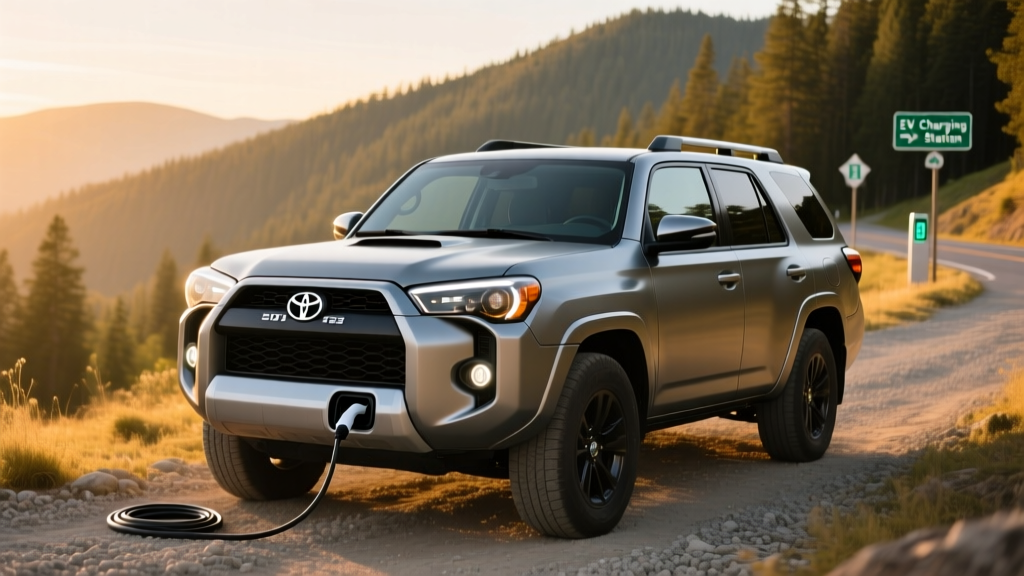
The 2026 Toyota 4Runner Hybrid pairs the legendary off-road capability of Toyota's body-on-frame SUV with the i-FORCE MAX hybrid powertrain — a setup that transforms one of the thirstiest midsize SUVs into something a daily commuter can actually stomach at the pump. If you've been searching for 4Runner hybrid gas mileage figures, you've found the right deep dive. We'll break down every EPA number, compare real-world results, explain the hybrid system under the hood, and help you decide whether this HEV, a PHEV competitor, or a full EV better fits your driveway.
2026 Toyota 4Runner Hybrid MPG: EPA Numbers and Real-World Results
The 2026 4Runner Hybrid uses Toyota's i-FORCE MAX turbocharged 2.4-liter four-cylinder hybrid powertrain. Unlike the outgoing V6 4Runner, which managed a dismal 16/19/17 MPG (city/highway/combined), the hybrid variant represents a massive efficiency leap. Here's the official EPA breakdown:
| Drivetrain | City MPG | Highway MPG | Combined MPG |
|---|---|---|---|
| 4x2 (Rear-Wheel Drive) | 27 | 28 | 27 |
| 4x4 (Four-Wheel Drive) | 26 | 27 | 26 |
Source: fueleconomy.gov, U.S. Environmental Protection Agency.
Toyota's hybrid systems consistently beat EPA city estimates in stop-and-go driving, where regenerative braking and electric-motor assist shine. Expect 28–30 MPG city in the 4x4 in moderate traffic. Highway cruising at 75+ MPH, however, typically drops to 23–25 MPG — the boxy aerodynamics and 4,700+ lb curb weight work against it. In cold weather (below 32°F), anticipate a 1–2 MPG reduction as the engine runs more frequently to maintain cabin heat and battery temperature.
i-FORCE MAX Powertrain: How the 4Runner Hybrid Actually Works
The i-FORCE MAX is a conventional hybrid (HEV), not a plug-in hybrid. This is a critical distinction: the 4Runner Hybrid never plugs into a wall or charger. Its 1.87 kWh nickel-metal hydride (NiMH) battery pack recharges exclusively through regenerative braking and the gasoline engine. You fuel it like any other vehicle — the hybrid system simply makes that fuel go further.
| Specification | Detail |
|---|---|
| Engine | 2.4L turbocharged inline-4 |
| Electric Motor | Integrated motor-generator (between engine and transmission) |
| Combined Horsepower | 326 hp |
| Combined Torque | 465 lb-ft |
| Transmission | 8-speed automatic (Direct Shift-8AT) |
| Hybrid Battery | 1.87 kWh NiMH (sealed) |
| Hybrid Type | Conventional HEV (no plug-in) |
| Towing Capacity | 6,000 lbs (4x4) |
| 0–60 MPH | ~6.4 seconds (est.) |
The 326 hp and 465 lb-ft of torque represent a dramatic performance upgrade over the previous generation's 270 hp V6. The electric motor fills in torque at low RPMs, eliminating the turbo lag common in smaller boosted engines and providing strong off-road crawl response.
4Runner Hybrid vs. Plug-In Hybrid vs. Full EV: Which Is Right for You?
Toyota does not currently offer a 4Runner PHEV. The i-FORCE MAX is strictly a conventional hybrid. For buyers cross-shopping electrified SUVs, here's how the three paths compare:
| Factor | 4Runner Hybrid (HEV) | PHEV SUV (e.g., RAV4 Prime) | Full EV (e.g., Rivian R1S) |
|---|---|---|---|
| Plug-in Required? | No | Yes (optional but recommended) | Yes (mandatory) |
| Electric-Only Range | None (EV assist only) | 35–42 miles typical | 300–400 miles (full battery) |
| Home Charging Needed? | No | Recommended (Level 2) | Essential (Level 2) |
| Off-Road Capability | Excellent (body-on-frame, lockers) | Limited (unibody AWD) | Good (Rivian), limited options |
| Federal Tax Credit | None | Up to $7,500 (§30D, if eligible) | Up to $7,500 (§30D, if eligible) |
| Annual Fuel/Energy Cost | ~$2,100 (15K mi/yr, $3.50/gal) | ~$900–$1,400 (mix of electric + gas) | ~$600–$900 (electricity only) |
| Towing Capacity | 6,000 lbs | 1,500–3,500 lbs | 7,700 lbs (R1S) |
- You need serious off-road hardware (locking differentials, body-on-frame, crawl control)
- You can't install a home charger (apartment, street parking)
- You tow 5,000+ lbs regularly
- You want 50%+ better fuel economy than the old V6 without changing your fueling habits
- You have home Level 2 charging and a commute under 40 miles (PHEV covers it electric-only)
- You want to qualify for the federal §30D tax credit
- Off-roading and heavy towing are not priorities
- You want to minimize operating costs and tailpipe emissions
Does the 4Runner Hybrid Qualify for a Federal Tax Credit?
No. The 2026 Toyota 4Runner Hybrid is a conventional HEV, not a plug-in vehicle. Under IRS §30D rules, only plug-in electric vehicles (PHEVs and BEVs) with sufficient battery capacity qualify for the Clean Vehicle Credit of up to $7,500. Conventional hybrids like the 4Runner i-FORCE MAX are excluded regardless of price or buyer income.
Some states offer their own rebates for conventional hybrids, though these are increasingly rare as incentive programs shift toward plug-in vehicles. Check your state's energy office or department of environmental quality for current programs. A few states, such as Colorado, have historically offered modest hybrid rebates, but availability and amounts change annually.
Pricing: 2026 Toyota 4Runner Hybrid Trim Levels and MSRP
The i-FORCE MAX hybrid powertrain is available across multiple 4Runner trims for 2026. Here's the current MSRP lineup (destination charge included):
| Trim | Drivetrain | MSRP |
|---|---|---|
| TRD Off-Road Hybrid | 4x4 | $52,220 |
| Limited Hybrid | 4x2 | $55,070 |
| Limited Hybrid | 4x4 | $57,120 |
| TRD Pro Hybrid | 4x4 | $64,990 |
| Trailhunter Hybrid | 4x4 | $62,760 |
Source: Toyota.com 2026 4Runner specifications. Prices subject to change; confirm with dealer.
For context, the non-hybrid 4Runner SR5 4x4 starts around $43,620. The hybrid premium runs roughly $5,000–$8,500 depending on trim, but the fuel savings — approximately $900/year versus the old V6 4Runner — offset that premium in about 6–9 years for a typical driver covering 15,000 miles annually.
Battery Warranty, Reliability, and Replacement Costs
- Hybrid Battery: 10 years / 150,000 miles (whichever comes first)
- Hybrid System Components: 8 years / 100,000 miles
- Powertrain (engine, transmission): 5 years / 60,000 miles
- Basic Bumper-to-Bumper: 3 years / 36,000 miles
Toyota's hybrid reliability track record is arguably the best in the industry. The Prius, Camry Hybrid, and RAV4 Hybrid have demonstrated hybrid battery lifespans routinely exceeding 200,000 miles with minimal degradation. The 4Runner's 1.87 kWh NiMH pack is small and conservatively managed — it never deeply discharges or charges to full capacity, which dramatically extends cycle life.
If the hybrid battery does require replacement out of warranty, expect a cost of $2,500–$4,000 for a refurbished or new NiMH pack at a Toyota dealer. Independent hybrid specialists often offer replacements for $1,800–$2,800. This is far less expensive than EV battery replacements, which can exceed $10,000–$15,000, because the 4Runner's hybrid battery is small and uses mature NiMH chemistry rather than a large lithium-ion pack.
Based on Toyota's historical hybrid data and IIHS reliability surveys, the likelihood of needing a hybrid battery replacement within the first 150,000 miles is low. Most failures occur in vehicles left sitting unused for extended periods or subjected to extreme heat without regular driving.
Pros and Cons: Living with the 4Runner Hybrid
- 326 hp / 465 lb-ft — strongest 4Runner ever, strong towing and passing power
- 26–27 MPG combined — roughly 55% improvement over the old V6
- No plug-in required — fuel it like a normal SUV, no charging infrastructure needed
- Body-on-frame with locking diffs, crawl control, and multi-terrain select
- 10-year / 150,000-mile hybrid battery warranty
- Proven Toyota hybrid reliability with low-cost battery replacement if needed
- No electric-only driving — always burns gasoline
- No federal tax credit eligibility (HEV exclusion under §30D)
- Highway MPG drops to 23–25 at 75+ MPH due to weight and aerodynamics
- $52,000+ starting price for the hybrid trims — significant premium over non-hybrid SR5
- Heavy curb weight (~4,800 lbs) impacts braking distances and tire wear
- No PHEV variant available — Toyota hasn't announced one
Frequently Asked Questions
How many MPG does the 2026 4Runner Hybrid get?
The EPA rates the 4Runner Hybrid 4x4 at 26 city / 27 highway / 26 combined MPG. The 4x2 version achieves 27/28/27 MPG. In real-world city driving, many owners report 28–30 MPG thanks to Toyota's regenerative braking system. Highway driving above 70 MPH typically yields 23–25 MPG.
Does the 4Runner Hybrid need to be plugged in?
No. The 4Runner i-FORCE MAX is a conventional hybrid (HEV). It charges its small 1.87 kWh battery through regenerative braking and the gasoline engine. You never plug it in — just fill up at the gas station as you would with any non-hybrid vehicle.
Is there a 4Runner plug-in hybrid (PHEV)?
Not as of the 2026 model year. Toyota has not announced a 4Runner PHEV. If plug-in capability and electric-only commuting are priorities, consider the Toyota RAV4 Prime (42 miles electric-only, up to $7,500 federal credit) or a full EV like the Rivian R1S for off-road capability.
Is the 4Runner Hybrid reliable?
Toyota's hybrid systems are among the most proven in the automotive industry. The i-FORCE MAX uses a small, conservatively managed NiMH battery that avoids the deep cycling that causes degradation. The hybrid battery is warranted for 10 years / 150,000 miles, and Toyota hybrids routinely exceed 200,000 miles without hybrid system issues.
What does a 4Runner Hybrid battery replacement cost?
Out-of-warranty replacement runs $2,500–$4,000 at a Toyota dealer or $1,800–$2,800 at an independent hybrid specialist. This is significantly less than EV battery replacements due to the small NiMH pack size. Given Toyota's hybrid track record, most owners will never need this service.
How much does the 4Runner Hybrid save in fuel costs?
Compared to the outgoing V6 4Runner (17 MPG combined), the hybrid at 26 MPG combined saves roughly $900–$1,100 per year for a driver covering 15,000 miles at $3.50/gallon. Over 10 years, that's approximately $9,000–$11,000 in fuel savings — enough to offset the hybrid trim premium.
Can the 4Runner Hybrid still go off-road?
Yes. The hybrid powertrain does not compromise off-road capability. TRD Off-Road and TRD Pro trims include locking rear differential, crawl control, multi-terrain select, and up to 9.0 inches of ground clearance. The instant torque from the electric motor actually enhances low-speed rock crawling response.