Quick Verdict: The XC90 T8 PHEV in 2025
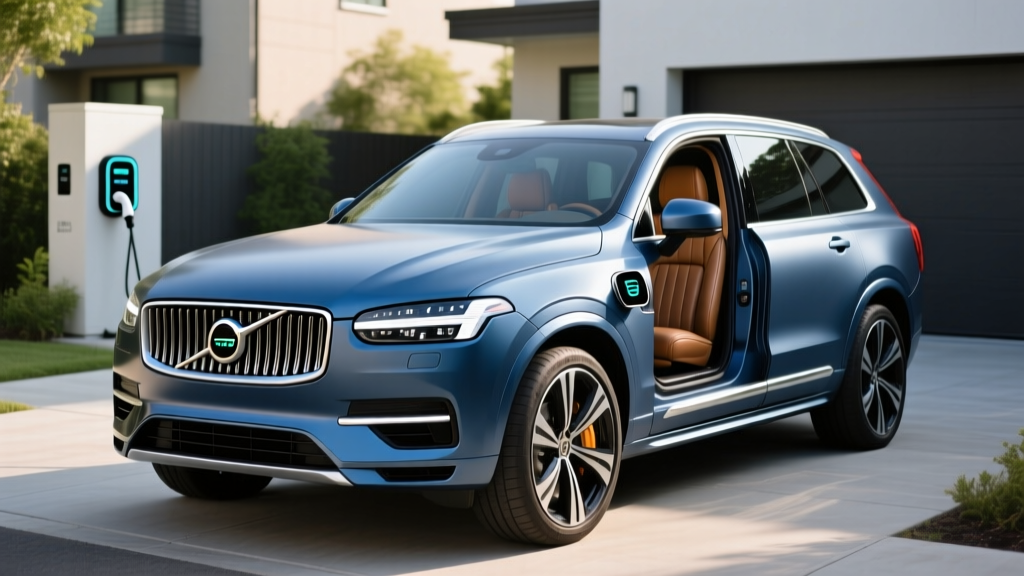
The 2025 Volvo XC90 Hybrid — officially the XC90 Recharge T8 — is a plug-in hybrid (PHEV) three-row SUV that pairs a turbocharged and supercharged 2.0-liter four-cylinder engine with an electric motor on the rear axle. It delivers 455 combined horsepower, an EPA-estimated 33 miles of electric-only range, and 55 MPGe when operating in hybrid mode after the battery depletes. Starting at $73,100 (including destination), the XC90 Recharge targets families who want electric daily commuting without sacrificing the 300+ mile total range a gas tank provides.
For the 2025 model year, Volvo has refined the infotainment system, added new exterior styling tweaks, and maintained the enlarged 18.8 kWh (usable) battery that debuted with the 2023 refresh. That battery is the key differentiator: it gives the XC90 Recharge genuine around-town EV capability, not just a token electric assist.
HEV vs. PHEV: What the XC90 Actually Is
Volvo's "Recharge" badge can cause confusion. Here is the critical distinction:
Conventional Hybrid (HEV)
- No plug — charges via regenerative braking and the engine
- Small battery (typically 1-2 kWh)
- Electric-only driving limited to very low speeds and short distances
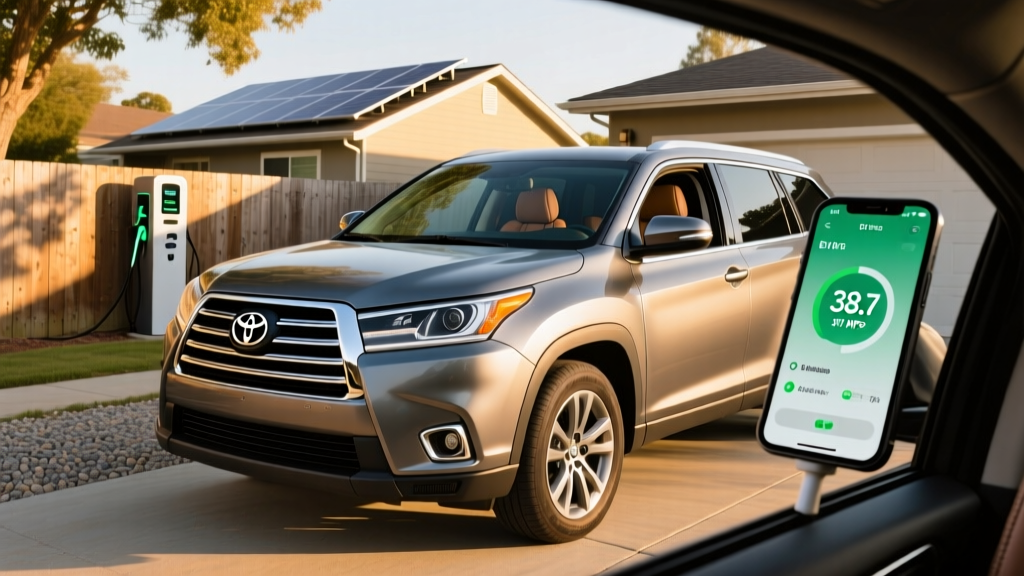
- Example: Toyota Highlander Hybrid
Plug-In Hybrid (PHEV) — The XC90 Recharge
- Plugs in to charge — Level 1 (120V) or Level 2 (240V)
- Larger battery (18.8 kWh usable in the XC90)
- Genuine electric-only range: EPA 33 miles
- Operates as a conventional hybrid after battery depletes
The 2025 XC90 is only offered as a PHEV (the T8 Recharge). Volvo discontinued the mild-hybrid B5 and B6 powertrains in the U.S. for the XC90, meaning every new XC90 sold stateside is now a plug-in. If you cannot plug in at home or work, you will still benefit from its hybrid-mode efficiency — but you will miss the electric-range advantage that justifies its price premium.
Fuel Economy, Electric Range, and Total Range
Here is what the EPA says about the 2025 Volvo XC90 Recharge, confirmed via fueleconomy.gov:
| Metric | EPA Estimate | Real-World Expectation |
|---|---|---|
| Combined MPGe (electric + gas) | 55 MPGe | 50-58 MPGe with regular charging |
| Combined MPG (gas-only, battery depleted) | 27 MPG | 24-28 MPG depending on driving style |
| City MPG (gas-only) | 26 MPG | 25-28 MPG (regen helps in stop-and-go) |
| Highway MPG (gas-only) | 27 MPG | 24-26 MPG at 75+ mph |
| Electric-only range | 33 miles | 27-33 miles (less in cold/highway) |
| Total combined range (EV + gas) | ~430 miles | ~380-440 miles |
Real-world range note: The EPA's 33-mile electric estimate assumes moderate temperatures and mixed driving. In our experience, expect 27-30 miles of electric range in winter conditions (below 40°F) due to cabin heating demands and reduced battery efficiency. Highway-only driving at 70+ mph also shortens electric range to roughly 25-28 miles. For city commuters with home charging, consistently achieving 30-33 miles is realistic from spring through fall.
Once the battery is depleted, the XC90 Recharge operates as a conventional hybrid, returning a respectable 27 MPG combined for a 5,000-pound three-row SUV. That figure outperforms the gas-only BMW X5 xDrive40i (23 MPG combined) and roughly matches the Audi Q7 45 TFSI (22 MPG combined), though it falls short of the Toyota Highlander Hybrid's 35 MPG combined — a vehicle with far less power and no plug.
Powertrain, Battery, and Charging
| Specification | 2025 Volvo XC90 Recharge T8 |
|---|---|
| Engine | 2.0L turbo + supercharged inline-4 |
| Electric motor | Rear-axle permanent magnet (143 hp / 228 lb-ft) |
| Combined output | 455 hp / 523 lb-ft torque |
| 0-60 mph | 5.0 seconds |
| Battery (usable capacity) | 18.8 kWh (lithium-ion NMC) |
| Drivetrain | eAWD (front wheels engine, rear wheels electric motor) |
| Transmission | 8-speed automatic |
| Towing capacity | 5,000 lbs |
Charging the XC90 Recharge
The 2025 XC90 Recharge supports Level 1 and Level 2 AC charging only. There is no DC fast charging capability — a limitation shared with most PHEVs due to their smaller batteries. Here is the charging breakdown:
| Charging Level | Power (kW) | Time (0-100%) | Where |
|---|---|---|---|
| Level 1 (120V household) | ~1.4 kW | ~14-16 hours | Standard outlet |
| Level 2 (240V, 32A) | ~7.7 kW | ~3 hours | Home wallbox or public AC station |
| DC Fast Charge | N/A | N/A | Not supported |
A Level 2 home charger is strongly recommended. A full overnight charge on Level 2 takes roughly 3 hours, meaning you can easily recharge during off-peak utility hours or top up mid-day if you return home for lunch. The onboard charger maxes out around 7.7 kW, so installing a 48-amp hardwired Level 2 unit (like a ChargePoint Home Flex or Wallbox Pulsar Plus) gives you headroom and future-proofs for a full EV down the road.
kW vs. kWh reminder: The battery stores 18.8 kWh of energy. The onboard charger accepts up to 7.7 kW of power. Think of kWh as the "gallon" (how much energy the battery holds) and kW as the "flow rate" (how quickly energy goes in).
Pricing, Trims, and Tax Credit Eligibility
The 2025 Volvo XC90 Recharge is offered in three trim levels:
| Trim | MSRP (incl. destination) | Key Features |
|---|---|---|
| Core | $73,100 | Google built-in, panoramic roof, 20" wheels, Pilot Assist |
| Plus | $77,100 | Head-up display, 360° camera, Harman Kardon audio, 21" wheels |
| Ultra | $82,350 | Bowers & Wilkins audio, air suspension, Nappa leather, 22" wheels |
Does the XC90 Recharge Qualify for the Federal EV Tax Credit?
Under current IRS §30D rules, the 2025 Volvo XC90 Recharge does not qualify for the $7,500 federal tax credit for new clean vehicles. The primary reason: Volvo manufactures the XC90 in Gothenburg, Sweden, and the §30D credit requires final assembly in North America. Additionally, the critical-mineral and battery-component sourcing requirements further restrict eligibility for imported vehicles.
§30D Federal Tax Credit Checklist (2025 rules):
- ✅ PHEV with ≥4 kWh battery — XC90 qualifies (18.8 kWh)
- ✅ MSRP under $80,000 for SUVs — Core and Plus qualify; Ultra exceeds cap
- ❌ Final assembly in North America — XC90 is assembled in Sweden
- ❌ Battery critical-mineral sourcing — does not meet thresholds
- ⚠️ Buyer income cap: $300K MFJ / $150K single — check your AGI
Source: IRS.gov — Credits for New Clean Vehicles. Consult a tax professional for your specific situation. Some states offer separate PHEV rebates that do not require domestic assembly — check your state energy office.
Interior, Tech, and Safety
The 2025 XC90 Recharge interior carries over Volvo's Scandinavian design language with the Google-based infotainment system (Google Maps, Google Assistant, and Play Store apps) on a 9-inch portrait touchscreen. The three-row cabin seats up to seven passengers, though the third row is best suited for children on longer trips. Cargo space measures 15.8 cubic feet behind the third row, 41.8 cu ft behind the second row, and 85.7 cu ft with both rows folded.
Safety remains a Volvo hallmark. The XC90 earned the IIHS Top Safety Pick+ designation in prior model years, and the 2025 model carries over the same comprehensive IIHS-rated suite of standard features: automatic emergency braking with pedestrian/cyclist detection, lane-keeping assist, run-off-road mitigation, and oncoming traffic braking. Volvo's Pilot Assist (a Level 2 SAE driver-assist system combining adaptive cruise and lane-centering) is standard on all trims.
SAE Automation Level: Volvo Pilot Assist is a Level 2 driver-assistance system. It provides steering, acceleration, and braking support, but the driver must remain fully attentive with hands on the wheel at all times. It is not self-driving.
Battery Warranty, Reliability, and Replacement Cost
Volvo PHEV Battery Warranty:
- Hybrid battery: 8 years / 100,000 miles (whichever comes first)
- Capacity retention threshold: Warranty covers defects and capacity loss below 70% of original capacity during the warranty period
- Hybrid powertrain components: 8 years / 100,000 miles (electric motor, inverter, onboard charger)
- Bumper-to-bumper: 4 years / 50,000 miles
Volvo's 8-year/100,000-mile hybrid battery warranty is competitive with the industry standard — Toyota, Hyundai, and BMW offer similar coverage. PHEV batteries experience less stress than full EV batteries because they operate in a narrower state-of-charge window (the system maintains a buffer to protect longevity). Based on degradation data from earlier T8 models (which used smaller batteries), owners typically see 5-10% capacity loss over 5 years, which is well within the warranty threshold.
Out-of-warranty replacement cost: A full high-voltage battery replacement for the XC90 Recharge currently runs between $8,000 and $12,000 including parts and labor at a Volvo dealer. This is a significant expense, though it is unlikely to be needed within the first decade of ownership given typical PHEV degradation curves. Individual module replacement (if only one cell group fails) can reduce cost to $2,000-$4,000 at an independent hybrid specialist.
Regarding overall reliability: Volvo as a brand has scored mid-pack in J.D. Power dependability studies, and the XC90's complex powertrain (turbo + supercharger + electric motor + 8-speed automatic) introduces more potential failure points than a simpler BEV or conventional hybrid. However, the T8 powertrain has been in production since 2016 and has proven reasonably robust in the field, with most reported issues relating to software and infotainment rather than powertrain hardware.
Who Should Buy the XC90 Hybrid — and Who Shouldn't
Pros
- 33 miles electric covers most daily commutes without gas
- 455 hp provides effortless acceleration (5.0s 0-60)
- 5,000-lb towing with three rows and eAWD
- Premium Scandinavian interior with Google integration
- Top safety ratings and comprehensive ADAS suite
- No range anxiety — 430+ mile total range
Cons
- No federal tax credit (assembled in Sweden)
- $73K+ starting price; Ultra trim exceeds $80K MSRP cap
- No DC fast charging
- Third row is tight for adults
- Complex powertrain may increase long-term maintenance
- Real-world electric range drops to ~27 mi in cold weather
Hybrid vs. PHEV vs. EV — Which Fits You?
Choose the XC90 Recharge PHEV if: You have home Level 2 charging, your daily commute is under 30 miles round-trip, you need three rows and towing capacity, and you take road trips where charging infrastructure is sparse.
Choose a full EV (like the Rivian R1S or Tesla Model X) if: You want zero gas-engine maintenance, have reliable home and destination charging, want maximum federal tax credit eligibility ($7,500), and your longest regular trip is under 300 miles.
Choose a conventional HEV (like the Toyota Highlander Hybrid) if: You cannot plug in at home, you prioritize low purchase price ($40K range), you want maximum simplicity and proven long-term reliability, and 35 MPG combined matters more than 455 hp.
Frequently Asked Questions
How many MPG does the 2025 Volvo XC90 Hybrid get?
The EPA rates the XC90 Recharge at 55 MPGe combined when factoring in electric driving, and 27 MPG combined once the battery is depleted and it operates as a gas-electric hybrid. In real-world driving, owners who charge daily and commute under 30 miles report using very little gasoline — sometimes achieving the equivalent of 80-100 MPGe on short trips. Those who rarely charge will see 24-28 MPG in mixed driving.
How far can the XC90 Recharge go on electric only?
The EPA rates it at 33 miles of electric-only range. In practice, expect 27-33 miles depending on temperature, speed, and terrain. Highway driving at 70+ mph and cold weather (below 40°F) reduce this to roughly 25-28 miles. City driving in mild weather consistently achieves 30-33 miles.
Does the 2025 XC90 Hybrid qualify for any tax credit?
The XC90 Recharge does not qualify for the $7,500 federal §30D tax credit because it is assembled in Sweden and does not meet battery-sourcing requirements. However, some states (such as Colorado, California, and New York) offer separate PHEV rebates or tax credits that do not require domestic assembly. Check your state's energy office or the AFDC state incentives database for current local programs.
Is the Volvo XC90 Hybrid reliable, and what does a battery replacement cost?
The T8 powertrain has been in production since 2016 and has proven reasonably reliable, with most complaints centered on software rather than hardware. The hybrid battery is warranted for 8 years/100,000 miles against defects and capacity loss below 70%. Out-of-warranty battery replacement costs $8,000-$12,000 at a dealer, though individual module repair can cost $2,000-$4,000 at a specialist.
Do I have to plug in the XC90 Recharge?
You do not have to — the vehicle will operate as a conventional hybrid using the gas engine and regenerative braking. However, to capture the 33-mile electric range and 55 MPGe rating, regular plug-in charging is essential. Without plugging in, you are paying a premium for battery capacity you never use and getting 27 MPG — which a less expensive conventional hybrid could match or beat.
Can the XC90 Recharge DC fast charge?
No. The XC90 Recharge only supports AC charging: Level 1 (120V, ~14-16 hours for a full charge) and Level 2 (240V, ~3 hours). This is standard for PHEVs — their smaller batteries make DC fast charging less practical, and a Level 2 home charger refills the 18.8 kWh battery overnight easily.