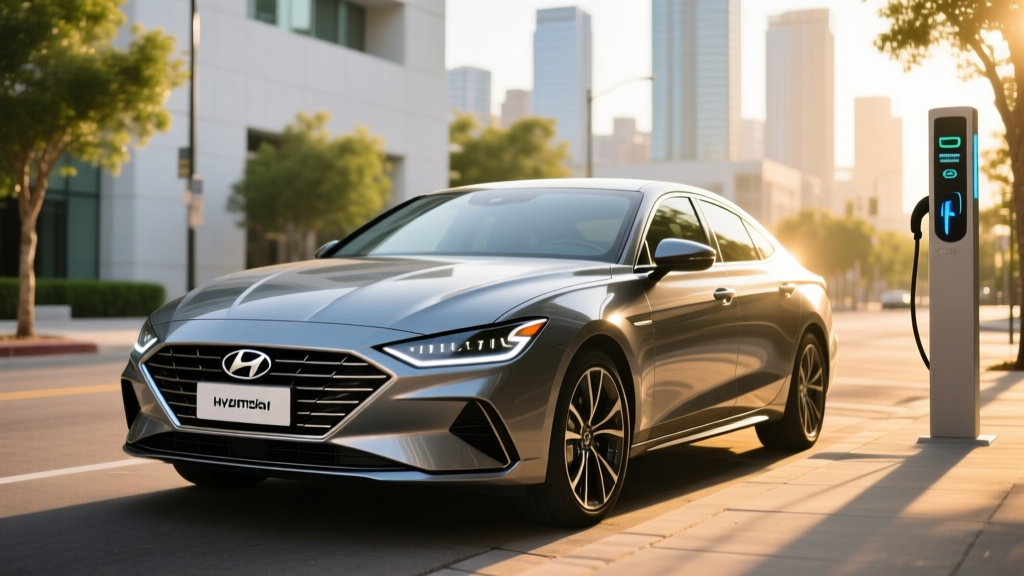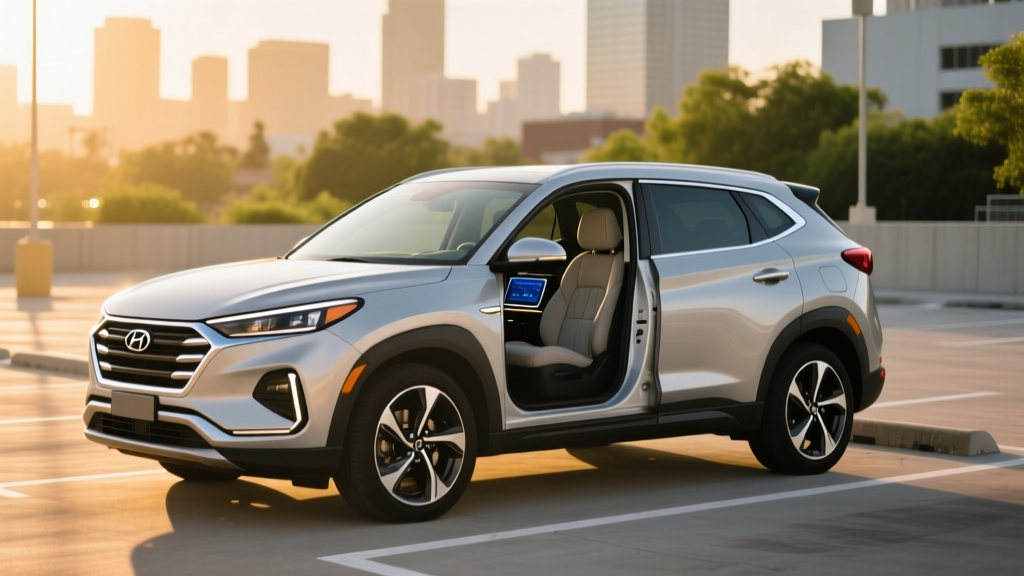
The 2025 Hyundai Tucson Hybrid Limited sits at the top of the compact hybrid-SUV segment, offering near-premium tech, a spacious cabin, and strong fuel economy without ever needing a plug. If you've been cross-shopping the RAV4 Hybrid, CR-V Hybrid, and Tucson Hybrid, this deep-dive on the Limited trim gives you the exact numbers you need to decide.
2025 Tucson Hybrid Limited: Quick Specs at a Glance
| Spec | 2025 Tucson Hybrid Limited |
|---|---|
| Powertrain | 1.6L turbo 4-cyl + electric motor (HEV) |
| Combined Horsepower | 231 hp / 271 lb-ft torque |
| Transmission | 6-speed automatic |
| Drivetrain | AWD (HTRAC standard on all trims) |
| EPA MPG (City / Hwy / Combined) | 37 / 36 / 38 (Blue trim); 35 / 35 / 35 (Limited) |
| Fuel Tank | 13.7 gallons |
| Total Driving Range | ~479–520 miles |
| 0–60 mph | ~7.1 seconds |
| Cargo Volume (rear seats up / down) | 38.7 / 80.3 cu ft |
| Base MSRP (Limited AWD) | $40,135 |
| Battery Warranty | 10 years / 100,000 miles |
| Federal EV Tax Credit | Not eligible (HEV, not PHEV/BEV) |
How Many MPG Does the 2025 Tucson Hybrid Actually Get?
The EPA rates the Tucson Hybrid at 38 MPG combined on the Blue trim (smaller wheels, lighter weight) and 35 MPG combined on SEL Convenience and Limited trims. Here's the full breakdown:
| Trim | City MPG | Highway MPG | Combined MPG |
|---|---|---|---|
| Blue | 37 | 36 | 38 |
| SEL Convenience | 35 | 35 | 35 |
| Limited | 35 | 35 | 35 |
Source: EPA Fuel Economy
Hybrid (HEV) vs. Plug-In Hybrid (PHEV): What's the Difference?
The Tucson is sold in three powertrain variants. Confusing them is a common buyer mistake. Here's what you need to know:
| Feature | Tucson Hybrid (HEV) | Tucson Plug-In Hybrid (PHEV) | Tucson (Gas Only) |
|---|---|---|---|
| Plug-in charging needed? | No — self-charging via engine + regen | Yes — 13.8 kWh battery, Level 1/2 charging | No |
| Electric-only range | None (motor assists engine) | ~33 miles (EPA) | None |
| Combined MPG / MPGe | 35–38 MPG | 80 MPGe (elec+gas); 35 MPG (gas only) | 26–28 MPG |
| Battery size | ~1.49 kWh (small buffer) | 13.8 kWh | N/A |
| Horsepower | 231 hp | 268 hp | 187 hp |
| Starting MSRP (top trim) | $40,135 (Limited) | $47,835 (Limited) | $38,535 (Limited) |
| Federal tax credit (§30D) | Not eligible | Up to $7,500 (subject to IRS sourcing rules) | Not eligible |
The key distinction: The Tucson Hybrid (HEV) never needs to be plugged in. Its small battery charges through regenerative braking and the gasoline engine. The Tucson PHEV has a much larger battery that you charge from a wall outlet for ~33 miles of electric-only driving, then the gas engine takes over seamlessly.
Powertrain & Driving Performance
The 2025 Tucson Hybrid pairs a 1.6-liter turbocharged 4-cylinder engine (178 hp) with a 47.7 kW electric motor (64 hp) integrated into the 6-speed automatic transmission. Combined output is 231 hp and 271 lb-ft of torque — noticeably more torque than the gas-only Tucson's 187 hp / 178 lb-ft.
HTRAC all-wheel drive is standard on every Tucson Hybrid trim. The AWD system uses a rear-mounted electric motor for the rear axle rather than a mechanical driveshaft, which means instant torque distribution and better traction response than a conventional AWD system.
The 0–60 mph time of approximately 7.1 seconds is competitive with the RAV4 Hybrid (~7.4s) and CR-V Hybrid (~7.8s). More importantly, the electric motor fills in the turbo lag, making the Tucson Hybrid feel responsive from a stoplight and during highway merges.
Pricing, Trims & Tax Credit Eligibility
The 2025 Tucson Hybrid is offered in three trims:
- Blue: $33,335 MSRP — best fuel economy (38 MPG combined), 18-inch wheels
- SEL Convenience: $36,685 MSRP — panoramic sunroof, leather seats, 19-inch wheels
- Limited: $40,135 MSRP — full LED headlights, ventilated front seats, heated rear seats, 10.25-inch digital cluster, Highway Driving Assist, Bose premium audio, 19-inch alloy wheels
All prices include the $1,395 destination charge.
No. The IRS §30D Clean Vehicle Credit applies only to plug-in electric vehicles (BEVs and PHEVs). The Tucson Hybrid (HEV) does not have a plug and is not eligible for the $7,500 federal tax credit. If you want the credit, look at the Tucson Plug-In Hybrid, which may qualify for up to $7,500 depending on battery-sourcing requirements, your income (≤$150K single / ≤$300K joint), and the $80,000 SUV MSRP cap. Always verify current eligibility at IRS.gov or with a tax professional, as sourcing rules have tightened significantly under current regulations.
Battery Warranty, Reliability & Replacement Cost
Hybrid battery longevity is the #1 concern we hear from buyers. Here's the reality for the Tucson Hybrid:
• 10 years / 100,000 miles (original owner, hybrid battery & components)
• 5 years / 60,000 miles (subsequent owners, if transferred)
• Covers capacity loss below a defined threshold (typically 70% state of health)
• Hybrid system components (inverter, motor, control unit) also covered under the 10/100 warranty
Is the Tucson Hybrid reliable? Hyundai's 1.6L turbo hybrid powertrain has been in production since the 2022 model year. The Tucson Hybrid uses a relatively small ~1.49 kWh lithium-ion polymer battery that operates within a narrow state-of-charge window (roughly 40–60%), which dramatically reduces stress and degradation compared to a full EV battery that cycles from 10–90%. Based on Hyundai's track record with the Ioniq Hybrid and Sonata Hybrid — platforms that routinely exceed 150,000 miles without battery issues — the Tucson Hybrid's battery should last the life of the vehicle under normal use.
Battery replacement cost: If the hybrid battery fails outside warranty, replacement typically runs $2,000–$4,000 including labor for a compact hybrid of this size. This is far less than an EV battery replacement ($8,000–$20,000+) because the HEV battery pack is small. Third-party refurbishers are also emerging as a lower-cost option as these vehicles age.
Who Should Choose the Tucson Hybrid Limited?
✅ Pros
- 35–38 MPG real-world without any lifestyle change
- 231 hp with strong low-end electric torque
- Standard AWD — rare at this price point
- Spacious 38.7 cu ft cargo area
- Limited trim rivals luxury SUVs in features
- 10-year/100k-mile hybrid warranty
- No charging infrastructure needed
❌ Cons
- Limited trim drops 3 MPG vs. Blue ($6,800 more)
- No federal tax credit (HEV, not PHEV)
- 6-speed auto less refined than e-CVT competitors
- Rear visibility slightly compromised by styling
- No DC fast charging (not applicable to HEV)
- Infotainment can lag compared to Kia/Telluride
Decision Framework: Tucson Hybrid vs. Tucson PHEV vs. Full EV
Choose the Tucson Hybrid (HEV) if: You don't have access to home charging (apartment, street parking), you want maximum simplicity, you drive a mix of city and highway, and you want a ~$40K SUV with premium features and 35+ MPG without any behavior change.
Choose the Tucson Plug-In Hybrid (PHEV) if: You have a garage or driveway with a 120V/240V outlet, your daily commute is under 30 miles (covering most days on electric only), you want the potential $7,500 federal tax credit, and you still need gas-engine range for road trips without charging-planner anxiety.
Choose a full EV (like the Ioniq 5) if: You have reliable Level 2 home charging, your daily driving is under 250 miles, you want the lowest per-mile fuel cost (~$0.04/mile vs. ~$0.11/mile for the hybrid), and you want to eliminate oil changes and transmission maintenance entirely.
Tucson Hybrid Limited vs. Key Rivals
| Spec | 2025 Tucson Hybrid Limited | 2025 RAV4 Hybrid Limited | 2025 CR-V Hybrid Sport-L |
|---|---|---|---|
| Combined MPG | 35 | 39 | 37 |
| Horsepower | 231 hp | 219 hp | 204 hp |
| AWD | Standard | Standard | Standard |
| Cargo (rear up) | 38.7 cu ft | 37.5 cu ft | 36.3 cu ft |
| 0–60 mph | ~7.1s | ~7.4s | ~7.8s |
| Top Trim MSRP | $40,135 | $41,845 | $40,700 |
| Hybrid Warranty | 10 yr / 100k mi | 10 yr / 150k mi | 8 yr / 100k mi |
The Tucson Hybrid Limited offers the most horsepower and the largest cargo area of the three. The RAV4 Hybrid wins on raw MPG (39 combined on the Limited, thanks to Toyota's e-CVT efficiency). The CR-V Hybrid sits in the middle. If fuel economy is your absolute top priority, the RAV4 Hybrid edges ahead. If performance and cargo space matter more, the Tucson Hybrid Limited is the stronger pick.
Frequently Asked Questions
How many MPG does the 2025 Tucson Hybrid Limited get in real-world driving?
The EPA rates it at 35 MPG combined (35 city / 35 highway). In real-world city driving with frequent stops, owners commonly report 36–40 MPG thanks to aggressive regenerative braking. Highway-only driving at 75+ mph typically yields 31–34 MPG. Cold weather (below 30°F) reduces economy by 5–10%.
Does the Tucson Hybrid need to be plugged in?
No. The Tucson Hybrid (HEV) is a conventional self-charging hybrid. The battery recharges through regenerative braking and the gasoline engine. You simply fill up at a gas station like any other car. Only the Tucson Plug-In Hybrid (PHEV) variant benefits from being plugged in.
Does the 2025 Tucson Hybrid qualify for a federal tax credit?
No. The federal §30D Clean Vehicle Credit requires a plug-in electric vehicle with a battery capacity of at least 7 kWh. The Tucson Hybrid's ~1.49 kWh battery does not qualify. If you want the credit, consider the Tucson PHEV (13.8 kWh battery), which may qualify for up to $7,500 depending on current IRS sourcing and income requirements.
How long will the Tucson Hybrid battery last?
Hyundai covers the hybrid battery for 10 years / 100,000 miles. Because HEV batteries operate in a narrow charge window (never fully depleted or fully charged), degradation is minimal. Comparable Hyundai/Kia hybrid systems routinely exceed 150,000 miles without battery replacement. If replacement is ever needed outside warranty, expect $2,000–$4,000.
Hybrid vs. PHEV vs. EV — which Tucson should I buy?
If you can't charge at home, the Hybrid (HEV) is the right choice — zero behavior change, 35+ MPG. If you have home charging and a short commute, the PHEV gives you ~33 electric-only miles for daily driving plus gas-engine range for road trips, with potential tax credit savings. If you have reliable home charging and want the lowest running cost, a full EV like the Ioniq 5 eliminates gas entirely but requires charging planning for longer trips.
Is the Tucson Hybrid Limited worth the premium over the Blue trim?
The Limited costs $6,800 more than the Blue and sacrifices 3 MPG (35 vs. 38 combined). In exchange, you get ventilated seats, heated rear seats, Bose audio, Highway Driving Assist, a digital instrument cluster, and premium interior materials. If you plan to keep the SUV 5+ years and value comfort features, the Limited justifies the cost. If fuel economy and value are paramount, the Blue trim is the efficiency champion.