Quick Verdict: The PHEV That Refuses to Compromise
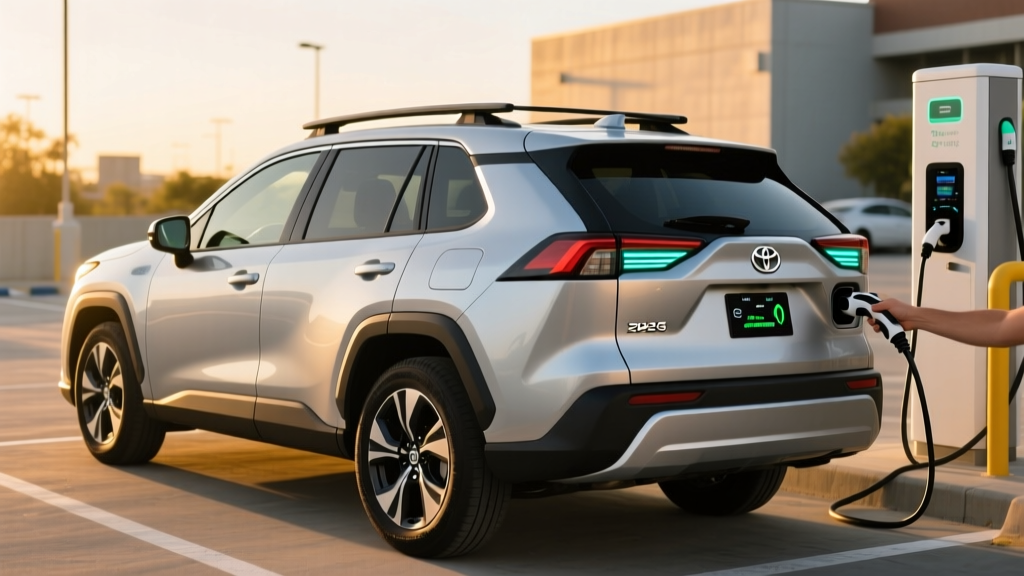
The 2025 Toyota RAV4 PHEV — still officially branded as the RAV4 Prime — remains one of the most compelling plug-in hybrids on the market. It pairs a 42-mile EPA electric-only range with 302 combined horsepower, standard all-wheel drive, and the kind of bulletproof reliability reputation that Toyota has spent decades building. For buyers who want daily electric commuting without ever worrying about finding a charger on a road trip, the RAV4 Prime occupies a sweet spot that few competitors can match.
But at a starting MSRP around $43,690 for the SE trim and climbing past $47,000 for the XSE, the question is whether the PHEV premium over the standard RAV4 Hybrid justifies itself in fuel savings, performance, and daily usability. This guide breaks down every number that matters.
| Spec | Value |
|---|---|
| EPA Electric-Only Range | 42 miles |
| EPA Combined MPGe (Electric Mode) | 94 MPGe |
| EPA Combined MPG (Gas-Only / Hybrid Mode) | 38 MPG |
| Total Combined Range (Electric + Gas) | ~440 miles |
| Battery Capacity | 18.1 kWh (usable ~14.9 kWh) |
| Battery Chemistry | Lithium-ion (NMC) |
| Combined Horsepower | 302 hp |
| 0–60 mph | 5.7 seconds |
| Drivetrain | AWD (standard, electronic rear motor) |
| Level 2 Charge Time (240V, 3.3 kW) | ~5.5 hours (SE) |
| Level 2 Charge Time (240V, 6.6 kW) | ~2.5 hours (XSE) |
| DC Fast Charging | Not available |
| Base MSRP (SE) | $43,690 |
| Base MSRP (XSE) | $47,190 |
| Battery Warranty | 10 years / 150,000 miles |
HEV vs. PHEV: What's the Difference in the RAV4 Lineup?
Toyota sells two electrified RAV4 variants, and confusing them is easy if you're not paying attention to the badges.
| Attribute | RAV4 Hybrid (HEV) | RAV4 Prime (PHEV) |
|---|---|---|
| Plug-In Charging | No — charges via regenerative braking and engine | Yes — plug in to access 42 mi electric range |
| Battery Size | 1.6 kWh (small buffer) | 18.1 kWh |
| Electric-Only Range | ~1 mile at low speed | 42 miles (EPA) |
| Combined Horsepower | 219 hp | 302 hp |
| 0–60 mph | 7.4 seconds | 5.7 seconds |
| EPA Combined MPG | 39 MPG | 38 MPG (hybrid mode) / 94 MPGe (electric) |
| Starting MSRP | ~$33,425 | ~$43,690 |
| Federal Tax Credit | None | Not eligible (§30D sourcing rules) |
The conventional hybrid (HEV) never plugs in. It uses a small battery and regenerative braking to assist the gas engine, boosting fuel economy without any change in your daily routine. The plug-in hybrid (PHEV) carries a much larger battery that you charge from a wall outlet or Level 2 charger, giving you genuine electric-only driving for most daily commutes before the gasoline engine seamlessly takes over.
If you can't charge at home or at work, the RAV4 Hybrid is the smarter buy — you'll still get excellent MPG without the PHEV price premium. If you have reliable Level 2 access, the Prime's 42-mile electric range can eliminate gas consumption for the vast majority of weekday driving.
Fuel Economy and Electric Range: The Numbers That Matter
| Mode | City | Highway | Combined |
|---|---|---|---|
| Electric Mode (MPGe) | 105 MPGe | 84 MPGe | 94 MPGe |
| Hybrid/Gas Mode (MPG) | 40 MPG | 36 MPG | 38 MPG |
In electric mode, the RAV4 Prime returns an EPA-estimated 94 MPGe combined. Once the battery depletes and the 2.5-liter four-cylinder engine kicks in, it operates as a conventional hybrid delivering 38 MPG combined — only 1 MPG less than the standard RAV4 Hybrid despite carrying roughly 300 extra pounds of battery.
The EPA's 42-mile electric range assumes moderate temperatures and mixed driving. In our experience and consistent owner reports, expect roughly 35–40 miles of electric range in warm weather on suburban roads. Highway driving at 70+ mph reduces that to approximately 28–32 miles. In freezing winter conditions (below 32°F), plan for 25–30 miles of electric range due to cabin heating demands and reduced battery efficiency. The gasoline hybrid mode holds up well — many owners report 40+ MPG in city driving, exceeding the EPA city estimate thanks to Toyota's series-parallel hybrid system favoring electric motor assist at low speeds.
According to fueleconomy.gov, the RAV4 Prime's combined range (electric plus a full 14.5-gallon tank) totals approximately 440 miles — enough to drive from Los Angeles to San Francisco and back with fuel to spare.
Charging: Level 2 Only, and That's Okay
The RAV4 Prime does not support DC fast charging — and for a PHEV, that's actually the correct engineering choice. Here's why: with only ~14.9 kWh of usable battery capacity, a DC fast charge session would take roughly the same amount of time as Level 2 charging while adding cost and weight to the vehicle.
| Charging Level | Power (kW) | 0–100% Time | Notes |
|---|---|---|---|
| Level 1 (120V household) | 1.4 kW | ~12 hours | Emergency/trickle; not practical for daily use |
| Level 2 (240V, SE trim) | 3.3 kW | ~5.5 hours | Standard onboard charger |
| Level 2 (240V, XSE trim) | 6.6 kW | ~2.5 hours | Upgraded onboard charger; worth it for midday top-ups |
The XSE trim's 6.6 kW onboard charger is a meaningful upgrade. If you plug in when you get home from work at 6 PM, the battery is fully replenished by 8:30 PM — well before your morning commute. The SE trim's 3.3 kW charger requires an overnight session, which still works fine for most owners who charge while sleeping.
A dedicated 240V Level 2 home circuit (typically a NEMA 14-50 outlet or hardwired wallbox) is strongly recommended. Installation costs range from $500–$2,000 depending on panel proximity and local permitting. Consult a licensed electrician for a site-specific quote.
Powertrain and Performance: 302 HP in a Compact SUV
The RAV4 Prime's powertrain is one of the most potent in the compact SUV segment. Toyota pairs a 2.5-liter Atkinson-cycle four-cylinder engine (177 hp on its own) with a front electric motor (134 kW / 180 hp) and a rear electric motor (40 kW / 54 hp) for a combined system output of 302 horsepower.
The result is a 0–60 mph time of 5.7 seconds — quicker than a Volkswagen GTI and dramatically faster than the standard RAV4 Hybrid's 7.4-second run. All-wheel drive is standard on every Prime trim, using the rear electric motor to provide torque to the rear wheels without a mechanical driveshaft.
In EV mode, the RAV4 Prime can reach up to 84 mph on electric power alone, which is more than sufficient for highway merging and suburban driving. The transition from electric to hybrid mode is nearly imperceptible — Toyota's Hybrid Synergy Drive system is among the smoothest in the industry.
Pricing, Trims, and Tax Credit Eligibility
| Trim | MSRP | Key Features |
|---|---|---|
| SE | $43,690 | 3.3 kW charger, 18" wheels, heated front seats, 8" touchscreen |
| XSE | $47,190 | 6.6 kW charger, 19" wheels, panoramic moonroof option, SofTex seats |
| XSE Premium (available package) | $50,000+ | JBL audio, 360° camera, heated rear seats, head-up display |
As of 2025, the RAV4 Prime does not qualify for the $7,500 federal EV tax credit under IRS §30D. The reason: the vehicle's battery components and critical minerals do not meet the domestic sourcing thresholds mandated by the Inflation Reduction Act. This is a significant consideration — the standard RAV4 Hybrid also does not qualify (as HEVs are excluded from §30D entirely).
However, some states offer their own incentives for PHEVs. Check your state's energy office or the IRS clean vehicle credits page for current eligibility details. Manufacturer incentives and dealer discounts may also offset the lack of a federal credit.
Reliability, Battery Warranty, and Long-Term Costs
Toyota covers the RAV4 Prime's high-voltage traction battery for 10 years or 150,000 miles (whichever comes first) in all 50 states. This applies to capacity loss below a defined threshold and any manufacturing defects. The hybrid system components — including the inverters, electric motors, and control units — are covered under the same terms.
Toyota's hybrid battery track record is among the best in the industry. The Prius, which has used a similar hybrid architecture since 2001, has demonstrated battery longevity well beyond 200,000 miles in real-world use. The RAV4 Prime's larger lithium-ion pack benefits from Toyota's conservative battery management strategy — the system maintains a generous buffer at both the top and bottom of the state-of-charge range to minimize degradation.
Battery replacement cost: If the traction battery does eventually need replacement outside of warranty, expect a cost in the range of $4,000–$7,000 including parts and labor at a Toyota dealership. Third-party hybrid battery refurbishers may offer rebuilt packs for $2,500–$4,000. However, given Toyota's warranty coverage and historical longevity data, most original owners will never face this expense.
The conventional 12V auxiliary battery is a separate item and follows standard replacement intervals (typically every 4–6 years, ~$200–$350).
Who Should Buy the RAV4 PHEV — and Who Shouldn't?
Pros
- 42-mile electric range covers most daily commutes gas-free
- 302 hp and 5.7-second 0–60 make it genuinely quick
- Standard AWD with no mechanical driveshaft
- 38 MPG hybrid mode once battery depletes — no range anxiety
- 10-year/150,000-mile hybrid battery warranty
- Strong resale value and Toyota reliability reputation
Cons
- No DC fast charging (acceptable for PHEV but limits flexibility)
- $10,000+ premium over the standard RAV4 Hybrid
- Does not qualify for $7,500 federal tax credit
- Cargo space slightly reduced vs. non-Prime RAV4 (battery packaging)
- SE trim's 3.3 kW charger is slow for midday top-ups
Choose the RAV4 Prime PHEV if:
- You have Level 2 charging at home or work
- Your daily round-trip commute is under 40 miles
- You take regular road trips where a pure EV would cause range anxiety
- You want the performance of 302 hp with the efficiency of a hybrid
- You plan to own the vehicle 8+ years and value Toyota's warranty
Choose the RAV4 Hybrid (HEV) instead if:
- You cannot charge at home or work
- Your budget is closer to $35,000
- You don't need 302 hp and are happy with 219 hp / 7.4s 0–60
Choose a full EV (e.g., Tesla Model Y, Hyundai Ioniq 5) instead if:
- You want zero tailpipe emissions and lower per-mile energy costs
- You have reliable home and workplace charging
- Your road trips are infrequent or you're comfortable with DC fast-charging stops
- You want to qualify for the $7,500 federal tax credit (model-dependent)
Frequently Asked Questions
How many MPG does the 2025 RAV4 PHEV get?
In hybrid (gasoline) mode after the battery is depleted, the RAV4 Prime returns an EPA-estimated 40 city / 36 highway / 38 combined MPG. In electric mode, it achieves 94 MPGe combined. Real-world city driving in hybrid mode often exceeds the EPA estimate, with many owners reporting 41–44 MPG in stop-and-go traffic where the hybrid system excels.
How far can the RAV4 Prime go on electric power alone?
The EPA rates the RAV4 Prime at 42 miles of electric-only range. In warm-weather suburban driving, expect 35–40 real-world miles. Highway speeds and cold weather reduce this to 25–32 miles. The vehicle can reach up to 84 mph in EV mode before the engine engages.
Does the 2025 RAV4 Prime qualify for the federal tax credit?
No. As of 2025, the RAV4 Prime does not meet the battery component and critical mineral sourcing requirements under IRS §30D to qualify for the $7,500 federal clean vehicle credit. Some state-level incentives may still apply — check your state's energy office. Tax rules change frequently; consult a tax professional for your specific situation.
Is the RAV4 Prime reliable? What about battery replacement costs?
Toyota's hybrid powertrains have a two-decade track record of exceptional reliability. The RAV4 Prime's battery is warranted for 10 years / 150,000 miles. Out-of-warranty replacement costs are estimated at $4,000–$7,000 at a dealership, but historical data from Toyota's hybrid fleet suggests most batteries last well beyond 200,000 miles. The NHTSA lists current safety ratings and recall information for the model.
Can I charge the RAV4 Prime on a regular household outlet?
Yes, but slowly. A standard 120V Level 1 outlet provides roughly 1.4 kW, requiring about 12 hours for a full charge. This works if you drive less than 20 miles daily and plug in every night. For the full 42-mile range replenished overnight, a 240V Level 2 installation is strongly recommended.
How does the RAV4 Prime compare to a full EV like the Tesla Model Y?
The Model Y offers 300+ miles of range, DC fast charging at up to 250 kW, and lower per-mile energy costs — but at a higher starting price and with no gasoline backup. The RAV4 Prime sacrifices all-electric range for the security of a gas engine, making it better suited for buyers in areas with sparse charging infrastructure or those who regularly drive long distances in remote areas.
What's the difference between the RAV4 Prime SE and XSE trims?
The key mechanical difference is the onboard charger: the SE uses a 3.3 kW unit (~5.5-hour charge), while the XSE gets a 6.6 kW charger (~2.5 hours). The XSE also adds 19-inch wheels, sport-tuned suspension, SofTex upholstery, and access to the panoramic moonroof option. If you plan to charge midday between commutes, the XSE's faster charger is worth the upgrade.