The Prius That Finally Earned Its Enthusiasm
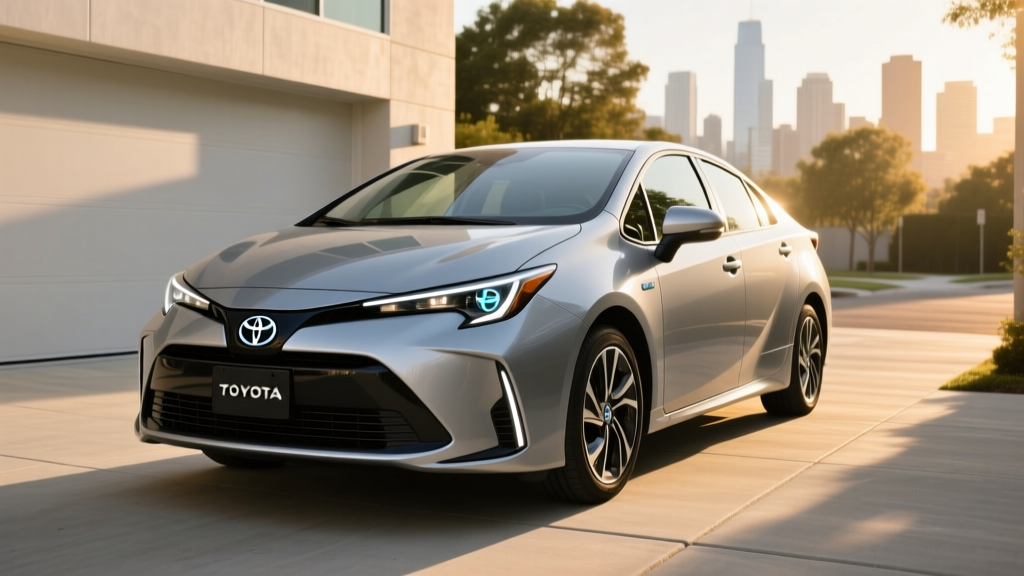
For two decades, the Toyota Prius was the car you bought to save money, not the car you wanted to drive. The current-generation redesign changed that equation entirely. The 2025 Toyota Prius hybrid pairs striking design with a 196-horsepower powertrain and an EPA-estimated 57 MPG combined — numbers that would have seemed contradictory a generation ago. If you're researching the 2025 Prius, this guide gives you every spec, real-world efficiency figure, and ownership cost you need to make a decision.
Toyota offers the Prius in two flavors: the conventional hybrid (HEV) covered primarily here, and the Prius Prime plug-in hybrid (PHEV). We'll distinguish between them throughout, because the choice between HEV and PHEV fundamentally changes how you fuel, how far you drive on electricity, and whether you qualify for federal incentives.
HEV vs PHEV: Which Prius Are We Talking About?
Before diving into specs, let's eliminate the most common confusion in hybrid shopping. The 2025 Toyota Prius (HEV) is a conventional self-charging hybrid. You never plug it in. It recovers energy through regenerative braking and its gasoline engine to charge a small 0.65 kWh battery. You fuel it exclusively at a gas station.
The 2025 Toyota Prius Prime (PHEV) has a larger 13.6 kWh battery that you plug in to charge. It can drive up to 44 miles on electricity alone before the gasoline engine engages, functioning as a hybrid afterward. If you have a short commute and home charging, the Prime can eliminate most gasoline use on weekdays.
| Attribute | Prius HEV | Prius Prime (PHEV) |
|---|---|---|
| Plug-in required? | No — never plug in | Yes — plug in for EV range |
| Battery capacity | 0.65 kWh (Li-ion) | 13.6 kWh (Li-ion) |
| Electric-only range | N/A (EV assist only) | 44 miles (EPA) |
| Total range | ~580 miles | ~44 EV + ~390 hybrid = ~434 mi |
| EPA combined MPG/MPGe | 57 MPG (LE FWD) | 52 MPG / 127 MPGe |
| Combined horsepower | 196 HP (AWD) | 220 HP |
| 0–60 mph | 7.0 sec (AWD-e) | 6.6 sec |
| Base MSRP | $28,350 | $33,450 |
| Federal tax credit (§30D) | Not eligible | Up to $3,750* |
*Prius Prime §30D credit varies by battery sourcing and buyer income. See IRS qualified models list and consult a tax professional. Credit may transfer at point of sale.
Fuel Economy: How Many MPG Does the 2025 Prius Get?
The headline number for the 2025 Toyota Prius hybrid is 57 MPG combined on the LE trim with front-wheel drive. That's among the highest EPA ratings of any non-plug-in vehicle sold in the United States. Step up to the XLE or Limited trims with larger 19-inch wheels, and the rating drops to 52 MPG combined — still exceptional, but worth noting if you're optimizing purely for efficiency.
| Trim | Drivetrain | City MPG | Highway MPG | Combined MPG |
|---|---|---|---|---|
| LE | FWD | 57 | 56 | 57 |
| LE | AWD-e | 53 | 54 | 54 |
| XLE / Limited | FWD | 52 | 52 | 52 |
| XLE / Limited | AWD-e | 49 | 50 | 49 |
Source: fueleconomy.gov
Real-World MPG vs. EPA Estimates
Hybrids tend to overperform their EPA ratings in city driving, where regenerative braking and electric-motor assist do the heaviest work. In real-world mixed commuting, many Prius owners report 55–62 MPG in city-dominant driving. Highway-only trips at 75+ mph typically yield 48–52 MPG for the LE trim, since aerodynamic drag dominates and the engine runs more continuously.
Cold weather reduces fuel economy by roughly 10–15% in any vehicle; expect winter readings in the low 50s for the LE. Short trips (under 3 miles) before the engine reaches operating temperature will also lower observed MPG. Over a full tank, however, the Prius LE consistently delivers 54–58 MPG for most drivers in temperate climates — closely matching or exceeding its EPA sticker.
Powertrain: 196 HP Changed the Prius Story
The 2025 Prius uses Toyota's fifth-generation hybrid system, pairing a 2.0-liter four-cylinder Dynamic Force engine with two motor-generators and a lithium-ion battery pack. Combined system output is 196 horsepower on AWD-e trims (194 HP on FWD), delivered through an electronically controlled continuously variable transmission (eCVT).
| Specification | Detail |
|---|---|
| Engine | 2.0L 4-cyl Dynamic Force (150 HP, 139 lb-ft) |
| Electric motor (front) | 83 kW (111 HP) |
| Electric motor (rear, AWD-e) | 30 kW (40 HP) |
| Combined system output | 196 HP (AWD-e) / 194 HP (FWD) |
| Transmission | eCVT |
| 0–60 mph | 7.0 sec (AWD-e) / 7.2 sec (FWD) |
| Hybrid battery | 0.65 kWh lithium-ion |
| Fuel tank | 11.3 gallons |
| Estimated total range | ~580–640 miles |
| Towing capacity | Not rated for towing |
The AWD-e system uses an independent rear electric motor that engages automatically during acceleration and low-traction conditions, providing all-weather confidence without the mechanical drag and fuel-economy penalty of a traditional AWD system. The rear motor operates up to approximately 43 mph for traction assist and re-engages during wheelslip at higher speeds.
Prius Prime PHEV: Electric Range and Charging
If you're cross-shopping the Prius Prime, the key question is whether its 44-mile EPA electric-only range covers your daily driving. For the median U.S. commute of roughly 16 miles each way, the answer is yes — you could commute all week without the gasoline engine engaging, then take a road trip on the weekend with the full hybrid system backing you up.
The Prime's 13.6 kWh battery charges as follows:
- Level 1 (120V household outlet): ~11 hours from empty — adequate for overnight charging if you drive less than 44 miles daily.
- Level 2 (240V, 3.2 kW onboard charger): ~4 hours from empty — practical for home or workplace Level 2 stations.
- DC fast charging: Not available. The Prius Prime does not support DC fast charging, which limits its practicality for frequent long-distance travelers who want to maximize electric miles on road trips.
Once the battery depletes, the Prime operates as a conventional hybrid, achieving an EPA 52 MPG combined in hybrid mode — nearly matching the standard Prius HEV. Total combined range (EV + hybrid) is approximately 434 miles.
Pricing, Trims, and Tax Credit Eligibility
The 2025 Toyota Prius HEV starts at $28,350 (including destination) for the LE FWD trim and tops out around $36,765 for the Limited AWD-e with options. The Prius Prime begins at $33,450 for the SE trim and reaches approximately $40,670 for the XSE Premium.
| Model | Trim | Drivetrain | MSRP |
|---|---|---|---|
| Prius HEV | LE | FWD | $28,350 |
| Prius HEV | LE | AWD-e | $29,750 |
| Prius HEV | XLE | FWD | $31,695 |
| Prius HEV | Limited | AWD-e | $36,265 |
| Prius Prime | SE | FWD | $33,450 |
| Prius Prime | XSE | FWD | $36,600 |
| Prius Prime | XSE Premium | FWD | $40,670 |
Does the 2025 Prius Qualify for a Federal Tax Credit?
The standard Prius HEV does not qualify for the federal §30D Clean Vehicle Credit. That credit applies only to plug-in electric vehicles and qualifying PHEVs with sufficient battery capacity.
The Prius Prime PHEV may qualify for up to $3,750 under current IRS rules, depending on critical-mineral and battery-component sourcing requirements that change periodically. Eligibility also requires the buyer to meet income thresholds ($150,000 single / $300,000 joint modified AGI) and the vehicle's MSRP must not exceed $55,000 (sedan cap). Always verify current eligibility on the IRS qualified manufacturers and models page and consult a tax professional before relying on credit assumptions.
Hybrid Battery Warranty — What's Covered
Toyota covers the 2025 Prius hybrid battery for 10 years or 150,000 miles (whichever comes first) in all 50 states, an upgrade from the prior 8-year/100,000-mile standard. This applies to both the HEV and Prime traction batteries. Toyota's hybrid battery warranty covers capacity loss below a defined threshold and defects. The basic new-vehicle warranty is 3 years/36,000 miles, and the powertrain warranty is 5 years/60,000 miles.
Reliability and Battery Replacement Cost
Toyota's hybrid system has one of the longest reliability track records in the industry — the Prius has been in continuous production since 1997 globally and 2000 in the U.S. Independent reliability surveys from Consumer Reports and J.D. Power consistently rank Toyota hybrids at or near the top of their segments.
The lithium-ion hybrid battery in the HEV is small (0.65 kWh) and operates within a conservative state-of-charge window managed by Toyota's battery management system, which avoids deep discharge and full-charge states to maximize longevity. Many first- and second-generation Prius vehicles have exceeded 200,000 miles on their original hybrid batteries.
What Does a Prius Hybrid Battery Replacement Cost?
If a replacement is needed out of warranty, a new OEM hybrid battery for the current-generation Prius HEV typically costs between $2,500 and $4,000 including installation at a dealership. The Prius Prime's larger 13.6 kWh battery is significantly more expensive — expect $6,000 to $9,000+ for replacement. Third-party refurbishing shops offer reconditioned hybrid batteries for approximately $1,500–$2,500 (HEV), though quality varies. Given the 10-year/150,000-mile warranty, most original owners will never face this cost.
Who Should Choose the 2025 Prius Hybrid?
Reasons to Choose the Prius HEV
- You want maximum MPG with zero plug-in hassle
- Your budget is under $35,000 and you want low total cost of ownership
- You lack access to home or workplace charging (apartment, street parking)
- You want proven Toyota reliability with a 10-year hybrid battery warranty
- You drive a mix of city and highway and want 580+ mile range per tank
Reasons to Look Elsewhere
- You want a full EV experience with zero gasoline use — consider a BEV
- You need cargo space for large families — the Prius hatch is 23.8 cu ft behind rear seats
- You want DC fast charging on a PHEV — the Prime lacks this capability
- You prioritize ride comfort over handling — the Prius is tuned firm for its class
- You want a federal tax credit on an HEV — only the Prime qualifies (conditionally)
Hybrid vs PHEV vs EV — Which Fits You?
Choose the Prius HEV if: You want the simplest, most affordable path to 50+ MPG. No charging infrastructure needed, no behavior change required. Ideal for apartment dwellers, high-mileage commuters, and buyers who want to minimize upfront cost.
Choose the Prius Prime PHEV if: You have home Level 2 charging, your weekday driving is under 40 miles round-trip, and you want to drive primarily on electricity while retaining gas-engine flexibility for road trips. The potential $3,750 federal credit narrows the price gap with the HEV.
Choose a full BEV (e.g., Tesla Model 3, Hyundai Ioniq 6) if: You have reliable home charging, your daily driving is under 250 miles, you want zero tailpipe emissions and minimal maintenance, and you're ready for the EV ownership transition. A BEV eliminates oil changes, spark plugs, and most brake wear through regenerative braking.
Frequently Asked Questions
How many MPG does the 2025 Toyota Prius hybrid get?
The 2025 Prius LE FWD achieves an EPA-estimated 57 city / 56 highway / 57 combined MPG. The AWD-e LE drops to 54 combined. XLE and Limited trims with 19-inch wheels achieve 52 combined (FWD) or 49 combined (AWD-e). Real-world results typically match or slightly exceed EPA estimates in city-dominant driving.
How far can the Prius Prime go on electric only?
The 2025 Prius Prime achieves an EPA-estimated 44 miles of electric-only range. After depletion, it operates as a conventional hybrid at 52 MPG combined. Total combined range (electric + hybrid) is approximately 434 miles.
Do I need to plug in the standard Prius hybrid?
No. The standard 2025 Prius HEV never requires plugging in. Its small hybrid battery charges exclusively through regenerative braking and the gasoline engine. Only the Prius Prime PHEV requires plug-in charging to access its electric-only range.
Is the 2025 Prius hybrid reliable?
Toyota's hybrid powertrain has over 25 years of proven reliability. The hybrid battery is covered by a 10-year/150,000-mile warranty across all 50 states. Real-world data shows many Prius hybrid batteries lasting 200,000+ miles. Toyota consistently ranks at the top of Consumer Reports and J.D. Power reliability surveys.
What does it cost to replace a Prius hybrid battery?
An OEM replacement hybrid battery for the Prius HEV costs approximately $2,500–$4,000 installed at a dealer. The Prius Prime's larger battery costs $6,000–$9,000+. Third-party reconditioned options exist for $1,500–$2,500 (HEV). Given the 10-year/150,000-mile warranty, most first owners will not face this expense.
Does the 2025 Prius qualify for a federal tax credit?
The standard Prius HEV does not qualify for any federal tax credit. The Prius Prime PHEV may qualify for up to $3,750 under IRS §30D rules, subject to battery sourcing requirements, buyer income caps ($150K single / $300K joint), and the $55,000 sedan MSRP cap. Verify current eligibility at IRS.gov before purchasing.
Can the Prius Prime DC fast charge?
No. The 2025 Prius Prime supports Level 1 (120V, ~11 hours) and Level 2 (240V, ~4 hours) charging only. It does not have a DC fast-charge port. This means long road trips rely entirely on the hybrid gasoline engine once the battery is depleted — you cannot quickly top up the battery at a public DC fast-charging station.
Sources: EPA fueleconomy.gov, Toyota Motor Corporation official specifications, IRS §30D Clean Vehicle Credit. Specifications reflect 2025 model year as published. Verify current pricing and credit eligibility before purchase.