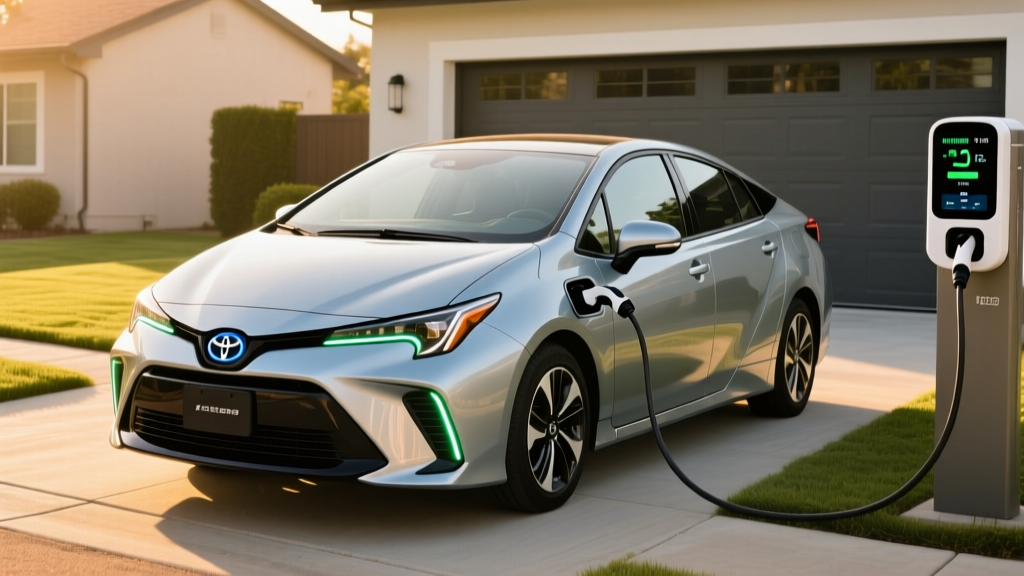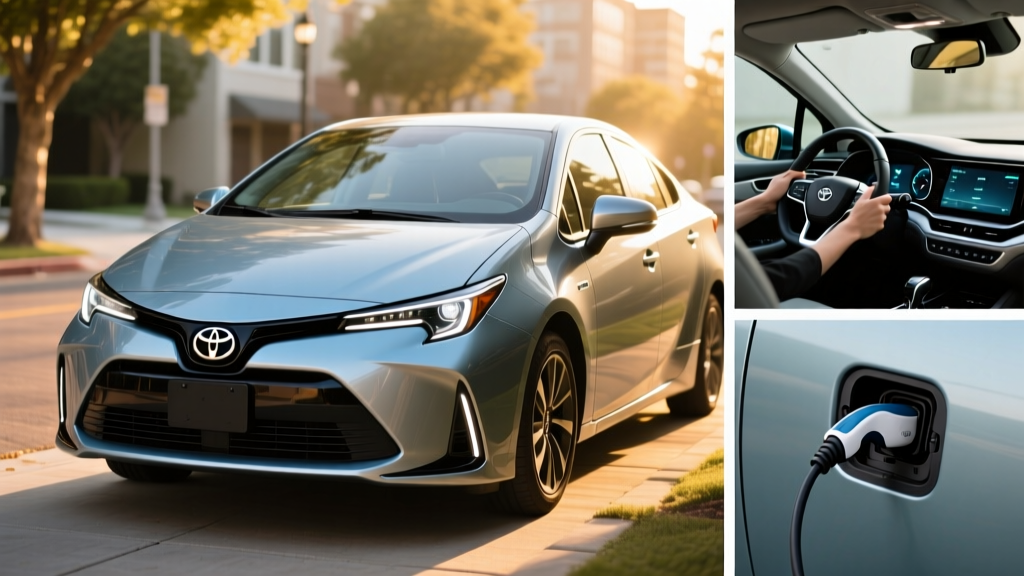
The 2025 Toyota Prius hybrid isn't the same dowdy commuter car your parents drove. Since its dramatic redesign for the 2023 model year, the Prius has shed its reputation for sluggish acceleration and bland styling while keeping the fuel-sipping DNA that made it famous. For 2025, Toyota carries over the fifth-generation formula: a 2.0-liter hybrid powertrain producing 196 horsepower, EPA-estimated fuel economy up to 57 MPG combined, and a starting price that undercuts most compact crossovers. If you're researching the 2025 Toyota Prius hybrid as your next daily driver, this guide covers every number that matters — from real-world MPG to battery replacement costs.
2025 Toyota Prius Hybrid at a Glance: Key Specifications
| Specification | LE Trim | XLE / Limited Trim |
|---|---|---|
| Powertrain | 2.0L 4-cyl + 2 electric motors (5th-gen Toyota Hybrid System) | |
| Combined Horsepower | 196 HP | |
| Drivetrain | FWD standard; AWD-e available (XLE/Limited) | |
| EPA City MPG | 57 | 52 (FWD) / 49 (AWD-e) |
| EPA Highway MPG | 56 | 52 (FWD) / 50 (AWD-e) |
| EPA Combined MPG | 57 | 52 (FWD) / 50 (AWD-e) |
| 0–60 MPH | ~7.0 sec (FWD) | |
| Hybrid Battery | Lithium-ion, ~0.9 kWh (self-charging HEV) | |
| Fuel Tank | 11.4 gallons | |
| Total Driving Range | ~650 mi | ~593 mi (FWD) |
| Starting MSRP | $28,350 | $32,675 (XLE) / $36,365 (Limited) |
| Federal Tax Credit | Not eligible (§30D requires plug-in capability) | |
| Hybrid Battery Warranty | 10 years / 150,000 miles | |
Sources: EPA fueleconomy.gov, Toyota Prius official page.
HEV vs. PHEV: Which Prius Is Right for You?
Toyota sells two distinct versions of the Prius, and confusing them is one of the most common buyer mistakes we see. Here's the breakdown:
2025 Toyota Prius (HEV — Conventional Hybrid)
- How it works: A small lithium-ion battery (~0.9 kWh) is charged exclusively by the gasoline engine and regenerative braking. You never plug it in.
- Electric-only driving: The EV mode allows very short, low-speed electric-only bursts (roughly 1 mile at under 25 MPH), but the car is designed to blend gas and electric seamlessly.
- Fueling: Gas station only. Fill the 11.4-gallon tank and go.
- Best for: Drivers without access to home or workplace charging who still want maximum fuel efficiency.
2025 Toyota Prius Prime (PHEV — Plug-In Hybrid)
- How it works: A larger 13.6 kWh lithium-ion battery can be charged by plugging into a wall outlet or Level 2 charger, giving genuine electric-only commuting range.
- Electric-only range: EPA-estimated 44 miles (SE trim) or 40 miles (XSE trim) on battery alone.
- Combined range: 44 miles electric + ~460 miles on gas = roughly 500+ total miles.
- MPG after battery depletes: EPA-estimated 48–52 MPG combined as a hybrid.
- Charging time: ~4 hours on a standard 120V outlet (Level 1); ~1 hour on a 240V Level 2 charger. No DC fast charging capability.
- Best for: Drivers with a home garage or workplace charger who commute under 44 miles round-trip and want to drive mostly on electricity.
- Tax credit: The Prius Prime may qualify for the IRS §30D Clean Vehicle Credit (up to $7,500), subject to MSRP caps, buyer income limits, and battery component/critical mineral sourcing requirements. Verify current-year eligibility on irs.gov or with a tax professional before purchasing.
If you're specifically searching for the 2025 Toyota Prius hybrid (the standard HEV), the rest of this review focuses on that model. If plug-in capability matters to you, the Prius Prime is the variant to research — and the potential $7,500 federal credit can significantly narrow the price gap between the two.
Real-World Fuel Economy: Does the Prius Match Its EPA Sticker?
| Driving Scenario | LE (EPA) | LE (Real-World Est.) | XLE FWD (EPA) | XLE FWD (Real-World Est.) |
|---|---|---|---|---|
| City / Stop-and-Go | 57 MPG | 55–62 MPG | 52 MPG | 50–56 MPG |
| Highway (70–75 MPH) | 56 MPG | 48–53 MPG | 52 MPG | 45–50 MPG |
| Combined Mixed Driving | 57 MPG | 50–56 MPG | 52 MPG | 47–52 MPG |
| Cold Weather (Below 32°F) | 57 MPG | 44–50 MPG | 52 MPG | 42–48 MPG |
Here's what the EPA sticker won't tell you: Toyota's hybrid system actually tends to exceed its city MPG rating in warm-weather stop-and-go driving, because regenerative braking recaptures energy that a gas car wastes as heat. Owners on forums and tracking apps like Fuelly frequently report 58–62 MPG in city conditions during summer months.
Highway driving is a different story. At sustained speeds above 70 MPH, aerodynamic drag increases exponentially and the gasoline engine carries more of the load. Expect highway MPG to drop to the high 40s or low 50s — still excellent, but measurably below the EPA highway figure.
Cold weather hits all vehicles, but hybrids lose a noticeable 10–15% in winter because the engine must run more frequently to generate cabin heat and keep the catalytic converter warm. If you live in a northern climate, budget for mid-to-high 40s MPG from December through February.
Powertrain and Performance: 196 HP Changes Everything
The fifth-generation Toyota Hybrid System pairs a 2.0-liter Atkinson-cycle four-cylinder engine with two motor-generators and a lithium-ion traction battery. Combined output is 196 horsepower — a dramatic upgrade from the 121 HP of the previous-generation Prius. The result is a 0–60 MPH time of approximately 7.0 seconds for FWD models, which makes the 2025 Prius genuinely quick enough for confident highway merging and passing.
The AWD-e option (available on XLE and Limited trims) adds a rear-mounted electric motor that provides on-demand rear-wheel traction up to about 43 MPH. It's not a performance AWD system — think of it as a traction aid for rain and light snow — and it costs you about 5 MPG on the combined cycle.
Ride quality has improved over prior generations, with a lower center of gravity and a more rigid platform. The Prius still prioritizes efficiency over sportiness, but it no longer feels like a penalty box on twisty roads. Road noise at highway speeds remains the most common complaint in long-term reviews.
Pricing, Trims, and Tax Credit Reality
The 2025 Toyota Prius hybrid starts at $28,350 for the LE trim (including destination charge). Here's the full lineup:
- LE (FWD): $28,350 — 57 MPG combined, 8-inch touchscreen, Toyota Safety Sense 3.0, wireless Apple CarPlay/Android Auto
- XLE (FWD): $32,675 — 52 MPG combined, 12.3-inch touchscreen, heated front seats, SofTex upholstery, wireless charging pad
- XLE (AWD-e): $34,075 — 50 MPG combined, adds electronic AWD
- Limited (FWD): $36,365 — 52 MPG combined, panoramic glass roof, JBL audio, heated and ventilated front seats, power liftgate
- Limited (AWD-e): $37,765 — 50 MPG combined
Federal Tax Credit: What the 2025 Prius HEV Does NOT Qualify For
The standard 2025 Toyota Prius (HEV) is not eligible for the IRS §30D Clean Vehicle Credit. Federal law requires a vehicle to have plug-in capability and a battery capacity of at least 7 kWh to qualify — the Prius HEV's ~0.9 kWh self-charging system doesn't meet either threshold.
If the federal tax credit is a deciding factor, the Prius Prime (PHEV) is the variant that may qualify for up to $7,500, depending on your income, the vehicle's MSRP, and battery sourcing requirements. Check irs.gov for current-year rules, or consult a tax professional. Some states also offer separate rebates for PHEVs — check your state energy office for details.
Battery Longevity, Warranty, and Replacement Cost
Hybrid battery anxiety is one of the top concerns we hear from first-time hybrid buyers. Here's what the data actually shows:
Warranty: Toyota covers the hybrid battery in the 2025 Prius for 10 years or 150,000 miles, whichever comes first. This applies in all 50 states (California-emissions states previously had extended terms, but Toyota standardized the 10/150k coverage nationally starting with the 2020 model year).
Real-world lifespan: Toyota's lithium-ion hybrid batteries in the fifth-generation Prius are designed to last the life of the vehicle under normal use. Data from earlier-generation Prius models (which used nickel-metal hydride packs) shows many reaching 200,000+ miles without battery replacement. The newer lithium-ion chemistry offers better thermal stability and longevity.
Replacement cost: If the hybrid battery does fail outside of warranty, a new OEM replacement from Toyota currently runs between $2,000 and $3,500 including labor at a dealership. Independent hybrid specialists often offer refurbished or reconditioned batteries for $1,000–$2,000. This is a fraction of the cost of replacing a full EV traction battery (which can exceed $10,000–$15,000), because the Prius HEV battery is very small.
What degrades: Over 10–15 years, you may see a slight reduction in fuel economy (1–3 MPG) as the battery's capacity diminishes. The car will still drive normally — the gasoline engine simply compensates. A hybrid battery health check can be performed at any Toyota dealer during routine service.
Reliability and Ownership Costs
The Toyota Prius has one of the strongest long-term reliability records of any vehicle sold in the United States. Consumer Reports and J.D. Power consistently rate the Prius at or near the top of their reliability surveys. The hybrid system has fewer wear components than a conventional gasoline car — there's no traditional starter motor, no alternator, and the regenerative braking system significantly extends brake pad life (many Prius owners report 80,000–100,000 miles on original brake pads).
Estimated annual maintenance costs run $300–$450 per year, below the compact car average. Oil changes are recommended every 10,000 miles or 12 months using 0W-16 synthetic oil.
Insurance costs are moderate — expect to pay $1,200–$1,600 annually depending on your profile and location, roughly on par with a Honda Civic or Toyota Corolla.
Pros
- Best-in-class fuel economy: 57 MPG combined (LE)
- 196 HP provides confident acceleration
- 10-year / 150,000-mile hybrid battery warranty
- Low starting price ($28,350) for the segment
- Excellent reliability track record
- Toyota Safety Sense 3.0 standard on all trims
- ~650 miles of total range (LE) — fewer fill-ups
Cons
- No federal tax credit (HEV doesn't qualify)
- Rear seat and cargo space tighter than compact SUVs
- Road noise noticeable at highway speeds
- AWD-e costs ~5 MPG and adds $1,400
- Low-slung roofline reduces rear headroom for tall passengers
- No DC fast charging (not applicable to HEV, but worth noting vs. PHEV)
Who Should Buy the 2025 Toyota Prius Hybrid?
Choose the Prius HEV if:
- You don't have access to home or workplace charging (apartment, street parking, no garage outlet)
- Your commute involves heavy stop-and-go traffic where regenerative braking maximizes efficiency
- You want to minimize fuel costs without any change to your fueling habits
- You drive 15,000+ miles per year and want to save $800–$1,200 annually vs. a 30 MPG gas car
- You want the lowest upfront price in the Prius lineup
Choose the Prius Prime (PHEV) if:
- You can install a Level 2 charger at home or have reliable workplace charging
- Your daily round-trip commute is under 44 miles (you could drive months without buying gas)
- You want to qualify for the potential $7,500 federal tax credit
- You want the option of electric-only driving for local errands
Choose a full EV (BEV) if:
- You have reliable home Level 2 charging and access to DC fast chargers for road trips
- You want zero tailpipe emissions and minimal maintenance (no oil changes, no gas engine)
- You drive under 250 miles daily and can plan charging around your routine
Stick with a gas car if:
- You regularly tow or haul heavy loads (the Prius isn't rated for towing)
- You drive primarily long, high-speed highway miles in rural areas with no traffic
- Upfront cost is your absolute top priority and a used gas car is cheaper
Frequently Asked Questions
How many MPG does the 2025 Toyota Prius hybrid get?
The 2025 Toyota Prius LE achieves an EPA-estimated 57 MPG city, 56 MPG highway, and 57 MPG combined. The XLE and Limited trims with FWD are rated at 52/52/52 MPG. AWD-e models drop to 49/50/50 MPG. In real-world driving, expect to match or slightly exceed the city rating in warm weather, but see a 5–10 MPG drop on sustained highway driving and in cold weather.
Does the 2025 Toyota Prius hybrid need to be plugged in?
No. The standard 2025 Prius is a conventional hybrid (HEV) that charges its small battery through regenerative braking and the gasoline engine. You fuel it at a gas station like any other car. If you want plug-in capability, you need the Prius Prime (PHEV).
How far can the Prius Prime go on electric only?
The 2025 Toyota Prius Prime SE has an EPA-estimated 44 miles of electric-only range. The XSE trim is rated at 40 miles due to larger wheels and additional weight. After the battery depletes, the Prime operates as a conventional hybrid achieving 48–52 MPG combined.
Is the 2025 Toyota Prius hybrid reliable?
Yes. The Prius has one of the strongest long-term reliability records in the automotive industry. Toyota's hybrid system is proven over 25+ years of production. The hybrid battery is warranted for 10 years/150,000 miles, and real-world data shows many Prius hybrid batteries lasting 200,000+ miles without replacement.
What does it cost to replace the Prius hybrid battery?
An OEM replacement hybrid battery from Toyota costs approximately $2,000–$3,500 including dealer labor. Refurbished batteries from independent hybrid specialists typically run $1,000–$2,000. Given the 10-year/150,000-mile warranty and the battery's proven longevity, most owners will never need a replacement.
Does the 2025 Toyota Prius qualify for a federal tax credit?
The standard Prius HEV does not qualify for any federal tax credit — IRS §30D requires plug-in capability and a minimum 7 kWh battery. The Prius Prime PHEV may qualify for up to $7,500 under §30D, subject to buyer income caps, MSRP limits, and battery sourcing requirements. Always verify current eligibility at irs.gov.
How does the Prius compare to a compact SUV hybrid?
The Prius delivers 52–57 MPG combined versus roughly 38–42 MPG for hybrid compact SUVs like the Toyota RAV4 Hybrid or Honda CR-V Hybrid. However, the Prius offers less cargo space (23.8 cu ft behind the rear seats vs. 37+ cu ft in a RAV4) and no towing capability. If cargo and passenger space are priorities, a hybrid SUV may be worth the MPG trade-off.
Editorial note: Pricing and tax credit information reflects 2025 model year data available at time of publication. Federal and state incentive rules change frequently. Always confirm current pricing with your local Toyota dealer and verify tax credit eligibility with the IRS or a qualified tax professional before purchasing.