The Toyota Crown has always been Toyota's quiet flagship — a car that prioritizes refinement over flash. For 2025, the Crown lineup leans heavily into electrification with two distinct hybrid powertrains: a conventional hybrid (HEV) and a plug-in hybrid (PHEV) variant sold in select markets. If you're researching the 2025 Toyota Crown Hybrid, you're likely weighing fuel savings against the premium price and wondering whether the HEV or the available PHEV makes more sense for your commute.
This guide breaks down every number that matters — EPA MPG, real-world efficiency, powertrain output, battery warranty, pricing by trim, and tax-credit eligibility — so you can decide if the Crown Hybrid earns a spot in your driveway or if a full BEV or a more affordable hybrid like the Camry Hybrid is a smarter buy.
2025 Toyota Crown Hybrid: HEV vs PHEV Explained
Before diving into specs, it's essential to understand the two hybrid architectures Toyota offers under the Crown badge. They serve fundamentally different use cases.
Conventional Hybrid (HEV) — Crown XLE / Limited
The standard Crown Hybrid uses Toyota's fifth-generation hybrid system. A 2.5-liter inline-4 engine pairs with two electric motor-generators and a small nickel-metal hydride (NiMH) traction battery. You never plug it in. The system recovers energy during braking and deceleration, recharging the battery automatically. It operates as a seamless blend of gas and electric power at all speeds.
Plug-In Hybrid (PHEV) — Crown Signia (Wagon/Crossover Variant)
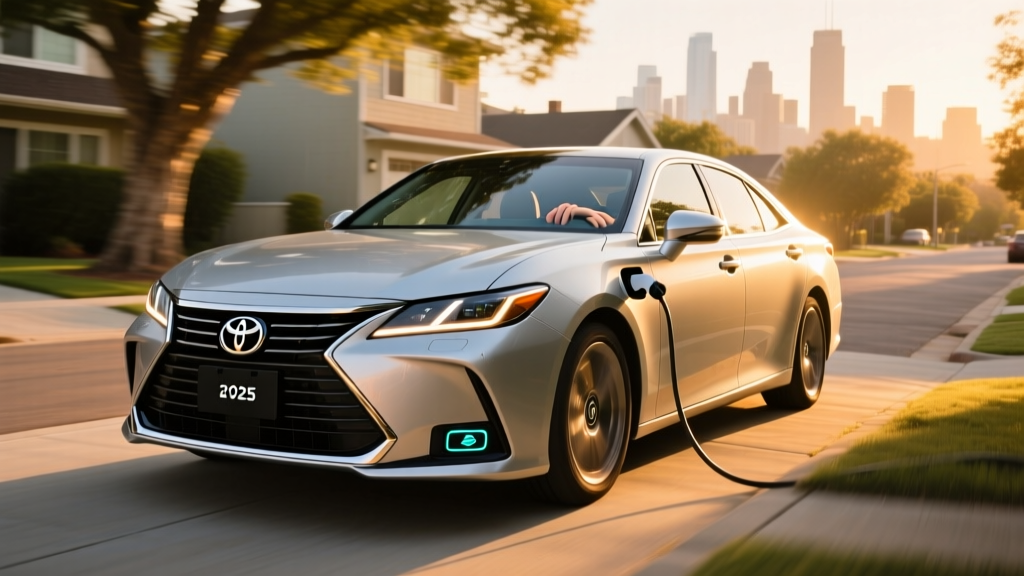
For 2025, Toyota introduced the Crown Signia, a lifted wagon/crossover variant available with a plug-in hybrid powertrain in certain markets. The PHEV pairs a 2.5-liter engine with a larger lithium-ion battery pack (approximately 18.1 kWh usable) and more powerful electric motors, enabling an EPA-estimated ~37 miles of electric-only driving before the gasoline engine engages. You can plug it in to a Level 1 (120V) or Level 2 (240V) charger. Note: The PHEV variant's availability in the US is limited — check your local dealer for inventory.
Key takeaway: If you see "Crown Hybrid" at a US dealership in 2025, you are almost certainly looking at the HEV sedan. The PHEV Crown Signia is a separate model line with different pricing and availability.
Fuel Economy: EPA MPG and Real-World Numbers
The headline reason buyers choose the Crown Hybrid is fuel economy. Here's how the 2025 lineup breaks down according to EPA estimates on fueleconomy.gov:
| Trim / Powertrain | City MPG | Highway MPG | Combined MPG |
|---|---|---|---|
| Crown XLE (HEV, 2.5L Hybrid) | 42 | 41 | 41 |
| Crown Limited (HEV, 2.5L Hybrid) | 42 | 40 | 41 |
| Crown Platinum (Hybrid MAX, 2.4L Turbo) | 29 | 32 | 30 |
| Crown Signia PHEV (if available) | ~37 mi electric-only; ~38 MPG combined (gas-only mode) | ||
Important note on the Hybrid MAX: The Platinum trim's Hybrid MAX powertrain (2.4L turbo + direct-drive electric motor) prioritizes performance — 340 combined horsepower — over efficiency. If maximum MPG is your goal, stick with the XLE or Limited and their 2.5L hybrid system.
Powertrain Specs: Horsepower, Engine, and Drivetrain
| Specification | XLE / Limited (2.5L HEV) | Platinum (Hybrid MAX) |
|---|---|---|
| Engine | 2.5L inline-4 | 2.4L turbo inline-4 |
| Combined System HP | 236 hp | 340 hp |
| Drivetrain | AWD (eAxle rear motor) | AWD (eAxle rear motor) |
| 0-60 mph (est.) | ~7.2 sec | ~5.1 sec |
| Transmission | eCVT | 6-speed automatic |
| Traction Battery | NiMH (~1.6 kWh) | Li-ion (~1.4 kWh) |
Both powertrains come standard with electronic all-wheel drive. The 2.5L hybrid uses a rear-mounted electric motor (eAxle) that engages automatically when the front wheels slip — there's no mechanical driveshaft. The Hybrid MAX pairs its turbo engine with a more powerful rear eAxle and a traditional 6-speed automatic for a sportier driving feel, at the cost of roughly 11 MPG combined.
Battery Warranty, Reliability, and Replacement Cost
Hybrid battery longevity is the single most common concern among first-time hybrid buyers. Here's what Toyota provides:
Toyota Hybrid Battery Warranty
- Coverage: 10 years / 150,000 miles (whichever comes first) for the hybrid battery and all hybrid system components, including the inverter and electric motors.
- Capacity retention threshold: Toyota warrants that the hybrid battery will retain sufficient capacity to operate the hybrid system normally. Unlike BEV warranties, there is no published percentage threshold (e.g., 70%) — failure is defined as the system's inability to function.
- Transferability: Fully transferable to subsequent owners at no cost, which supports strong resale values.
Real-world reliability data: Toyota's hybrid system is among the most proven in the industry. The Prius, Camry Hybrid, and RAV4 Hybrid have collectively logged billions of miles with the same fundamental architecture. Hybrid battery failures before 150,000 miles are statistically rare. When replacement is needed out of warranty, a refurbished Crown hybrid battery typically costs $2,000-$3,500 installed; a new OEM unit runs $3,500-$5,000. For context, most conventional automatic transmission replacements cost $4,000-$7,000.
According to IIHS ratings, the 2025 Crown carries top marks in crashworthiness, which pairs well with Toyota Safety Sense 3.0 — the standard ADAS suite including pre-collision braking, lane-tracing assist, and full-speed adaptive cruise control.
Pricing by Trim and Tax-Credit Eligibility
The 2025 Toyota Crown Hybrid sedan is available in three trims. Here's the MSRP breakdown (destination included):
- Crown XLE (HEV): ~$41,440
- Crown Limited (HEV): ~$46,990
- Crown Platinum (Hybrid MAX): ~$54,590
Does the 2025 Crown Hybrid Qualify for a Federal Tax Credit?
Conventional HEV (XLE, Limited, Platinum): No. The IRS §30D federal tax credit applies only to plug-in electric vehicles (BEVs and PHEVs) with sufficient battery capacity. Standard hybrids that cannot be plugged in do not qualify for any federal purchase credit.
PHEV variant (Crown Signia, if available): Potentially eligible for up to $7,500 under §30D, but eligibility depends on three factors that change annually: (1) battery component and critical-mineral sourcing requirements, (2) buyer income caps ($150K single / $300K joint for new vehicles), and (3) MSRP caps ($55,000 for sedans, $80,000 for SUVs/vans). Consult the IRS clean vehicle credit page and a tax professional before relying on credit eligibility.
State incentives: Some states offer rebates for conventional hybrids. Check your state energy office or DMV for current programs — these vary widely and change frequently.
Who Should Buy the Crown Hybrid — and Who Shouldn't
Pros
- 41 MPG combined with AWD standard — rare in the premium sedan segment
- Refined, quiet cabin with excellent ride quality
- 10-year/150,000-mile hybrid battery warranty
- No plug-in required — works with any lifestyle or parking situation
- Toyota Safety Sense 3.0 standard on all trims
- Strong resale value backed by Toyota reliability reputation
Cons
- No federal tax credit for the HEV trims
- Starting price above $41K — pricier than Camry Hybrid (~$29K)
- Hybrid MAX (Platinum) drops to 30 MPG for a performance tradeoff
- Rear headroom is tight due to the sloping roofline
- No PHEV option widely available in the US sedan lineup
- eCVT can feel disconnected during hard acceleration
Crown Hybrid vs Full EV vs Gas Sedan: Which Fits You?
Decision Framework
Choose the Crown Hybrid (HEV) if: You want 40+ MPG without changing your fueling habits. You don't have reliable access to home or workplace charging. You drive a mix of city and highway miles and want a premium, quiet sedan with AWD and strong resale value.
Choose a full BEV (e.g., Tesla Model 3, Hyundai Ioniq 6) if: You can install a Level 2 home charger, your daily commute is under 250 miles round-trip, and you want the lowest per-mile fuel cost (~$0.04/mi on electricity vs ~$0.12/mi on gas at 41 MPG). A BEV also qualifies for the §30D federal tax credit, which can offset the higher purchase price.
Choose a gas-only sedan if: Your budget is under $30,000, you drive fewer than 8,000 miles per year (where fuel savings don't offset the hybrid premium), or you plan to keep the car for fewer than 4 years.
Choose the Crown Signia PHEV if: You have home charging, your commute is under 35 miles (covering most daily driving on electricity), but you want the flexibility of a gas engine for road trips. The PHEV also opens potential §30D credit eligibility.
5-Year Cost of Ownership Snapshot
| Cost Factor (5 yr / 75K mi) | Crown XLE HEV | Gas Sedan Baseline (30 MPG) |
|---|---|---|
| Fuel Cost ($3.50/gal avg) | ~$6,400 | ~$8,750 |
| Maintenance (est.) | ~$2,800 | ~$3,500 |
| Insurance (est. avg) | ~$7,500 | ~$6,800 |
| Federal Tax Credit | $0 | $0 |
| 5-Year Operating Total | ~$16,700 | ~$19,050 |
The Crown Hybrid saves roughly $2,350 in operating costs over 5 years compared to a comparable 30 MPG gas sedan. That doesn't fully offset the Crown's higher purchase price versus a Camry Hybrid, but it does narrow the gap against similarly priced gas luxury sedans like the Lexus ES 250 or Acura TLX.
Frequently Asked Questions
How many MPG does the 2025 Toyota Crown Hybrid get?
The Crown XLE and Limited with the 2.5L hybrid system achieve an EPA-estimated 42 city / 41 highway / 41 combined MPG. The performance-oriented Platinum trim with Hybrid MAX drops to 29/32/30 MPG. Real-world city driving often exceeds the EPA estimate by 2-4 MPG in warm conditions.
Does the 2025 Toyota Crown Hybrid need to be plugged in?
No. The standard Crown Hybrid (XLE, Limited, Platinum) is a conventional HEV. It charges its own battery through regenerative braking and the gasoline engine. You fuel it like any other car. Only the Crown Signia PHEV variant (limited availability) requires or benefits from plug-in charging.
How long will the Crown Hybrid battery last and what does replacement cost?
Toyota warranties the hybrid battery for 10 years / 150,000 miles. Based on decades of Toyota hybrid data, most batteries last well beyond the warranty period. If replacement is needed out of warranty, expect $2,000-$3,500 for a refurbished unit or $3,500-$5,000 for a new OEM battery, installed.
Does the Crown Hybrid qualify for any tax credit?
The conventional HEV trims do not qualify for the federal §30D clean vehicle tax credit — that credit is reserved for plug-in vehicles. Some states may offer hybrid-specific rebates, but these vary by jurisdiction and change frequently. Check your state energy office for current programs.
Is the Crown Hybrid better than the Camry Hybrid?
They serve different buyers. The Camry Hybrid LE achieves 52 MPG combined starting around $29,000 — far more efficient and affordable. The Crown Hybrid trades ~11 MPG for a premium cabin, standard AWD, more power (236 hp vs 225 hp), and a more refined ride. If efficiency-per-dollar is your priority, the Camry wins. If you want a near-luxury experience with hybrid efficiency, the Crown is the pick.
Is the Hybrid MAX Platinum trim worth the MPG tradeoff?
Only if performance matters to you. The Platinum's 340 hp and 5.1-second 0-60 time transform the Crown from a relaxed cruiser into a genuinely quick sedan. But you sacrifice 11 MPG combined and pay roughly $13,000 more than the XLE. For most hybrid buyers prioritizing fuel savings, the XLE or Limited is the rational choice.