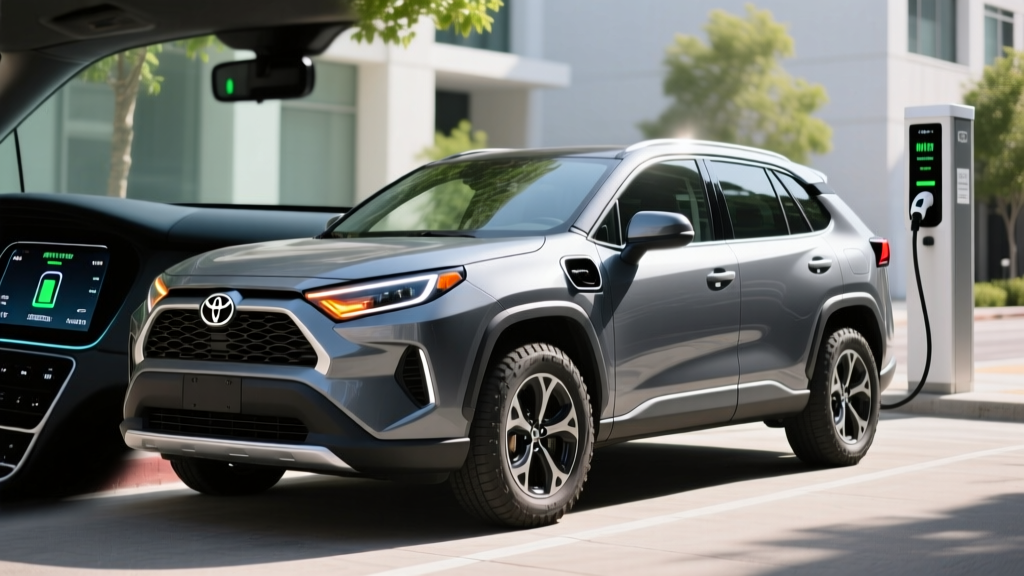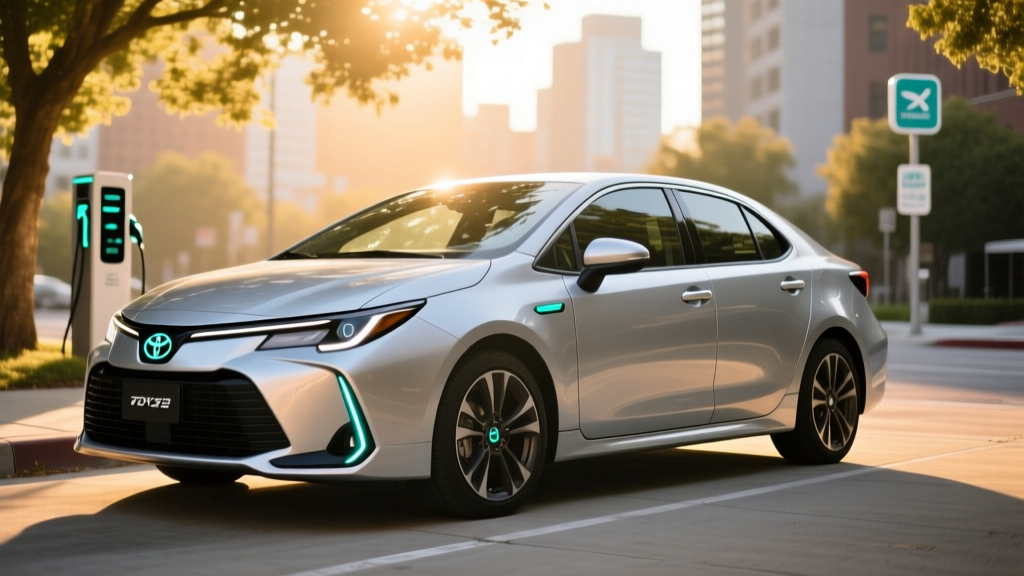
If you've searched for the 2025 Toyota Corolla Hybrid EPA combined MPG rating, you already know the headline number: 50 MPG combined for the front-wheel-drive LE trim. But sticker MPG only tells part of the story. In this guide, we unpack the Corolla Hybrid's real-world fuel economy across city, highway, and cold-weather driving, its fifth-generation Toyota hybrid powertrain, battery longevity, and whether it still makes sense in a market increasingly crowded by PHEVs and full EVs.
The 2025 Corolla Hybrid is a conventional hybrid (HEV) — meaning it charges its small battery through regenerative braking and the gasoline engine. You never plug it in. That distinction matters because buyers sometimes confuse it with plug-in hybrids like the Toyota Prius Prime, which offer electric-only range but require charging infrastructure. We'll clarify exactly what the Corolla Hybrid is, what it isn't, and who it's built for.
2025 Corolla Hybrid MPG: EPA Ratings and Real-World Numbers
The EPA rates the 2025 Toyota Corolla Hybrid LE (FWD) at 53 MPG city / 46 MPG highway / 50 MPG combined. The all-wheel-drive (AWD-e) trims — including the LE AWD, SE AWD, and Nightshade AWD — drop slightly to 47 city / 41 highway / 44 combined due to the additional rear motor and drivetrain weight.
| Trim | Drivetrain | City MPG | Highway MPG | Combined MPG |
|---|---|---|---|---|
| LE | FWD | 53 | 46 | 50 |
| LE | AWD-e | 47 | 41 | 44 |
| SE | AWD-e | 47 | 41 | 44 |
| Nightshade | AWD-e | 47 | 41 | 44 |
Real-World MPG: Where the Corolla Hybrid Shines (and Where It Doesn't)
Toyota's fifth-generation hybrid system is optimized for urban driving. The 1.8-liter Atkinson-cycle four-cylinder engine hands off low-speed propulsion to the electric motor, which is far more efficient in stop-and-go traffic. In real-world city driving, many owners report exceeding the EPA city estimate — hitting 55–58 MPG on suburban routes with frequent stops. This is a hallmark of Toyota's hybrid synergy: regenerative braking recaptures energy that a gas car would waste as heat.
Highway driving tells a different story. At sustained 70–80 MPH speeds, the gasoline engine carries most of the load, and the hybrid system's advantage narrows. Expect 42–45 MPG on the highway for FWD trims, roughly matching or slightly undercutting the EPA estimate. In cold weather (below 30°F), fuel economy drops further — typically 10–15% below the combined rating — because the engine runs more often to provide cabin heat and because the battery's charge-acceptance rate decreases at low temperatures.
HEV vs. PHEV: Why the Corolla Hybrid Is Not a Plug-In
The 2025 Corolla Hybrid is a conventional hybrid electric vehicle (HEV). It uses a 0.9 kWh (gross) nickel-metal hydride (NiMH) traction battery that charges exclusively through regenerative braking and the gasoline engine. There is no charge port, no plug, and no electric-only driving mode beyond very low-speed maneuvers (typically under 1 MPH in parking lots).
This is fundamentally different from a plug-in hybrid electric vehicle (PHEV) like the Toyota Prius Prime, which carries a much larger lithium-ion battery (13.6 kWh usable), can travel up to 44 miles on electricity alone, and requires Level 1 or Level 2 plug-in charging. If you want electric-only commuting with a gas engine backup, a PHEV is the right category — but it comes at a higher purchase price and requires access to charging.
| Feature | Corolla Hybrid (HEV) | Prius Prime (PHEV) |
|---|---|---|
| Plug-in charging required? | No | Yes (Level 1 or Level 2) |
| Battery capacity | 0.9 kWh (NiMH) | 13.6 kWh (Li-ion) |
| Electric-only range | None (low-speed assist only) | Up to 44 miles (EPA) |
| Combined MPG (gas-only) | 50 MPG (FWD LE) | 48 MPG (after battery depletes) |
| MPGe (electric + gas) | N/A | 127 MPGe |
| Base MSRP | $23,725 | $33,445 |
| Federal tax credit (§30D) | Not eligible | Up to $7,500 (income/sourcing rules apply) |
The tradeoff is straightforward: the Corolla Hybrid is cheaper, simpler (no charging needed), and delivers excellent fuel economy everywhere. The Prius Prime rewards owners who can charge at home or work with daily electric-only commuting but costs roughly $10,000 more upfront before any tax credit.
Powertrain and Performance Specs
The 2025 Corolla Hybrid uses Toyota's fifth-generation Hybrid Synergy Drive, pairing a 1.8-liter inline-4 Atkinson-cycle engine with a permanent-magnet synchronous electric motor through a planetary gearset (eCVT). FWD models use a single front motor; AWD-e models add a second, independent rear motor that provides torque to the rear axle during acceleration and low-traction conditions — without a mechanical driveshaft.
| Specification | Detail |
|---|---|
| Engine | 1.8L 4-cylinder Atkinson-cycle |
| Engine horsepower | 96 HP @ 5,200 RPM |
| Front electric motor | 94 HP / 105 lb-ft torque |
| Rear electric motor (AWD-e only) | 40 HP / 38 lb-ft torque |
| Net combined system horsepower | 138 HP |
| Transmission | eCVT (planetary gearset) |
| 0–60 MPH | ~9.0 seconds (FWD), ~8.5 seconds (AWD-e) |
| Traction battery | 0.9 kWh NiMH (bipolar design) |
| Curb weight | ~3,050 lbs (FWD LE) |
The 138 combined horsepower figure is modest by modern standards, and the 9-second 0–60 time reflects that. The Corolla Hybrid is not a performance car — it's an efficiency tool. The eCVT delivers seamless, gearless acceleration that feels adequate for merging and passing at city speeds but requires patience during highway overtaking. The AWD-e system's rear motor engages automatically and transparently; there's no driver-selectable AWD mode.
Pricing, Trims, and Tax Credit Eligibility
The 2025 Corolla Hybrid starts at $23,725 MSRP (LE FWD, including destination), making it one of the most affordable hybrids on the US market. The AWD-e option adds approximately $1,400. The sport-tuned SE AWD-e starts around $27,225, and the blacked-out Nightshade AWD-e lands near $28,025.
| Trim | Drivetrain | MSRP (incl. destination) |
|---|---|---|
| LE | FWD | $23,725 |
| LE | AWD-e | $25,125 |
| SE | AWD-e | $27,225 |
| Nightshade | AWD-e | $28,025 |
Does the Corolla Hybrid Qualify for a Federal Tax Credit?
No. The IRS §30D New Clean Vehicle Credit applies only to battery electric vehicles (BEVs) and plug-in hybrid electric vehicles (PHEVs) that meet specific battery capacity, critical-mineral sourcing, and MSRP/income thresholds. Because the Corolla Hybrid is a conventional HEV with a sub-1 kWh battery and no plug-in capability, it does not qualify for the federal $7,500 tax credit or any portion of it.
Some states offer rebates or HOV lane access for hybrids, but these vary by jurisdiction and change frequently. Check your state's energy office or department of environmental quality for current programs. At the federal level, the Corolla Hybrid's value proposition rests on its low purchase price and fuel savings, not incentive subsidies.
Battery Warranty, Longevity, and Replacement Cost
Hybrid battery longevity is consistently the top concern among first-time hybrid buyers. Toyota addresses this with one of the strongest hybrid battery warranties in the industry.
The 2025 Corolla Hybrid uses a bipolar nickel-metal hydride (NiMH) traction battery — the same chemistry Toyota has refined over 25+ years of hybrid production. NiMH is less energy-dense than the lithium-ion batteries in PHEVs and BEVs, but it is exceptionally durable and thermally stable. Real-world data from Toyota's millions of Prius and Camry Hybrids on the road shows that NiMH hybrid batteries routinely last 150,000–200,000+ miles with minimal capacity loss. Unlike full EV batteries, the Corolla Hybrid's small battery operates within a narrow state-of-charge window (roughly 40–80%), which dramatically reduces degradation stress.
If the hybrid battery does fail outside of warranty — typically at very high mileage — replacement cost runs approximately $2,000–$3,500 for a new OEM battery pack installed at a Toyota dealer. Independent hybrid specialists often offer refurbished or reconditioned packs for $1,000–$2,000. Given the 10-year/150,000-mile warranty and NiMH's proven track record, battery replacement is a low-probability expense for most owners.
Hybrid vs. PHEV vs. Full EV: Which Powertrain Fits You?
Choosing between a conventional hybrid, a plug-in hybrid, and a battery electric vehicle comes down to three questions: Can you charge at home? How do you drive daily? And what's your budget?
Choose the Corolla Hybrid (HEV) if:
- You have no access to home or workplace charging
- Your budget is under $28,000
- You want maximum simplicity — no plugs, no apps, no range planning
- You drive a mix of city and highway miles
- You plan to keep the car 8–10+ years and value proven reliability
Consider a PHEV (e.g., Prius Prime) if:
- You can install a Level 2 charger at home
- Your daily commute is under 40 miles round-trip
- You want to drive mostly on electricity but need gas flexibility for road trips
- You can benefit from the §30D federal tax credit (up to $7,500)
- You're willing to pay a higher upfront price to offset with fuel savings
Consider a full EV (e.g., Tesla Model 3, Chevy Equinox EV) if:
- You have reliable Level 2 home charging
- Your daily driving is under 250 miles and you can plan road-trip charging stops
- You want zero tailpipe emissions and minimal maintenance (no oil changes, no gas engine)
- You qualify for the full §30D tax credit, significantly reducing effective price
- You value instant torque, quiet operation, and one-pedal driving
For buyers in apartments without charging access, or in rural areas with sparse DC fast-charging infrastructure, the Corolla Hybrid remains the most pragmatic path to dramatically lower fuel consumption — no behavior change required.
Ownership Economics: 5-Year Cost Snapshot
The Corolla Hybrid's low MSRP and exceptional fuel economy produce compelling ownership economics. Here's a 5-year/75,000-mile estimate compared to the gas-only Corolla LE (which EPA-rates at 35 MPG combined):
| Category | Corolla Hybrid LE (FWD) | Corolla LE (Gas, 35 MPG) |
|---|---|---|
| Purchase price (MSRP) | $23,725 | $22,325 |
| Fuel cost (75,000 mi @ $3.40/gal) | $5,100 | $7,286 |
| Fuel savings vs. gas model | +$2,186 saved over 5 years | |
| Estimated maintenance | $2,200 | $2,800 |
| Federal tax credit | $0 | $0 |
| Estimated 5-year total (purchase + fuel + maint.) | ~$31,025 | ~$32,411 |
The hybrid's $1,400 price premium over the gas Corolla is recovered in fuel savings within approximately 3–4 years of average driving. Beyond that, the hybrid continues to save money at the pump. Maintenance costs are also slightly lower: the hybrid system reduces brake wear (regenerative braking handles most deceleration) and the engine runs less frequently, reducing oil degradation.
Insurance premiums for the Corolla Hybrid are typically comparable to the gas model — usually within $5–$10/month — because the vehicle's repair costs and safety ratings are similar. Toyota Safety Sense 3.0 (standard on all trims) includes pre-collision braking, lane departure alert, adaptive cruise control, and lane tracing assist, which contributes to strong IIHS safety ratings.
Pros and Cons at a Glance
Pros
- 50 MPG combined EPA (FWD) — among the highest of any non-plug-in vehicle
- Under $24,000 starting price for LE FWD
- No plug-in charging required — works with existing gas-station infrastructure
- 10-year / 150,000-mile hybrid battery warranty
- Standard AWD-e availability across multiple trims
- Toyota Safety Sense 3.0 standard on all trims
- Proven NiMH battery chemistry with 25+ year track record
Cons
- 138 HP — leisurely acceleration (9+ second 0–60)
- No electric-only driving mode
- Not eligible for the $7,500 federal EV tax credit
- Highway MPG drops noticeably vs. city (46 highway FWD)
- AWD-e trims lose 6 MPG combined vs. FWD
- Modest cargo space (~13.1 cu ft trunk) — no hatchback option
- Infotainment is functional but dated vs. competitors
Frequently Asked Questions
How many MPG does the 2025 Toyota Corolla Hybrid get?
The FWD LE trim is EPA-rated at 53 city / 46 highway / 50 combined MPG. AWD-e trims are rated at 47 city / 41 highway / 44 combined. In real-world city driving, many owners exceed the EPA city estimate thanks to aggressive regenerative braking. Highway and cold-weather driving reduce fuel economy below the combined rating.
Does the Corolla Hybrid need to be plugged in?
No. The Corolla Hybrid is a conventional HEV. Its small NiMH battery charges through regenerative braking and the gasoline engine. There is no plug, no charge port, and no requirement for any external charging infrastructure.
How long will the Corolla Hybrid battery last?
Toyota's NiMH hybrid batteries have a proven track record of lasting 150,000–200,000+ miles. The battery is covered by a 10-year / 150,000-mile warranty. If replacement is needed out of warranty, expect $2,000–$3,500 for a new OEM pack, or $1,000–$2,000 for a refurbished unit from an independent specialist.
Does the 2025 Corolla Hybrid qualify for a tax credit?
Not at the federal level. The IRS §30D credit applies only to plug-in vehicles (BEVs and PHEVs). The Corolla Hybrid, as a conventional HEV, does not qualify. Some states may offer hybrid-specific incentives — check your state energy office for current programs.
Is the Corolla Hybrid better than a full EV?
It depends on your situation. If you lack home charging access, drive long highway routes, or live in an area with limited public charging, the Corolla Hybrid delivers 70–80% of an EV's fuel-cost savings with none of the charging logistics. If you can charge at home and your daily driving is under 250 miles, a full EV will have lower operating costs and zero tailpipe emissions — but at a higher purchase price.
What is the total driving range of the Corolla Hybrid?
The FWD LE delivers approximately 570 miles of total range on its 11.4-gallon tank at the 50 MPG combined rating. In mixed real-world conditions, expect 480–540 miles between fill-ups. AWD-e trims deliver roughly 500 miles at 44 MPG combined.