Quick Verdict: The 2025 Toyota Camry XSE Hybrid at a Glance
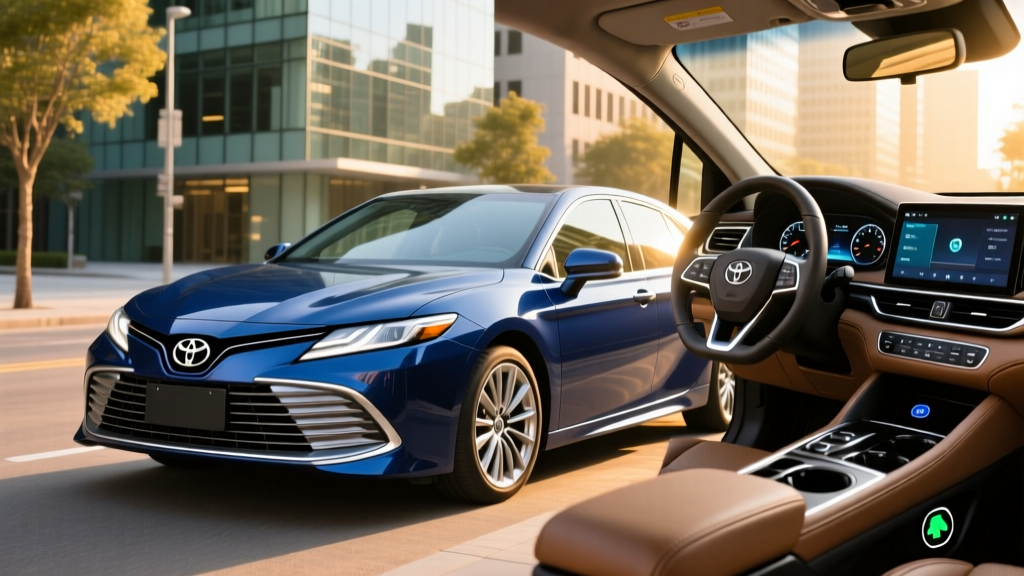
The 2025 Toyota Camry XSE Hybrid is the sportiest trim in Toyota's now fully-hybrid midsize sedan lineup. Pairing a 2.5-liter four-cylinder engine with Toyota's fifth-generation hybrid system, the XSE delivers 225 combined horsepower and an EPA-estimated 47 MPG combined — a rare combination of efficiency and engagement in the sedan segment. With all-wheel drive standard on the XSE, a starting MSRP around $35,490 (including destination), and Toyota's reputation for hybrid durability, this is the trim for buyers who want athletic styling without sacrificing fuel economy.
But does the real-world fuel economy match the EPA sticker? How does the hybrid battery hold up over time? And does the Camry Hybrid qualify for any federal tax credits? We break down every number that matters.
| Specification | Value |
|---|---|
| Powertrain | 2.5L 4-cyl + electric motor (5th-gen Toyota Hybrid System) |
| Combined Horsepower | 225 hp (FWD) / 232 hp (AWD) |
| EPA MPG (City / Hwy / Combined) | 48 / 47 / 47 (FWD) · 44 / 43 / 44 (AWD) |
| Drivetrain | FWD standard; Electronic AWD available |
| Hybrid Battery | Lithium-ion, ~1.0 kWh (self-charging HEV — no plug) |
| 0–60 mph | ~7.1 seconds (est.) |
| Starting MSRP (incl. destination) | ~$35,490 |
| Federal §30D Tax Credit | Not eligible (conventional HEV, not PHEV/BEV) |
| Hybrid Battery Warranty | 10 years / 150,000 miles |
HEV vs. PHEV: What the Camry Hybrid Actually Is
A common source of confusion among sedan shoppers is whether the Camry Hybrid needs to be plugged in. It does not. The 2025 Camry XSE Hybrid is a conventional hybrid electric vehicle (HEV) — sometimes called a "self-charging" hybrid. It recovers energy through regenerative braking and its gasoline engine to keep a small lithium-ion battery charged. You simply fill it with gas and drive.
HEV (Camry Hybrid) vs. PHEV (e.g., Toyota RAV4 Prime) vs. BEV
| Feature | HEV (Camry Hybrid) | PHEV (RAV4 Prime) | BEV (e.g., Tesla Model 3) |
|---|---|---|---|
| Plug-in Required? | No | Yes | Yes |
| Electric-Only Range | None (motor assists engine) | ~42 miles | 250–360+ miles |
| Total Range | ~600+ miles | ~600+ miles (gas + electric) | 250–360+ miles |
| Federal Tax Credit (§30D) | Not eligible | Up to $7,500 (if eligible) | Up to $7,500 (if eligible) |
| Home Charging Needed? | No | Recommended (Level 2) | Essential (Level 2) |
| Best For | No garage/outlet access; max simplicity | Short commutes + road-trip flexibility | Home charging + lower running cost |
The Camry Hybrid's small ~1.0 kWh battery is fundamentally different from a PHEV's larger 14–18 kWh pack or a BEV's 60–80+ kWh pack. The electric motor in the Camry assists the gasoline engine during acceleration and enables brief low-speed electric-only creeping, but it cannot sustain highway speeds on electricity alone. This is by design: the HEV system prioritizes seamless efficiency without any change to your fueling habits.
Fuel Economy: EPA Numbers and Real-World MPG
| Configuration | City MPG | Highway MPG | Combined MPG |
|---|---|---|---|
| FWD (LE, SE, XLE, XSE) | 51 (LE) / 48 (XSE) | 53 (LE) / 47 (XSE) | 52 (LE) / 47 (XSE) |
| AWD (SE, XLE, XSE) | 44 | 43 | 44 |
Source: U.S. EPA / fueleconomy.gov
The XSE's larger 19-inch alloy wheels and sport-tuned suspension add rolling resistance and weight versus the LE trim, explaining the 47-MPG combined rating versus the LE's 52 MPG combined. In real-world driving:
- City driving: Hybrids typically exceed EPA city estimates because regenerative braking recovers more energy in stop-and-go traffic. Expect 48–52 MPG in urban commuting with the XSE.
- Highway cruising: Expect 42–46 MPG at 70–75 mph sustained. Hybrid advantage diminishes at high speed where aerodynamic drag dominates.
- Cold weather (below 35°F): Expect a 5–10% MPG reduction. The engine runs more often to provide cabin heat and maintain battery temperature.
- Combined real-world: Most XSE owners report 44–49 MPG in mixed driving — closely tracking the EPA sticker.
With a 13.2-gallon fuel tank, the XSE Hybrid delivers roughly 550–620 miles of real-world range between fill-ups — enough to stretch fuel stops to once every two weeks for average commuters.
Powertrain and Performance: 225 HP with Hybrid Efficiency
The 2025 Camry XSE Hybrid pairs a 2.5-liter Dynamic Force four-cylinder engine (184 hp, 163 lb-ft on its own) with a permanent-magnet electric motor integrated into the transaxle. Combined system output is 225 horsepower in FWD form and 232 hp with the available electronic AWD, which adds a second rear-mounted electric motor (40 hp) that engages automatically for traction.
The XSE trim specifically adds:
- Sport-tuned suspension with stiffer damping
- 19-inch black alloy wheels with summer tire option
- Paddle shifters for simulated 6-speed manual gear selection
- Drive Mode Select (Eco, Normal, Sport)
In Sport mode, the hybrid system prioritizes throttle response and holds higher engine RPM for more immediate power delivery. The 0–60 mph sprint takes approximately 7.1 seconds — quick for a midsize sedan and noticeably more responsive than the previous-generation Camry Hybrid's 208 hp system.
The electronic AWD system is worth noting for buyers in snow-belt states. Unlike a mechanical AWD system with a driveshaft, the rear motor activates only when front-wheel slip is detected, minimizing the fuel-economy penalty. The AWD XSE drops only 3 MPG combined versus FWD — a modest tradeoff for all-weather confidence.
Pricing, Trims, and Tax Credit Eligibility
The 2025 Camry XSE Hybrid starts at approximately $35,490 including destination charges. Key options that push the price higher include:
- AWD: +$1,525
- Premium Audio + Navigation + Panoramic Roof package: ~$2,500
- Two-tone paint: +$495
A well-equipped XSE AWD with packages typically lands in the $38,000–$40,000 range before any incentives.
The 2025 Camry Hybrid does not qualify for the IRS §30D Clean Vehicle Credit. That credit (up to $7,500) applies only to plug-in electric vehicles — battery-electric (BEV) and plug-in hybrid (PHEV) models that meet battery sourcing, MSRP caps, and buyer income limits. As a conventional HEV, the Camry Hybrid is ineligible.
- IRS §30D requires a minimum 7 kWh battery capacity and plug-in capability — the Camry HEV has neither
- No federal credit currently exists for conventional hybrids
- Some states and utilities offer modest rebates for HEVs — check your state energy office or local utility for current programs
Source: IRS.gov — Clean Vehicle Credits
Battery Longevity, Warranty, and Replacement Cost
- Coverage: 10 years or 150,000 miles (whichever comes first), applicable in all 50 states
- What's covered: Hybrid battery pack, hybrid control module, and related hybrid-system components
- Capacity threshold: Toyota warrants the battery against defects and abnormal loss of capacity — there is no published minimum retention percentage (unlike some BEV warranties that guarantee 70% capacity)
- Transferability: Warranty transfers to subsequent owners, supporting resale value
Toyota's hybrid battery reliability is among the best-documented in the industry. The Prius, which has used a similar hybrid architecture since 2001, routinely sees original batteries lasting 200,000+ miles. The fifth-generation system in the 2025 Camry uses a lithium-ion pack that is smaller, lighter, and more thermally stable than the nickel-metal hydride batteries in earlier Toyota hybrids.
Is this hybrid reliable and what is battery replacement cost? If the hybrid battery does fail outside warranty, replacement cost for a Toyota Camry hybrid battery typically ranges from $2,000 to $4,000 including labor at a dealership. Independent hybrid specialists and refurbished battery options can reduce this to $1,200–$2,500. However, given Toyota's track record and the 10-year/150,000-mile warranty, out-of-pocket battery replacement is uncommon during typical ownership periods.
The broader hybrid system — including the electric motor-generators and power-control unit — has very few wear items compared to a conventional automatic transmission. There is no traditional transmission fluid to change at short intervals, no starter motor, no alternator, and regenerative braking significantly extends brake pad life (many owners report 80,000–100,000 miles on original pads).
Camry XSE Hybrid vs. Full EV vs. Gas Camry: Who Should Choose What?
- You want 45+ MPG without changing your fueling routine
- You lack access to home or workplace charging (apartment, street parking)
- You take frequent long road trips and don't want to plan around charging stops
- You value Toyota's long-term reliability and resale value
- You want sporty styling and AWD availability in an efficient sedan
- You have a garage or driveway with a 120V or 240V outlet
- Your daily commute is under 40 miles round-trip (you'd drive mostly on electricity)
- You want to qualify for the $7,500 federal tax credit (subject to §30D eligibility)
- You want EV-like running costs on weekdays with gas flexibility on weekends
- You have reliable Level 2 home charging
- Your daily driving is under 250 miles and you road-trip infrequently
- You want the lowest cost-per-mile (electricity at ~$0.04–0.06/mile vs. gas at ~$0.10–0.14/mile)
- You want zero tailpipe emissions and minimal maintenance (no oil changes, no engine)
For 2025, Toyota made every Camry a hybrid. There is no gas-only Camry in the current lineup. The closest non-hybrid alternative in Toyota's range would be the Crown (starting ~$42,000) or stepping outside Toyota to a Honda Accord 1.5T.
Pros and Cons of the 2025 Camry XSE Hybrid
- 47 MPG combined (FWD) with real-world consistency
- 225–232 hp with responsive Sport mode
- AWD availability with minimal MPG penalty
- 10-year / 150,000-mile hybrid battery warranty
- No plug-in charging required — zero lifestyle change
- Strong resale value and Toyota reliability record
- 600+ mile total range per tank
- No federal tax credit eligibility (HEV, not PHEV/BEV)
- XSE's 19-inch wheels reduce MPG vs. LE trim (47 vs. 52 combined)
- Firm ride from sport suspension may not suit all buyers
- ~$35,490 starting price is above the old gas Camry base
- Rear-seat headroom slightly reduced vs. some competitors
- No DC fast charging capability (not applicable to HEV)
Frequently Asked Questions
How many MPG does the 2025 Camry XSE Hybrid get?
The EPA rates the XSE Hybrid at 48 city / 47 highway / 47 combined MPG with front-wheel drive, and 44/43/44 with AWD. In real-world mixed driving, most owners report 44–49 MPG with the FWD XSE, with city driving often exceeding the EPA estimate thanks to regenerative braking.
Does the Camry Hybrid need to be plugged in?
No. The Camry Hybrid is a conventional hybrid (HEV), not a plug-in hybrid (PHEV). It charges its own small battery through regenerative braking and the gasoline engine. You fuel it like any other gas car — there is no charging port or plug.
How far can the Camry Hybrid drive on electric only?
The Camry Hybrid can creep at very low speeds (under ~25 mph) on electric power for short distances — typically a few hundred yards in parking lots or heavy traffic. It cannot sustain highway speeds on electricity alone. If electric-only commuting range is important to you, consider a PHEV like the Prius Prime (~44 miles electric-only) or a full BEV.
Is the 2025 Camry Hybrid reliable, and what does a battery replacement cost?
Toyota's hybrid system has over two decades of proven reliability. The hybrid battery is warranted for 10 years / 150,000 miles. If replacement is needed out of warranty, expect $2,000–$4,000 at a dealer or $1,200–$2,500 through an independent hybrid specialist. Most Toyota hybrid batteries last well beyond 150,000 miles in normal use.
Does the 2025 Camry Hybrid qualify for any tax credit?
No federal tax credit applies to the Camry Hybrid. The IRS §30D Clean Vehicle Credit requires plug-in capability and a minimum 7 kWh battery — the Camry HEV meets neither requirement. Some state or utility-level rebates may apply to hybrids; check your local programs. If the $7,500 federal credit is a priority, you'd need to look at PHEVs (like the Prius Prime) or BEVs that meet §30D sourcing, MSRP, and income requirements.
How does the XSE trim compare to the SE and XLE Hybrid?
The XSE sits at the top of the sport-oriented trims. Versus the SE, it adds 19-inch wheels, a sport-tuned suspension, leather-trimmed seats, a 12.3-inch touchscreen, and ambient lighting. Versus the comfort-oriented XLE, the XSE trades some ride softness and a few MPG for sharper handling and more aggressive styling. All trims share the same 225-hp hybrid powertrain.
Is the AWD system worth the MPG tradeoff?
If you regularly drive in snow, rain, or on unpaved roads, yes. The electronic AWD system costs only 3 MPG combined (44 vs. 47) and adds roughly $1,525 to the price. It provides meaningful traction improvement without the weight and maintenance of a mechanical AWD system. For dry-climate drivers, FWD is the more efficient choice.