Quick Verdict: The 2025 Toyota Camry XLE Hybrid at a Glance
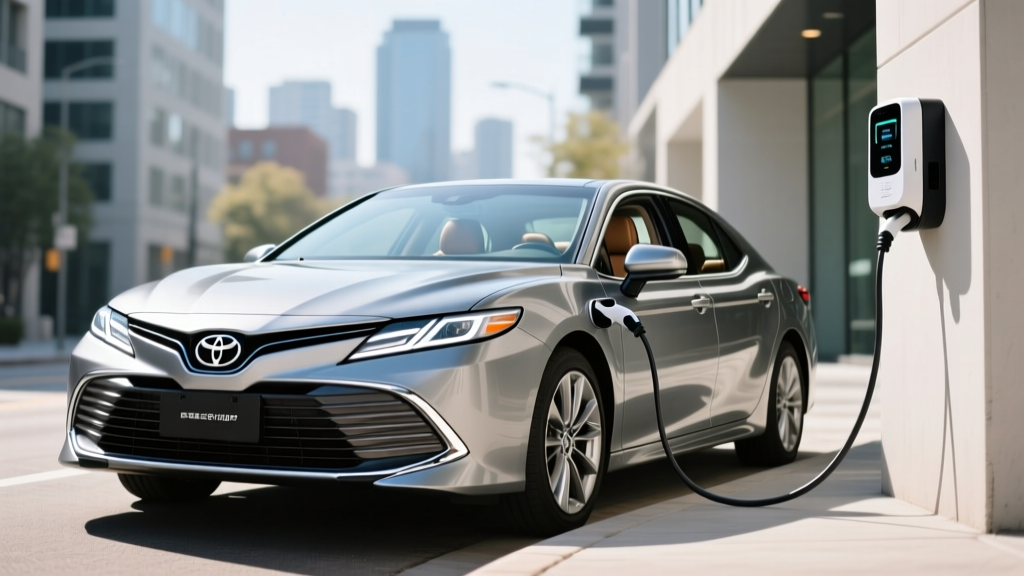
The 2025 Toyota Camry XLE Hybrid is a conventional hybrid (HEV) — not a plug-in. It pairs a 2.5-liter four-cylinder engine with Toyota's fifth-generation hybrid system to deliver an EPA-estimated 51 MPG city and 49 MPG highway in front-wheel-drive form. Starting at $33,495 for the XLE trim (including destination), it requires no plug-in charging and has no electric-only driving range. For buyers who want a midsize sedan with exceptional fuel economy, zero range anxiety, and Toyota's long-standing hybrid reliability, the Camry XLE Hybrid remains one of the most practical vehicles on the road.
| Spec | 2025 Camry XLE Hybrid (FWD) | 2025 Camry XLE Hybrid (AWD) |
|---|---|---|
| Combined HP | 225 hp | 232 hp |
| EPA City / Hwy / Combined MPG | 51 / 49 / 51 | 49 / 47 / 48 |
| Powertrain | 2.5L I4 + 2 electric motors | 2.5L I4 + 3 electric motors |
| Hybrid Battery | ~1.1 kWh (lithium-ion, self-charging) | ~1.1 kWh (lithium-ion, self-charging) |
| Plug-in Required? | No — HEV | No — HEV |
| Electric-Only Range | N/A (brief low-speed assist only) | N/A |
| 0-60 mph (est.) | ~7.2 sec | ~6.9 sec |
| MSRP (incl. destination) | $33,495 | $34,895 |
| Federal Tax Credit (§30D) | Not eligible (HEV) | Not eligible (HEV) |
| Hybrid Battery Warranty | 10 yr / 150,000 mi | 10 yr / 150,000 mi |
HEV vs PHEV: Where the Camry XLE Hybrid Fits
Before digging into fuel economy, it's essential to distinguish what the 2025 Camry XLE Hybrid is — and isn't.
| Feature | HEV (Camry Hybrid) | PHEV (e.g., Prius Prime) | BEV (e.g., Tesla Model 3) |
|---|---|---|---|
| Plug-in Charging Required? | No | Yes (Level 1/2) | Yes (Level 2/DC) |
| Electric-Only Range | ~1 mi at low speed | 30-44 mi (typical) | 250-350+ mi |
| Gas Engine | Yes (always available) | Yes (kicks in after EV range) | No |
| Fuel / Energy | Gasoline only | Gasoline + electricity | Electricity only |
| Federal Tax Credit | None | Up to $7,500 (§30D) | Up to $7,500 (§30D) |
| Best For | No home charging access | Short commutes + home charging | Full electric commitment |
The 2025 Camry XLE Hybrid is a conventional hybrid (HEV). Its small lithium-ion battery recharges through regenerative braking and the gas engine — you never plug it in. Toyota does not currently offer a Camry PHEV in the US market. If you want plug-in capability in a Toyota sedan, the Prius Prime is the closest alternative, offering up to 44 miles of electric-only range.
Fuel Economy: EPA Numbers and Real-World MPG
The 2025 Camry XLE Hybrid with front-wheel drive carries an EPA-estimated 51 MPG city, 49 MPG highway, and 51 MPG combined. The AWD variant drops slightly to 49/47/48. These numbers are exceptional for a midsize sedan and represent a meaningful improvement over the previous-generation Camry Hybrid (which rated at 44/47/46 combined for the LE trim).
| Trim / Drivetrain | City MPG | Highway MPG | Combined MPG |
|---|---|---|---|
| XLE Hybrid (FWD) | 51 | 49 | 51 |
| XLE Hybrid (AWD) | 49 | 47 | 48 |
| SE Hybrid (FWD) | 48 | 47 | 47 |
| LE Hybrid (FWD) | 53 | 50 | 52 |
Real-World MPG: What Owners Actually See
Toyota hybrids tend to meet or exceed their EPA city estimates in real-world driving — the opposite of most gas-only vehicles, which fall short of sticker numbers. The hybrid system's regenerative braking recaptures energy in stop-and-go traffic, making city driving the Camry Hybrid's sweet spot.
In mixed driving with moderate highway use, expect real-world fuel economy in the 47-53 MPG range for the FWD XLE. Highway-heavy trips at 75+ mph will pull numbers toward the low-to-mid 40s, as aerodynamic drag overwhelms the hybrid system's efficiency advantage at sustained speed. In cold weather (below 35°F), expect a 5-10% reduction as the engine runs more frequently to heat the cabin and maintain battery temperature.
At $3.30/gallon (national average as of early 2026) and 15,000 miles per year, the Camry XLE Hybrid costs approximately $970 annually in fuel — roughly $650 less than a comparable gas-only midsize sedan rated at 30 MPG combined.
Powertrain and Performance
The 2025 Camry XLE Hybrid uses Toyota's fifth-generation hybrid system, pairing a 2.5-liter Dynamic Force four-cylinder engine with two electric motor-generators (three in AWD models, which add a rear-mounted electric motor for electronic all-wheel drive).
- FWD: 225 combined system horsepower
- AWD: 232 combined system horsepower
- Transmission: eCVT (electronically controlled continuously variable transmission)
- 0-60 mph: Approximately 7.2 seconds (FWD), 6.9 seconds (AWD)
The eCVT is a power-split device, not a traditional belt-driven CVT, so it avoids the rubber-band feel that plagues some competitors. Acceleration is linear and adequate for highway merging, though the Camry Hybrid prioritizes efficiency over sportiness. The XLE trim's softer suspension tuning emphasizes comfort, making it the right choice for commuters who value ride quality over corner-carving ability.
Pricing, Trims, and Tax Credit Eligibility
The 2025 Toyota Camry XLE Hybrid starts at $33,495 (including $1,095 destination charge). Adding AWD brings the price to $34,895. The XLE sits above the base LE Hybrid ($29,495) and sport-oriented SE Hybrid ($31,495) in the lineup, offering premium features like SofTex-trimmed seats, a 12.3-inch touchscreen, wireless Apple CarPlay and Android Auto, and a 9-speaker audio system.
Federal Tax Credit: Not Eligible
Because the 2025 Camry XLE Hybrid is a conventional HEV — not a plug-in hybrid or battery-electric vehicle — it does not qualify for the federal §30D Clean Vehicle Credit of up to $7,500. The IRS §30D credit applies only to new plug-in electric vehicles (PHEVs and BEVs) with a battery capacity of at least 7 kWh. Since the Camry Hybrid's battery is approximately 1.1 kWh and the vehicle cannot be plugged in, it falls outside the credit's scope.
Some states and local utilities offer rebates for conventional hybrids, but these vary widely by jurisdiction. Check your state energy office or utility provider for current programs.
Hybrid Battery Warranty, Lifespan, and Replacement Cost
Hybrid battery longevity is the top concern for first-time hybrid buyers. Toyota addresses this with one of the strongest warranties in the industry:
- Hybrid Battery Warranty: 10 years or 150,000 miles (whichever comes first), transferable to subsequent owners
- Hybrid System Components: 8 years or 100,000 miles (inverter, transaxle, control module)
In practice, Toyota hybrid batteries routinely last 150,000-200,000+ miles before significant degradation. The fifth-generation system uses a relatively small lithium-ion pack that operates in a narrow state-of-charge window (roughly 40-80%), which dramatically reduces cycle wear compared to a full EV battery that regularly charges to 100%.
If replacement is eventually needed outside warranty, a new OEM hybrid battery for the Camry Hybrid costs approximately $3,000-$4,500 installed at a Toyota dealer. Third-party refurbished units are available for $1,500-$2,500. Given the battery's small size and the system's proven architecture, catastrophic failure before 150,000 miles is rare.
Who Should Buy the 2025 Camry XLE Hybrid?
Choose the Camry XLE Hybrid If:
- You don't have access to home or workplace charging (no plug needed)
- You drive 15,000+ miles per year and want to minimize fuel costs
- You prioritize comfort and technology over sporty handling
- You want proven hybrid reliability with a 10-year battery warranty
- Your budget is $33,000-$38,000 (before options)
Look Elsewhere If:
- You want electric-only driving — consider the Prius Prime PHEV (44 mi EV range) or a full BEV
- You need all-electric commuting to qualify for HOV lane access or state EV incentives
- You want a federal tax credit — only PHEVs and BEVs qualify under §30D
- You prefer sporty driving dynamics — the Camry SE Hybrid or a turbocharged competitor may suit you better
Pros
- 51 MPG combined — best-in-class for midsize sedans
- No plug-in charging required — works for apartment dwellers
- 10-year / 150,000-mile hybrid battery warranty
- Comfortable ride, quiet cabin, strong tech suite
- Toyota Safety Sense 3.0 standard (pre-collision, lane tracing, adaptive cruise)
- Low annual fuel cost (~$970/yr at 15k mi)
Cons
- No federal tax credit eligibility (HEV, not PHEV)
- No electric-only driving range for zero-emission commuting
- eCVT drone under hard acceleration
- XLE trim's soft suspension sacrifices handling precision
- AWD costs $1,400 extra and drops MPG slightly
Frequently Asked Questions
How many MPG does the 2025 Toyota Camry XLE Hybrid get?
The FWD XLE Hybrid is EPA-rated at 51 city / 49 highway / 51 combined. The AWD version rates at 49/47/48. Real-world results typically land between 47-53 MPG depending on driving conditions, with city-heavy routes often exceeding the EPA estimate.
Does the 2025 Camry XLE Hybrid need to be plugged in?
No. The Camry XLE Hybrid is a conventional hybrid (HEV). Its battery recharges automatically through regenerative braking and the gas engine. You fuel it exclusively with gasoline — no charging cable, no plug, no home charger installation needed.
How far can the Camry Hybrid drive on electric power alone?
Essentially zero meaningful distance. The hybrid system can propel the car at very low speeds (under 25 mph) for roughly a mile or less in ideal conditions, but the engine engages frequently. If you need real electric-only range, you want a PHEV like the Prius Prime (44 mi) or a full BEV.
Is the 2025 Camry Hybrid reliable?
Toyota's hybrid system has over 25 years of proven reliability since the original Prius. The fifth-generation system in the 2025 Camry uses fewer moving parts than a conventional powertrain (no traditional starter, alternator, or accessory belt). The hybrid battery is warrantied for 10 years/150,000 miles, and real-world data shows these packs routinely exceed 200,000 miles. IIHS has tested the Camry sedan and rates it highly for crashworthiness.
Does the 2025 Camry XLE Hybrid qualify for any tax credit?
No federal tax credit. The IRS §30D Clean Vehicle Credit applies only to plug-in vehicles (PHEVs and BEVs). The Camry Hybrid is an HEV and does not qualify. Some state or utility-level hybrid incentives may exist — check local programs. A tax professional can confirm your specific eligibility.
What is the hybrid battery replacement cost?
Out of warranty, expect $3,000-$4,500 for a new OEM battery installed at a Toyota dealer, or $1,500-$2,500 for a refurbished unit from a third-party supplier. Given the 10-year/150,000-mile warranty and typical battery lifespan exceeding 200,000 miles, most owners will never face this cost.
Camry Hybrid vs. a full EV — which should I choose?
If you have reliable home Level 2 charging, drive under 300 miles per day, and want the lowest operating cost plus federal tax credit eligibility, a BEV like the Tesla Model 3 or Hyundai Ioniq 6 may be a better fit. If you lack home charging, regularly take long road trips, or want zero behavior change from your gas car, the Camry Hybrid delivers massive fuel savings with no infrastructure requirements.