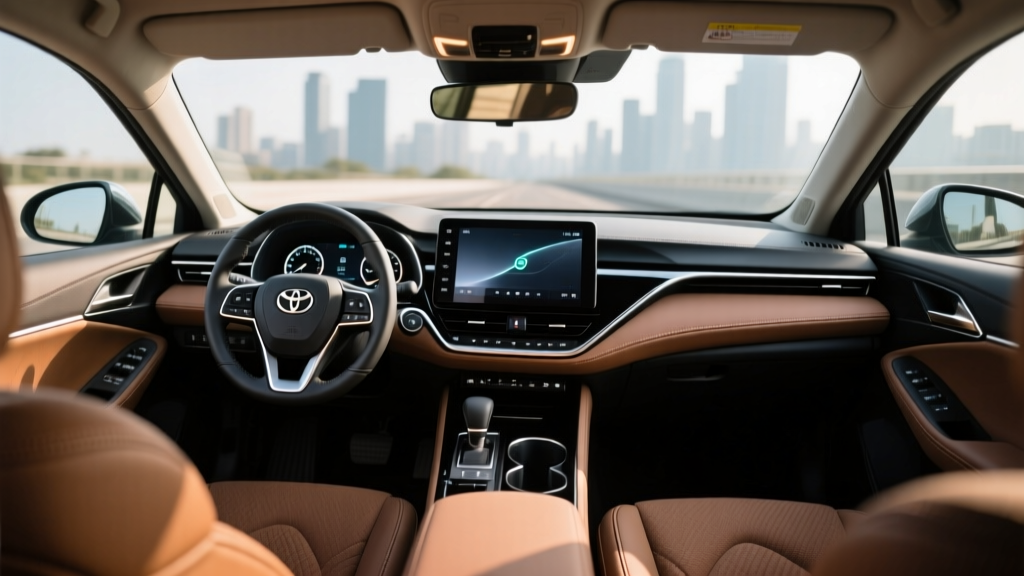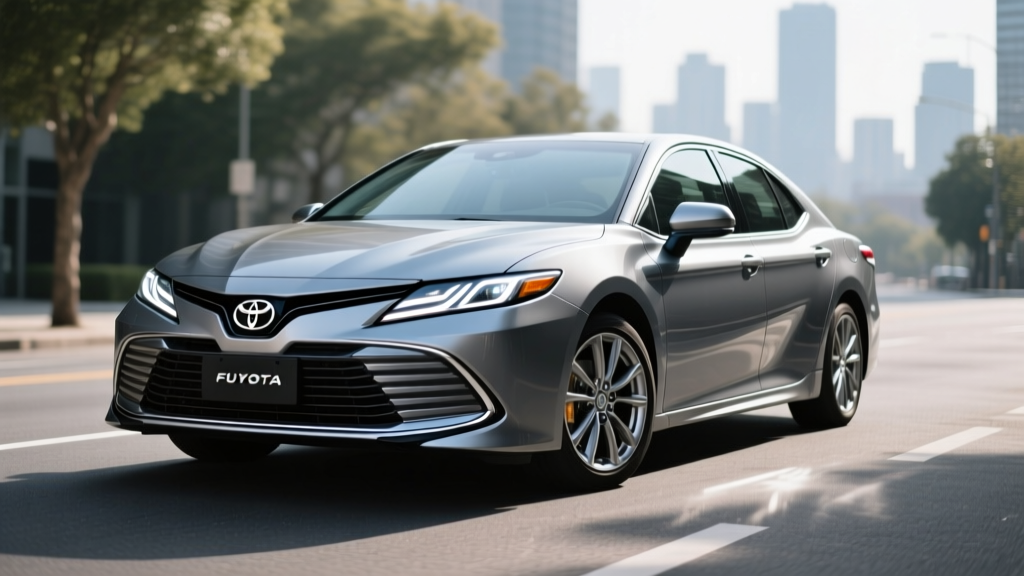
The 2025 Toyota Camry Hybrid LE FWD arrives at a pivotal moment for midsize sedan buyers. With Toyota making the Camry lineup hybrid-only for the first time, the base LE FWD trim represents the most accessible entry point into one of America's best-selling nameplates — now with a fifth-generation hybrid system that pushes EPA fuel economy to 51 MPG combined. This isn't a plug-in hybrid, and it doesn't pretend to be. It's a conventional self-charging hybrid (HEV) engineered for drivers who want maximum fuel efficiency without altering their refueling habits.
We've analyzed the official EPA data, Toyota's powertrain specifications, and real-world driving patterns to give you a complete picture of what the Camry Hybrid LE FWD delivers — and where its limitations lie compared to a PHEV or full battery-electric vehicle.
2025 Toyota Camry Hybrid LE FWD: Core Specifications
| Specification | Value |
|---|---|
| Powertrain Type | Conventional Hybrid (HEV) — no plug-in required |
| Engine | 2.5L 4-cylinder Dynamic Force + 2 electric motor-generators |
| Combined Horsepower | 225 hp (net system output) |
| Drivetrain | Front-Wheel Drive (FWD) |
| Transmission | eCVT (electronically controlled continuously variable) |
| Hybrid Battery | Lithium-ion, ~1.1 kWh usable (self-charging, not plug-in) |
| EPA MPG (City / Hwy / Combined) | 53 / 50 / 51 MPG |
| Fuel Tank Capacity | 13.2 gallons |
| Total Driving Range | ~673 miles (EPA combined estimate) |
| 0–60 mph | ~7.2 seconds (estimated) |
| Starting MSRP | $29,495 (including destination) |
| Hybrid Battery Warranty | 10 years / 150,000 miles |
| Powertrain Warranty | 5 years / 60,000 miles |
Fuel Economy: EPA Ratings vs. Real-World MPG
The EPA rates the 2025 Camry Hybrid LE FWD at 53 MPG city, 50 MPG highway, and 51 MPG combined, according to fueleconomy.gov. These are class-leading numbers for a midsize sedan and represent a meaningful improvement over the previous-generation Camry Hybrid LE's 52 MPG combined rating.
The Camry Hybrid's EPA city number (53 MPG) is one area where real-world results often exceed the sticker. Toyota's hybrid system recovers significant energy through regenerative braking in stop-and-go traffic, and many owners report 55–58 MPG in urban driving during mild weather. Highway driving is where you'll see numbers dip slightly below EPA: expect 46–49 MPG at sustained 75 mph speeds, especially with headwinds or elevation changes. In cold weather (below 30°F), plan for a 5–10% reduction across the board as the engine runs more frequently for cabin heat before the hybrid system fully warms up.
| Driving Scenario | EPA Rating | Real-World Expectation |
|---|---|---|
| City (stop-and-go) | 53 MPG | 52–58 MPG |
| Highway (70–75 mph) | 50 MPG | 46–49 MPG |
| Combined (mixed) | 51 MPG | 48–53 MPG |
| Cold weather (combined) | — | 44–48 MPG |
Fifth-Generation Hybrid Powertrain: How It Works
The 2025 Camry uses Toyota's fifth-generation Hybrid Synergy Drive, pairing a 2.5-liter Dynamic Force four-cylinder engine (running the Atkinson cycle for maximum thermal efficiency) with two motor-generators and a lithium-ion hybrid battery pack. The combined net system output is 225 horsepower — a 23-hp increase over the prior generation's 208 hp.
The FWD LE uses a parallel hybrid architecture: the gasoline engine and electric motor(s) can drive the front wheels independently or together. The eCVT transmission isn't a traditional belt-and-pulley CVT; it uses a planetary gearset to seamlessly blend power from the engine and electric motors. The result is smooth, linear acceleration without the rubber-band feeling associated with older CVTs.
Critically, this is a conventional hybrid (HEV), not a plug-in hybrid (PHEV). The ~1.1 kWh lithium-ion battery recharges exclusively through regenerative braking and the gasoline engine. You never plug it in. The electric-only driving capability is limited to very short, low-speed bursts (typically under 1 mile at speeds below 25 mph) — enough for creeping through a parking lot or moving silently in a drive-through, but not for meaningful electric-only commuting.
Conventional Hybrid (HEV) — like this Camry Hybrid LE — has a small battery (~1 kWh) that charges through regen braking and the engine. No plug, no electric-only range to speak of. You fuel it like a normal gas car and get dramatically better MPG.
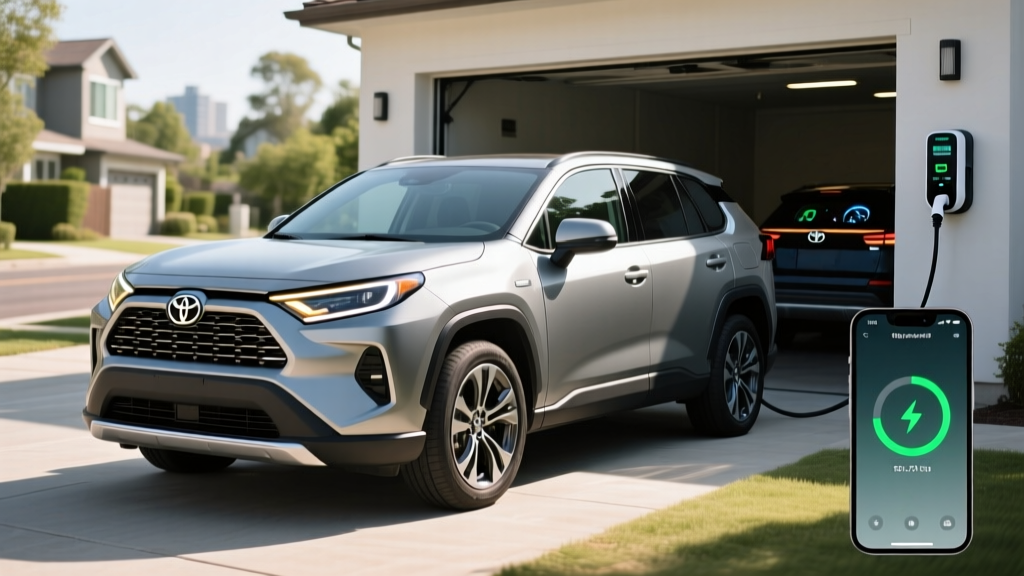
Plug-in Hybrid (PHEV) — like the Toyota RAV4 Prime or Prius Prime — has a larger battery (13–18 kWh), a charging port, and 25–44 miles of electric-only range before the hybrid system kicks in. PHEVs qualify for potential federal tax credits but cost $5,000–$10,000 more upfront.
Pricing, Trims, and Tax Credit Eligibility
The 2025 Toyota Camry Hybrid LE FWD starts at $29,495 including destination charges. This positions it competitively against the Honda Accord Hybrid (starting ~$33,000 for the Sport trim) while undercutting most midsize hybrid rivals.
| Trim | MSRP (incl. destination) | Key Additions Over LE |
|---|---|---|
| LE FWD | $29,495 | Base — 8" touchscreen, wireless CarPlay/Android Auto, TSS 3.0 |
| SE FWD | $31,995 | Sport suspension, 18" alloy wheels, paddle shifters |
| XLE FWD | $34,495 | Leather-trimmed seats, 12.3" display, heated front seats |
Federal tax credit status: The Camry Hybrid LE is a conventional hybrid (HEV), not a plug-in hybrid or battery-electric vehicle. It does not qualify for the federal §30D Clean Vehicle Credit (up to $7,500), which is reserved for new plug-in electric vehicles with ≥7 kWh of battery capacity and meeting critical mineral and battery component sourcing requirements per IRS guidelines. Some states offer modest incentives for high-efficiency hybrids — check your state's energy office or the Alternative Fuels Data Center for local programs, but these are typically $250–$1,000 and vary by jurisdiction.
The economic case for the Camry Hybrid LE doesn't rely on tax credits. At 51 MPG combined and current national gas prices (~$3.10/gallon), the annual fuel cost is approximately $940 for 15,000 miles of driving. A comparable non-hybrid midsize sedan averaging 30 MPG combined would cost roughly $1,550 per year — a difference of about $610 annually, or $3,050 over five years, in fuel savings alone.
Reliability and Hybrid Battery Longevity
Toyota's hybrid systems have an extensive track record spanning over 25 years since the original Prius. The Camry Hybrid's powertrain is one of the most proven in the industry, and the brand consistently ranks at or near the top in long-term reliability surveys from J.D. Power and Consumer Reports.
Toyota covers the 2025 Camry Hybrid's lithium-ion battery pack for 10 years or 150,000 miles (whichever comes first) in all 50 states. This is among the best hybrid battery warranties available. If the battery does fail outside warranty — which is statistically uncommon based on two decades of Toyota hybrid data — a replacement hybrid battery pack for the Camry currently costs between $2,500 and $4,000 including labor at a dealership. Independent hybrid specialists often offer refurbished packs for $1,500–$2,500. For context, many Toyota hybrid batteries from the 2005–2015 era are still functioning with well over 200,000 miles on the original pack.
The hybrid battery in the Camry LE is relatively small (~1.1 kWh) and operates within a conservative state-of-charge window — Toyota's battery management system rarely allows it to fully charge or fully discharge, which significantly extends cycle life. The battery is air-cooled and mounted under the rear seat, keeping it within a manageable temperature range.
Beyond the hybrid battery, the Camry's 2.5L Dynamic Force engine has no turbocharger (fewer failure points), and the eCVT planetary gearset has no belts, clutches, or bands to wear out. Routine maintenance is minimal: oil changes, tire rotations, cabin air filter, and brake inspections. Regenerative braking significantly reduces brake pad wear — many hybrid owners report original brake pads lasting 80,000–100,000 miles.
Camry Hybrid LE vs. PHEV vs. Full EV: Which Fits You?
The right electrified vehicle depends on your driving patterns, charging access, and budget. Here's a practical decision framework:
- You don't have access to home or workplace charging (apartment, street parking)
- You want zero behavior change — fuel at any gas station, no plug-in routine
- Your budget is under $30,000 and you want maximum MPG for the dollar
- You drive 12,000–18,000 miles/year and want the lowest fuel cost without an EV premium
- You frequently take long road trips and don't want to plan around charging stops
- You can charge at home (Level 1 or Level 2) and want 25–44 miles of electric-only daily commuting
- Your daily round-trip commute is under 40 miles but you also take longer trips regularly
- You want to qualify for the federal §30D tax credit (up to $7,500 on eligible PHEVs)
- You're willing to pay a $5,000–$10,000 premium for electric-only capability
- You have reliable home Level 2 charging and your daily driving is under 250 miles
- You want the lowest per-mile energy cost (electricity at ~$0.14/kWh ≈ $0.04/mile vs. gas at ~$0.06/mile for the Camry Hybrid)
- You want to eliminate oil changes and most powertrain maintenance entirely
- You qualify for the full $7,500 federal tax credit and state incentives, narrowing the price gap
Pros and Cons: 2025 Camry Hybrid LE FWD
- 51 MPG combined — best-in-class for midsize sedans
- 225 hp provides confident highway merging and passing
- No plug-in required — zero lifestyle change
- ~673-mile total range between fill-ups
- Strong resale value and proven reliability
- 10-year/150,000-mile hybrid battery warranty
- Under $30,000 starting price
- Toyota Safety Sense 3.0 standard (adaptive cruise, lane-keeping, auto emergency braking)
- No electric-only driving range (unlike a PHEV)
- No federal tax credit eligibility (HEV, not plug-in)
- eCVT engine drone under hard acceleration
- FWD only on the LE trim (AWD available on SE/XLE for $1,600 more)
- Base LE interior is functional but plain — hard plastics on lower door panels and dash
- No DC fast charging capability (not applicable to HEV, but worth noting vs. PHEVs/EVs)
- Highway MPG drops noticeably above 75 mph
Frequently Asked Questions
How many MPG does the 2025 Toyota Camry Hybrid LE FWD get?
The EPA rates the 2025 Camry Hybrid LE FWD at 53 MPG city, 50 MPG highway, and 51 MPG combined. In real-world driving, expect 48–53 MPG in mixed conditions, with city driving often exceeding the EPA estimate (55+ MPG) and sustained highway driving at 75+ mph yielding 46–49 MPG. Cold weather reduces efficiency by roughly 5–10%.
Does the Camry Hybrid LE need to be plugged in?
No. The Camry Hybrid LE is a conventional hybrid (HEV). Its small lithium-ion battery recharges entirely through regenerative braking and the gasoline engine. You simply fill the 13.2-gallon fuel tank at any gas station — no charging cable, no plug, no home charger needed.
Is the Camry Hybrid reliable, and what does battery replacement cost?
Toyota's hybrid system is one of the most proven in the automotive industry, with over 25 years of continuous refinement. The hybrid battery is covered by a 10-year/150,000-mile warranty. Out-of-warranty replacement costs approximately $2,500–$4,000 at a dealership, or $1,500–$2,500 through an independent hybrid specialist using a refurbished pack. Based on historical data, most Toyota hybrid batteries last well beyond 150,000 miles without issue.
Does the 2025 Camry Hybrid qualify for any tax credit?
The Camry Hybrid LE does not qualify for the federal §30D Clean Vehicle Credit, which requires a plug-in electric vehicle with at least 7 kWh of battery capacity. As a conventional hybrid with a ~1.1 kWh battery, it doesn't meet this threshold. Some states and local utilities offer small rebates ($250–$1,000) for high-efficiency hybrids — check the Alternative Fuels Data Center for your area. A tax professional can confirm eligibility for any local incentives.
How does the Camry Hybrid LE compare to a PHEV like the Prius Prime?
The Prius Prime (PHEV) offers up to 44 miles of electric-only range and qualifies for a partial federal tax credit, but starts around $33,000 and requires plug-in charging to realize its electric benefits. The Camry Hybrid LE starts at $29,495, needs no plug, and delivers 51 MPG combined consistently. If you can charge at home and your commute is under 40 miles, the Prius Prime may save more on fuel. If you lack charging access or want the lowest upfront cost with zero behavior change, the Camry Hybrid LE is the stronger pick.
Is AWD available on the Camry Hybrid LE?
No. The LE trim is FWD only. Electronic On-Demand AWD (using a separate rear electric motor) is available on the SE and XLE trims for an additional $1,600, though AWD reduces EPA fuel economy to 49 MPG combined.