The 2025 Subaru Hybrid Landscape: What's Actually Available
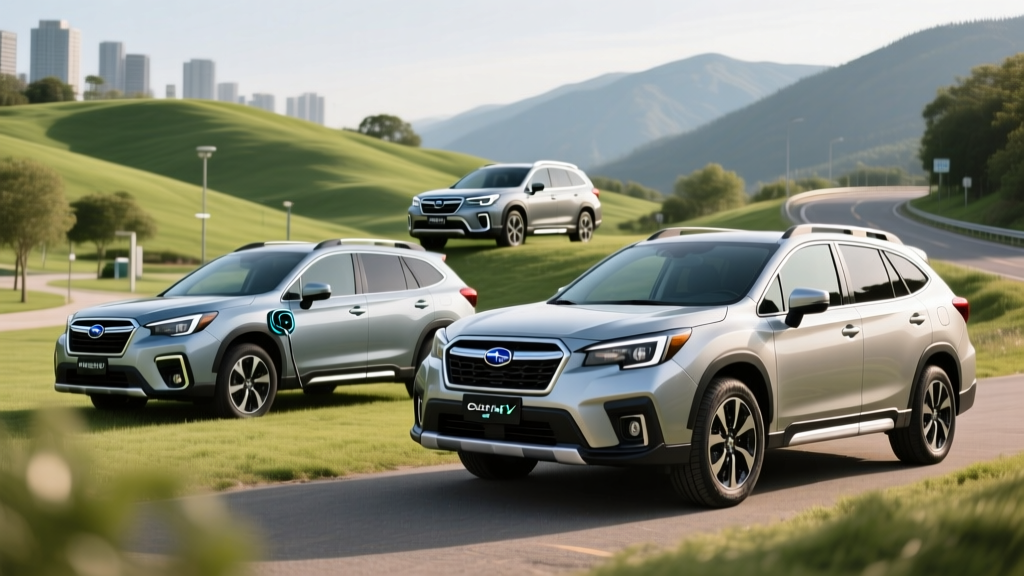
Subaru's electrification strategy has historically lagged behind Toyota and Honda, but the 2025 model year marks a meaningful shift. After discontinuing the Crosstrek Plug-In Hybrid (PHEV) following the 2023 model year, Subaru has restructured its hybrid offerings around conventional hybrid (HEV) technology, with the 2025 Crosstrek Hybrid leading the charge as the brand's first dedicated HEV nameplate in the U.S. market. The 2025 Forester also gains a hybrid variant, while Subaru continues to lean on its partnership with Toyota for hybrid powertrain components.
If you're searching for a 2025 Subaru hybrid, you need to understand exactly which models qualify, what kind of hybrid system they use, and whether any still offer plug-in capability. This guide breaks down every electrified Subaru you can buy today, with exact EPA figures, pricing, and ownership economics.
HEV vs. PHEV — What Subaru Offers in 2025
Conventional Hybrid (HEV): Uses a small battery (typically 1–2 kWh) charged by regenerative braking and the gas engine. You never plug it in. It improves MPG, especially in city driving, but offers no electric-only range.
Plug-In Hybrid (PHEV): Carries a larger battery (typically 10–20 kWh) that you can charge from a wall outlet or public charger. It provides 20–40 miles of electric-only driving before the gas engine kicks in. Subaru currently has no PHEV in its 2025 U.S. lineup.
2025 Subaru Crosstrek Hybrid: Specs, MPG, and Pricing
The 2025 Crosstrek Hybrid is Subaru's mainstream hybrid play. Built on the same platform as the standard Crosstrek, it pairs Subaru's 2.0-liter BOXER engine with an electric motor integrated into a revised continuously variable transmission (CVT). The system produces a combined 194 horsepower, a meaningful bump over the gas-only Crosstrek's 152 hp from its 2.0L engine.
| Spec | Value |
|---|---|
| Powertrain | 2.0L BOXER-4 + electric motor (HEV) |
| Combined Horsepower | 194 hp |
| Drivetrain | Symmetrical AWD (standard) |
| Battery | ~1.1 kWh lithium-ion (HEV, not plug-in) |
| EPA MPG (City / Hwy / Combined) | 36 / 34 / 35 MPG |
| 0–60 mph | ~7.8 seconds (est.) |
| Base MSRP | ~$29,995 |
| Federal Tax Credit | Not eligible (HEV) |
Real-World MPG: What to Actually Expect
Subaru's EPA rating of 35 MPG combined for the Crosstrek Hybrid is a solid improvement over the gas-only 2.0L Crosstrek's 29 MPG combined. However, as with most conventional hybrids, real-world results skew favorably in city driving and less so on the highway.
Based on early owner reports and Subaru's hybrid system behavior:
- City driving: Expect 37–40 MPG. The electric motor handles low-speed propulsion, and regenerative braking recaptures energy at stops.
- Highway driving (70+ mph): Expect 30–33 MPG. At sustained high speeds, the gas engine carries most of the load, and the aerodynamic profile of a crossover works against efficiency.
- Cold weather (below 30°F): Expect a 5–10% drop, putting combined real-world around 31–33 MPG. The engine runs more frequently to provide cabin heat and maintain battery temperature.
For context, the EPA's fueleconomy.gov listing confirms the 35 MPG combined figure. Subaru's hybrid system prioritizes seamless AWD engagement over maximizing electric-only low-speed driving, which slightly limits city gains compared to, say, the Toyota RAV4 Hybrid's 41 MPG combined.
2025 Subaru Forester Hybrid: The Family-Friendly Option
The redesigned 2025 Forester introduces a hybrid variant for the first time in the U.S. market since the 2022 model year. Like the Crosstrek Hybrid, it uses a 2.0-liter BOXER engine paired with an electric motor, but tuned for the Forester's larger, heavier platform.
| Driving Condition | EPA MPG | Real-World Estimate |
|---|---|---|
| City | 35 | 36–38 |
| Highway | 33 | 29–32 |
| Combined | 34 | 32–35 |
The Forester Hybrid starts at approximately $33,995 and includes Subaru's Symmetrical All-Wheel Drive as standard. Combined output is 194 hp, adequate for daily driving but not brisk for a vehicle of this size. If you regularly carry a full cabin of passengers and cargo on mountain highways, you'll notice the powertrain working hard — this is a fuel-economy play, not a performance upgrade.
What Happened to the Subaru PHEV?
Subaru's only recent plug-in hybrid was the Crosstrek Plug-In Hybrid, sold from 2019 through 2023. It was essentially a rebadged Toyota Prius Prime powertrain adapted to the Crosstrek platform, offering 17 miles of electric-only range from a 8.8 kWh battery and an EPA rating of 90 MPGe when blending electric and gas operation.
Subaru discontinued the Crosstrek PHEV for the 2024 model year due to modest sales and the industry's pivot toward full battery-electric vehicles. As of the 2025 model year, Subaru does not sell a PHEV in the United States. The brand's next electrified step is the Solterra, a fully electric SUV developed with Toyota, but that's a BEV — not a hybrid.
If plug-in capability is a priority for you, you'll need to look outside the Subaru showroom. The Toyota RAV4 Prime (42 miles electric-only, 38 MPG gas-only) or the Mitsubishi Outlander PHEV (38 miles electric-only) are the closest AWD alternatives with plug-in capability.
Battery Warranty, Reliability, and Replacement Cost
Subaru Hybrid Battery Warranty
Subaru covers its hybrid battery components under the standard hybrid system warranty:
- Coverage period: 8 years / 100,000 miles (whichever comes first)
- In California and states adopting CARB standards: 10 years / 150,000 miles
- What's covered: Hybrid battery pack, inverter, electric motor, and associated control modules
Subaru's hybrid systems, being derived from Toyota-sourced components, carry a strong reliability track record. Toyota's hybrid synergy drive architecture has demonstrated battery longevity exceeding 150,000–200,000 miles in real-world use across millions of vehicles. There's no reason to expect Subaru's implementation to differ significantly.
If the hybrid battery does need replacement outside warranty, expect a cost between $2,000 and $4,000 depending on the model and whether you use a new OEM pack or a refurbished unit. For context, this is comparable to a major transmission repair on a conventional vehicle and far less than a full EV battery replacement.
Tax Credits and Incentives: What You Can (and Can't) Claim
Here's where the distinction between HEV and PHEV matters most for your wallet:
- Conventional hybrids (HEV): The 2025 Crosstrek Hybrid and Forester Hybrid do not qualify for the federal §30D Clean Vehicle Credit. That credit requires a plug-in vehicle with a minimum battery capacity of 7 kWh. HEVs fall well below this threshold.
- Plug-in hybrids (PHEV): Since Subaru has no PHEV in its 2025 lineup, there is no Subaru model eligible for the federal credit this year.
- State incentives: Some states offer rebates for conventional hybrids, though these are increasingly rare as incentive programs shift toward BEVs and PHEVs. Check your state's energy office or the DOE's Alternative Fuels Data Center for current state-level programs.
If the federal §30D tax credit is important to your purchase decision, you'll need to look at a PHEV or BEV from another manufacturer. The IRS rules require the vehicle to have a battery capacity of at least 7 kWh, meet MSRP caps ($55,000 for SUVs, $50,000 for sedans), and satisfy critical-mineral and battery-component sourcing requirements.
2025 Subaru Hybrid vs. Full EV vs. Gas: Which Should You Buy?
Choose the 2025 Subaru Hybrid If:
- You want AWD and better fuel economy without changing your refueling habits
- You don't have reliable access to home or workplace charging
- You regularly drive in cold climates where EV range loss is a concern
- You want Subaru's safety tech (EyeSight) and resale value with a modest efficiency upgrade
- Your annual mileage is moderate (10,000–15,000 miles) and fuel savings alone won't justify a more expensive EV
Look at a Full EV or PHEV Instead If:
- You have home Level 2 charging and want to eliminate gas expenses
- You want to claim the $7,500 federal tax credit (requires PHEV or BEV)
- Your daily commute is under 30 miles and you want zero tailpipe emissions on most trips
- You plan to keep the vehicle 8+ years and want lower long-term maintenance costs
- You live in a state with high gas prices (CA, HI, WA, NY) where EV charging economics strongly favor electrification
The Crosstrek Hybrid makes the most sense for Subaru-loyal buyers in rural or cold-climate areas where charging infrastructure is sparse and AWD is non-negotiable. It's a pragmatic efficiency upgrade, not a transformative technology leap. If you're ready for a bigger step, the Solterra BEV or a competitor's PHEV will serve you better.
Frequently Asked Questions
How many MPG does the 2025 Subaru Crosstrek Hybrid get?
The EPA rates the 2025 Crosstrek Hybrid at 36 city / 34 highway / 35 combined MPG. In real-world city driving, owners often see 37–40 MPG thanks to the electric motor's low-speed assistance. Highway driving at 70+ mph typically yields 30–33 MPG.
Does Subaru make a plug-in hybrid in 2025?
No. Subaru discontinued the Crosstrek Plug-In Hybrid after the 2023 model year. The 2025 Subaru lineup includes only conventional hybrids (HEVs) that do not plug in. If you need a PHEV with AWD, consider the Toyota RAV4 Prime or Mitsubishi Outlander PHEV.
Is the 2025 Subaru Hybrid reliable, and what does a battery replacement cost?
Subaru's hybrid system uses Toyota-derived components with a proven reliability record spanning millions of vehicles. The hybrid battery is warrantied for 8 years/100,000 miles (10 years/150,000 miles in CARB states). Out-of-warranty replacement runs $2,000–$4,000, comparable to a major drivetrain repair on a conventional vehicle.
Does the 2025 Subaru Hybrid qualify for any tax credit?
No. The federal §30D Clean Vehicle Credit requires a plug-in vehicle with at least 7 kWh of battery capacity. Subaru's 2025 hybrids are conventional HEVs with ~1 kWh batteries and do not qualify. Some states may offer minor incentives for hybrids — check the DOE's state incentive database.
Hybrid vs. PHEV vs. EV — which Subaru is right for me?
If you want a Subaru specifically, your only electrified option in 2025 is a conventional hybrid (Crosstrek or Forester). These suit buyers who need AWD, lack home charging, and want incremental MPG gains. If plug-in or full electric capability is a priority, you'll need to look at the Subaru Solterra (BEV) or cross-shop PHEV models from Toyota, Mitsubishi, or Hyundai.