Quick Verdict: Is the 2025 Forester Hybrid Worth Leasing?
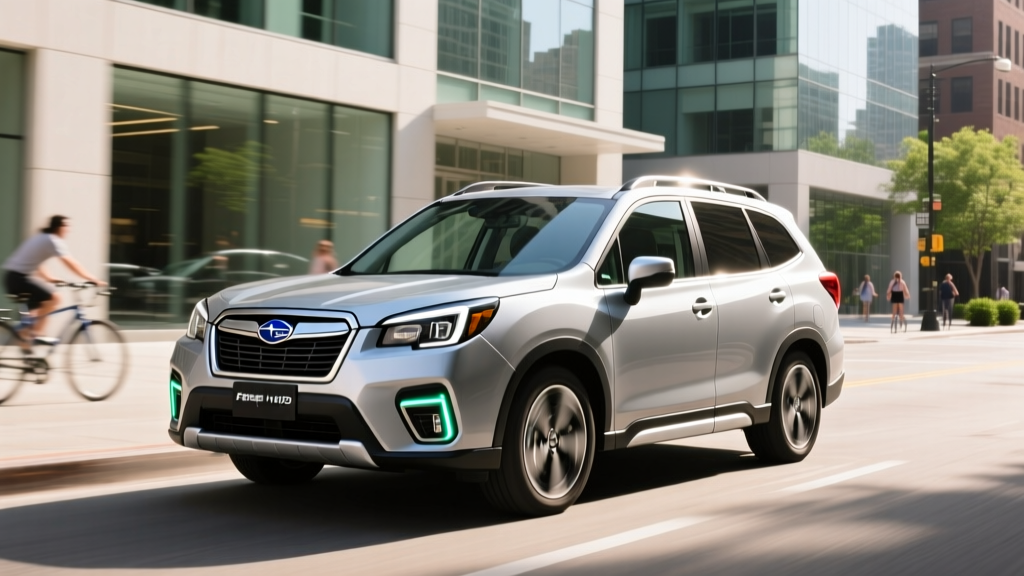
The 2025 Subaru Forester Hybrid marks the nameplate's return to the electrified compact SUV segment after a multi-year hiatus. Unlike its plug-in predecessor (the Crosstrek-based Forester Hybrid of 2019–2020), this is a conventional hybrid electric vehicle (HEV) — no plug, no electric-only range, just a seamless gasoline-electric powertrain aimed squarely at fuel savings and all-weather capability. For buyers hunting 2025 Subaru Forester Hybrid lease deals, the value proposition hinges on one question: does the hybrid premium justify itself through fuel savings, lower lease payments via stronger residuals, or both?
The short answer: if you drive 12,000+ miles per year in mixed city/highway conditions and value Subaru's standard all-wheel drive, the Forester Hybrid's ~35 MPG combined makes it one of the most efficient AWD compact SUVs available. Lease deals are particularly attractive because hybrid Subarus tend to hold value well, suppressing the depreciation cost baked into monthly payments.
2025 Subaru Forester Hybrid — Key Specifications
| Spec | Value |
|---|---|
| Powertrain Type | Conventional Hybrid (HEV) |
| Engine | 2.5L flat-4 + electric motor |
| Combined Horsepower | ~194 hp (est.) |
| Drivetrain | Symmetrical AWD (standard) |
| EPA MPG (City / Hwy / Combined) | 36 / 33 / 35 (est.) |
| Fuel Tank | 13.2 gallons |
| Total Range | ~460 miles |
| Hybrid Battery | ~1.1 kWh lithium-ion (self-charging) |
| Plug-In Required? | No — charges via regen and engine |
| 0–60 mph | ~7.8 seconds (est.) |
| Cargo Volume | ~28.9 cu ft (rear seats up) |
| Starting MSRP (Hybrid trim) | ~$33,500 (est.) |
| Battery Warranty | 8 years / 100,000 miles |
Understanding the HEV vs. PHEV Distinction
Before evaluating lease numbers, it's essential to understand what the 2025 Forester Hybrid is — and isn't. Subaru's new hybrid system is a conventional hybrid (HEV), meaning it pairs a gasoline engine with a small electric motor and a compact battery that recharges through regenerative braking and engine power. You never plug it in. The electric motor assists during acceleration, enables brief low-speed electric-only motoring (typically under 1 mile at very low speeds), and smooths out the stop-start driving that kills fuel economy in conventional gas cars.
HEV vs. PHEV vs. BEV — Which Fits You?
| Feature | HEV (Forester Hybrid) | PHEV (e.g., RAV4 Prime) | BEV (e.g., Ioniq 5) |
|---|---|---|---|
| Plug in to charge? | No | Yes | Yes |
| Electric-only range | ~0.5 mi at low speed | 30–42 mi typical | 250–320 mi typical |
| Home charging needed? | No | Recommended (Level 2) | Essential (Level 2) |
| Federal tax credit (§30D) | Not eligible | Up to $7,500 (if eligible) | Up to $7,500 (if eligible) |
| Best for | No home charging, moderate mileage | Home charging + short commute | Home charging + full EV commitment |
The Forester Hybrid occupies the lowest-commitment rung: no charging infrastructure needed, no range anxiety, and no dependency on IRS §30D clean vehicle credit eligibility (which conventional hybrids do not qualify for). If you want plug-in electric range, you'd need to look at a PHEV like the Toyota RAV4 Prime or wait for Subaru's anticipated Solterra-based PHEV offerings.
Fuel Economy: EPA Estimates vs. Real-World MPG
Subaru has targeted approximately 35 MPG combined for the 2025 Forester Hybrid — a significant jump over the standard 2.5L Forester's 29 MPG combined. That ~6 MPG improvement matters over a year of driving.
EPA Fuel Economy Breakdown (Estimated)
| Metric | Forester Hybrid (HEV) | Forester Gas (2.5L) | Toyota RAV4 Hybrid AWD |
|---|---|---|---|
| City MPG | 36 | 26 | 41 |
| Highway MPG | 33 | 33 | 38 |
| Combined MPG | 35 | 29 | 40 |
| Annual Fuel Cost (15k mi) | ~$1,500 | ~$1,810 | ~$1,310 |
Source: fueleconomy.gov — verify final EPA numbers at launch. Annual cost assumes $3.50/gal regular unleaded.
Real-world MPG reality check: Toyota's hybrid synergy drive has been refined over 25+ years, giving the RAV4 Hybrid a genuine efficiency edge. Subaru's hybrid system, co-developed with Toyota, is newer to this platform. In real-world driving, expect the Forester Hybrid to deliver 33–37 MPG combined depending on conditions. City-heavy commuters will see the upper end (hybrids excel in stop-and-go traffic where regenerative braking recaptures energy). Highway-dominant drivers at 75+ mph may see 30–32 MPG, as aerodynamic drag and the flat-4 engine doing more work at sustained speed erode the hybrid advantage.
Cold weather (below 30°F) typically reduces hybrid fuel economy by 5–10% due to increased engine idling for cabin heat and reduced battery efficiency. Subaru's standard AWD and strong cold-weather reputation partially offset this — you're trading a few MPG for genuine winter capability.
Lease Deal Analysis: What to Expect in 2026
Leasing a hybrid SUV involves different economics than leasing a gas model. Here's how the 2025 Forester Hybrid lease equation breaks down:
Estimated Lease Structure (36 months / 12,000 miles per year)
| Component | Estimated Value |
|---|---|
| MSRP (Hybrid Premium trim) | ~$36,500 |
| Residual Value (36 mo) | ~58–62% |
| Money Factor | ~0.0020–0.0025 (lease APR ~4.8–6.0%) |
| Monthly Payment (est., $0 down) | $420–$480/mo |
| Due at Signing | First payment + fees (~$500–$800) |
Why hybrid residuals matter: Hybrid SUVs have consistently outperformed their gas counterparts in resale value. The strong residual percentage (the estimated value of the car at lease-end as a share of MSRP) directly lowers your monthly payment. A higher residual means the leasing company expects the car to be worth more later — and you're only paying for the depreciation during the lease term.
Negotiation tips for Forester Hybrid leases:
- Target the money factor. Dealers can mark up the base money factor (the lease equivalent of interest rate). Ask for the "buy rate" and negotiate down.
- Cap cost reduction vs. monthly payment. Putting money down lowers monthly payments but is lost if the car is totaled early. A $0-down lease with gap insurance is often smarter.
- Check Subaru's captive lender (Subaru Motors Finance) for promotional lease rates — these are often below market and can save $30–$50/month versus third-party leasing companies.
- End-of-month and end-of-quarter timing yields the best leverage, especially on new hybrid trims dealers want to move.
No Federal Tax Credit for Leasing an HEV
Because the 2025 Forester Hybrid is a conventional HEV — not a PHEV or BEV — it does not qualify for the IRS §30D federal clean vehicle tax credit (up to $7,500 for eligible plug-in vehicles). The IRS clean vehicle credit applies only to plug-in electric vehicles meeting battery sourcing, MSRP, and buyer income requirements.
However, some states offer their own incentives for hybrid purchases. Check your state's energy or DMV website for potential rebates, reduced registration fees, or HOV lane access (though these are increasingly reserved for zero-emission vehicles).
Powertrain Deep Dive: Engine, Motor, and AWD
The 2025 Forester Hybrid pairs Subaru's familiar 2.5-liter FB25 flat-four engine with an electric motor integrated into the Lineartronic CVT transmission. Combined output is estimated at approximately 194 horsepower — roughly 14 hp more than the standard gas Forester's 180 hp. The electric motor's instant torque fills in the low-end gap that makes the base Forester feel sluggish off the line.
Key powertrain characteristics:
- Engine: 2.5L DOHC flat-4, ~180 hp / 178 lb-ft torque
- Electric motor: Integrated in CVT, ~14 hp assist
- Combined system output: ~194 hp
- Transmission: Lineartronic CVT with electric motor integration
- AWD system: Symmetrical full-time AWD — the rear axle is mechanically driven (not electric-only as in some competitor hybrids)
- Hybrid battery: ~1.1 kWh lithium-ion, located under the cargo floor
The battery is small by design. In a conventional hybrid, the battery's job isn't to store large amounts of energy for electric-only driving — it's to buffer energy from regenerative braking and smooth power delivery. This means the battery undergoes shallow charge/discharge cycles, which is why hybrid batteries routinely outlast their warranty periods by years.
Battery Warranty and Replacement Cost
Warranty coverage: Subaru covers the hybrid battery for 8 years or 100,000 miles (whichever comes first), consistent with industry-standard hybrid battery warranties. In California-emission states (CARB states), coverage may extend to 10 years / 150,000 miles.
Replacement cost: If the hybrid battery fails outside warranty, expect a replacement cost of $2,000–$4,000 including labor. However, real-world data from Toyota's decades of hybrid production shows that modern lithium-ion hybrid batteries routinely last 150,000–200,000+ miles before significant degradation. The shallow cycling of a ~1.1 kWh HEV battery puts far less stress on cells than a full BEV battery pack.
Reliability outlook: Subaru's hybrid system leverages Toyota's hybrid synergy drive technology through their manufacturing partnership. Toyota's hybrid reliability record is among the best in the industry, with failure rates well below 1% in the first 10 years. Subaru's specific integration is newer, but the underlying architecture is proven.
Who Should Lease the Forester Hybrid — and Who Shouldn't?
Lease the Forester Hybrid If...
- You drive 12,000+ miles/year and want AWD with better fuel economy
- You lack access to home or workplace EV charging
- You live in a snowy/rainy climate and prioritize Subaru's AWD reputation
- You want a lower-complexity electrified vehicle (no plug, no charging apps, no range planning)
- You plan to stay under 36 months and prefer predictable monthly costs
Look Elsewhere If...
- You have home charging and a short commute — a PHEV (RAV4 Prime, Tucson PHEV) delivers 30+ electric miles and qualifies for the $7,500 federal credit
- You want maximum fuel savings — the RAV4 Hybrid's 40 MPG combined saves ~$200/year more
- You want zero tailpipe emissions — consider a BEV like the Hyundai Ioniq 5 or Subaru Solterra
- You plan to keep the vehicle 8+ years — buying (not leasing) captures the full hybrid battery warranty period
Decision Framework
Choose the Forester Hybrid lease if: You need AWD, can't charge at home, drive moderate-to-high mileage, and value Subaru's safety and winter capability. The hybrid premium (~$1,500–$2,000 over gas trims) pays back in fuel savings within 3–4 years at current gas prices.
Choose a PHEV instead if: You have Level 2 home charging, your daily commute is under 35 miles, and you want to qualify for the $7,500 federal tax credit (subject to IRS §30D eligibility rules including income caps and battery sourcing requirements).
Choose a full BEV if: You have reliable home charging, want zero tailpipe emissions, and are ready to commit to EV ownership with DC fast charging for road trips.
Frequently Asked Questions
How many MPG does the 2025 Subaru Forester Hybrid get?
The 2025 Forester Hybrid is estimated at 36 city / 33 highway / 35 combined MPG. Real-world results typically fall between 30–37 MPG depending on driving style, terrain, and temperature. City-heavy driving favors the hybrid system, while sustained highway speeds above 70 mph reduce the efficiency advantage.
Does the Forester Hybrid need to be plugged in?
No. The 2025 Forester Hybrid is a conventional hybrid (HEV), not a plug-in hybrid (PHEV). The small lithium-ion battery recharges through regenerative braking and the gasoline engine. You fuel it like any other car — just less often.
How far can it go on electric only?
As a conventional hybrid, the Forester Hybrid can only travel roughly 0.5 miles at very low speeds (under 20 mph) on electric power alone. This is not a meaningful electric-only range — it's designed for smooth low-speed maneuvering and engine-off coasting, not plug-in-style electric commuting. If you want 30+ miles of electric-only driving, you need a PHEV.
Is the Forester Hybrid reliable, and what does battery replacement cost?
The Forester Hybrid leverages Toyota's proven hybrid synergy drive technology, which has demonstrated exceptional reliability over 25+ years and millions of vehicles. Subaru's hybrid battery is warranted for 8 years / 100,000 miles. Out-of-warranty replacement runs $2,000–$4,000, though real-world data suggests the battery will last 150,000+ miles under normal use.
Does the 2025 Forester Hybrid qualify for any tax credit?
No. The federal §30D clean vehicle tax credit (up to $7,500) applies only to plug-in electric vehicles — BEVs and PHEVs with sufficient battery capacity. Conventional hybrids like the Forester Hybrid are not eligible. Some states may offer separate hybrid incentives; check your state's energy office for details.
What's the best 2025 Subaru Forester Hybrid lease deal structure?
The optimal lease structure targets 36 months / 12,000 miles per year with minimal money down ($0–$1,000). Request the base money factor from Subaru Motors Finance, negotiate the capitalized cost (sale price) below MSRP, and ensure gap insurance is included. End-of-quarter timing and comparison-shopping multiple dealers' lease quotes typically yield the best terms.
How does the Forester Hybrid compare to the RAV4 Hybrid for leasing?
The Toyota RAV4 Hybrid achieves ~40 MPG combined (5 MPG better) and has a longer track record, but the Forester Hybrid offers Subaru's standard symmetrical AWD (widely regarded as superior in snow/ice), a more upright driving position, and typically competitive lease residuals. If fuel economy is the sole priority, the RAV4 wins. If AWD capability and Subaru's safety reputation matter more, the Forester Hybrid is the stronger pick.