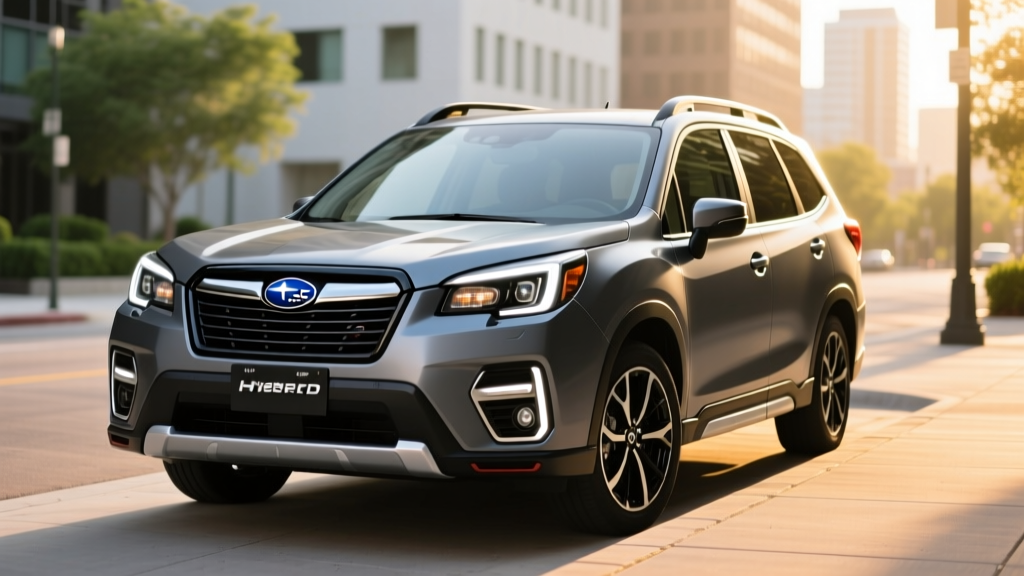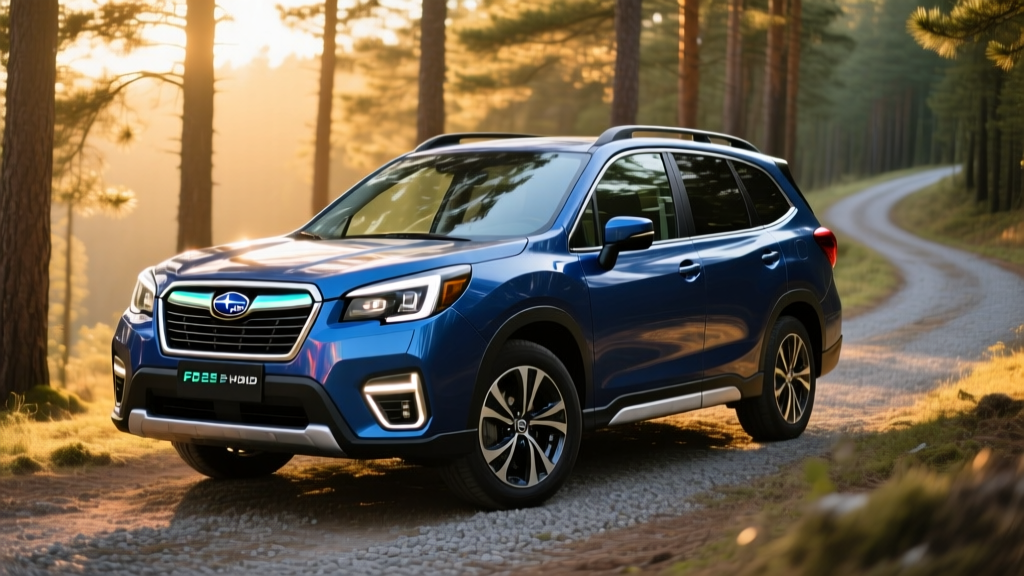
The 2025 Subaru Forester returns to the U.S. market with a hybrid variant for the first time since the previous generation, and buyers have one question front and center: how much power does it actually make, and does the fuel-economy payoff justify the added complexity? The short answer is that the 2025 Subaru Forester Hybrid produces 194 combined horsepower from Subaru's latest e-BOXER powertrain, pairs it with standard all-wheel drive, and targets an EPA-estimated 35 MPG combined — a meaningful jump over the gas-only Forester's 29 MPG combined.
But spec sheets only tell part of the story. In this guide, we dissect the hybrid system's real-world behavior, clarify what this vehicle is (a conventional self-charging hybrid, not a plug-in), and help you decide whether the Forester Hybrid fits your driving pattern better than a full EV or a traditional gas crossover.
HEV vs. PHEV: What the Forester Hybrid Actually Is
Before we get into horsepower curves and fuel-economy data, it's critical to establish what the 2025 Forester Hybrid is — and what it isn't.
The 2025 Forester Hybrid is a self-charging hybrid electric vehicle (HEV). It uses a small battery (approximately 1.1 kWh usable) that recharges through regenerative braking and the gasoline engine. You never plug it in. The electric motor assists the gas engine during acceleration and can propel the vehicle at low speeds for very short distances (typically under 1 mile at parking-lot speeds).
This is not a plug-in hybrid (PHEV). A PHEV like the Toyota RAV4 Prime has a much larger battery (18.1 kWh), offers 42 miles of electric-only range, and requires plugging in to realize its full efficiency benefit. The Forester Hybrid has no plug, no electric-only highway range, and no eligibility for the federal §30D EV tax credit.
Subaru chose the HEV route deliberately: it keeps weight down, avoids the price premium of a large battery pack, and requires zero behavioral change from the driver. You fuel up at a gas station exactly as before — the hybrid system simply makes each gallon go further, especially in city driving.
2025 Subaru Forester Hybrid Horsepower and Powertrain Specs
The heart of the Forester Hybrid is Subaru's fifth-generation e-BOXER system, which integrates an electric motor into the Lineartronic CVT transmission housing. Here's the full powertrain breakdown:
| Specification | Detail |
|---|---|
| Gasoline Engine | 2.5L naturally aspirated flat-four (Boxer) |
| Engine Output | 180 hp @ 5,800 rpm / 178 lb-ft torque @ 3,700 rpm |
| Electric Motor | AC synchronous, integrated in CVT |
| Motor Output | ~19 hp (14 kW) / ~48 lb-ft torque |
| Combined System Horsepower | 194 hp |
| Hybrid Battery | ~1.1 kWh lithium-ion (usable), located under cargo floor |
| Transmission | Lineartronic CVT with integrated electric motor |
| Drivetrain | Symmetrical All-Wheel Drive (standard) |
| 0-60 mph (est.) | ~8.5 seconds |
| Towing Capacity | 1,500 lbs (hybrid); gas model rated at 1,500 lbs |
For context, the gas-only 2025 Forester produces 180 hp from the same 2.5L Boxer without electric assist. The hybrid's 194 combined horsepower represents a modest bump, but the real benefit is how the electric motor fills in torque at low RPMs — the result is noticeably more responsive launches from a stop and less of the CVT "drone" under hard acceleration that Subaru owners know well.
Compared to the segment's hybrid benchmark, the Toyota RAV4 Hybrid (219 combined hp), the Forester Hybrid gives up about 25 horsepower. That's perceptible during highway merging, but the Forester counters with standard AWD (the RAV4 Hybrid also has standard AWD via a rear motor) and Subaru's well-regarded X-MODE for low-traction surfaces.
Fuel Economy: EPA Ratings and Real-World MPG
Fuel economy is where the Forester Hybrid earns its keep. Here's the EPA breakdown, sourced from fueleconomy.gov:
| Driving Cycle | 2025 Forester Hybrid (EPA) | 2025 Forester Gas (EPA) | Improvement |
|---|---|---|---|
| City | 36 MPG | 26 MPG | +38% |
| Highway | 34 MPG | 33 MPG | +3% |
| Combined | 35 MPG | 29 MPG | +21% |
The city MPG advantage is where hybrids shine. In stop-and-go traffic, the electric motor handles low-speed propulsion and regenerative braking recaptures energy that would otherwise become brake heat. Owners of similar Subaru e-BOXER systems report 37-39 MPG in city driving, often exceeding the EPA city estimate.
Highway driving tells a different story. At sustained 70-80 mph speeds, the electric motor contributes little, and you're essentially carrying the hybrid system's extra ~150 lbs of weight on gasoline power alone. Expect 31-33 MPG on the highway in real-world conditions, slightly below the EPA highway figure. Cold weather (below freezing) can reduce combined economy by 2-4 MPG due to increased engine running time for cabin heat and reduced battery efficiency.
On a 13.2-gallon fuel tank, the Forester Hybrid delivers a theoretical maximum range of approximately 462 miles at the combined EPA figure. Real-world mixed driving should yield 400-430 miles between fill-ups — enough for most commuters to visit a gas station roughly once every two weeks.
Pricing, Trims, and Tax Credit Eligibility
The 2025 Forester Hybrid is offered across multiple trim levels. Pricing starts in the low-to-mid $30,000 range (MSRP, before destination), representing a premium of approximately $1,500-$2,500 over the equivalent gas-only trim. Here's a representative breakdown:
| Trim | Est. MSRP | Key Features |
|---|---|---|
| Premium Hybrid | ~$33,500 | Heated seats, 11.6" touchscreen, EyeSight |
| Sport Hybrid | ~$36,000 | Sport-tuned suspension, unique styling, wireless CarPlay |
| Limited Hybrid | ~$38,500 | Leather, power liftgate, Harman Kardon audio |
| Touring Hybrid | ~$41,000 | Nappa leather, ventilated seats, 180° camera |
Note: Pricing is estimated based on Subaru's announced positioning and comparable model-year data. Confirm exact MSRP with your local Subaru dealer before purchasing.
The 2025 Forester Hybrid is a conventional hybrid (HEV), not a plug-in electric vehicle. Under IRS §30D rules, only battery electric vehicles (BEVs) and plug-in hybrids (PHEVs) with qualifying battery capacity and domestic sourcing can claim the federal clean vehicle credit of up to $7,500. The Forester Hybrid does not qualify.
Some states offer their own incentives for conventional hybrids, but these are increasingly rare as state programs shift toward zero-emission vehicles. Check your state's energy office or department of environmental quality for current programs.
Reliability, Battery Warranty, and Long-Term Costs
Hybrid reliability is a top concern for buyers, particularly those who remember early-generation hybrid systems from the 2000s. The good news: Subaru's e-BOXER system benefits from lessons learned across the Toyota-Subaru partnership (Toyota supplies hybrid system components), and the technology is now in its fifth generation.
- Hybrid Battery: 8 years / 100,000 miles (10 years / 150,000 miles in CARB states including CA, NY, MA, and others)
- Hybrid System Components: 8 years / 100,000 miles (inverter, electric motor, control modules)
- Powertrain: 5 years / 60,000 miles
- Bumper-to-Bumper: 3 years / 36,000 miles
Battery replacement cost: If the hybrid battery requires replacement outside warranty, expect $2,000-$4,000 for the battery pack itself, plus labor. However, hybrid battery failure rates in modern systems are low — Toyota's Prius fleet data shows less than 5% of batteries require replacement within 15 years of service. Subaru's smaller 1.1 kWh pack experiences less stress than a PHEV or BEV battery, which should translate to strong longevity.
Subaru's EyeSight driver-assistance system (standard on all trims) continues to earn strong safety marks. The 2025 Forester carries IIHS TOP SAFETY PICK credentials, and the hybrid variant shares the same structural safety cell.
How Does the Forester Hybrid Compare to Competitors?
The compact hybrid SUV segment is competitive. Here's how the Forester Hybrid stacks up against key rivals:
| Model | Combined HP | EPA Combined MPG | AWD | Starting MSRP |
|---|---|---|---|---|
| 2025 Subaru Forester Hybrid | 194 | 35 | Standard | ~$33,500 |
| Toyota RAV4 Hybrid | 219 | 39 | Standard | ~$33,000 |
| Honda CR-V Hybrid | 204 | 40 | Available | ~$35,000 |
| Ford Escape Hybrid | 198 | 39 | Available | ~$34,500 |
The Forester Hybrid trails the RAV4 and CR-V hybrids in peak MPG and horsepower, but it holds advantages in outward visibility (Subaru's greenhouse is class-leading), standard AWD with genuine off-road capability via X-MODE, and a more spacious rear seat and cargo area than the Escape. If fuel economy is your sole priority, the CR-V Hybrid edges ahead. If you need a vehicle that handles dirt roads, snow, and daily commuting with equal competence, the Forester Hybrid's case strengthens considerably.
Who Should Choose the Forester Hybrid vs. a Full EV or Gas Car?
- You drive 10,000-15,000 miles per year with a mix of city and highway driving
- You don't have access to home Level 2 charging (apartment, street parking, no garage)
- You need AWD for snow, dirt roads, or outdoor recreation
- You want better fuel economy without changing your refueling habits
- You plan to keep the vehicle 8-12 years (the hybrid premium pays back in fuel savings)
- You have reliable home Level 2 charging
- Your daily commute is under 60 miles round-trip
- You want to eliminate gas station visits entirely
- You qualify for the $7,500 federal tax credit (which can offset the EV price premium)
- You prioritize lower per-mile "fuel" costs (electricity is typically $0.04-$0.06/mile vs. $0.12-$0.15/mile for gas at 35 MPG)
- You drive fewer than 8,000 miles per year (the hybrid premium won't pay back)
- Your driving is almost entirely highway (the hybrid's city advantage matters less)
- You want the lowest possible upfront purchase price
The hybrid payback math is straightforward. At 12,000 miles per year and $3.50/gallon gasoline, the gas Forester (29 MPG combined) costs approximately $1,448 annually in fuel. The Forester Hybrid (35 MPG combined) costs about $1,200 — a savings of roughly $248 per year. With a ~$2,000 hybrid premium, payback takes approximately 8 years. However, this calculation doesn't account for reduced brake wear (regenerative braking extends pad life by 30-50%), potentially higher resale value, and the buffer against future gas price increases.
Frequently Asked Questions
How many MPG does the 2025 Subaru Forester Hybrid get?
The EPA rates the 2025 Forester Hybrid at 36 MPG city, 34 MPG highway, and 35 MPG combined. In real-world driving, expect to exceed the city figure in stop-and-go traffic (37-39 MPG) and fall slightly below the highway figure on sustained interstate trips (31-33 MPG). Cold weather reduces combined economy by 2-4 MPG.
Is the Forester Hybrid a plug-in? Do I need to charge it?
No. The Forester Hybrid is a conventional self-charging hybrid (HEV). The small 1.1 kWh battery recharges through regenerative braking and the gasoline engine. You never plug it in — simply fill up at a gas station as you would with any other vehicle.
Does the 2025 Forester Hybrid qualify for any federal tax credit?
No. Under current IRS §30D rules, only plug-in electric vehicles (BEVs and PHEVs) with qualifying battery sourcing are eligible for the federal clean vehicle credit. Conventional hybrids like the Forester Hybrid do not qualify. Some states may offer small hybrid incentives, but these are increasingly uncommon.
How reliable is the hybrid battery, and what does replacement cost?
Subaru warranties the hybrid battery for 8 years/100,000 miles (10 years/150,000 miles in CARB states). Based on industry data from Toyota's long-running hybrid programs, modern hybrid batteries have failure rates below 5% over 15 years. Out-of-warranty replacement costs approximately $2,000-$4,000 including labor. The small battery in the Forester Hybrid undergoes less charge/discharge stress than a PHEV or BEV pack, which favors longevity.
How much horsepower does the 2025 Forester Hybrid have?
The combined system output is 194 horsepower — 180 hp from the 2.5L Boxer engine plus approximately 19 hp from the integrated electric motor. The motor's primary contribution is low-RPM torque fill, which improves launch responsiveness and reduces CVT drone during acceleration.
Hybrid vs. PHEV vs. EV — which fits my lifestyle?
If you lack home charging access and want a no-compromise vehicle that handles any road condition, the Forester Hybrid (HEV) is the practical choice. If you have home charging and a short commute, a PHEV like the Toyota RAV4 Prime (42 miles electric-only, then gas) offers the best of both worlds. If you have home charging, a predictable routine under 250 miles, and want the lowest operating costs, a full EV eliminates gas entirely. The Forester Hybrid sits in the "zero lifestyle change" category — better economy with zero new infrastructure requirements.
- Standard AWD with X-MODE for genuine off-road capability
- 35 MPG combined — 21% improvement over gas model
- Exceeds EPA city MPG in real-world stop-and-go driving
- No plug-in charging required — zero behavioral change
- Class-leading outward visibility and rear-seat space
- Strong hybrid battery warranty (8-10 yr / 100-150k mi)
- 194 hp trails RAV4 Hybrid (219 hp) and CR-V Hybrid (204 hp)
- 35 MPG combined trails segment leaders (CR-V: 40 MPG)
- No federal tax credit eligibility
- ~$2,000 hybrid premium takes ~8 years to recoup at 12k mi/yr
- Highway MPG improvement over gas model is minimal (~3%)