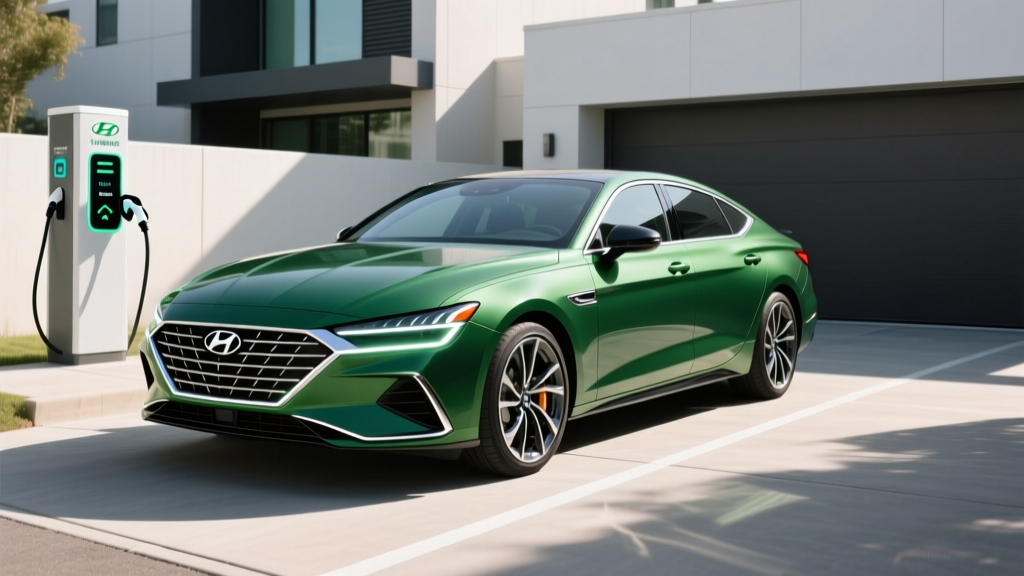
The midsize hybrid sedan segment has no shortage of contenders, but the 2025 Hyundai Sonata Hybrid occupies a distinct position: it pairs one of the highest EPA combined fuel economy ratings in its class with a conventional six-speed automatic transmission that prioritizes drivability over the droning CVT experience found in rivals. For buyers who want exceptional fuel efficiency without plugging in, this is a powertrain worth serious consideration.
Below, we break down every spec that matters — from EPA and real-world MPG to powertrain output, trim pricing, battery warranty coverage, and whether the Sonata Hybrid or a plug-in alternative makes more sense for your commute.
2025 Sonata Hybrid Fuel Economy: EPA Numbers and Real-World Results
The 2025 Sonata Hybrid is rated by the EPA at 50 MPG city / 54 MPG highway / 52 MPG combined for the SEL and Limited trims. The sportier N Line Hybrid trim, which uses larger wheels and a slightly different tuning, drops slightly to an EPA-estimated 44 MPG city / 51 MPG highway / 47 MPG combined. These figures place the Sonata Hybrid at or near the top of the midsize hybrid sedan segment, trading blows with the Toyota Camry Hybrid and Honda Accord Hybrid.
| Trim | City MPG | Highway MPG | Combined MPG |
|---|---|---|---|
| SEL | 50 | 54 | 52 |
| Limited | 50 | 54 | 52 |
| N Line Hybrid | 44 | 51 | 47 |
Source: EPA fueleconomy.gov
In mixed suburban and highway driving, the Sonata Hybrid's 52 MPG combined EPA rating is achievable — and many owners report exceeding it in city-heavy commutes where regenerative braking recaptures more energy. Expect 48–55 MPG in typical mixed driving. On sustained highway trips above 75 mph, efficiency dips to roughly 44–48 MPG, which is still competitive. Cold weather (below 30°F) can reduce fuel economy by 5–10% due to increased engine warm-up cycles and cabin heating load.
Powertrain and Performance Specs
The Sonata Hybrid uses Hyundai's TMED-II (Transmission-Mounted Electric Device) system, which integrates a 1.6-liter turbocharged four-cylinder engine with an electric motor mounted inside a conventional six-speed automatic transmission. This is a deliberate engineering choice: unlike the e-CVT planetary gearsets in the Camry or Accord hybrids, the Sonata Hybrid shifts through actual gears, delivering a more natural acceleration feel that enthusiasts appreciate.
| Specification | Value |
|---|---|
| Engine | 1.6L turbocharged GDI 4-cylinder |
| Engine Output | 150 hp / 195 lb-ft torque |
| Electric Motor Output | 39 kW (52 hp) / 151 lb-ft torque |
| Combined System Output | 192 hp |
| Transmission | 6-speed automatic (TMED-II) |
| Drivetrain | Front-wheel drive |
| 0–60 mph (est.) | ~7.5 seconds |
| Hybrid Battery | 1.62 kWh lithium-ion (HEV) |
| Fuel Tank | 13.2 gallons |
| Total Driving Range | ~686 miles (combined) |
The 1.62 kWh battery pack is compact — it's a conventional hybrid (HEV), not a plug-in. It charges exclusively through regenerative braking and the gasoline engine. There is no plug, no EV-only range to speak of beyond very low-speed creeping, and no need to install home charging equipment.
HEV vs. PHEV vs. EV: Which Powertrain Fits Your Needs?
The 2025 Sonata is available only as a conventional hybrid (HEV) in the U.S. market. Hyundai previously offered a Sonata Plug-in Hybrid in earlier generations, but the current lineup does not include a PHEV variant. Here's how to think about the three electrification tiers:
| Factor | HEV (Sonata Hybrid) | PHEV (e.g., Toyota Prius Prime) | BEV (e.g., Hyundai Ioniq 6) |
|---|---|---|---|
| Plugs In? | No | Yes (Level 1/2) | Yes (Level 1/2/DC) |
| Electric-Only Range | ~0 miles | 25–44 miles | 250–360+ miles |
| Combined MPG / MPGe | 47–52 MPG | 48–52 MPG + 114–127 MPGe | 100–140 MPGe |
| Home Charging Needed? | No | Recommended | Essential |
| Upfront Cost | Lowest | Mid | Highest |
| Federal Tax Credit | None | Up to $7,500 (§30D) | Up to $7,500 (§30D) |
| Best For | No garage/outlet access | Short commute + garage | Home charging + low mi/yr |
- You lack access to a garage or outdoor outlet for Level 2 charging
- Your daily commute exceeds 40 miles, making PHEV electric-only range impractical
- You want the lowest purchase price and simplest ownership experience
- You take frequent long road trips and don't want to plan around charging stops
Pricing, Trims, and Tax Credit Eligibility
The 2025 Sonata Hybrid starts at $30,250 MSRP for the SEL trim (including destination), making it one of the most accessible midsize hybrid sedans. The range-topping Limited trim adds premium features like a panoramic sunroof, Hyundai Digital Key, and a Bose audio system for approximately $37,250. The sport-tuned N Line Hybrid slots in between at roughly $34,750.
| Trim | MSRP (incl. destination) | Key Additions |
|---|---|---|
| SEL | $30,250 | Heated seats, Smart Cruise Control, 12.3" display |
| N Line Hybrid | $34,750 | Sport suspension, 19" wheels, N Line styling, paddle shifters |
| Limited | $37,250 | Panoramic roof, ventilated seats, Digital Key, Highway Driving Assist |
The Sonata Hybrid is a conventional HEV, not a plug-in vehicle. It does not qualify for the IRS §30D Clean Vehicle Credit, which is reserved for battery electric vehicles (BEVs) and plug-in hybrids (PHEVs) with battery capacities of at least 7 kWh. There is no federal incentive for conventional hybrids. Some states or local utilities may offer minor rebates for hybrid purchases — check your state energy office or utility provider for current programs. (Source: IRS.gov §30D)
Battery Warranty, Reliability, and Replacement Cost
Hybrid battery longevity is consistently the top concern among first-time hybrid buyers. Hyundai addresses this with one of the strongest warranty packages in the industry:
- Hybrid Battery: 10 years / 100,000 miles (original owner)
- Hybrid System Components: 10 years / 100,000 miles
- Powertrain: 10 years / 100,000 miles
- New Vehicle Limited: 5 years / 60,000 miles
- Capacity Retention Threshold: Warranty covers battery if capacity drops below ~70% of original
In practice, Hyundai's lithium-ion hybrid battery packs have proven durable. The 1.62 kWh pack in the Sonata Hybrid operates within a narrow state-of-charge window (roughly 40–60% SoC during normal driving), which dramatically reduces degradation compared to a full BEV battery that cycles through wider charge ranges. Most hybrid batteries outlast the vehicle itself.
If replacement is needed outside of warranty, a refurbished Sonata Hybrid battery pack typically costs between $2,000 and $3,500 including labor at an independent hybrid specialist. OEM replacement through a Hyundai dealer runs closer to $3,500–$5,000. For context, this is significantly less than a BEV traction battery replacement, which can exceed $10,000–$15,000.
Driving Impressions and Daily Usability
The Sonata Hybrid's six-speed automatic is its defining differentiator. Where competitors use planetary e-CVTs that hold the engine at a constant drone during acceleration, the Sonata Hybrid shifts through gears like a conventional car. The result is a more engaging, less monotonous driving experience — particularly noticeable during highway merging and passing maneuvers.
The 192 combined horsepower is adequate for confident highway acceleration and passing, though it won't win any stoplight races. Regenerative braking is well-calibrated with multiple levels selectable via steering wheel paddles, allowing for near one-pedal driving in traffic without the aggressive grabby feel some hybrids exhibit.
Interior space is generous, with 16.0 cubic feet of trunk volume — the hybrid battery is packaged under the rear seat, preserving full cargo capacity. The cabin materials on the Limited trim punch above the price point, with soft-touch surfaces and a well-integrated dual 12.3-inch display setup.
Safety and Driver Assistance
Every 2025 Sonata Hybrid comes standard with Hyundai SmartSense, which includes:
- Forward Collision-Avoidance Assist with pedestrian/cyclist detection
- Blind-Spot Collision-Avoidance Assist
- Rear Cross-Traffic Collision-Avoidance Assist
- Smart Cruise Control with Stop & Go
- Lane Keeping Assist and Lane Following Assist
The Limited trim adds Highway Driving Assist (HDA), which combines adaptive cruise control with lane centering on divided highways. This is a SAE Level 2 driver-assistance system — it does not make the vehicle self-driving. The driver must keep hands on the wheel and eyes on the road at all times. HDA works well for reducing fatigue on long highway stretches but requires active supervision.
Highway Driving Assist and Smart Cruise Control are Level 2 systems under the SAE J3016 framework. The driver remains fully responsible for vehicle operation. This is not Level 4 autonomous driving — no hands-off, eyes-off operation is permitted or safe.
2025 Sonata Hybrid Pros and Cons
- Best-in-class 52 MPG combined (SEL/Limited)
- Six-speed automatic — no CVT drone
- 10-year/100,000-mile hybrid battery warranty
- Competitive $30,250 starting price
- Full trunk space (battery under rear seat)
- Comprehensive standard safety suite
- No PHEV option in current generation
- FWD only — no AWD availability
- No federal tax credit for HEV
- N Line Hybrid drops to 47 MPG combined
- 192 hp is adequate but not quick
- 13.2-gallon tank limits range vs. some rivals
Frequently Asked Questions
How many MPG does the 2025 Sonata Hybrid actually get?
The EPA rates the SEL and Limited trims at 50 city / 54 highway / 52 combined MPG. In real-world mixed driving, expect 48–55 MPG. The N Line Hybrid is rated at 44/51/47 MPG due to larger wheels and sportier tuning. City-heavy commutes tend to yield higher numbers thanks to frequent regenerative braking.
Does the Sonata Hybrid need to be plugged in?
No. The 2025 Sonata Hybrid is a conventional hybrid (HEV). Its 1.62 kWh battery recharges through regenerative braking and the gasoline engine. There is no plug, no charging cable, and no electric-only driving range beyond minimal low-speed assist.
Is there a Sonata Plug-in Hybrid (PHEV) available?
Not for the 2025 model year. Hyundai discontinued the Sonata PHEV in the U.S. market after the previous generation. If plug-in capability is a priority, consider the Toyota Prius Prime (44 miles electric-only) or the Hyundai Tucson PHEV (33 miles electric-only) as alternatives.
Does the 2025 Sonata Hybrid qualify for a federal tax credit?
No. The IRS §30D Clean Vehicle Credit applies only to plug-in electric vehicles (BEVs and PHEVs) with battery packs of at least 7 kWh. The Sonata Hybrid's 1.62 kWh battery does not meet this threshold. No federal tax incentive is available for conventional hybrids.
How long will the hybrid battery last?
Hyundai covers the hybrid battery for 10 years or 100,000 miles. Based on historical data from Hyundai's hybrid lineup, these batteries routinely exceed 150,000 miles without significant degradation. The battery operates in a narrow charge window that minimizes wear. Out-of-warranty replacement costs approximately $2,000–$5,000 depending on source and labor.
Should I buy the Sonata Hybrid or a full EV?
If you have reliable home charging (Level 2), drive fewer than 40 miles daily, and want the lowest operating cost, a BEV like the Hyundai Ioniq 6 or Tesla Model 3 will save more on fuel over time and may qualify for a $7,500 federal tax credit. If you lack charging access, regularly drive more than 300 miles between fill-ups, or want the lowest upfront cost, the Sonata Hybrid is the more practical choice.
Is the Sonata Hybrid available with all-wheel drive?
No. The 2025 Sonata Hybrid is front-wheel drive only across all trims. If AWD is a requirement, the Toyota Camry Hybrid offers an AWD option, as does the Hyundai Tucson Hybrid SUV.