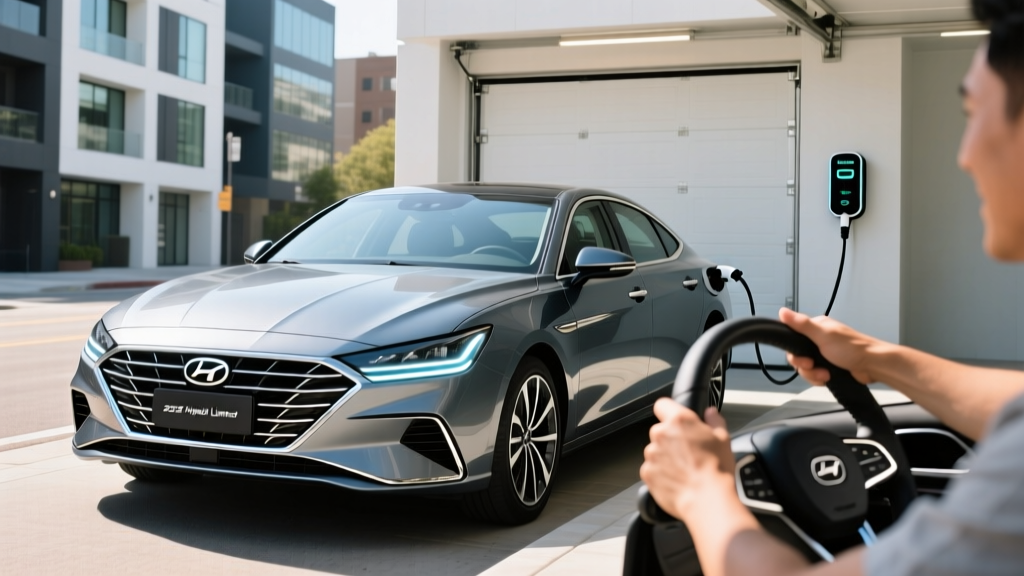
The 2025 Hyundai Sonata Hybrid Limited sits at the top of a midsize sedan lineup that refuses to chase the crossover trend. While rivals pivot to SUVs, Hyundai keeps refining a four-door that delivers genuinely excellent fuel economy, a premium-feeling interior, and a powertrain that asks nothing of you beyond filling it with gas. No plug, no range anxiety, no charging apps — just a 64-horsepower electric motor working in concert with a 1.6-liter turbocharged engine to squeeze every mile out of every gallon.
This review breaks down the 2025 Sonata Hybrid Limited's real-world efficiency, powertrain specs, pricing after incentives, and whether this conventional hybrid (HEV) makes more sense for your daily driving than a plug-in hybrid or a full battery-electric vehicle.
2025 Sonata Hybrid Limited: Key Specs at a Glance
| Specification | 2025 Sonata Hybrid Limited |
|---|---|
| Powertrain | 1.6L turbo I-4 + 64 kW electric motor (HEV) |
| Combined Horsepower | 192 hp |
| Transmission | 6-speed automatic (torque converter) |
| EPA City MPG | 44 MPG |
| EPA Highway MPG | 51 MPG |
| EPA Combined MPG | 47 MPG |
| Fuel Tank Capacity | 13.2 gallons |
| Est. Total Range | ~620 miles |
| 0–60 mph | ~7.5 seconds (est.) |
| Drivetrain | Front-wheel drive |
| Hybrid Battery | ~1.6 kWh lithium-ion (self-charging) |
| MSRP (Limited trim) | $38,250 |
| Federal Tax Credit | Not eligible (§30D is for PHEVs/BEVs only) |
| Hybrid Battery Warranty | 10 years / 100,000 miles |
Source: fueleconomy.gov, Hyundai USA
Fuel Economy: EPA Numbers vs. Real-World MPG
The EPA rates the 2025 Sonata Hybrid Limited at 44 city / 51 highway / 47 combined MPG. The Blue trim and SEL trim share the same powertrain and achieve the same ratings, meaning you don't sacrifice efficiency by stepping up to the Limited's additional features.
Conventional hybrids like the Sonata tend to exceed their EPA city estimate in stop-and-go traffic, where regenerative braking recaptures the most energy. Expect 46–50 MPG in mixed city driving during mild weather. Highway cruising at 70+ mph may drop to 42–46 MPG because the electric motor contributes less at sustained high speeds. In cold weather (below 30°F), plan for a 5–10% reduction as the engine runs more often to generate cabin heat.
Over a 620-mile combined range from the 13.2-gallon tank, the Sonata Hybrid Limited is one of the most road-trip-friendly midsize sedans available. That range rivals or exceeds many battery-electric vehicles when you factor in charging stops.
HEV vs. PHEV vs. BEV: Which Powertrain Fits You?
The 2025 Sonata is offered as a conventional hybrid (HEV). Hyundai previously sold a Sonata Plug-in Hybrid in the U.S. but discontinued it. If you're cross-shopping, here's how the three electrified powertrain types compare:
| Factor | HEV (Sonata Hybrid) | PHEV (e.g., Toyota Prius Prime) | BEV (e.g., Tesla Model 3) |
|---|---|---|---|
| Plug-in Required? | No — self-charging | Yes — for EV range | Yes — sole fuel source |
| Electric-Only Range | ~1 mile (low-speed assist) | 25–44 miles typical | 250–360+ miles |
| Total Range | ~620 miles | 400–600+ miles | 250–360+ miles |
| Home Charging Needed? | No | Recommended (Level 2) | Essential |
| Federal Tax Credit (§30D) | Not eligible | Up to $7,500 (if qualified) | Up to $7,500 (if qualified) |
| Best For | No home charging, long trips | Short commute + road trips | Home charging + daily driving |
| Upfront Cost | Lowest | Mid-range | Highest |
Choose the Sonata Hybrid (HEV) if: You don't have access to home or workplace charging, you take frequent road trips, you want maximum simplicity, and you want to minimize upfront cost while still cutting fuel consumption roughly in half compared to a gas-only midsize sedan.
Look at a PHEV instead if: Your commute is under 40 miles round-trip, you have a garage or driveway for a Level 2 charger, and you want to drive on electricity most days while keeping a gas engine for weekend road trips.
Go full BEV if: You have reliable home charging, your daily driving is under 250 miles, and you want the lowest per-mile fuel cost and minimal maintenance over time.
Powertrain Deep Dive: 1.6L Turbo + Electric Motor
The Sonata Hybrid pairs a 1.6-liter turbocharged four-cylinder engine (producing roughly 150 hp on its own) with a 64 kW (approximately 86 hp) electric motor integrated into the transmission housing. Combined system output is 192 horsepower. Unlike Toyota's e-CVT planetary gearset, Hyundai uses a traditional 6-speed automatic transmission with a torque converter. The result is more natural-feeling acceleration and none of the "rubber band" sensation some drivers associate with CVT-equipped hybrids.
The ~1.6 kWh lithium-ion battery pack is small by EV standards — it's not designed for electric-only driving. Instead, it buffers energy captured during braking and deceleration, then deploys it to assist the gasoline engine during acceleration and to enable brief electric-only movement at very low speeds (parking lots, stoplights). The battery recharges itself through regenerative braking and engine-generated electricity. You never plug it in.
Acceleration to 60 mph takes approximately 7.5 seconds — adequate for merging and passing, though not sporty. The Sonata Hybrid prioritizes smoothness and efficiency over performance, and the powertrain delivers on that promise. The electric motor fills in the torque gap at low RPM before the turbo spools up, eliminating the lag you'd feel in a non-hybrid turbocharged sedan.
Limited Trim: What You Get for $38,250
The 2025 Sonata Hybrid Limited is the top trim and comes loaded with features that push it into near-luxury territory:
- 12.3-inch dual curved displays — digital instrument cluster and infotainment in a single curved panel
- Leather-trimmed seats with heated and ventilated front seats, heated rear seats
- Heated steering wheel
- Bose 12-speaker premium audio
- Head-up display (HUD)
- Digital key (NFC + UWB smartphone integration)
- Hyundai SmartSense suite — adaptive cruise control with stop-and-go, lane-keeping assist, blind-spot monitoring with rear cross-traffic alert, highway driving assist (SAE Level 2)
- Panoramic sunroof
- Wireless Apple CarPlay and Android Auto
- 360-degree surround-view monitor
- Remote smart parking assist (Limited-exclusive)
At $38,250 MSRP (before destination charges), the Limited is roughly $5,000–$7,000 more than the SEL trim. The price premium buys genuine luxury features, but the powertrain and fuel economy are identical across all trims. If budget is a priority, the Blue trim at approximately $30,250 delivers the same 47 MPG combined.
Tax Credits and Incentives: What Applies to the Sonata Hybrid?
The IRS §30D Clean Vehicle Credit applies only to plug-in electric vehicles — battery-electric (BEV) and plug-in hybrid (PHEV) models with battery capacities of at least 7 kWh. The Sonata Hybrid's ~1.6 kWh battery and self-charging architecture disqualify it. There is no federal tax credit for conventional hybrids as of 2025.
However, some states and localities offer rebates or incentives for hybrid vehicles. These vary widely by jurisdiction and change frequently. Check your state's energy office or department of environmental quality for current programs. Some utility companies also offer rebates for hybrid vehicle purchases — contact your local provider.
For definitive federal tax credit rules, consult the IRS Clean Vehicle Credits page and consider speaking with a tax professional about your specific eligibility.
Battery Warranty, Reliability, and Replacement Cost
Hyundai covers the Sonata Hybrid's lithium-ion battery pack for 10 years or 100,000 miles (whichever comes first). This warranty covers defects and capacity loss below a specified threshold. The hybrid system components — including the electric motor, inverter, and control electronics — are covered under the same 10-year/100,000-mile powertrain warranty.
Hyundai's hybrid battery warranty is among the best in the industry, matching or exceeding most competitors (Toyota offers 10 years/150,000 miles on hybrid batteries for models from 2020 onward). The small battery pack in a conventional hybrid undergoes less stress than a large BEV pack because it operates in a narrow state-of-charge window — typically between 40% and 80% — which dramatically reduces degradation.
Real-world longevity data: Modern lithium-ion hybrid batteries from Hyundai, Toyota, and Honda routinely last 150,000–200,000+ miles before requiring replacement. Many first-generation hybrid vehicles (Toyota Prius, Honda Insight) are still on their original batteries past 200,000 miles.
Replacement cost if out of warranty: A Sonata Hybrid battery replacement typically runs between $2,000 and $4,000 including labor, depending on whether you use a new OEM pack, a refurbished unit, or an aftermarket option. This is significantly less than BEV battery replacements, which can exceed $10,000–$20,000 for large packs.
Overall reliability: Hyundai's hybrid powertrain has proven durable in owner surveys and long-term testing. The conventional 6-speed automatic transmission is a known, proven design — simpler and more serviceable than the e-CVTs or dual-clutch units in some competing hybrids. The Sonata as a platform earned a TOP SAFETY PICK rating from the IIHS in prior model years; check the latest IIHS and NHTSA ratings for the 2025 model year as they become available.
Who Should Buy the 2025 Sonata Hybrid Limited?
✓ This Hybrid Is Right for You If…
- You want excellent fuel economy without plugging in or changing habits
- You lack home/workplace charging access (apartment, street parking)
- You take regular road trips and don't want to plan around chargers
- You want a comfortable, well-equipped midsize sedan under $40K
- You prioritize a long warranty and proven hybrid reliability
✗ Look Elsewhere If…
- You want electric-only daily driving (consider a PHEV or BEV)
- You need all-wheel drive (Sonata Hybrid is FWD only)
- You want to qualify for the $7,500 federal tax credit
- You prefer a crossover/SUV body style
- You want sporty handling over comfort-oriented dynamics
The 2025 Sonata Hybrid Limited is a strong pick for drivers who want to cut their fuel bill roughly in half compared to a gas-only midsize sedan — without changing their refueling routine, installing a home charger, or worrying about range. At 47 MPG combined and ~620 miles of total range, it's one of the most practical and road-trip-ready vehicles in its class, and the Limited trim wraps that efficiency in a genuinely premium cabin.
Frequently Asked Questions
How many MPG does the 2025 Sonata Hybrid Limited get?
The EPA rates it at 44 city / 51 highway / 47 combined MPG. In real-world mixed city driving during mild weather, expect 46–50 MPG. Highway cruising at 75+ mph may yield 42–46 MPG. Cold weather (below 30°F) can reduce efficiency by 5–10%.
Does the Sonata Hybrid need to be plugged in?
No. The Sonata Hybrid is a conventional hybrid (HEV), not a plug-in hybrid (PHEV). Its small battery recharges through regenerative braking and the gasoline engine. You never plug it in — just fill it with gas like any other car.
Does the 2025 Sonata Hybrid qualify for a federal tax credit?
No. The IRS §30D Clean Vehicle Credit applies only to plug-in vehicles (BEVs and PHEVs) with batteries of at least 7 kWh. The Sonata Hybrid's ~1.6 kWh self-charging battery does not qualify. Check your state and local programs for possible hybrid incentives.
How long will the Sonata Hybrid battery last?
Hyundai warranties the hybrid battery for 10 years / 100,000 miles. In practice, modern hybrid battery packs routinely last 150,000–200,000+ miles. The battery operates in a narrow charge window (roughly 40–80% SoC), which minimizes degradation compared to full EVs.
What does a Sonata Hybrid battery replacement cost?
If out of warranty, expect $2,000–$4,000 for a replacement hybrid battery pack including labor, depending on OEM vs. refurbished options. This is significantly less than BEV battery replacements.
Is the Sonata Hybrid available with all-wheel drive?
No. The 2025 Sonata Hybrid is front-wheel drive only across all trims. If AWD is a priority in a hybrid sedan, consider the Toyota Camry Hybrid (AWD available) or the Toyota Prius AWD.
How does the Sonata Hybrid compare to the Toyota Camry Hybrid?
The Camry Hybrid offers comparable fuel economy (~44–52 MPG depending on trim) and available AWD. The Sonata Hybrid Limited counters with a more premium interior, larger infotainment screens, and Hyundai's 10-year/100,000-mile powertrain warranty. Both are strong choices — the Camry wins on AWD availability and long-term resale value, while the Sonata wins on cabin tech and warranty length.